Spoiler-light guide
Neuromancer in eight quick answers
- Premiere
- 22 January 2027 on Apple TV
- Episodes
- 10
- Opening release
- Two episodes, then weekly
- Case
- Callum Turner
- Molly
- Briana Middleton
- Original novel
- William Gibson, 1984
- Series creators
- Graham Roland and JD Dillard
- Book order
- First novel in the Sprawl trilogy
Checked 27 July 2026 after Apple released the first teaser. This guide explains the premise without revealing the novel's major turns.
The short answer: what is Neuromancer?
Neuromancer is a 1984 science-fiction novel by William Gibson and one of the defining works of cyberpunk. Its protagonist, Case, was once an elite computer thief. After losing the ability to enter cyberspace, he is offered a dangerous way back by a secretive employer. The job pulls him into digital espionage alongside Molly, a highly capable mercenary with mirrored eyes.
Apple is adapting that premise as a 10-episode television series. Apple originally announced the order in February 2024, naming Graham Roland and JD Dillard as the creators, Roland as showrunner and Dillard as director of the pilot. Callum Turner plays Case and Briana Middleton plays Molly.
The first full teaser and premiere announcement arrived during San Diego Comic-Con in July 2026. Current release information sets the global Apple TV premiere for Friday, 22 January 2027. Two episodes are due at launch, followed by one episode each Friday through 19 March.
Why are people suddenly searching for it?
The immediate reason is the first substantial look at Apple's adaptation. A teaser turns a long-running production into something viewers can see, while the January premiere date answers the question that had remained open since the series was ordered.
The interest is larger than a normal trailer search because Neuromancer has spent decades being described as influential and difficult to adapt. Readers want to know what the title means, whether they need to read the book first and how much of the familiar cyberpunk language in films and games can be traced to Gibson's novel.
The useful answer is not that Neuromancer predicted every device. It did not. Gibson himself has pointed out inventions he missed, including the mobile-phone world a modern reader might expect. Its achievement was different: it made a networked future feel socially complete, with slang, inequality, crime, entertainment, bodies, corporations and artificial minds all changing together.
What does the title Neuromancer mean?
The title behaves like a constructed word rather than a simple job description. It combines the sound of neuro, pointing toward nerves and the mind, with necromancer, a figure associated with communicating with or controlling the dead. Romance also echoes inside the word.
That layered name fits a story interested in consciousness, memory, artificial intelligence and the border between a living person and information that can continue without a body. Explaining more would spoil important discoveries, but the title is a clue: this is not only a story about stealing data.
The word also demonstrates Gibson's method. He rarely stops the story to define every piece of slang. Readers encounter terms through movement, context and atmosphere, as though they have arrived in a city whose residents already know how everything works.
Did Neuromancer invent cyberspace or cyberpunk?
The two claims need to be separated. Gibson coined the word cyberspace in his 1982 short story Burning Chrome and expanded the idea in Neuromancer. The novel helped popularise cyberspace as a shared, navigable representation of computer data years before ordinary households were using the World Wide Web.
Gibson did not coin the word cyberpunk. Writer Bruce Bethke used that term for a short-story title, and it was later applied to a group of writers whose work combined advanced technology with damaged cities, street-level characters and powerful institutions. Neuromancer became the movement's most famous novel, but being its defining book is not the same as inventing its label.
This distinction matters because the novel's influence is more interesting than a false first. Gibson turned separate anxieties about computing, multinational power, biotechnology and urban life into a world that felt as if it had already accumulated history.
Why did the book change science fiction?
Many earlier futures placed technology in clean laboratories, military command rooms or distant spacecraft. Neuromancer put extraordinary systems beside cheap hotels, crowded bars, addiction, fashion and organised crime. High technology did not erase poverty or human appetite. It gave both new tools.
Its style was equally important. Gibson wrote in compressed images, brand-like names and fragments of technical language. The reader experiences the future before receiving a complete explanation of it. That approach influenced the texture of later cyberpunk even when those works told very different stories.
The recognition was immediate and unusual for a first novel. Neuromancer won the Nebula Award, the Hugo Award and the Philip K. Dick Award. It later became the opening book of the Sprawl trilogy, followed by Count Zero and Mona Lisa Overdrive.
Is its cyberspace the same thing as the internet?
Not exactly. The internet is physical infrastructure, protocols, machines and services. Neuromancer's cyberspace is a sensory way of entering and navigating data. Its skilled operators experience information as a spatial environment rather than clicking through flat pages on a phone.
That vision feels familiar because modern culture routinely turns invisible systems into places. We visit websites, enter chat rooms, build online communities and talk about being inside virtual worlds. The metaphor survived even though everyday networking developed through screens, apps and mobile devices rather than the novel's exact interface.
The book therefore works better as a study of how people might experience connected information than as a checklist of correct predictions. It asks who owns the system, who can move freely through it and whether an intelligence living there would understand freedom in human terms.
What has Apple confirmed about the adaptation?
Apple describes the series as a high-stakes heist involving Case, Molly, digital espionage and a corporate dynasty with hidden secrets. The official order is for 10 episodes. Callum Turner, Mark Strong and Peter Sarsgaard appear on Apple's current series page, while the announced ensemble also includes Briana Middleton.
The premiere is scheduled for 22 January 2027, with two episodes first and weekly releases after that. A schedule can still change before launch, so the date should be checked against Apple's series page closer to January.
A teaser can confirm visual tone, performers and selected moments, but it cannot prove how faithfully a full season adapts the novel. Claims that the series has removed, combined or fundamentally changed a character should wait for episodes, detailed production notes or direct statements from the creators.
Do you need to read the book before watching?
No. A television adaptation must introduce its own characters and rules clearly enough for a new audience. Reading the novel first will add context, but it should not be an entry ticket.
Readers who do start the book can make the opening easier by accepting temporary uncertainty. Follow what Case wants, notice who controls his choices and let unfamiliar words gain meaning through repetition. Constantly stopping to search every invented term can break the rhythm Gibson designed.
The novel is also short enough to revisit. A first reading supplies speed and atmosphere; a second makes its structure and clues easier to see. People who want to continue afterwards should read Count Zero and then Mona Lisa Overdrive. They share the Sprawl setting but do not simply repeat Case's original journey.
What should viewers watch for without spoiling the story?
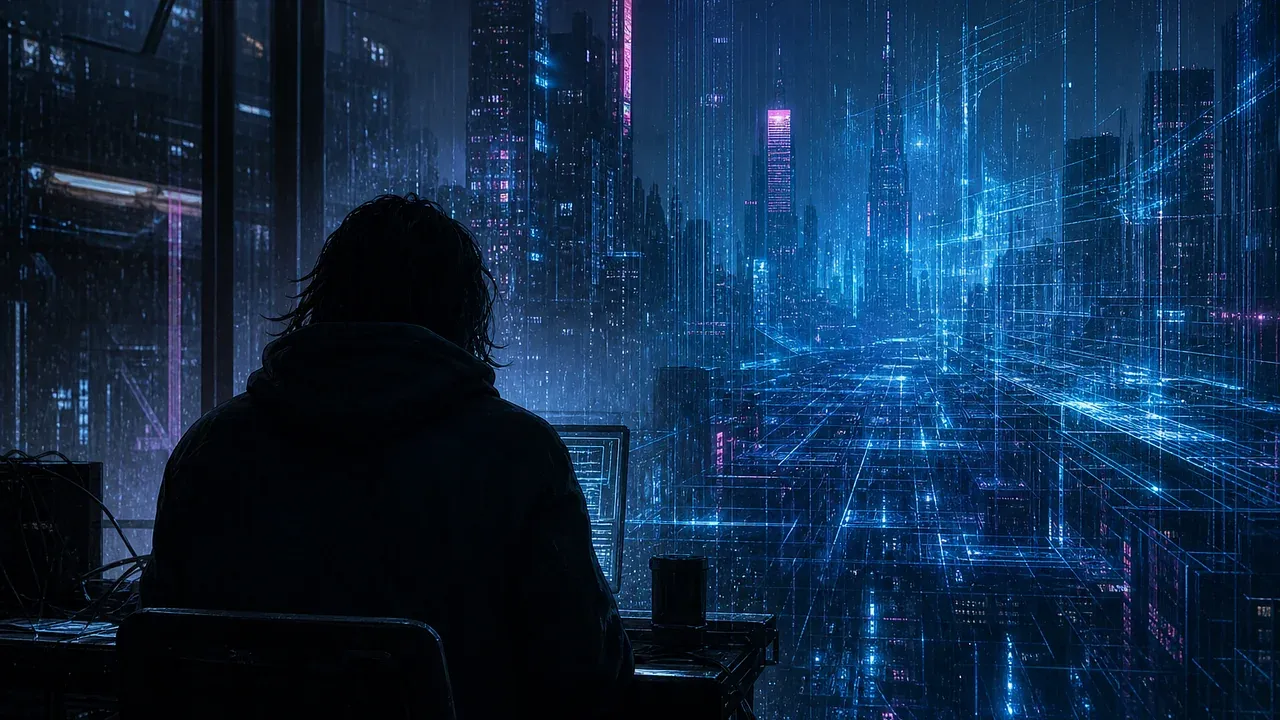
Watch how the adaptation makes cyberspace visible without turning it into a generic glowing city. The novel treats digital space as beautiful, dangerous and shaped by power. The important question is not merely whether the effects look expensive, but whether entering the system feels different from standing in the physical world.
Also watch Molly's agency, Case's dependence on other people and the gap between a corporation's polished surface and what it is willing to do. Cyberpunk can become a collection of neon signs and dark coats. Neuromancer lasts because its style carries arguments about ownership, bodies and freedom.
That is why the 2027 series has a difficult but exciting task. It is adapting a plot, a vocabulary and a way of seeing technology at the same time. The teaser created today's curiosity; the real test will be whether the finished series preserves that deeper tension.
Sources and further reading
- Apple TV Press: original 10-episode Neuromancer series announcement ↗
- Apple TV: current Neuromancer series page ↗
- 9to5Mac: Comic-Con teaser, 22 January 2027 premiere and release plan ↗
- Penguin Random House: Neuromancer description, trilogy and awards ↗
- Science Fiction and Fantasy Writers Association: 1984 Nebula winner ↗
- Wired interview: William Gibson on cyberspace and predicting technology ↗
This article was written for Curiosity Desk. We do not copy other publishers or invent quotes. If a material error is found, we correct it openly.
Read the full standards →One answer should lead to a better question
Bring your curiosity to the group
Curious Minds is our public Facebook community for surprising science, strange history, Australian wildlife and everyday questions. No copied posts, no personal-friend invitations and no link dumping.
- Three self-contained discussion prompts each week
- Sourced answers and honest uncertainty
- Respectful conversation without spam