The show was a planned first, not a football tradition
The 2026 World Cup final included the first dedicated half-time show in the history of the men's tournament final. FIFA and Global Citizen announced it as a new entertainment and fundraising event, curated by Coldplay co-founder Chris Martin.
It was not introduced because the Laws of the Game require a performance or because previous finals had gradually developed the same custom. Organisers deliberately added a produced stadium show to the interval between the two halves.
It happened after a goalless first half
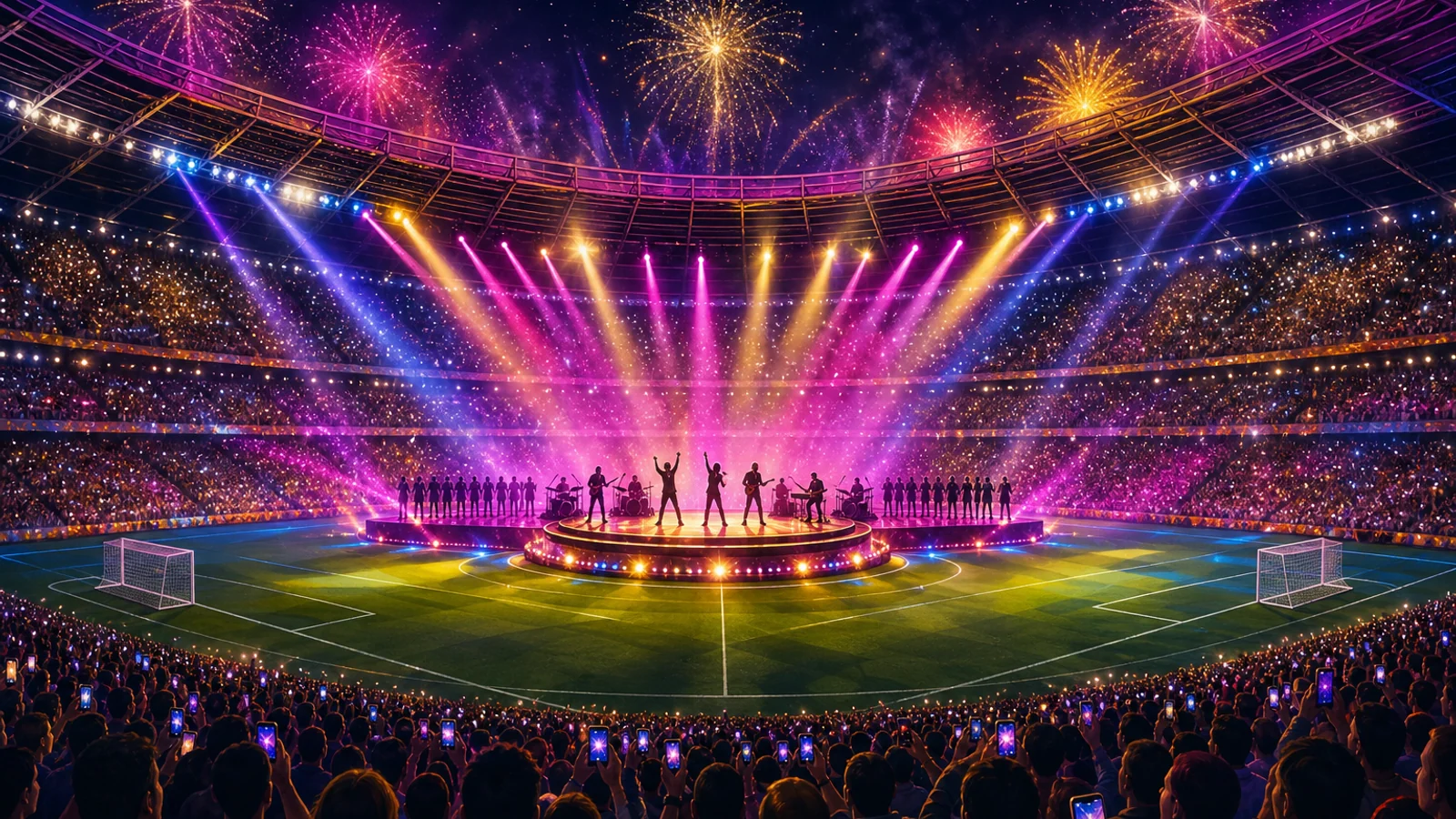
Spain and Argentina reached half-time at 0-0 in New York New Jersey Stadium. During the interval, Madonna opened the show, BTS performed, Justin Bieber appeared, and Shakira and Burna Boy performed the official tournament song, according to FIFA's post-event account.
The final sequence brought Chris Martin together with the PS22 Chorus, a live band, the Muppets and Sesame Street characters. Fireworks closed the production before the teams returned for the second half.
The broadcast was designed to fit the interval
FIFA's final pre-event announcement described an 11-minute broadcast. That is much shorter than the total interval of many large stadium concerts once setup and removal are included, so the production had to use the existing stadium environment and tightly planned entrances.
A football half-time interval still has competitive purposes: players recover, receive treatment and discuss adjustments. The show occupied the public-facing part of that pause without changing the score, match clock or rules used once play resumed.
The stated purpose extended beyond entertainment
FIFA and Global Citizen connected the show to the FIFA Global Citizen Education Fund. The initiative set a target of USD 100 million to expand access to education and football opportunities for children.
By 8 July, FIFA said more than USD 50 million had been raised and that USD 1 from every World Cup ticket sold was being donated to support social projects. Those are organiser statements about the campaign; they should not be confused with an independent audit of later spending or outcomes.
The closing ceremony and half-time show were different events
The final also had entertainment before kick-off, including the closing ceremony, musical performances and the national anthem. FIFA's post-event report separates those moments from the dedicated show that began after the opening 45 minutes.
That distinction explains why online lists of performers can look inconsistent. Some artists appeared before the match, while the half-time programme had its own sequence. A complete recap should identify which part of the final each performance belonged to.
Why it drew so much search interest
The final brought together football audiences, global music fandoms and a format familiar from major American sporting events but new to the World Cup final. Searches for Shakira and the half-time show rose sharply in Australia as viewers tried to identify performers and understand why the production existed.
The durable answer is simple: FIFA and Global Citizen chose to turn the interval into a global entertainment and fundraising platform. Whether later tournaments repeat it will depend on future organiser decisions, not on a permanent change to football's Laws of the Game.
Sources and further reading
This article was written for Curiosity Desk. We do not copy other publishers or invent quotes. If a material error is found, we correct it openly.
Read the full standards →One answer should lead to a better question
Bring your curiosity to the group
Curious Minds is our public Facebook community for surprising science, strange history, Australian wildlife and everyday questions. No copied posts, no personal-friend invitations and no link dumping.
- Three self-contained discussion prompts each week
- Sourced answers and honest uncertainty
- Respectful conversation without spam