One match can have several correct clock times
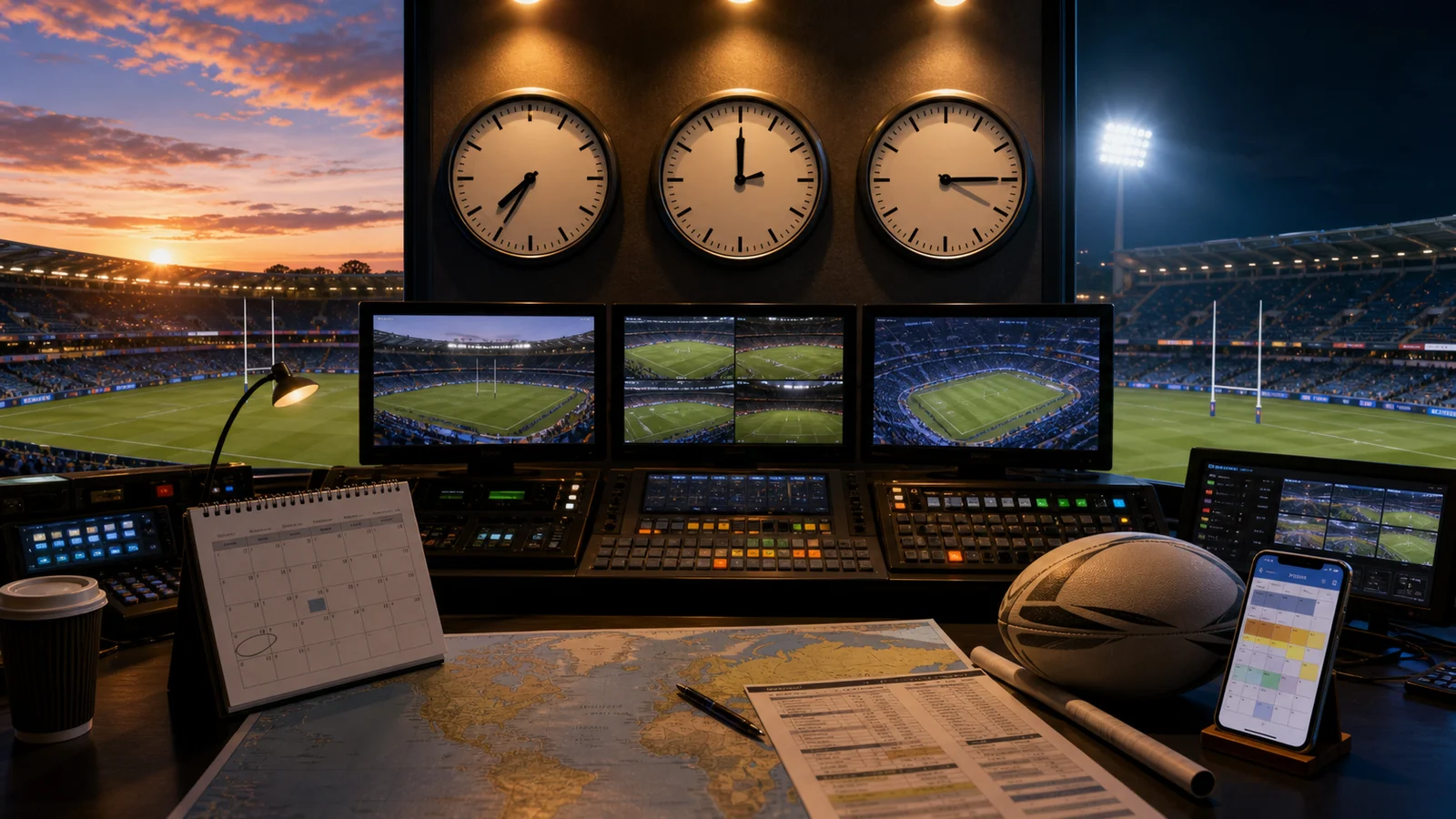
A kick-off happens at one instant, but viewers describe that instant using their local clocks. A match in Perth, Darwin or New Zealand can therefore have a local venue time and a different eastern-Australia broadcast time.
Confusion begins when a screenshot removes the timezone label. A bare time such as 7:30 does not say whether the page means local venue time, AEST, AEDT or the timezone set on the viewer's device.
AEST and AEDT are not interchangeable
AEST is Australian Eastern Standard Time. AEDT is Australian Eastern Daylight Time, used in daylight-saving jurisdictions during the warmer part of the year. The labels are one hour apart.
Tasmania, Victoria and New South Wales change between those systems, while Queensland remains on standard time. That means Hobart and Brisbane can share a clock in winter but differ during daylight saving.
The official PDF shows why local time matters
The NRL's printable 2026 draw includes an eastern-time column and a local-time column. Most Round 21 venues share AEST, so those entries align, but other rounds show the difference clearly.
For example, the official draw lists some Perth and Darwin matches with a local start earlier than the eastern-time listing, while New Zealand fixtures can have a later local clock. The game has not moved; the reference clock has.
Live pages and imported calendars can convert again
A website, app or calendar may use browser or device settings to display the event in the viewer's timezone. That is helpful overseas, but it can make the page disagree with an Australian promotional graphic that uses AEST or local venue time.
Automated search previews can also strip context or cache an older value. Opening the match centre and checking the timezone label is safer than relying on the clock shown in a search result snippet.
A three-step check prevents most mistakes
First identify the match date at the venue. Second read the timezone printed beside the time. Third convert that named zone to your own location for the date of the match, allowing for daylight saving on both sides.
If the conversion places an evening Australian match in your morning, check whether the calendar date also changes. Viewers in the Americas may see the previous date, while some viewers east of Australia may see a later date.
Which source should settle a disagreement
Use the live NRL draw or match centre for the latest official start, then verify the timezone. The printable PDF is useful for understanding the published schedule but may not reflect a late change as quickly as the live page.
Set a calendar reminder only after that check. A good article can explain the conversion, but a static page should never pretend it can outlive an official postponement or schedule update.
Sources and further reading
This article was written for Curiosity Desk. We do not copy other publishers or invent quotes. If a material error is found, we correct it openly.
Read the full standards →One answer should lead to a better question
Bring your curiosity to the group
Curious Minds is our public Facebook community for surprising science, strange history, Australian wildlife and everyday questions. No copied posts, no personal-friend invitations and no link dumping.
- Three self-contained discussion prompts each week
- Sourced answers and honest uncertainty
- Respectful conversation without spam