The danger is in the speed, not the bird's size
A bird strike is any collision between an aircraft and wildlife, but the location of the impact changes the problem. A strike on a wing, nose or windscreen can damage a surface or obscure a pilot's view. A bird entering an operating jet engine is different because the engine is continuously drawing in a very large mass of air. The bird meets a rotating fan at the front, where the relative speed and energy of the collision are far greater than its small size suggests.
The Federal Aviation Administration's Aeronautical Information Manual calls ingestion into turbine and turboprop engines among the most serious wildlife-strike scenarios. That does not mean every ingestion produces the same outcome. Engines are designed and certified with bird-ingestion hazards in mind, and crews have procedures for abnormalities. But the physical reason for the concern is simple: a collision can bend, crack or dislodge parts that are meant to remain precisely balanced while rotating extremely quickly.
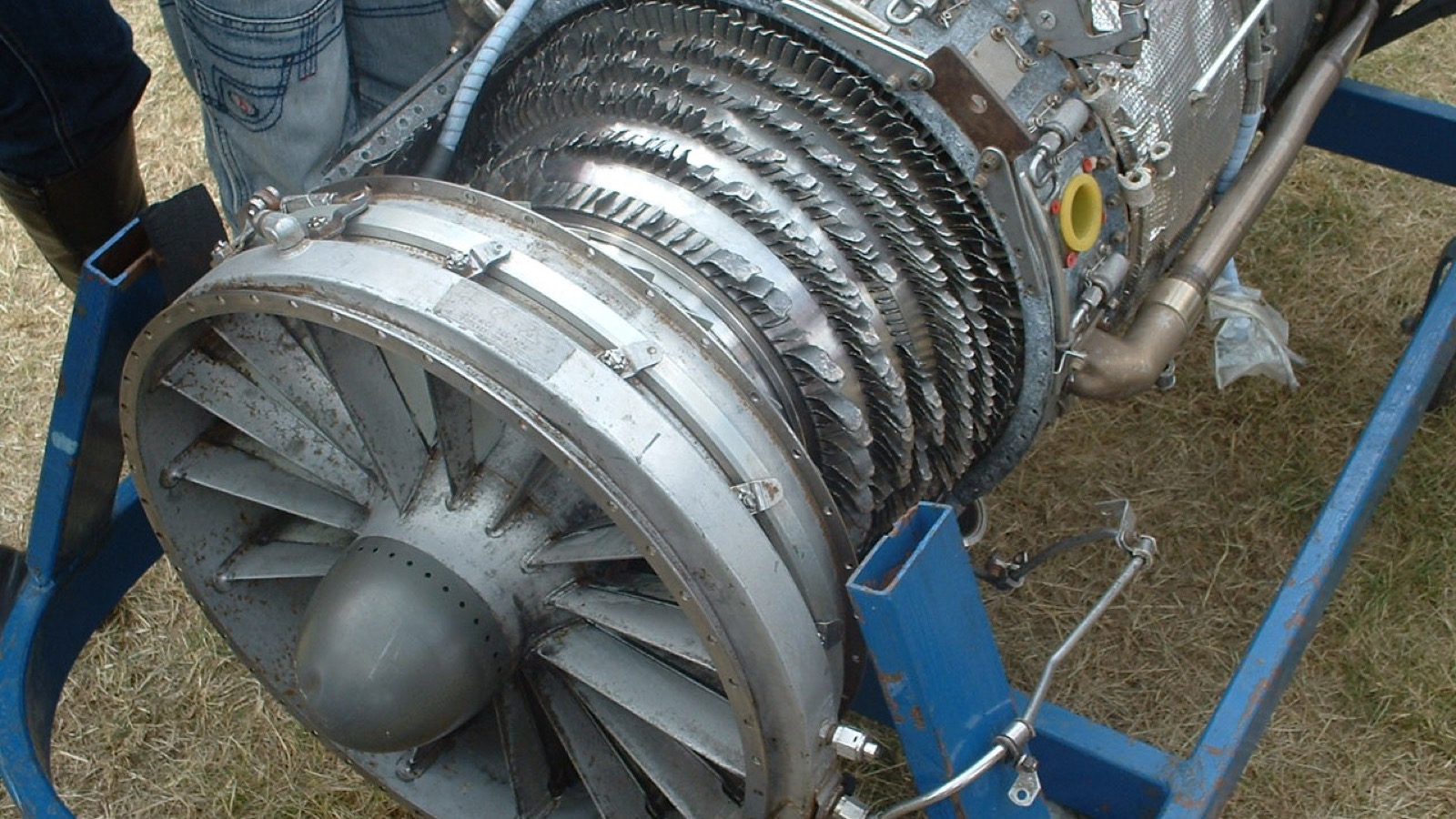
The real photograph above shows a jet engine after a bird strike. It is evidence of damage, not a picture of the current trend or of one standard failure pattern. Modern engines differ, and a strike can involve one bird or a flock, different sizes of birds and different phases of flight. The useful general lesson is narrower: the front of an engine is not an empty tube. It is a machine full of fast-moving, closely spaced aerodynamic parts.
That is why aviation safety treats the phrase 'bird strike' as a classification, not a diagnosis. The report asks which part of the aircraft was struck, whether an engine ingested material and what effect, if any, it had on the flight. Those details distinguish a harmless encounter from one needing an inspection, a shutdown or another response under the operator's procedures. This article explains the mechanism; it is not flight-safety advice for passengers or pilots.
The fan takes the first hit, but the engine is a connected system
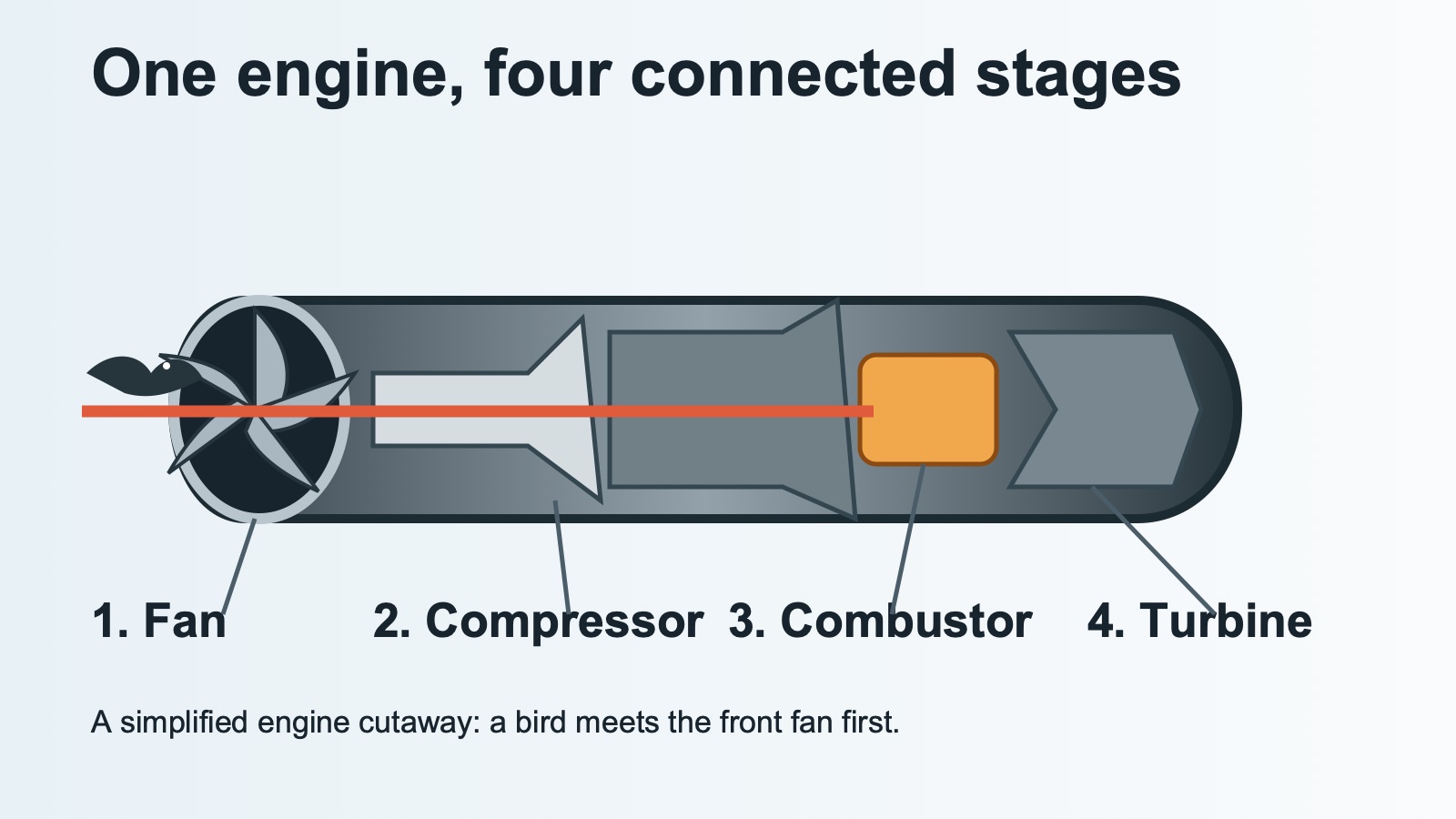
On a typical turbofan, the large front fan accelerates air into the engine. Much of that air flows around the smaller central core to provide thrust; the rest passes through the compressor, combustor and turbine that keep the engine running. A bird entering the inlet is therefore likely to hit the fan first. The fan blades are strong, but they are shaped to move air efficiently and must remain closely balanced with the rest of the rotating assembly.
A damaged blade can change the airflow and the balance of the fan. In a more severe event, material or blade fragments can continue into later stages. The exact path depends on the engine design, the strike and what breaks or remains contained, so it would be misleading to say that every bird travels to the core. The important connection is that an engine's stages are not independent decorations: the fan's airflow feeds the compressor, the compressor supplies the combustor, and the turbine drives the machinery behind it.
That connected design explains why a striking visual of the inlet does not tell the whole story. Maintenance teams need to know what entered the engine, which components were hit and whether the event changed how the engine performed. The FAA's wildlife-strike reporting form explicitly includes engine ingestion and the affected engine position because those facts matter when the event is recorded and analysed.
A useful analogy is a carefully tuned line of bicycle wheels. A small object caught in one wheel can create a wobble that matters because the wheel is spinning and connected to the rest of the machine. A jet engine is vastly more complex and powerful, so the analogy stops there. It only helps show why an impact at a rotating entry point can matter more than the mass of the object alone.
Airports reduce risk before a bird reaches the runway
The best wildlife strike is the one that never happens. Airports cannot remove all birds from the air, but they can reduce the conditions that attract hazardous wildlife near aircraft movements. The FAA's wildlife-hazard programme links prevention to local habitat, land use, detection methods and operational planning. That makes prevention an environmental and information problem as well as an aviation one.
For example, an airfield needs to understand which species use the area, when they are active and what food, water, shelter or nearby activity draws them there. The right response is site-specific. It may involve changing habitat, monitoring wildlife activity or coordinating how an airport manages a known hazard. This is why a headline about a bird strike cannot honestly be answered by a single universal rule or by blaming birds: the risk is produced by the overlap between wildlife behaviour and aircraft operations.
The FAA also maintains a National Wildlife Strike Database. Reported strikes create a record of the species when known, aircraft component, place and circumstances. Over time, that helps show patterns that an individual crew or airport could not see from one event. The FAA's current wildlife page publishes long-run data and guidance, while its reporting circular explains how reports feed the system.
One long-run FAA summary says wings and engines were each the most frequently damaged aircraft components in identified US civil bird strikes from 1990 to 2023, at 25% of damaged components. That statistic is context, not a forecast for the next flight. It reinforces the broader point: reducing wildlife risk requires evidence about recurring conditions, rather than treating every strike as an isolated surprise.
A feather can become useful safety data
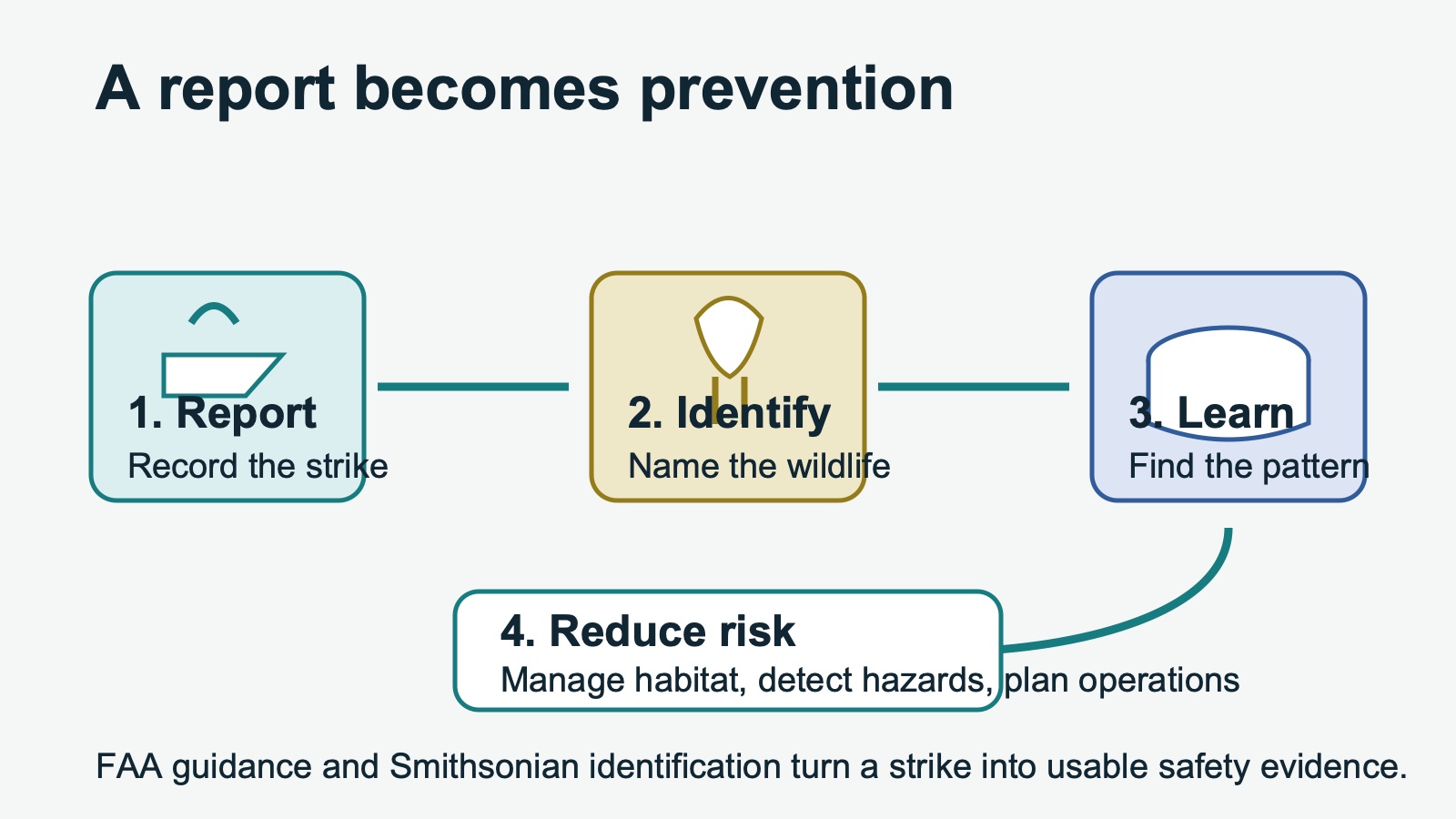
After a strike, identifying the animal can be more useful than it sounds. The Smithsonian Feather Identification Lab, which works with the FAA and other agencies, can identify wildlife from whole feathers, fragments and in some cases tissue containing DNA. A common name such as 'bird' is not enough for prevention if different species have different body mass, flocking behaviour, migration patterns or attraction to airfield habitat.
The identification is paired with the report. The FAA says its reporting system and database are used to understand wildlife-strike risk, and its guidance encourages people with strike information to submit it. That is a quiet but important part of the story behind the trend: the event is not only a moment of damage. It can add to a record that helps airports and engineers focus on the most relevant hazards.
This process also keeps the explanation grounded. It does not require a dramatic claim that all bird strikes are catastrophic, and it does not pretend that a photograph of a damaged engine proves what happened in a current news event. Instead, it shows the chain that makes aviation safety more practical: notice the strike, record the circumstances, identify the wildlife when possible, and use the patterns to reduce the next encounter.
The answer to the original question is therefore more interesting than 'a bird is hard'. The risk comes from a fast aircraft meeting wildlife in the wrong place, especially at a rotating engine inlet. The response is not one magic device. It is a layered system of resilient engineering, reporting, species knowledge and airport management—each step designed to make an uncommon but real hazard less likely and less consequential.
Sources and further reading
- FAA: Wildlife Hazard Mitigation ↗
- FAA Aeronautical Information Manual: Safety of Flight and wildlife strikes ↗
- FAA AC 150/5200-32C: Reporting Wildlife Aircraft Strikes ↗
- FAA: Wildlife-strike frequently asked questions ↗
- FAA and Smithsonian: Feather Identification Lab ↗
- Wikimedia Commons: Jet engine damaged by bird strike ↗
This article was written for Curiosity Desk. We do not copy other publishers or invent quotes. If a material error is found, we correct it openly.
Read the full standards →One answer should lead to a better question
Bring your curiosity to the group
Curious Minds is our public Facebook community for surprising science, strange history, Australian wildlife and everyday questions. No copied posts, no personal-friend invitations and no link dumping.
- Three self-contained discussion prompts each week
- Sourced answers and honest uncertainty
- Respectful conversation without spam