The format in one paragraph
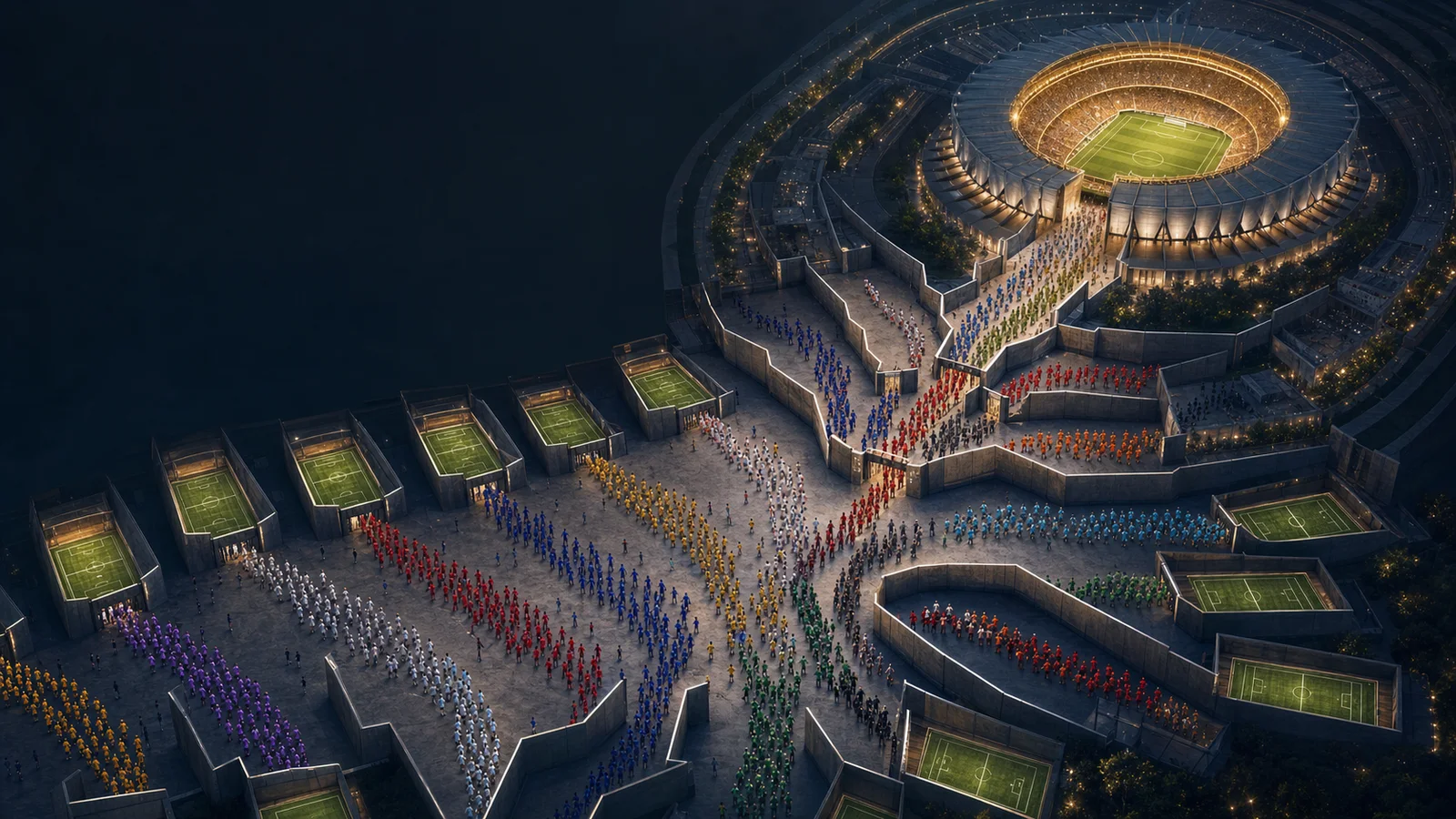
The 2026 World Cup began with 48 teams divided into 12 groups of four. Each team played three group matches. The top two in every group advanced, along with the eight strongest third-place teams.
That produced 32 knockout qualifiers. From there the competition became single elimination through the Round of 32, Round of 16, quarter-finals, semi-finals and final, with a bronze match for the losing semi-finalists.
Why the arithmetic produces 32 qualifiers
The first two positions in each of 12 groups created 24 places. Eight of the 12 third-place teams then joined them. Twenty-four plus eight produced the 32-team bracket.
The other four third-place teams and all 12 fourth-place teams were eliminated. Finishing third therefore became a possible route, not an automatic place in the knockouts.
The group stage still gave every team three matches
FIFA chose 12 groups of four instead of a proposed structure with 16 groups of three. The organisation said its review considered team and fan experience, player welfare and sporting integrity.
Four-team groups preserved the familiar three-match sequence for each side. They also created a final group round in which two matches could be scheduled together, reducing the opportunity for teams to react to a result already known elsewhere in the group.
The Round of 32 changed the champion's workload
A finalist now had to win or survive five knockout matches after the group stage. Under the previous 32-team format, qualifiers began at the Round of 16 and faced four knockout stages on the way to the trophy.
Spain therefore played eight games as champion. The extra knockout round raised the number of tournament matches from 64 at Qatar 2022 to 104 in 2026.
Third-place qualification connected all 12 groups
The top two could be ranked inside their own group. Third-place teams also had to be compared across different groups using points, goal difference, goals scored and further tie-breakers.
That meant a third-place team's fate could remain uncertain after its final match. Results in later groups could move the qualification line even though the team itself was no longer playing.
What changed and what stayed familiar
The unfamiliar parts were the 48-team field, the cross-group third-place table and the Round of 32. The basic group scoring system and the later win-or-go-home knockout logic remained recognisable.
In practice, the structure delivered more participating nations, more matches and a longer maximum route. Understanding those three changes makes the apparently complicated bracket much easier to follow.
Sources and further reading
This article was written for Curiosity Desk. We do not copy other publishers or invent quotes. If a material error is found, we correct it openly.
Read the full standards →One answer should lead to a better question
Bring your curiosity to the group
Curious Minds is our public Facebook community for surprising science, strange history, Australian wildlife and everyday questions. No copied posts, no personal-friend invitations and no link dumping.
- Three self-contained discussion prompts each week
- Sourced answers and honest uncertainty
- Respectful conversation without spam