The simple calculation
Spain played eight matches at the 2026 World Cup because the expanded competition inserted a Round of 32 before the familiar Round of 16. The champion's route became three group matches plus five knockout matches.
Those knockout stages were the Round of 32, Round of 16, quarter-final, semi-final and final. A team reaching the title match under the previous 32-team format played only four knockout games after its group stage.
Spain first had to emerge from Group H
Spain opened with a 0-0 draw against Cabo Verde, beat Saudi Arabia 4-0 and defeated Uruguay 1-0. Those three results put it into the new knockout bracket.
The group stage itself did not become longer for an individual team. Twelve groups of four still gave each team three group matches. The extra work began only for teams that advanced.
The new Round of 32 created match number four
Spain met Austria in the Round of 32 and won 3-0. Under the older format, a group qualifier would have moved directly into a Round of 16 instead.
Adding this stage allowed 32 of the 48 participating teams to enter the knockouts. It also meant a future champion had to survive one more single-match elimination contest.
Four more knockout matches followed
Spain then beat Portugal 1-0 in the Round of 16, Belgium 2-1 in the quarter-final and France 2-0 in the semi-final. Argentina was the eighth and final opponent.
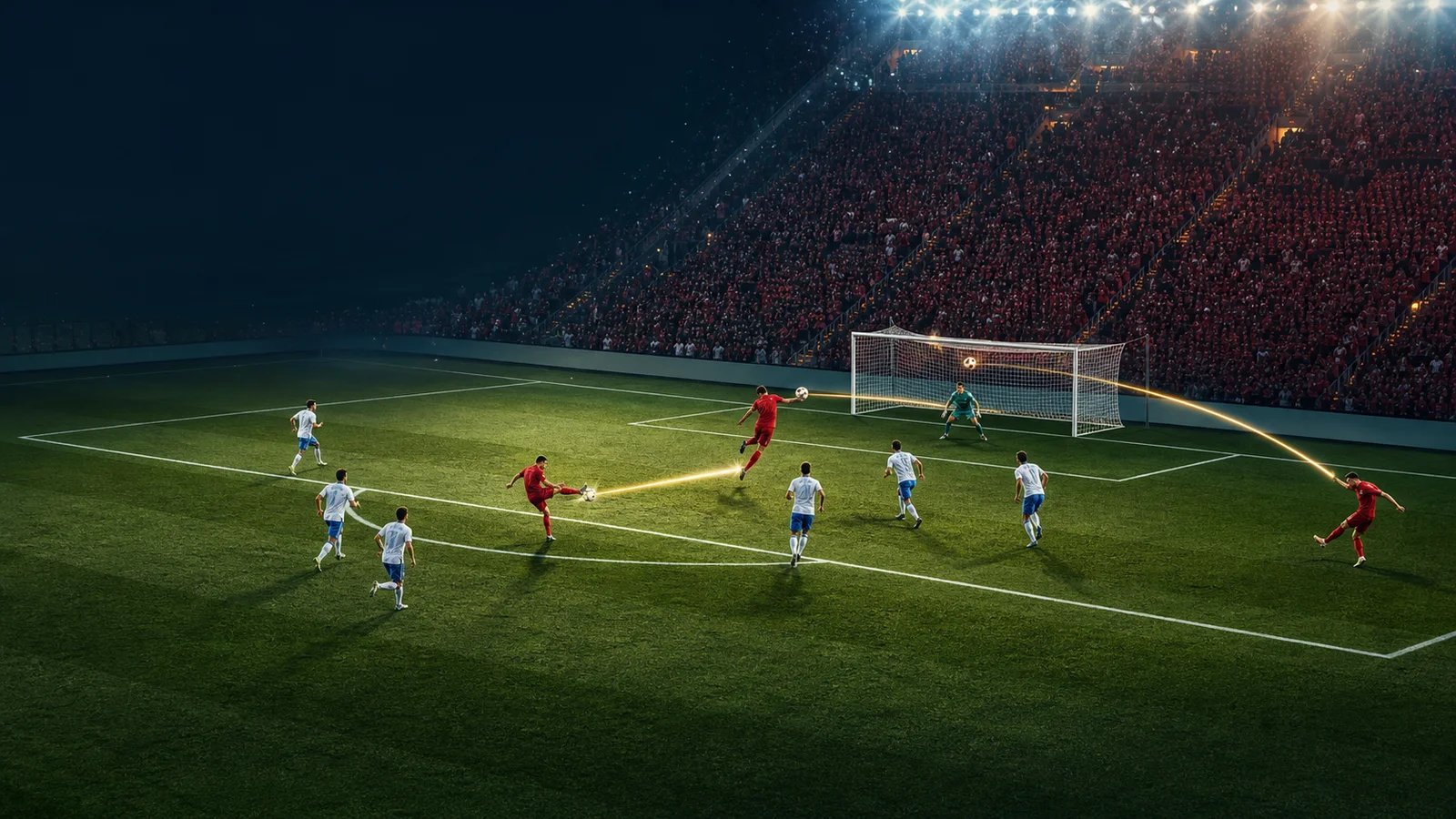
The final remained scoreless through 90 minutes before Ferran Torres struck in the 106th. Extra time made the eighth match longer, but it did not count as a separate ninth fixture.
The tournament grew from 64 to 104 matches
FIFA expanded the field from 32 to 48 teams and the overall schedule from 64 to 104 matches. The increase reflects both the larger group stage and the additional knockout round.
No individual team played all 104 matches, of course. Most teams left earlier. Eight was the maximum path for a finalist and the exact number completed by champion Spain.
Why eight matters beyond trivia
An extra knockout game adds travel, recovery demands and another occasion when one mistake can end a campaign. It also creates more room for rotation and squad depth to influence the champion's route.
Spain's title should therefore be read inside the 2026 format. Comparing its eight-match record directly with seven-match champions from earlier editions requires acknowledging that the competition asked a different question of the finalists.
Sources and further reading
This article was written for Curiosity Desk. We do not copy other publishers or invent quotes. If a material error is found, we correct it openly.
Read the full standards →One answer should lead to a better question
Bring your curiosity to the group
Curious Minds is our public Facebook community for surprising science, strange history, Australian wildlife and everyday questions. No copied posts, no personal-friend invitations and no link dumping.
- Three self-contained discussion prompts each week
- Sourced answers and honest uncertainty
- Respectful conversation without spam