The tactical substitute has been removed
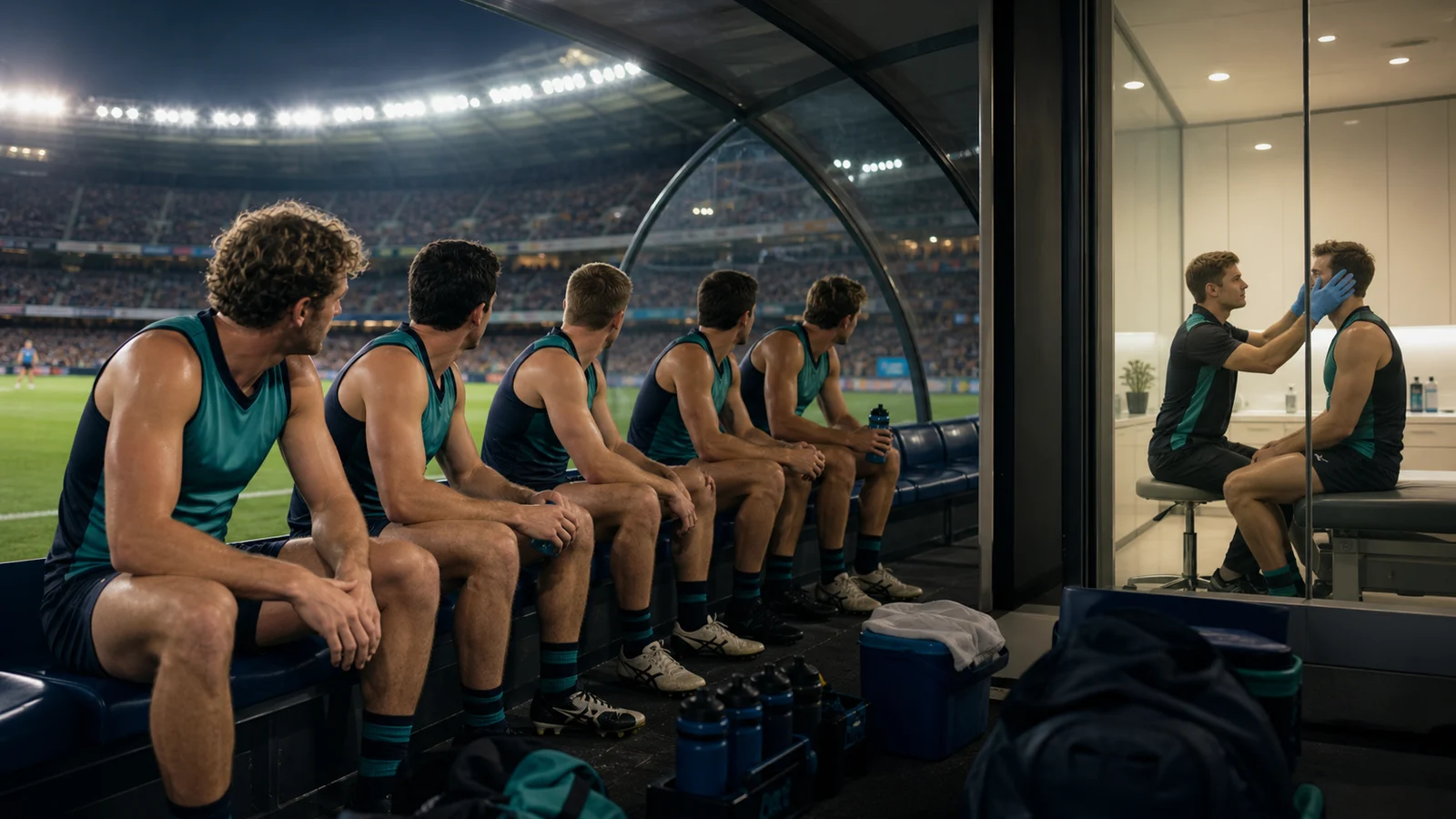
For the 2026 AFL season, clubs name 23 players on the official team sheet: 18 starters and five interchange players. The previous tactical substitute is no longer a separate role.
All five bench players are available within the normal rotation. A coach can hold one back as an unofficial impact option, but activating that player does not permanently remove a teammate in the way the old substitute mechanism did.
Why people still call someone a pseudo substitute
AFL reporting before the season described clubs considering a fifth player as a pseudo substitute. That phrase describes a coaching tactic, not a category written into the rules.
A club may delay using one player and rotate the other four more heavily. If injuries or the match pattern change, the fifth player remains a standard member of the bench rather than a one-time replacement token.
A head assessment is not the same as a concussion diagnosis
The 2026 Regulations set a procedure for a detailed off-field head injury assessment. Once the assessment is notified, the player cannot return to the playing surface for at least 15 minutes, including breaks.
That period gives the club doctor time to assess the player. It should not be described as a promise that the player will return after 15 minutes; the outcome can keep the player out and lead to concussion management.
An extended medical assessment has a different clock
The Regulations also define an extended medical assessment with a 20-minute period excluding breaks. Stretcher and extended-assessment procedures have their own return restrictions and interchange treatment.
The existence of both 15-minute and 20-minute rules explains why a single social post can be misleading. The correct duration depends on the medical process recorded for that player, not merely on the fact that the player left the field.
A diagnosed concussion starts a longer process
The AFL's elite concussion guidance maintains a minimum 12-day return-to-play protocol for AFL and AFLW players. It is a minimum, not an automatic clearance date, and the player must progress safely through the medical program.
Community football uses a different minimum: the earliest return is the 21st day after the incident, subject to progression and medical clearance. Readers should not apply the elite 12-day setting to a local player.
The clean way to remember the system
Selection uses 18 on the field plus five interchange players. Match-day medical assessment can require 15 or 20 minutes away depending on the procedure. A concussion diagnosis then moves the player into a longer, individual medical pathway.
Those rules serve different purposes and should be reported separately. A bench change concerns team composition, an assessment period concerns immediate evaluation, and return to play concerns recovery after concussion.
Sources and further reading
This article was written for Curiosity Desk. We do not copy other publishers or invent quotes. If a material error is found, we correct it openly.
Read the full standards →One answer should lead to a better question
Bring your curiosity to the group
Curious Minds is our public Facebook community for surprising science, strange history, Australian wildlife and everyday questions. No copied posts, no personal-friend invitations and no link dumping.
- Three self-contained discussion prompts each week
- Sourced answers and honest uncertainty
- Respectful conversation without spam