One point still changes the winner
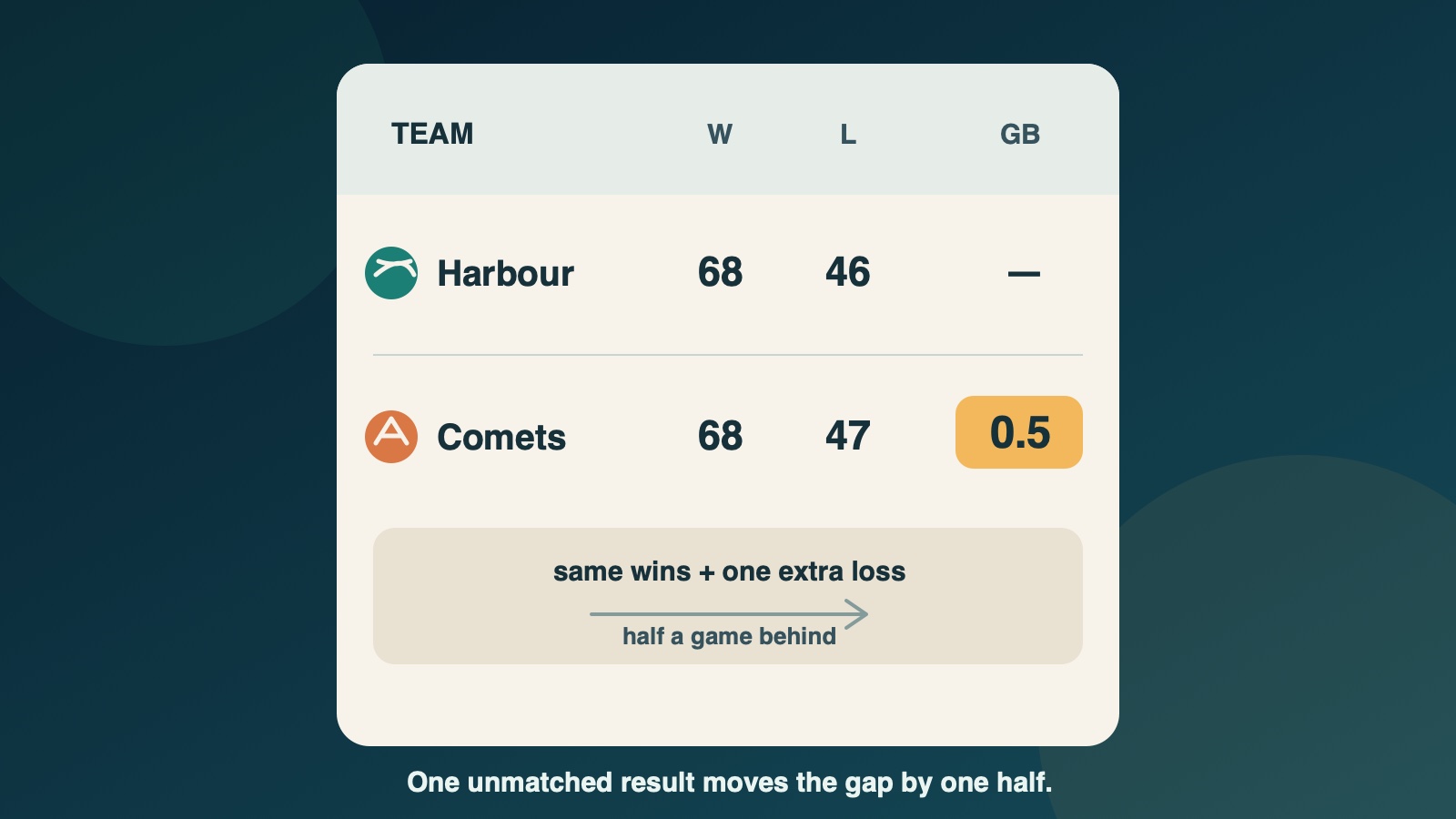
The Laws of Australian Football award six points for a goal and one for a behind, but the winner is simply the team with the greater total. The rules do not award the match to the team with more goals.
That makes every behind part of the result. If scores are level, one behind creates a one-point lead. If a team trails by six, a goal only draws the totals while a goal plus a behind moves it ahead.
A behind covers several different outcomes
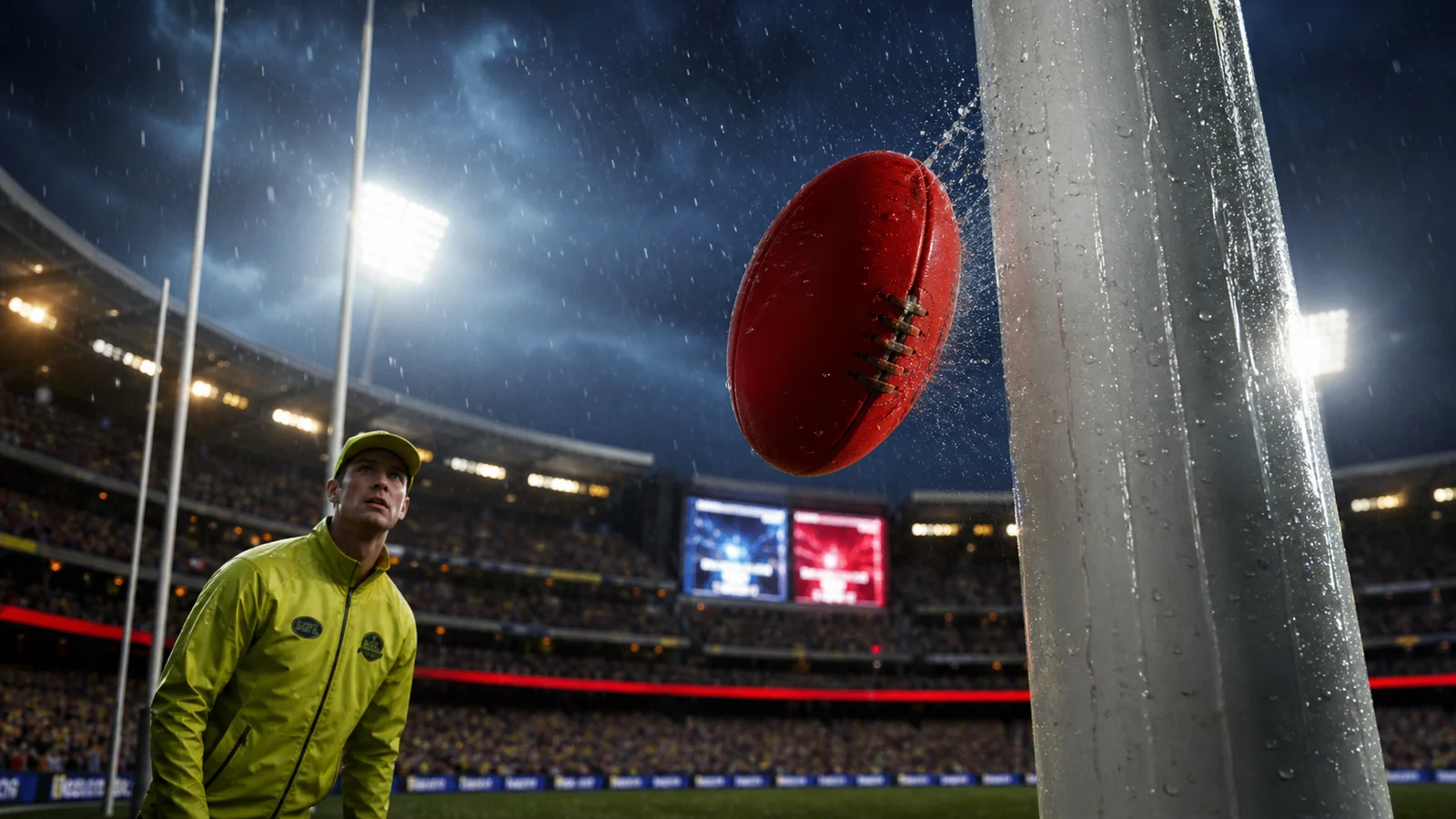
The obvious behind crosses the line between a goal post and a behind post. A ball that hits or passes over a goal post is also a behind rather than a goal.
A kick touched before it crosses the central goal line receives one point, and several other ways of carrying the ball over the line can do the same. The single scoreboard category therefore captures more than a simple inaccurate kick.
The minor score rewards a near miss
Unlike sports in which an attempt just outside the target scores nothing, Australian football gives one point for passing through the wider scoring area. That lets sustained attacking pressure accumulate on the scoreboard.
It also creates a trade-off. A team producing many attempts may build points through behinds, but inaccurate conversion can leave it vulnerable to an opponent scoring fewer chances as six-point goals.
Late-game arithmetic changes decisions
When the margin is one point, a behind can draw the match and a goal can win it. When the margin is five, a behind may still be tactically important because it turns the opponent's next goal from a lead into a level score.
Players still aim for goals, but the current margin influences risk. A rushed attempt that secures one point can be more valuable than holding the ball for a perfect shot that never arrives.
Defenders cannot concede every behind freely
A defending team can take the ball across its own scoring line in circumstances that record a behind. However, Law 18.11 provides a free kick when an umpire judges that a defender deliberately rushed a behind outside the permitted situations.
That restriction prevents defenders from automatically trading one point for an easy restart whenever pressure appears. The precise decision depends on possession, pressure and the conditions stated in the law.
Accuracy and value are different questions
A high behind count may show missed goal opportunities, difficult shots, touched balls or defensive pressure. It cannot be interpreted from the scoreboard alone as proof that a team played better or worse.
What the scoreboard does prove is simpler: every behind adds one to the total. That single point can decide the winner, alter the next required score and make two identical goal counts produce different results.
Sources and further reading
This article was written for Curiosity Desk. We do not copy other publishers or invent quotes. If a material error is found, we correct it openly.
Read the full standards →One answer should lead to a better question
Bring your curiosity to the group
Curious Minds is our public Facebook community for surprising science, strange history, Australian wildlife and everyday questions. No copied posts, no personal-friend invitations and no link dumping.
- Three self-contained discussion prompts each week
- Sourced answers and honest uncertainty
- Respectful conversation without spam