What is actually confirmed
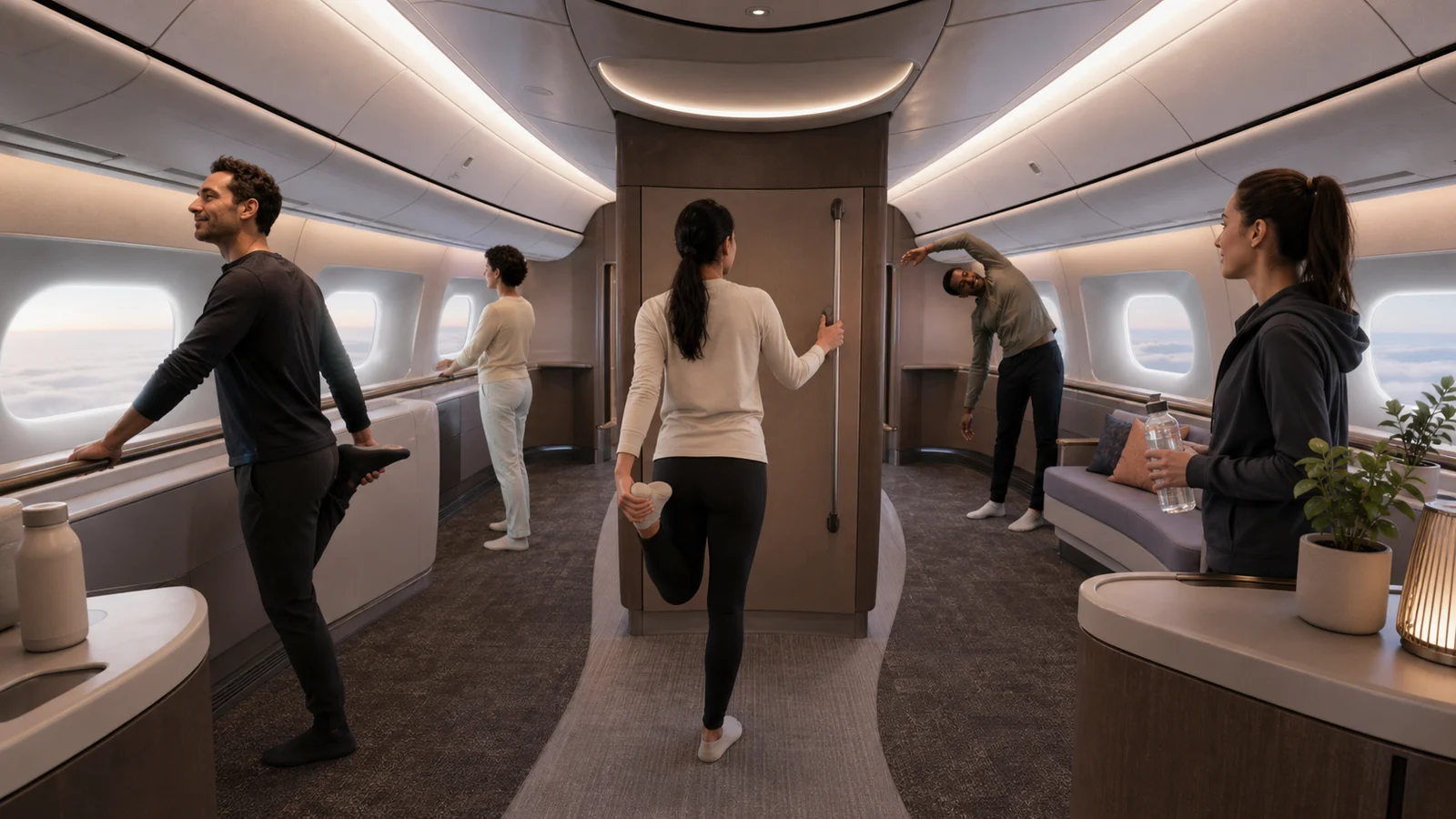
Inside the Project Sunrise wellbeing zone
- Location
- Between Premium Economy and Economy
- Intended use
- Movement, stretching and hydration
- Physical features
- Sculpted wall panels and integrated stretch handles
- Guidance
- On-screen movement suggestions
- Refreshment feature
- Hydration station with premium refreshments
- Wider cabin system
- 238 seats and 12 planned lighting scenes
- Planned debut
- Sydney to London service from October 2027
The feature supports movement and hydration. Qantas does not present it as a medical treatment or guarantee that passengers will avoid jet lag.
It is a dedicated place outside the seat
Qantas calls the feature a purpose-built onboard wellbeing zone. It gives passengers a defined area to leave their seat rather than relying only on the aisle or galley during a journey lasting up to 22 hours.
The airline identifies three intended activities: movement, stretching and hydration. Airbus also describes the zone as a place where passengers can stretch during long flights.
The feature uses valuable cabin area
Space assigned to the zone cannot also hold a normal row of seats. That choice helps explain the aircraft's low-density 238-seat configuration alongside large premium cabins and other service areas.
It does not mean every passenger will use the area in the same way or at the same time. Cabin crew procedures and conditions during the flight will still govern when moving around is appropriate.
Its location and fittings are now described
Qantas places the wellbeing zone between Premium Economy and Economy. The current aircraft page shows sculpted wall panels with integrated handles that passengers can use while following guided movement content on a nearby screen.
The airline also describes a hydration station with filtered water and premium refreshments. These details turn the idea from an empty standing area into a defined part of the cabin, although final designs remain subject to approvals and certification.
It belongs to a wider cabin programme
Qantas says the cabin work drew on research with the University of Sydney's Charles Perkins Centre. The fact sheet also lists 12 lighting scenes intended to help passengers adjust to destination time zones.
Lighting, food, seat design and movement space are separate interventions. A headline should not credit the wellbeing zone alone with every outcome claimed for the overall cabin programme.
The lighting programme is not inside the zone
Qantas lists 12 cabin-lighting scenes with names including Sunrise, Sunset and Awake. Those scenes operate across the cabin and are intended to coordinate with meal and rest periods during the journey.
They should not be reported as another piece of exercise equipment or as proof that the zone prevents jet lag. Lighting, hydration, movement and seating are connected parts of the passenger design, but each has a different function.
Access will still depend on safe cabin conditions
The published material does not promise that passengers can use the area whenever they choose. Normal crew instructions, turbulence and the illuminated seatbelt sign can require travellers to remain seated even on a very long flight.
The zone is also shared, so the experience will depend on how Qantas manages access and how many passengers want to use it. Those operating details will be easier to assess after scheduled service begins.
What it cannot guarantee
The official material frames the zone as supporting comfort and wellbeing. It does not guarantee that a traveller will avoid jet lag, sleep normally or eliminate the health effects associated with very long periods of travel.
Personal health advice depends on the traveller and belongs with an appropriate clinician. The article's role is to describe the confirmed feature and the airline's stated purpose without presenting marketing language as treatment evidence.
What passengers can verify after launch
Once the aircraft enters service, passengers will be able to compare the promised hardware with the real cabin: the location, handles, movement screen, water access and space available when other people are using it.
Independent experience will also show how often the area is accessible, whether it becomes crowded and how it fits around meal and rest periods. Until then, the responsible description is based on the published design rather than imagined passenger results.
The simplest accurate description
The wellbeing zone is a small shared cabin destination for movement, stretching and hydration. It is unusual because Qantas has designed floor area specifically around those activities on a commercial airliner.
Its real value will be clearer once passengers use it in service from the planned October 2027 launch. Until then, the verified facts are its purpose, placement in the 238-seat layout and connection to the broader cabin design.
Sources and further reading
This article was written for Curiosity Desk. We do not copy other publishers or invent quotes. If a material error is found, we correct it openly.
Read the full standards →One answer should lead to a better question
Bring your curiosity to the group
Curious Minds is our public Facebook community for surprising science, strange history, Australian wildlife and everyday questions. No copied posts, no personal-friend invitations and no link dumping.
- Three self-contained discussion prompts each week
- Sourced answers and honest uncertainty
- Respectful conversation without spam