No single magic component
The 22-hour range system
- Aircraft
- Airbus A350-1000ULR
- Published capability
- Up to 22 hours and almost 10,000 nautical miles
- Additional tank
- 20,000-litre rear centre tank
- Range contribution
- About 1,000 nautical miles beyond the baseline A350-1000
- Engines
- Two Rolls-Royce Trent XWB-97 engines
- Qantas layout
- 238 seats
- Certification campaign
- About 80 planned flight hours
Up to 22 hours describes aircraft capability. The time and fuel for an operating flight will depend on its route, conditions, payload and required reserves.
Range is a whole-aircraft calculation
An aircraft cannot gain extreme range by adding fuel alone. The extra fuel adds weight, the structure must carry it, the fuel system must manage it and the aircraft must retain reserves for diversions.
Airbus describes flights of almost 10,000 nautical miles and up to 22 hours. Those are capability figures for the mission, while an actual flight time will vary with route, winds, weather and air traffic.
The rear centre tank extends the mission
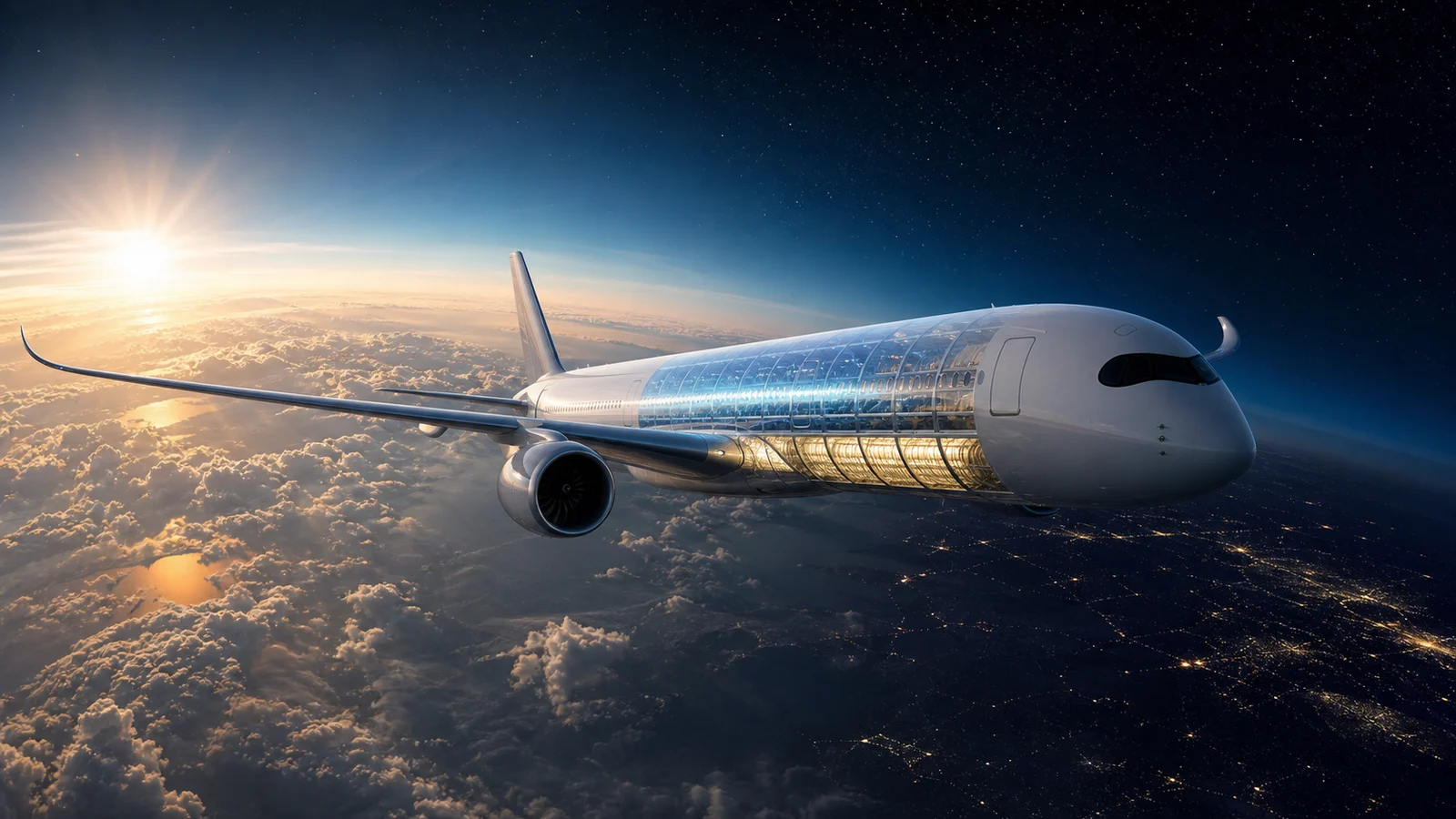
The A350-1000ULR adds a 20,000-litre rear centre tank integrated into the structure. Airbus says it extends the baseline A350-1000 range by about 1,000 nautical miles while retaining provision for end-of-flight diversions.
A modified Fuel Quantity Management System controls how fuel moves among tanks. Certification testing checks the pumps, gauges, pressure, transfer sequence, temperature and oxygen concentration throughout the flight envelope.
More fuel requires a higher certified weight
The ULR benefits from an increase in maximum take-off weight. That permits the aircraft to begin the mission carrying the necessary fuel, passengers, baggage and operating supplies within its approved limits.
It does not mean every flight departs at the maximum. Dispatch planning calculates the fuel and payload required for the actual route and conditions under regulated safety margins.
Efficiency preserves the fuel over time
Two Rolls-Royce Trent XWB-97 engines power the aircraft. The A350 platform's aerodynamics and materials reduce the fuel needed for a given mission compared with less efficient designs, making the extra tank more useful.
As fuel burns, the aircraft becomes lighter. Flight planning can adjust altitude and speed as conditions change, but the official sources do not promise one universal profile for every London or New York service.
The cabin is part of the mission design
Qantas selected 238 seats, fewer than a typical high-capacity layout, with more than 40 percent in premium cabins. Passenger count, cabin fittings, cargo and supplies all contribute to operating weight.
The result is not one magic component. It is a certified combination of fuel capacity, structural weight, propulsion, aerodynamics, payload planning and operational reserves that can support a mission lasting up to 22 hours.
Up to 22 hours is not a fixed timetable
Aircraft capability, scheduled block time and time actually spent in the air are three different measurements. Winds, weather avoidance, air traffic routing, runway use and the direction of travel can all change a particular journey.
A route advertised as a Project Sunrise service therefore will not automatically take exactly 22 hours. The phrase describes the demanding end of the mission the aircraft is being designed to support, not a promise that every flight will remain airborne for that duration.
Reserve and diversion fuel still apply
Airbus specifically describes the extra range while retaining provision for a diversion near the destination. The new rear tank does not remove the requirement to plan for contingencies or allow the aircraft to arrive with no regulated reserve.
Dispatch planners must consider the destination, possible alternate airports, weather, routing and the payload carried that day. The fuel loaded is an operational calculation within approved limits, not simply a decision to fill every tank to its maximum.
A lighter galley cooler helps at the margins
The ULR certification work also includes a New Generation Air Chiller for galley cooling. Airbus says the system is around 300 kilograms lighter than the earlier equipment and is intended to become standard on future A350 aircraft.
That saving is useful because every kilogram carried for the whole journey consumes fuel. It is still only one small contribution beside the 20,000-litre tank, higher certified take-off weight, efficient airframe, engines and carefully selected payload.
ULR describes a certified variant, not every A350-1000
The Project Sunrise aircraft requires certification for its additional tank, modified fuel management and other mission changes. Those features distinguish the A350-1000ULR from the baseline aircraft rather than turning every A350-1000 into a 22-hour configuration.
Airbus separately describes Qantas's order for 12 ULR aircraft and another 12 standard A350-1000s. Comparing their advertised missions requires checking the actual variant and airline layout, not relying on the shared A350 name.
Sources and further reading
This article was written for Curiosity Desk. We do not copy other publishers or invent quotes. If a material error is found, we correct it openly.
Read the full standards →One answer should lead to a better question
Bring your curiosity to the group
Curious Minds is our public Facebook community for surprising science, strange history, Australian wildlife and everyday questions. No copied posts, no personal-friend invitations and no link dumping.
- Three self-contained discussion prompts each week
- Sourced answers and honest uncertainty
- Respectful conversation without spam