A reputation built in the dark
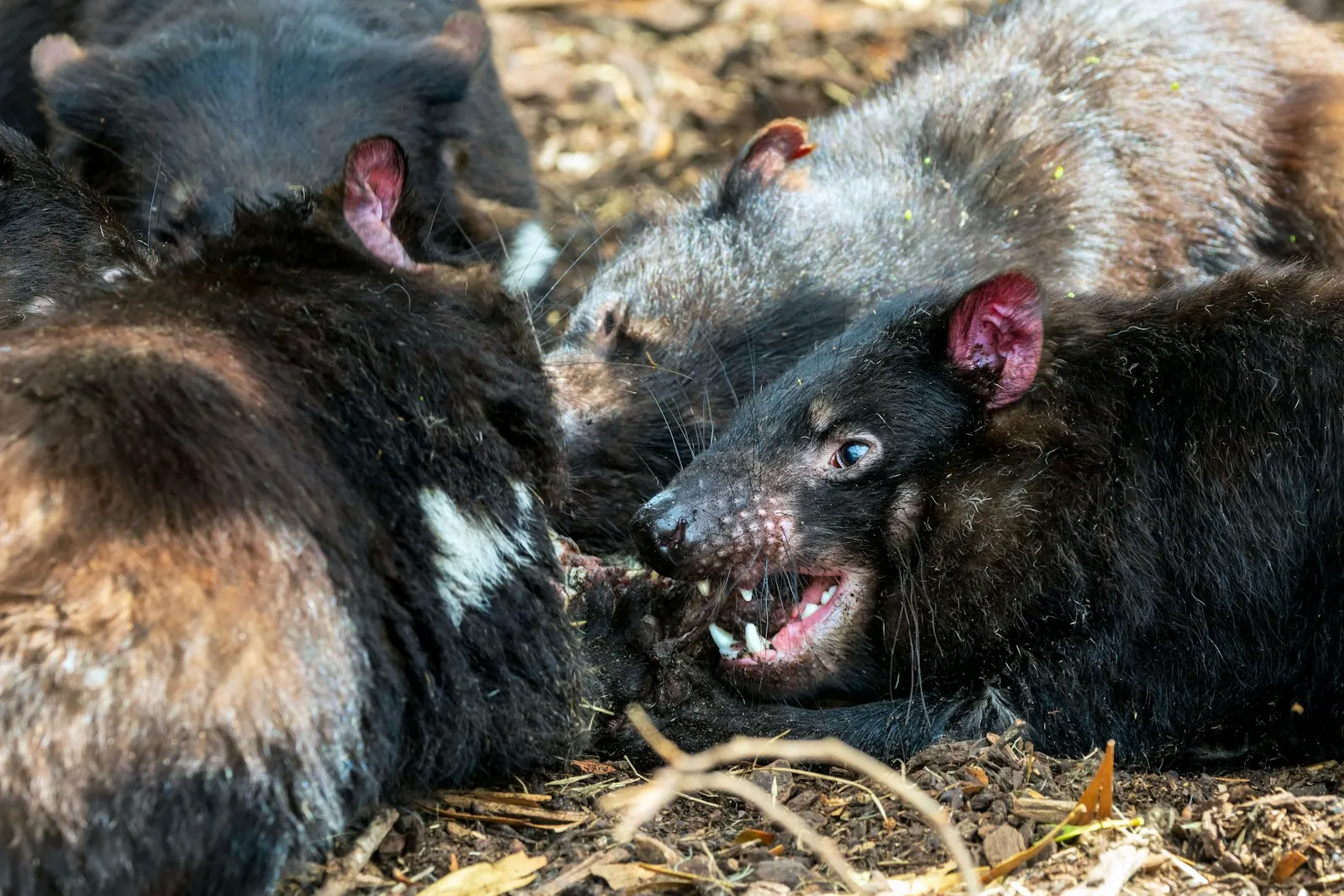
European settlers encountered a stocky black marsupial after sunset and heard screeches, growls and harsh cough-like calls coming from the bush. Add a wide, tooth-filled gape and the name 'devil' becomes understandable as a frightened first impression, even if it is not a fair description of the animal.
Tasmania's Parks and Wildlife Service calls the devil the world's largest surviving carnivorous marsupial. It is mainly nocturnal, sheltering during the day and travelling at night. A wild devil generally has far more reason to avoid a person than to approach one.
What the scream is doing
Devils are often most vocal when several animals gather at a carcass. The noise, posture and open mouth help them negotiate access to food without every disagreement becoming a serious fight. A dramatic display can be a warning that creates distance, not proof that an attack is underway.
That rowdy communal feeding helped build the legend. Devils are capable hunters, but they are also notable scavengers and can consume skin, organs and bone. By removing carrion they recycle nutrients and may reduce material available to introduced scavengers. Their ecological role is less theatrical and more useful than the old name suggests.
A survivor isolated in Tasmania
Fossils show that devils once lived on mainland Australia. The Tasmanian Government says they disappeared there roughly 3,000 years ago, while the population separated by Bass Strait survived. After European settlement, devils endured bounties, trapping and poisoning before receiving legal protection.
They occupy a range of Tasmanian habitats, including coastal heath and dry or mixed forest. At night they may travel considerable distances to find food. For many people the most likely encounter is sadly a dark shape near a road, which is why slowing down between dusk and dawn is a practical conservation action.
The cancer that behaves like an infection
Devil facial tumour disease was first recorded in 1996. It is not a virus that causes each animal to grow a new cancer. Living cancer cells themselves pass between devils, commonly through biting during mating and fighting, and the recipient's immune system does not reject them in the usual way.
Tumours around the mouth and face can interfere with eating and spread through the body. The Tasmanian Government reports declines of up to about 80 per cent in long-affected populations. A second transmissible devil cancer was identified later, which makes continued monitoring especially important.
Why the story is not only decline
The Save the Tasmanian Devil Program combines monitoring, research and insurance populations. Disease-free, genetically diverse animals are managed across institutions, while field teams track how wild populations and the tumours change. Devils have persisted in places where early models raised fears of local disappearance.
Visitors can help without getting close: never feed a devil, secure rubbish, obey wildlife-area rules and report sick or injured animals through the appropriate Tasmanian service. The scream that created a monster in colonial imagination belongs to a complex native scavenger whose survival now depends partly on careful science.
Sources and further reading
This article was written for Curiosity Desk. We do not copy other publishers or invent quotes. If a material error is found, we correct it openly.
Read the full standards →One answer should lead to a better question
Bring your curiosity to the group
Curious Minds is our public Facebook community for surprising science, strange history, Australian wildlife and everyday questions. No copied posts, no personal-friend invitations and no link dumping.
- Three self-contained discussion prompts each week
- Sourced answers and honest uncertainty
- Respectful conversation without spam