The egg does not cancel the mammal
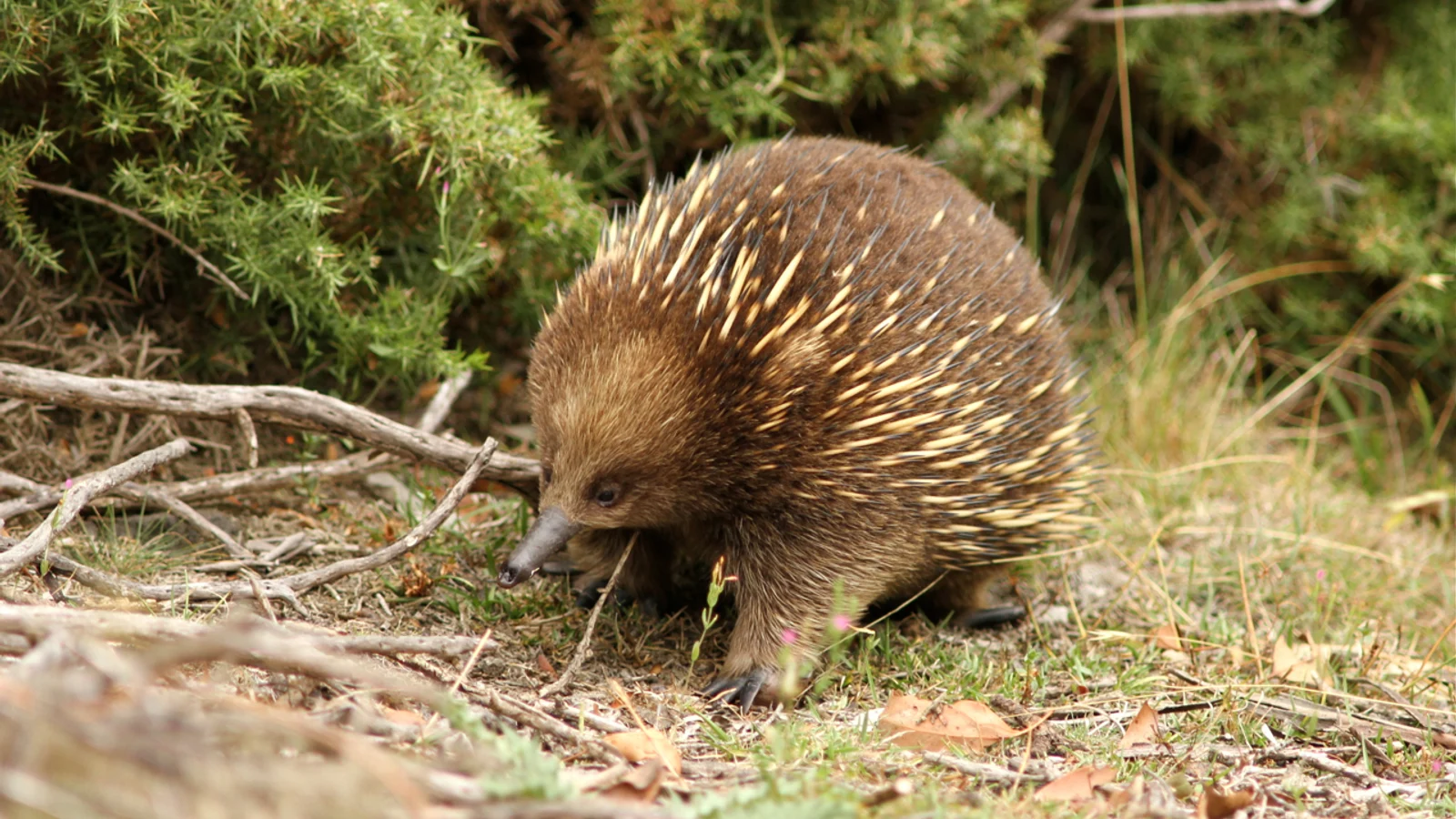
A short-beaked echidna lays one small, soft-shelled egg at a time. The female develops a temporary fold of skin on her abdomen and carries the egg there. After about ten days of incubation, a blind, hairless hatchling emerges. It is tiny and far less developed than a newborn cat, calf or human baby.
Egg laying feels incompatible with the word mammal only because almost every mammal people meet gives birth to live young. Mammals are united by a collection of inherited features, especially milk production and hair. The living monotremes, echidnas and the platypus, show that pregnancy and live birth are not requirements for belonging to the group.
A puggle begins life before it looks ready
The newly hatched echidna is often called a puggle. Its front limbs are developed enough to help it move toward the milk area, while the rest of its body remains at an early stage. The Australian Museum reports that the young stays in the temporary pouch for roughly two or three months as it grows.
Spines eventually make the arrangement impractical. The mother then places the young in a nursery burrow and returns to feed it. Lactation continues for months after the egg's brief incubation. Echidna reproduction therefore shifts most early growth out of an egg and into a long period of parental nourishment.
Milk arrives without a nipple
Female echidnas do not have nipples. Mammary glands release milk through many pores on specialised patches of skin, and the puggle takes milk from the surface and surrounding hairs. The delivery system looks unfamiliar, but the substance and its job are unmistakably mammalian.
Milk is more than a calorie supply for such an undeveloped hatchling. A review of monotreme and marsupial milk describes how its composition changes during development. Researchers have also identified monotreme milk proteins with antimicrobial activity, an important line of study because the young animal begins life with an immature immune system in a pouch and burrow exposed to microbes.
Monotreme does not mean half reptile
Echidnas retain egg laying from a deep branch of mammalian history, but calling them primitive can suggest that evolution stopped working on them. A short-beaked echidna is a modern specialist with powerful digging limbs, protective spines, a long sticky tongue and sensory adaptations that suit a diet of ants and termites across habitats ranging from forest to arid country.
It is also misleading to call the animal a missing link. Living species are not unfinished steps waiting to become something else. Echidnas, platypuses, marsupials and placental mammals share ancestors, then followed separate evolutionary paths. The unusual combination survives because it works, not because the animal is trapped between categories.
The real surprise is where development happens
A chicken embryo receives stored nutrients inside an egg until hatching. A placental mammal supports much of early development inside the uterus. An echidna uses a short gestation and incubation, followed by extended lactation. Each strategy moves the work of development to a different place and time.
That is why the headline is more than an Australian oddity. The egg reveals one part of mammalian history, while the milk reveals the feature that still connects every living mammal. Follow the young echidna from egg to pouch to burrow and the apparent contradiction becomes a coherent reproductive system.
Sources and further reading
This article was written for Curiosity Desk. We do not copy other publishers or invent quotes. If a material error is found, we correct it openly.
Read the full standards →One answer should lead to a better question
Bring your curiosity to the group
Curious Minds is our public Facebook community for surprising science, strange history, Australian wildlife and everyday questions. No copied posts, no personal-friend invitations and no link dumping.
- Three self-contained discussion prompts each week
- Sourced answers and honest uncertainty
- Respectful conversation without spam