Yes, the cubes are real
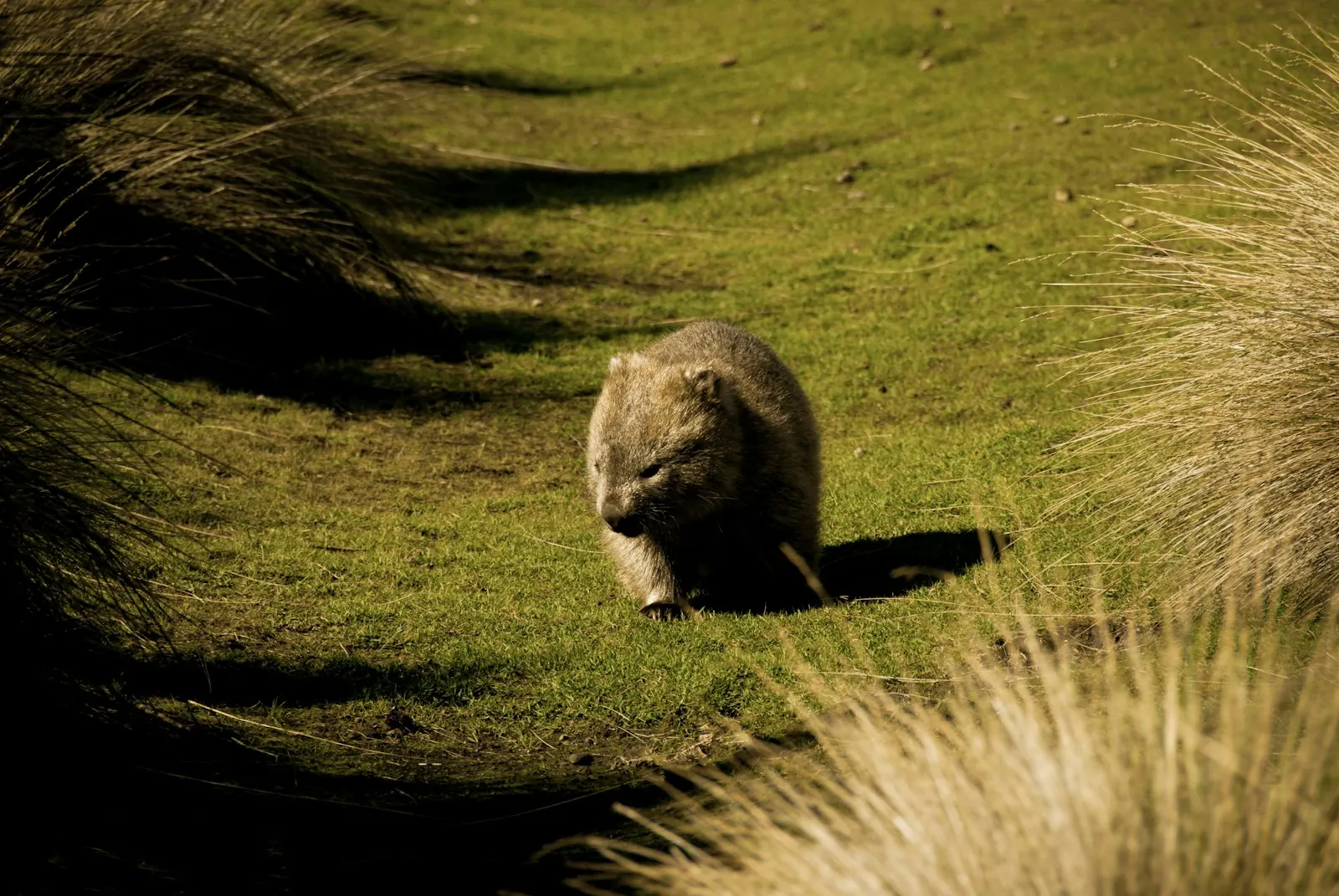
Bare-nosed wombats produce droppings with recognisable flat faces, rounded edges and corners. That is unusual because soft biological tubes normally make rounded shapes. The answer is not a square opening at the end of the animal: dissections show that the shape has already formed before the droppings leave the body.
A 2021 study in the journal Soft Matter combined dissections, tissue measurements and a mathematical model. The researchers reported that the cubes form within the final 17 per cent of the intestine. Their aim was not simply to catalogue an odd animal fact, but to explain how a soft tube can repeatedly create a stable geometric object.
The intestine does not stretch evenly
The team found regions around the intestinal wall that differed in thickness and stiffness. Some regions were about twice as thick and four times as stiff as others. As muscular contractions move material forward, those regions do not deform at the same speed or by the same amount.
In the researchers' model, faster contraction in the stiffer regions and slower movement through the softer regions produced flatter sides and corners. Repeated cycles shape the material gradually while water is being removed. The result is closer to moulding than cutting: no hidden blade or square sphincter is involved.
Why the material can hold a shape
A corner would disappear if the material behaved like a thin liquid. Wombat digestion is slow and efficient at drawing out moisture, leaving firm material that can be deformed yet still retain the new shape. That combination makes the intestinal differences visible in the final dropping.
The study is a useful reminder that anatomy and material physics work together. The tissue supplies alternating forces, while the contents must be dry and cohesive enough to preserve the result. Researchers have suggested that the same principles could inspire new ways of shaping soft materials, although that is a possible application rather than a technology already in use.
Do the cubes have a purpose?
Wombats place droppings on rocks, logs and other noticeable locations, and scent marking is part of their communication. A cube is less likely than a round pellet to roll away from a raised surface. That makes the familiar explanation plausible, but it should be described as a hypothesis rather than a proven reason that cube-making evolved.
The mechanical evidence is much stronger than the evolutionary story. Scientists can measure the stiffness of the intestine and reproduce aspects of the shaping process in a model. Proving why natural selection favoured the result is harder because behaviour, habitat and ancestry all have to be considered.
What the clue tells you in the bush
Finding dark blocks on an Australian trail can reveal that a wombat has passed through even when the animal is resting underground. The droppings may occur in groups on prominent objects. They are a sign to observe, not a souvenir to handle.
Keep your distance from wild wombats, avoid blocking burrow entrances and never feed them. The delightful headline is that wombats make cubes. The more interesting answer is that a flexible intestine, working through repeated contractions and uneven stiffness, can manufacture geometry without any hard mould at all.
Sources and further reading
This article was written for Curiosity Desk. We do not copy other publishers or invent quotes. If a material error is found, we correct it openly.
Read the full standards →One answer should lead to a better question
Bring your curiosity to the group
Curious Minds is our public Facebook community for surprising science, strange history, Australian wildlife and everyday questions. No copied posts, no personal-friend invitations and no link dumping.
- Three self-contained discussion prompts each week
- Sourced answers and honest uncertainty
- Respectful conversation without spam