Safety quick answer
Bleach and ammonia: what to know first
- Reaction
- Chloramine vapours can form
- First action
- Leave the area for fresh air
- Never
- Add another chemical to neutralise it
- Australia
- Poisons Information Centre: 13 11 26
Call Triple Zero for severe breathing trouble, collapse or another medical emergency.
Does bleach contain ammonia?
No. A standard household chlorine bleach is normally a sodium hypochlorite product, while household ammonia is a different cleaner. The danger begins when the products, or residues left by them, meet.
Ammonia may appear in a clearly labelled ammonia cleaner and can also be an ingredient in some glass, floor or multipurpose products. Read the full label rather than judging by the product's colour, scent or marketing name.
What does bleach and ammonia make?
When hypochlorite reacts with ammonia, it can form chloramine vapours, including monochloramine and dichloramine. The result is not a stronger cleaner. It is a preventable chemical exposure that can injure the eyes and respiratory tract.
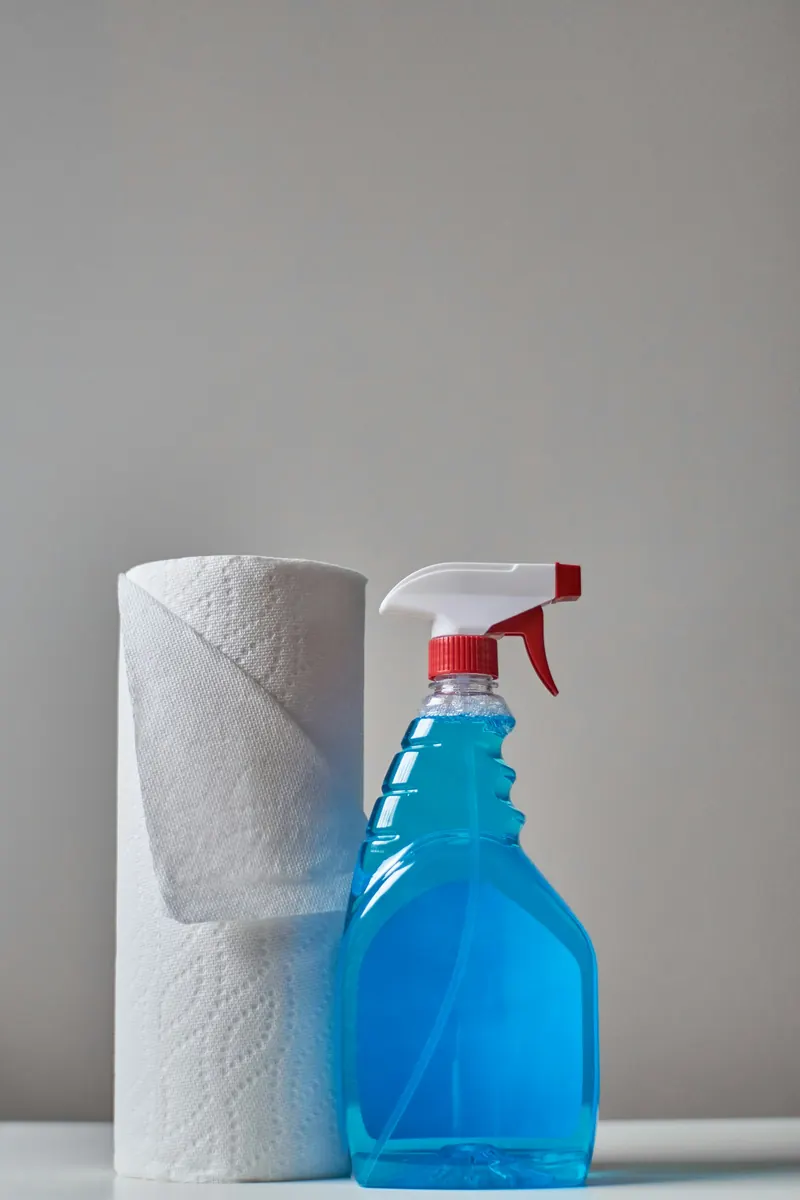
The reaction can begin in a bucket, toilet bowl, drain, spray bottle or on a wet cloth where residues meet. A small room and poor ventilation increase the risk because vapour can accumulate near the person using the products.
What the vapour can do
CDC reports on mixed-cleaner exposures describe tearing, nausea and irritation of the eyes and respiratory tract. More serious exposure can cause coughing, chest tightness, shortness of breath and lung injury. People with asthma or chronic lung disease may be especially sensitive, but a healthy person is not protected from a concentrated release.
Do not lean over the container to identify the smell. Odour is a warning, not a safe measuring instrument, and irritation can begin before a person understands what has happened. A dust mask does not filter chemical gases.
Bleach must also stay away from acids
Ammonia is not the only dangerous partner. Mixing bleach with acidic toilet-bowl, rust, descaling or vinegar products can release chlorine gas. Because ingredient names are not always obvious on the front label, the safest household rule is broader: never mix bleach with any other cleaner or disinfectant.
Rinsing one product and immediately adding another can still create a reaction if residue remains. Use one product, follow its label and rinse only when directed. Do not improvise a sequence from social-media recipes.
Can bleach be used after an ammonia cleaner?
The safest household answer is not to layer the products. Use one labelled cleaner for the job and do not follow it with bleach unless the product instructions or situation-specific poison advice explicitly says that is safe. A quick wipe may leave enough residue for an unwanted reaction.
If you are uncertain what was already used on a surface, stop and check the labels. Do not run a chemistry experiment to test whether the residue is gone. For a possible exposure in Australia, call the Poisons Information Centre on 13 11 26 for advice based on the actual products and circumstances.
What to do after an accidental mixture
If fumes appear indoors, stop work and move everyone, including pets, to fresh air without spending time trying to rescue tools or neutralise the bucket. If it can be done immediately without moving through the vapour, opening a door on the way out may improve ventilation; personal safety comes first.
Call emergency services for breathing difficulty, collapse, severe eye symptoms or a significant exposure. In Australia, the Poisons Information Centre is available on 13 11 26 for situation-specific advice. Do not add another chemical to cancel the reaction and do not re-enter until professional guidance says it is safe.
A safer cleaning system
Most everyday household cleaning can be done with soap or detergent and water. CDC says disinfection is generally unnecessary unless someone is sick or at increased risk, or a particular contamination requires it. When bleach is appropriate, use the product specified by local guidance and follow its exact dilution, ventilation, protective-equipment and contact-time instructions.
Keep every chemical in its original labelled container, store incompatible products separately and use dedicated measuring equipment only if the label requires dilution. One product at a time is not merely simpler; it removes the chemical guesswork that causes preventable emergencies.
The safest rule is broader than memorising one pair
A person should not have to recognise every chemical name before cleaning a bathroom. CDC guidance gives a simpler rule: never mix household bleach or another disinfectant with any other cleaner or disinfectant. Clean visible dirt with soap or detergent first, and disinfect only when it is genuinely needed and the product label permits it.
If an exposure may have occurred, do not wait for an online article to diagnose it. In Australia, the Poisons Information Centre provides situation-specific advice 24 hours a day on 13 11 26. Call triple zero for collapse, severe breathing trouble or another medical emergency.
Sources and further reading
- NSW Health - Hygiene at home and bleach warning ↗
- CDC - Ammonia chemical fact sheet ↗
- CDC - Chloramine injury from mixed household cleaners ↗
- CDC - Chemical disinfectants and hazardous hypochlorite reactions ↗
- CDC - Cleaning and disinfecting with bleach ↗
- Healthdirect Australia - Poisoning advice and emergency guidance ↗
This article was written for Curiosity Desk. We do not copy other publishers or invent quotes. If a material error is found, we correct it openly.
Read the full standards →One answer should lead to a better question
Bring your curiosity to the group
Curious Minds is our public Facebook community for surprising science, strange history, Australian wildlife and everyday questions. No copied posts, no personal-friend invitations and no link dumping.
- Three self-contained discussion prompts each week
- Sourced answers and honest uncertainty
- Respectful conversation without spam