The scale changed immediately
Birmingham 2022 delivered 19 sports across 15 venues and welcomed more than 4,500 athletes. Glasgow 2026 is planned for 10 sports, four venue hubs and about 3,000 athletes from 74 nations and territories.
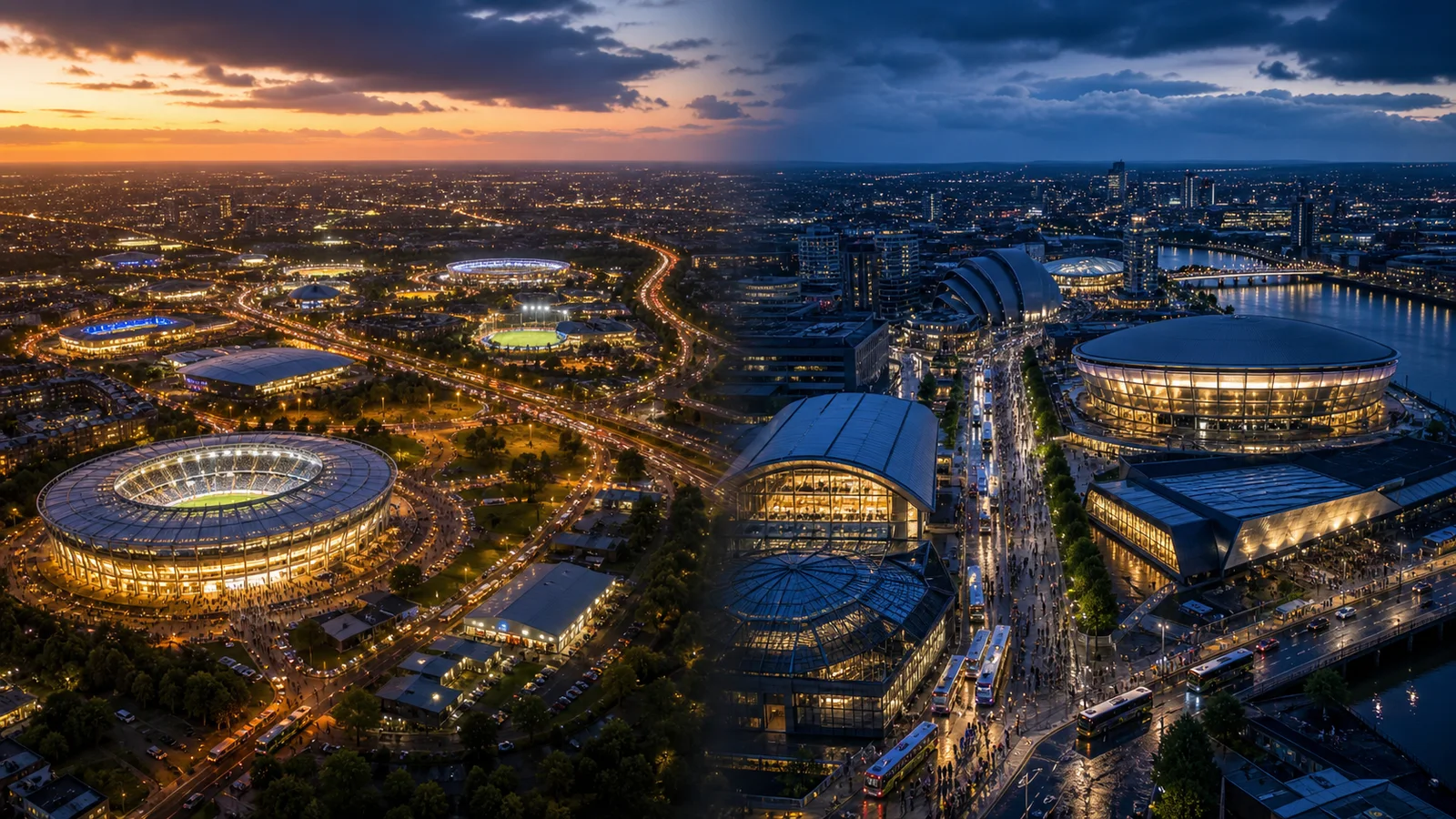
Those figures describe different operating models, not simply a larger and smaller version of the same plan. Glasgow concentrates the event inside an eight-mile corridor and relies heavily on venues already used for major sport.
The medal programme also became smaller overall
Birmingham recorded 283 medal events. Glasgow's published competition schedule contains 215. Fewer sports naturally remove event families that contributed medals in 2022.
The reduction is uneven because Glasgow's retained sports can contain many events. Athletics, swimming and track cycling still create a large programme even while team sports and disciplines from Birmingham are absent.
Several Birmingham sports are not in Glasgow
Birmingham included cricket T20, hockey, rugby sevens, badminton, table tennis, squash and triathlon among a broader programme. Those sports are not on the Glasgow list.
Cycling has also been narrowed to the track programme. The Glasgow sport count combines 3x3 basketball and wheelchair 3x3 as one sport family and presents bowls indoors at the SEC.
Para sport expanded inside the smaller Games
Birmingham was described as the largest integrated Para sport programme in Commonwealth Games history at the time. Glasgow now lists a record 47 Para medal events across six sports.
Para track cycling doubled from four Birmingham medal events to eight in Glasgow. This shows why total sport count and Para opportunity should be compared separately rather than treated as the same measure.
The venue and accommodation concepts differ
Birmingham spread competition across 15 venues in a regional major-event plan. Glasgow uses Scotstoun, Tollcross, the Sir Chris Hoy venue and the Scottish Event Campus as its four main hubs.
Glasgow also plans hotel accommodation for athletes and staff instead of building a dedicated village. Organisers connect this use of existing infrastructure to the shorter delivery schedule and stated core funding model.
What cannot be known from the comparison yet
Numbers can show that Glasgow is more concentrated and offers fewer sports. They cannot yet prove whether athletes and spectators will judge the model better, or whether its financial and sustainability claims will hold after final reporting.
The fairest comparison is therefore structural. Birmingham maximised breadth across a larger venue network. Glasgow tests whether a compact programme can preserve a major multi-sport atmosphere while reducing delivery complexity.
Sources and further reading
This article was written for Curiosity Desk. We do not copy other publishers or invent quotes. If a material error is found, we correct it openly.
Read the full standards →One answer should lead to a better question
Bring your curiosity to the group
Curious Minds is our public Facebook community for surprising science, strange history, Australian wildlife and everyday questions. No copied posts, no personal-friend invitations and no link dumping.
- Three self-contained discussion prompts each week
- Sourced answers and honest uncertainty
- Respectful conversation without spam