The clue looked like bad workmanship
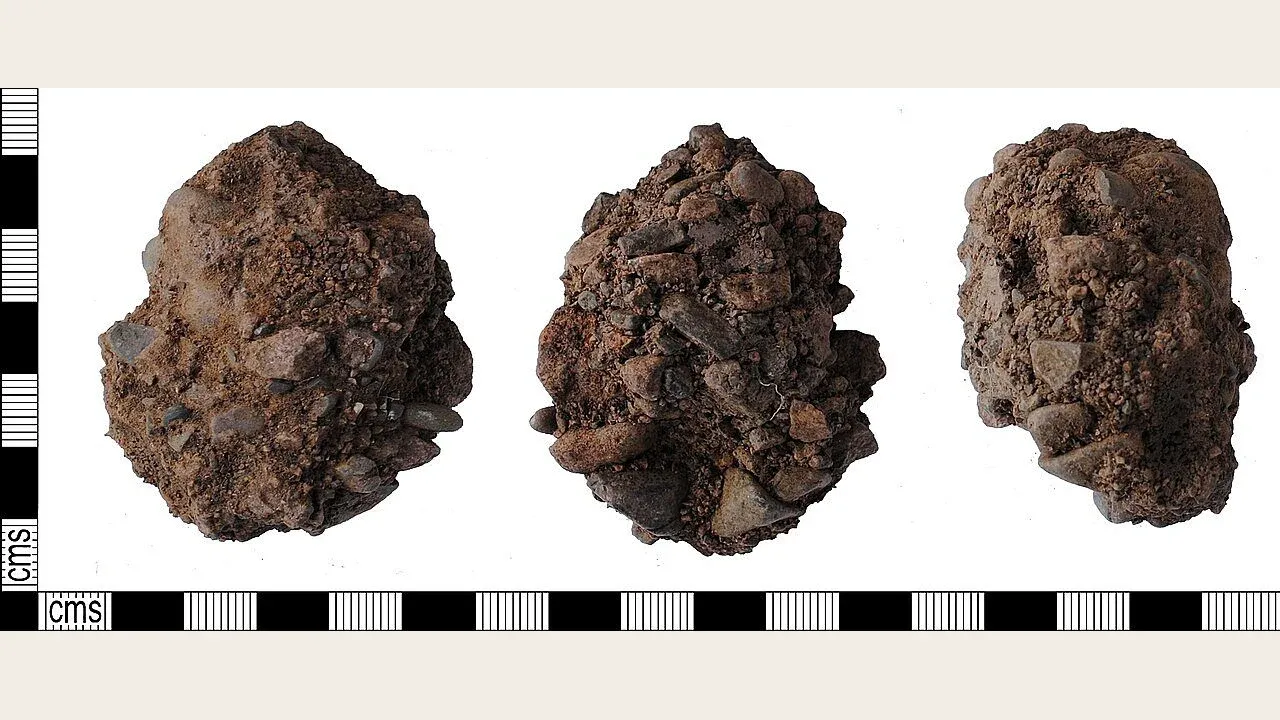
Ancient Roman concrete often contains millimetre-scale white fragments called lime clasts. Modern observers could interpret them as evidence that the ingredients were poorly mixed. A team led by researchers at MIT asked the opposite question: if the fragments appear repeatedly in durable material, could they be doing useful work?
High-resolution imaging and chemical mapping showed that the clasts contained forms of calcium associated with very hot reactions. That evidence supported a manufacturing process known as hot mixing, in which quicklime was used directly with other dry ingredients before or while water was added.
Adding water made the mixture heat itself
Quicklime reacts strongly with water and releases heat. The researchers argued that this hot mixing could create chemical products and a brittle, highly reactive structure inside the lime clasts that would not form in the same way if builders used only pre-slaked lime paste.
The process may also have shortened setting and curing times, which would have been valuable during construction. Recent analysis of an unfinished building site at Pompeii found dry lime pre-mixed with volcanic material, providing direct archaeological evidence that Roman workers used hot mixing rather than leaving the method only as a laboratory reconstruction.
A crack can trigger its own repair material
When a small crack reaches a lime clast and water enters, the reactive calcium-rich material can dissolve. It moves into the gap as a calcium-saturated solution and then recrystallises as calcium carbonate. The new mineral growth fills part of the crack and restricts the path water was using.
In laboratory tests, concrete made with the proposed hot-mixing approach sealed cracks under water flow while comparison material did not seal in the same way. This is self-healing in a specific materials-science sense. It does not mean a collapsed wall can rebuild itself or every crack will disappear.
There was never one magical Roman recipe
Roman builders worked across centuries, regions and very different structures. They changed aggregate, lime, volcanic material and construction technique according to what was available and what the job required. Some surviving marine concrete also owes durability to reactions involving seawater and volcanic ash, a related but distinct line of research.
Modern concrete is not simply inferior. Reinforced structures, controlled strength, rapid construction and safety standards solve problems Roman builders never faced in the same way. Modern steel reinforcement can also introduce corrosion-related failure modes. A fair comparison asks which material, design and environment are involved.
The old material points toward a modern opportunity
Concrete production has a large environmental cost, so a material that lasts longer and repairs small cracks before they spread could reduce maintenance and replacement. Researchers are exploring how ancient processing ideas might inform modern formulations without copying a historical recipe blindly.
The story is better than “Rome had a lost secret.” A feature dismissed as a defect became the clue to a reaction, and an abandoned Pompeii worksite later preserved evidence of the mixing sequence. Follow that path to the Antikythera mechanism and another corroded object turns out to contain far more engineering than its surface suggests.
Sources and further reading
This article was written for Curiosity Desk. We do not copy other publishers or invent quotes. If a material error is found, we correct it openly.
Read the full standards →One answer should lead to a better question
Bring your curiosity to the group
Curious Minds is our public Facebook community for surprising science, strange history, Australian wildlife and everyday questions. No copied posts, no personal-friend invitations and no link dumping.
- Three self-contained discussion prompts each week
- Sourced answers and honest uncertainty
- Respectful conversation without spam