Vinegar works because it is acid, not because it is natural
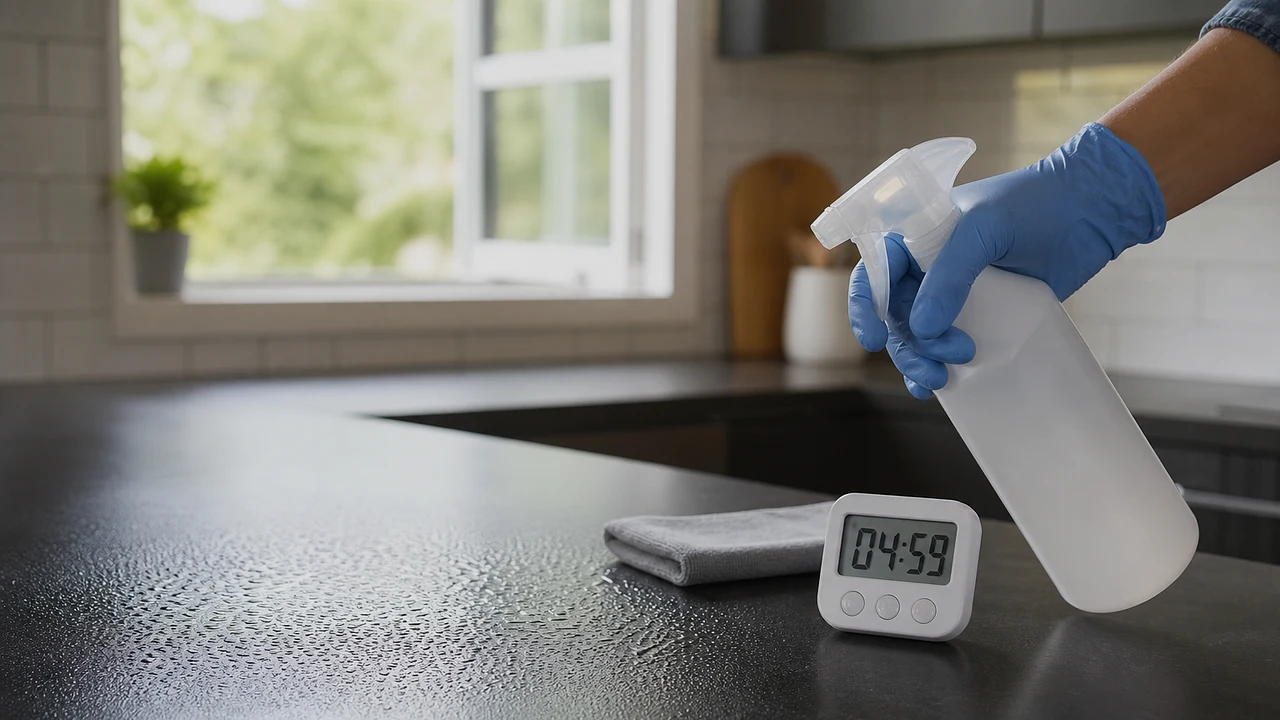
Household vinegar is mostly water with acetic acid. The acid can react with alkaline mineral deposits, which is why a vinegar solution may loosen some white scale on a compatible surface. The visible result is real chemistry, but it does not make the liquid safe for every material it touches.
The same acid can react with minerals in stone, weaken a finish or conflict with an appliance maker's tested care method. Natural describes where an ingredient came from. It does not answer whether the concentration, exposure time and surface are compatible. The useful question is not, does vinegar clean? It is, does this maker allow this acid on this exact material for this exact job?
Start with three labels before starting with a recipe
First identify the material, including its coating or sealer. A countertop may be natural stone, engineered stone, laminate, stainless steel or a coated surface even when the colour looks similar. Second read the appliance or surface care guide. Third read the vinegar label, because food vinegar and products sold for cleaning can have different acid concentrations.
A small hidden-spot test can reveal dulling or colour change, but it cannot prove that repeated use will not weaken a finish, hose or seal over time. A manufacturer warning should therefore outrank a successful five-minute patch test. If the material is unknown, a mild detergent and water followed by drying is usually the more conservative starting point.
Keep vinegar away from marble, limestone and travertine
Marble, limestone and travertine are calcareous stones. The Natural Stone Institute explains that calcium carbonate is sensitive to acidic solutions and specifically warns that vinegar can dull or etch these stones. Etching is chemical damage to the surface, not ordinary dirt that another cleaner can wipe away.
A sealer does not turn acid-sensitive stone into an acid-proof surface. The Institute describes many sealers as repellents that improve stain resistance rather than making stone stain proof. If an acidic spill happens, blot it, rinse with water and mild soap, dry the area and ask a stone professional about a visible etch mark. Adding more vinegar will not polish the damage away.
Granite is not one simple yes or no
Some granite is more acid resistant than marble, but granite is a family of stones rather than one identical recipe. The Natural Stone Institute cautions that some granite species contain acid-sensitive minerals and that an applied sealer or impregnator may also react or discolour. Its advice is to consult the stone supplier before using vinegar.
This is a useful correction to two viral claims. Vinegar does not automatically destroy every granite counter on contact, and a successful wipe on one counter does not prove that every granite, sealer or engineered surface is compatible. The supplier and product care sheet settle the question more reliably than the stone's appearance.
Finished timber floors can lose the layer you are trying to protect
A timber floor is usually cleaned at the finish, not at bare wood. Floor-care manufacturer Bona advises against vinegar and water because the acid can break down the protective finish over time, reduce shine and leave a dull appearance. Too much water adds a separate risk of swelling and discolouration.
Use the floor maker's recommended pH-neutral product, a lightly damp microfibre pad and as little free liquid as the care instructions permit. Do not assume a homemade cleaner is gentler simply because its ingredients are familiar. Repeated mild exposure can matter even when one pass leaves no immediate mark.
Do not pour vinegar into a washing machine unless its manual permits it
Bosch says it does not recommend vinegar for cleaning its washing machines because repeated exposure may degrade rubber parts. Whirlpool gives similar guidance, identifying seals and hoses as areas of concern and warning that adding vinegar directly to the drum can cause damage over time.
Those statements do not prove that every washing machine uses the same materials. They prove why a universal social-media dose is poor advice. Search the manual for the exact model and use its cleaning cycle and approved product. An appliance company may permit vinegar for a removable drawer or exterior while prohibiting it inside the machine, so the location matters as much as the ingredient.
Dishwashers show why the manual matters more than the myth
Whirlpool publishes a specific vinegar-rinse method for some dishwashers: vinegar stays in a dishwasher-safe cup on the rack and mixes gradually with wash water. The same guidance warns that vinegar is acid and that using it too often could damage the machine. That is very different from pouring an unmeasured amount over components.
Another brand or model may specify a proprietary descaler or a different method. Follow the manual's amount, placement, cycle and frequency. Do not combine a vinegar rinse with detergent, bleach or another cleaner unless the manual explicitly instructs it. A technique can be valid for one tested configuration without becoming a rule for every appliance.
Vinegar is not a verified replacement for a disinfectant
Cleaning removes soil and many germs. Disinfection uses a product tested to inactivate specified microorganisms when the label directions, dilution and contact time are followed. The US Environmental Protection Agency says it does not review ordinary household ingredients such as vinegar for effectiveness against SARS-CoV-2, so it cannot verify how well they work for that purpose.
Most homes do not need routine disinfection of every surface. The CDC says soap or detergent and water are enough in many situations. When disinfection is genuinely required, choose a registered product whose label lists the surface and target organism, then keep it wet for the stated contact time. A sour smell, a shiny counter or an online before-and-after photo is not efficacy testing.
Never mix vinegar with chlorine bleach
Chlorine bleach contains hypochlorite. The CDC warns that hypochlorite can release toxic chlorine gas when mixed with an acid, including acidic household cleaning agents. Vinegar is acidic. The safe rule is simple: never mix household bleach with vinegar or any other cleaner.
Separation includes time and tools, not just bottles. Do not spray vinegar onto a surface that still holds bleach, pour one product into the other's container or reuse an unrinsed cloth or bucket. Keep products in their original labelled containers. If a job changes products, stop, rinse the compatible surface thoroughly with water and follow both labels rather than trying to neutralise one cleaner with another.
Baking soda fizz is not proof of extra cleaning power
Vinegar and baking soda produce dramatic bubbles. The American Chemical Society explains that the reaction forms carbon dioxide, water and sodium acetate. The fizz proves a reaction occurred. It does not prove the mixture has become a stronger all-purpose cleaner.
The acid and base consume each other as the reaction proceeds. The movement of bubbles may help loosen debris in a narrow situation, and either ingredient may be useful separately for a compatible task. But combining them without a job-specific reason can reduce the acidity that dissolves mineral scale and the alkalinity that helps with some greasy soil. Spectacle is not the same as useful chemistry.
Use vinegar only for a narrow compatible job
A sensible vinegar task has four features: the deposit is likely mineral scale, the surface maker permits acid, the amount and exposure time are controlled, and the area can be rinsed and dried. A removable part approved for soaking is easier to manage than an unknown liquid running into an appliance, joint or unsealed edge.
Stop if the surface changes colour, loses gloss or feels rough. Do not keep increasing concentration or dwell time because a deposit is slow to move. A deposit that resists the approved method may need a purpose-made product, mechanical removal that the surface can tolerate or professional assessment. Stronger is not automatically faster once damage becomes the limiting problem.
If cleaners were mixed, leave the chemistry alone
If vinegar and bleach were accidentally combined and there is a strong irritating odour, coughing, chest tightness or breathing difficulty, move away from the area to fresh air without leaning over the mixture or adding another chemical. Keep other people and pets away. Call Triple Zero on 000 for severe breathing trouble or collapse.
For poisoning advice anywhere in Australia, call the Poisons Information Centre on 13 11 26. It operates 24 hours a day. Have the product containers or clear photographs of their labels available if this can be done safely. Do not return to clean up until emergency or poisons specialists say it is safe.
The thirty-second vinegar decision
Before reaching for vinegar, ask: do I know the material and finish? Does the manufacturer permit acid here? Is the problem mineral scale rather than grease or a need for disinfection? Is bleach or another cleaner absent from the surface, cloth, bucket and room task? Can I control the contact time, rinse and dry?
If any answer is unknown, pause and check. Vinegar is inexpensive and genuinely useful in the right place. Its limitations are not a reason to fear it. They are the reason to stop calling one familiar acid a universal cleaner. The surface, product label and job decide whether it belongs in the routine.
Sources and further reading
- Natural Stone Institute: Cleaning products and acid-sensitive stone care ↗
- Natural Stone Institute: Countertop sanitation and vinegar compatibility warning ↗
- Bona: Why vinegar and water are not recommended for finished timber floors ↗
- Bosch: Washing machine cleaning with vinegar ↗
- Whirlpool: Should you clean a washing machine with vinegar? ↗
- Whirlpool: Model-specific dishwasher interior cleaning and vinegar rinse ↗
- US EPA: Common household substances such as vinegar are not reviewed as disinfectants ↗
- US EPA: How registered disinfectants and their label directions are verified ↗
- CDC: Cleaning and disinfecting with bleach ↗
- CDC: Hypochlorites release toxic chlorine gas when mixed with acid ↗
- American Chemical Society: Products of the vinegar and baking soda reaction ↗
- Queensland Poisons Information Centre: 24-hour Australian poisons advice ↗
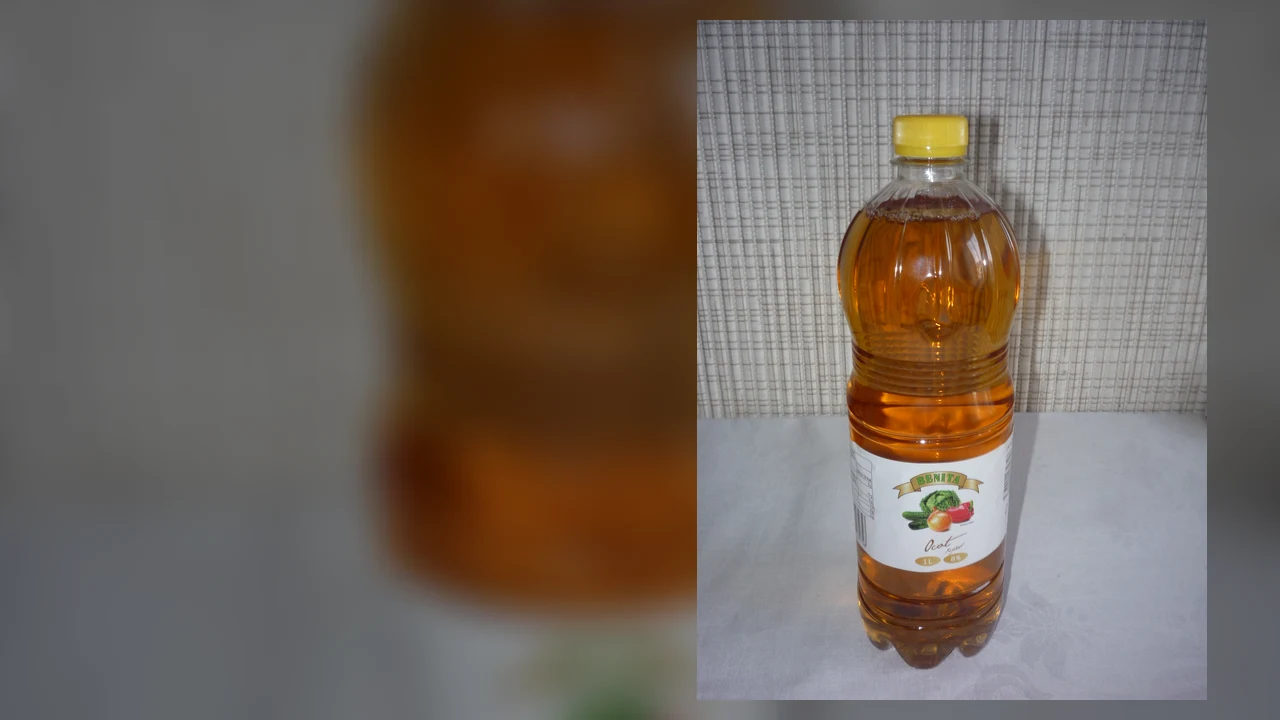
- Wikimedia Commons: Household spirit-vinegar bottle photograph by Pohled 111, CC BY-SA 4.0 ↗
This article was written for Curiosity Desk. We do not copy other publishers or invent quotes. If a material error is found, we correct it openly.
Read the full standards →One answer should lead to a better question
Bring your curiosity to the group
Curious Minds is our public Facebook community for surprising science, strange history, Australian wildlife and everyday questions. No copied posts, no personal-friend invitations and no link dumping.
- Three self-contained discussion prompts each week
- Sourced answers and honest uncertainty
- Respectful conversation without spam