The trend without the hype
Fibermaxxing in six useful facts
- 2026 search rise
- 115 percent in 90 days
- FDA Daily Value
- 28 grams
- General adult range
- 22 to 34 grams
- High on a label
- 20 percent Daily Value or more
- Safer approach
- Increase gradually
- Food first
- Beans, whole grains, fruit, vegetables, nuts and seeds
These figures are general US guidance, not a personalised prescription. Needs can differ with age, sex, energy intake and health circumstances.
A sensible nutrition idea acquired an extreme-sounding name
Fibermaxxing is the latest internet label for a familiar goal: deliberately adding more dietary fiber to meals. Google reported that searches for the term rose 115 percent during a 90 day period in 2026. High fiber smoothie and blueberry muffin recipes were also among the fastest rising related searches.
The name borrows the language of optimisation culture, where ordinary habits are pushed toward a supposed maximum. That makes the trend memorable, but it also creates the first misunderstanding. Nutrition guidance recommends getting enough fiber. It does not tell everyone to chase the largest number they can tolerate.
Fiber is carbohydrate that behaves differently during digestion
Dietary fiber is found mainly in plant foods. Unlike sugars and many starches, it is not fully broken down and absorbed in the small intestine. Different fibers can hold water, add bulk, be fermented by gut microbes or change how quickly material moves through the digestive system.
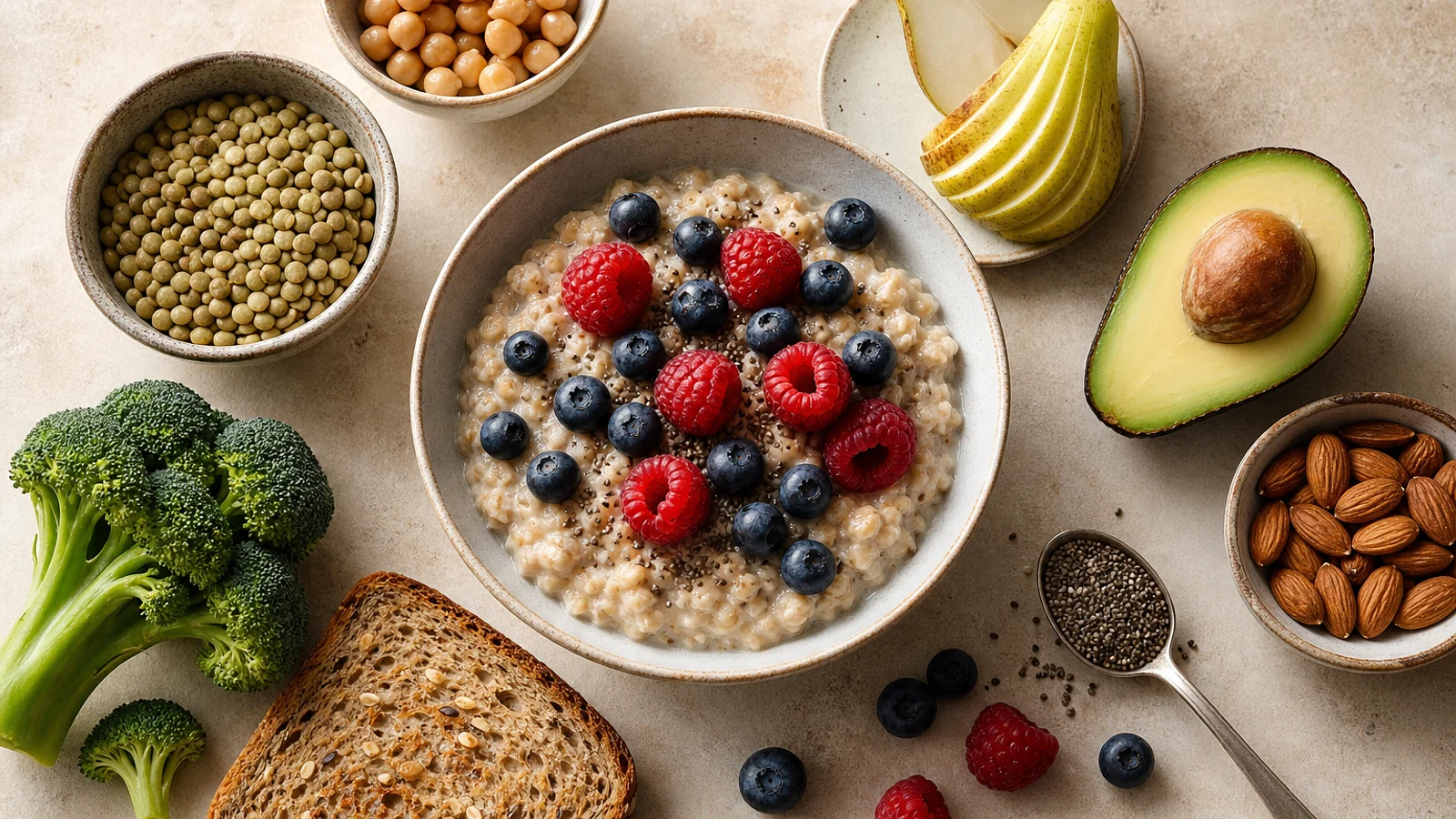
That variety is why fiber is not one magic ingredient. Oats, lentils, pears, almonds and broccoli do not become nutritionally identical just because each contributes fiber. They bring different structures, nutrients and patterns of soluble, insoluble or fermentable material to a meal.
The number on a US food label is 28 grams, not infinity
The US Food and Drug Administration sets the Daily Value for dietary fiber at 28 grams for a 2,000 calorie diet. The figure helps shoppers compare packaged foods. It is not a universal dose for every body, and it is not a line that becomes more beneficial without limit.
The National Institute of Diabetes and Digestive and Kidney Diseases gives a broader general range of 22 to 34 grams a day for adults, depending on age and sex. Personal needs can differ. Someone following a medically restricted diet should not replace individual clinical advice with a social media target.
The percentage column can do the arithmetic for you
A Nutrition Facts label lists grams of dietary fiber per serving and the percentage of the Daily Value. FDA guidance calls 5 percent Daily Value or less low and 20 percent or more high. Those percentages are often more useful than a package shouting words such as wholesome or multigrain.
For example, 20 percent of the 28 gram Daily Value is 5.6 grams. A product around that level provides a meaningful contribution, but the serving size still matters. Eating twice the stated serving changes the calories, sodium, added sugar and every other number as well as the fiber.
The strongest version begins with ordinary food
NIDDK lists whole grains, legumes, fruits, vegetables and nuts as useful sources. A practical meal might add beans to a soup, berries and oats to breakfast, a pear with its skin as a snack, or an extra vegetable beside dinner. The point is repeated, varied choices rather than one heroic bowl.
Current US dietary guidance emphasises diets built from whole, nutrient-dense foods. That food-first framing matters because a lentil, an apple and a spoonful of isolated fiber powder are not interchangeable packages. Whole foods can contribute vitamins, minerals, protein, fats and texture alongside fiber.
Research supports fiber-rich eating, but social posts often overstate it
A 2023 systematic review pooled 64 prospective cohort studies involving more than 3.5 million participants. Higher dietary fiber intake was associated with lower all-cause, cardiovascular and cancer mortality. Results also differed by food source and type of fiber.
Association is not the same as a promise to an individual. Cohort studies observe patterns among people whose diets and lives differ in many ways. A strong evidence base can support dietary guidance without proving that adding one trendy ingredient will prevent a disease, repair a gut or extend a particular person's life.
A sudden increase can make the trend feel like it is failing
People who rapidly add large servings of bran, beans, seeds and supplements may notice gas, bloating or changes in bowel habits. NIDDK advises adding fiber a little at a time so the body can adjust. It also recommends drinking water and other liquids to help fiber work better.
That is the speed limit missing from many short videos. Someone moving from a low fiber pattern to several concentrated additions in one day is running an uncontrolled experiment. A smaller change held for several days makes it easier to notice comfort, appetite and tolerance before adding another.
More powder is not automatically the same as a better diet
Fiber supplements can be useful in some circumstances, but the word fiber on a tub does not answer every question. Products contain different ingredients and serving sizes. They can also be added to meals that remain low in fruit, vegetables, legumes and whole grains.
A food label or supplement label should be read as a complete panel, not as a hunt for the highest fiber number. Check the stated serving, ingredients, added sugars, sodium and directions. Anyone using medicines or managing a digestive condition should ask a qualified clinician or dietitian before making a major change or adding a concentrated product.
A calmer seven-day experiment is more informative
Start by observing rather than guessing. Read the fiber line on foods already eaten and note the plant foods that appear across a normal day. Then choose one repeatable addition, such as oats at breakfast, beans in one lunch or an extra piece of whole fruit.
Keep the change modest for several days, drink normally and pay attention to comfort. A second change can follow if the first fits. This is not a seven-day cure or challenge. It is a way to turn an attention-grabbing trend into a routine that can survive after the hashtag disappears.
The useful question is not how to max it out
Fibermaxxing has value because it directs attention toward a nutrient many people overlook and toward foods that can improve the variety of a diet. Its weakness is the name. Maximum sounds measurable, competitive and universally desirable even when an appropriate intake is personal and context dependent.
The evidence-led version is less dramatic and more durable: use reliable guidance, compare labels, favour varied foods, increase gradually and stop treating discomfort as proof that a trend is working. Enough can be a meaningful target. More is not a personality test.
Sources and further reading
This article was written for Curiosity Desk. We do not copy other publishers or invent quotes. If a material error is found, we correct it openly.
Read the full standards →One answer should lead to a better question
Bring your curiosity to the group
Curious Minds is our public Facebook community for surprising science, strange history, Australian wildlife and everyday questions. No copied posts, no personal-friend invitations and no link dumping.
- Three self-contained discussion prompts each week
- Sourced answers and honest uncertainty
- Respectful conversation without spam