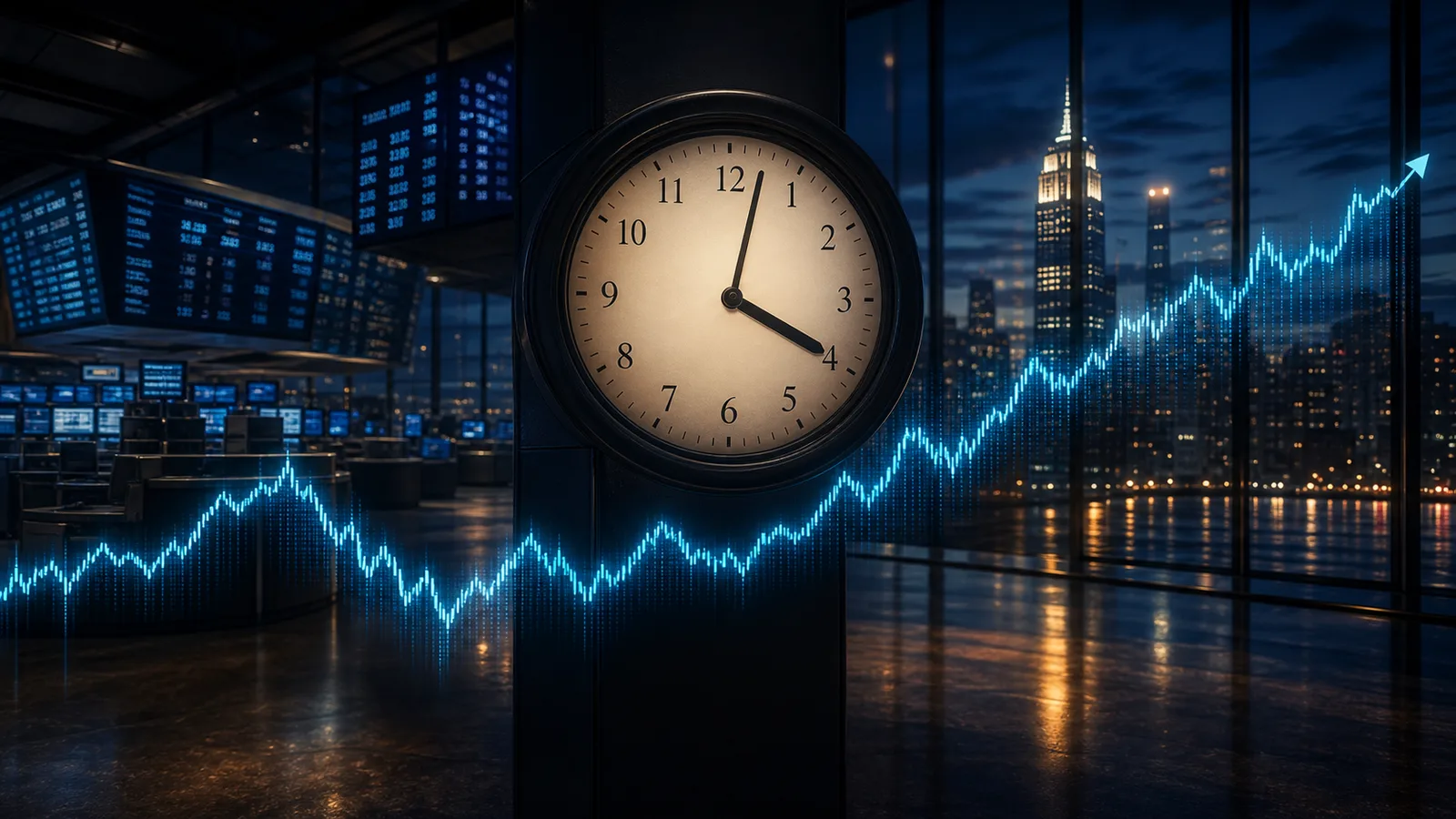
The closing bell ends one session, not every possible trade
For most US-listed stocks, the core trading session runs from 9:30 a.m. to 4 p.m. Eastern time. The closing bell marks the end of that main exchange session and helps establish the official daily close. It does not switch off every electronic venue or prevent all investors from submitting orders.
Brokerage firms can route eligible orders to electronic trading systems before the opening bell or after the core session. These systems match willing buyers and sellers outside regular hours. Access, order types and session length vary by broker and venue, which is why two investors can see the same moving quote but have different abilities to trade it.
Earnings news often arrives when the busiest session is over
Companies frequently release quarterly results before the market opens or after it closes. That gives investors time to read the revenue, profit, guidance and conference-call details without the announcement landing in the middle of the most active session. The pause does not stop people from reacting; it moves much of the first reaction into extended-hours trading.
Imagine that a large technology company reports results at 4:05 p.m. New buy and sell orders can reach electronic venues within seconds. If buyers are willing to pay more than the last regular-session price, trades occur at higher prices. Market apps then show an after-hours percentage change even though the official 4 p.m. close has not been rewritten.
A thinner market can make the price move farther
The Securities and Exchange Commission warns that extended-hours markets often have lower trading volume and less liquidity than regular sessions. There may be fewer competing orders at each price. That can widen the gap between the highest price a buyer offers and the lowest price a seller will accept, known as the bid-ask spread.
With a thinner order book, a relatively small wave of orders may push through several available price levels. The visible move can therefore look unusually large. It is still a real traded price, but it may be based on fewer transactions and less competition than the price discovered when the full market of institutions, market makers and individual investors is active.
The after-hours quote is not the same as the official close
Investor.gov explains that the regular-session closing price is generally the last price established around 4 p.m. Eastern. Trades reported later are tagged as after-hours activity and do not replace that official regular-session high, low or close. Some websites display the two numbers separately, while others can make the distinction less obvious.
This is why a news report may say a stock closed at one price and an app may show another number moments later. Both can be describing valid but different reference points. One is the regular-session close. The other is the latest transaction in an extended-hours venue where the number of participants and available quotes may be much smaller.
Tonight's move is not a promise about tomorrow's opening
An after-hours price can influence expectations for the next day, but it does not lock in the opening price. More investors may read the announcement overnight, analysts may revise estimates, other news may appear and new orders may arrive before the market reopens. The opening auction then combines a much larger set of buy and sell interest.
The SEC specifically notes that an after-hours price may not reflect the price seen at the next regular-session open. A sharp move can shrink, grow or reverse. That uncertainty is one reason an explanatory article should describe the market mechanism rather than treat the first visible reaction as a prediction.
Why the contradiction is useful to understand
When an app says a stock is up after hours, it is not showing a ghost price produced while the market sleeps. It is showing transactions from a smaller electronic session with different participation and risk. The closing bell remains important because it ends the deepest public session and creates a standard daily reference price.
The simple mental model is two layers: the core US market closes at 4 p.m., while eligible trading can continue around it. News can arrive between the layers, and a thinner collection of orders can react quickly. The result is a price that genuinely moved after the bell without proving where the stock will trade when the full market returns.
Sources and further reading
- US Securities and Exchange Commission: after-hours trading and its risks ↗
- Investor.gov: official closing price and after-hours reporting ↗
- Investor.gov: definition of after-hours trading ↗
- New York Stock Exchange: extended-hours session structure ↗
- New York Stock Exchange: earnings announcements and after-hours participation ↗
This article was written for Curiosity Desk. We do not copy other publishers or invent quotes. If a material error is found, we correct it openly.
Read the full standards →One answer should lead to a better question
Bring your curiosity to the group
Curious Minds is our public Facebook community for surprising science, strange history, Australian wildlife and everyday questions. No copied posts, no personal-friend invitations and no link dumping.
- Three self-contained discussion prompts each week
- Sourced answers and honest uncertainty
- Respectful conversation without spam