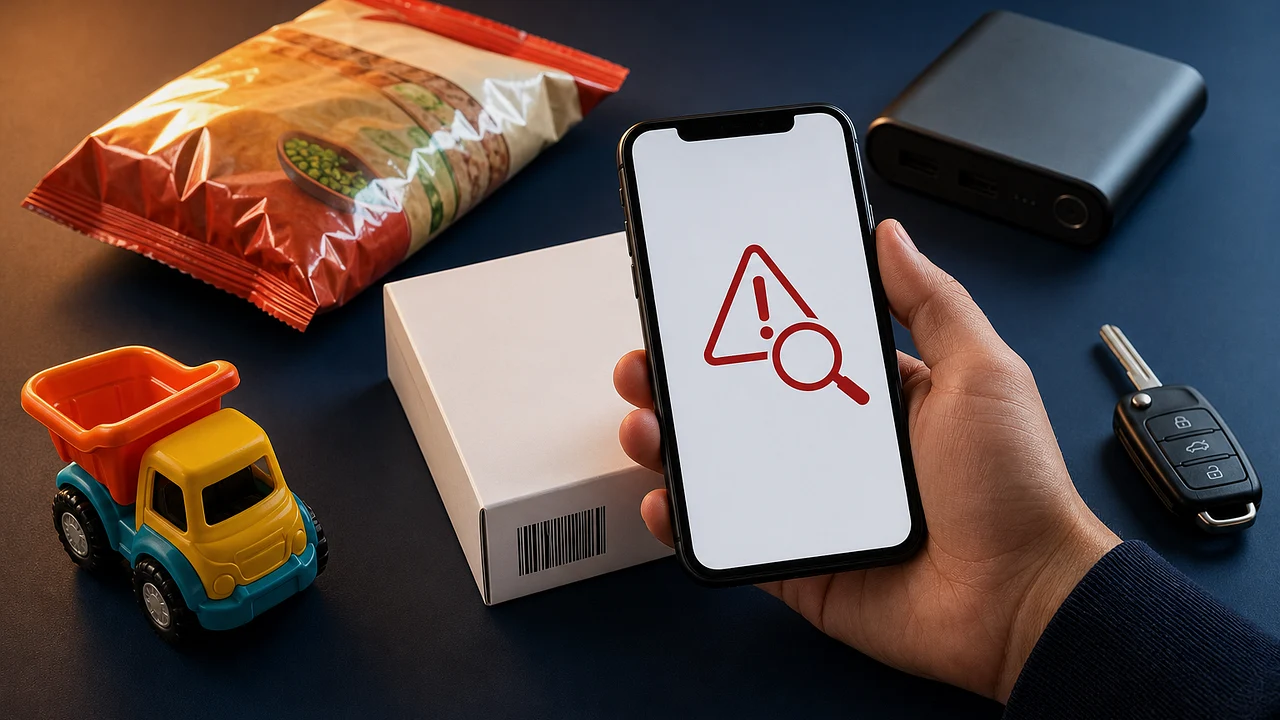
There is no single Australian recall search for everything
A warning shared online can make it sound as though one national search box covers every item in a home. Australia actually divides recall information by product type. The ACCC's Product Safety Australia database covers consumer goods such as toys, electronics, appliances and many household products. Food Standards Australia New Zealand publishes food recalls. The federal Vehicle Recalls site covers road vehicles and approved components. The Therapeutic Goods Administration publishes actions involving medicines, medical devices and other therapeutic goods.
The first useful question is therefore not just, “Has this product been recalled?” It is, “Which regulator handles this type of product?” Searching the wrong database can produce no result even when an official notice exists elsewhere. A child car restraint, for example, is a consumer product listed through Product Safety Australia, while a road vehicle recall belongs on Vehicle Recalls.
Begin with identifiers, not a similar-looking photograph
Recall notices normally apply to a defined group, not every product that looks alike. Before searching, photograph the label and collect the product name, brand, model number, serial number, batch or lot code, barcode, manufacture date and purchase details that are available. Keep the packaging and receipt if you still have them. For a vehicle, record the 17-character vehicle identification number, usually called the VIN.
Food notices may distinguish products by pack size, best-before or use-by date, batch code, where they were sold and the state or territory. A matching brand and flavour are not enough if the affected date code is different. Medicines and devices may use an ARTG number, batch, lot or serial number. Matching every listed identifier prevents both false reassurance and unnecessary panic.
Household goods, toys and electronics start with Product Safety Australia
For general consumer goods, search the official Product Safety Australia recall listing by product name, brand or model. Its filters cover categories including baby products, toys, electronics, home and garden goods, cosmetics, sports equipment and unregistered or off-road vehicles. Open the individual notice rather than relying on the search-result heading because the notice contains the affected identifiers, hazard, sale dates, traders and remedy.
The ACCC's consumer guidance says to stop using a recalled consumer product, keep it out of reach of children and contact the supplier for the stated repair, replacement or refund. Do not improvise a repair or throw the item away before reading the notice. Some recalls require a particular disposal method, proof that the product was disabled or collection because ordinary rubbish could create another hazard.
Food recalls use pack size, date codes and batch details
FSANZ maintains Australia's current consumer food recalls. Its notices identify the product, package, date marking, affected locations and reason for the recall. Reasons can include undeclared allergens, microbial contamination, foreign matter or labelling errors. The same brand may sell several sizes or batches, so compare the packet in your hand with every identifying detail in the notice.
FSANZ says a confirmed recalled food should not be eaten or drunk. Follow the notice about returning it for a refund or disposing of it. If you feel unwell and suspect you consumed recalled food, seek early medical advice and tell the clinician which product and batch were involved. Keep a photo of the label even if the food itself must be discarded.
Vehicle searches need both the official notice and a VIN check
Search the Australian Government's Vehicle Recalls site by make, model and year, then use the manufacturer's official VIN checker when one is available. A model-level notice tells you the affected production range and safety issue. The VIN check can answer the narrower question of whether one particular vehicle has an outstanding action.
Do not assume that silence means a car is clear. The department notes that owners may miss a letter if their address or contact details have changed, so regular checks still matter. In most circumstances an affected vehicle is taken to the manufacturer or dealer and repaired free of charge. Follow any instruction about whether the vehicle can be driven before the appointment.
Medicines and medical devices need a different kind of caution
The TGA's searchable Database of Recalls, Product Alerts and Product Corrections, known as DRAC, covers prescription and over-the-counter medicines, complementary medicines, medical devices, biologicals and related therapeutic goods. The TGA distinguishes a recall from a product alert, product correction and quarantine. Those actions do not all tell a consumer to do the same thing.
Do not stop a prescription medicine or abandon an implanted or essential medical device merely because a headline uses the word recall. The TGA says many market actions require no public action, while some call for return or disposal, a software or hardware correction, awareness of a risk, or advice from a treating clinician. Read the exact notice and contact the listed sponsor, pharmacist or health professional when the instruction is unclear.
A reliable notice answers six practical questions
An official recall notice should let you identify the product, explain the defect or hazard, define the affected models or batches, show where and when it was sold, state what the owner should do and provide contact details for the responsible supplier. If one of those pieces is missing from a screenshot, use the official database to find the complete and most recently updated notice.
Pay attention to the remedy wording. One notice may offer a replacement cable, another a dealership repair, another a refund and another special disposal instructions. The safest action is the one written for that specific recall. A generic comment saying “take it back to the shop” can be wrong for a lithium battery, contaminated food, installed appliance or medical device.
Treat unexpected recall calls as something to verify
A genuine recall can arrive by post, email, text or phone, but the contact method is not proof by itself. The federal Vehicle Recalls service has warned about people impersonating dealerships and offering to collect vehicles for an outstanding recall. Before handing over a product, vehicle, personal information or money, find the official notice independently and contact the supplier through the number on its own website or the regulator's notice.
Be especially cautious if a caller demands an upfront fee, gift card, remote access to a device or immediate collection by an unknown person. Most vehicle recall repairs are free, and a consumer-product notice should state the remedy and official contact route. Verification does not mean ignoring the recall. It means responding through a channel you found independently.
The recall remedy and your consumer rights can overlap
A recall notice describes the supplier's immediate safety action, which may be a repair, replacement, refund or another specific step. Australian Consumer Law can provide additional rights when a product bought from a business fails the consumer guarantees. The ACCC says an unsafe product is a major problem, and in an applicable consumer purchase the consumer can choose a refund or replacement.
That does not make every recall identical, and it is not a reason to ignore the official safety instructions while debating the final remedy. Keep proof of purchase, correspondence and reasonable return costs. A voluntary manufacturer's warranty is additional to consumer guarantees, so its expiry does not automatically end every right. Private second-hand sales have more limited consumer-guarantee coverage than purchases from a business.
Check before buying second-hand or from an online marketplace
A low price can move a recalled item from one home to another. Before buying a used cot, child restraint, power bank, appliance, caravan component or other safety-sensitive product, search the relevant official database using the exact model details. Ask the seller for a clear label photograph rather than accepting “hardly used” as evidence of safety.
The ACCC advises buyers to check recalls and bans, keep the listing and seller details, inspect the item and register it with the manufacturer where possible. Registration can help a supplier reach you if a recall begins later. When the seller is a private individual rather than a business, most consumer guarantees do not apply, which makes the safety check before purchase even more important.
A five-minute routine makes future checks easier
Save the four official starting points: Product Safety Australia, FSANZ food recalls, Vehicle Recalls and the TGA's DRAC database. Subscribe to the categories that matter to your household, register high-value products and vehicles, and update your contact details after moving. Keep digital receipts and a photograph of important model and serial labels.
If a product has already caused an injury, illness or suspected poisoning, the database search is not the first-aid step. Seek medical help and follow emergency advice. Australia's Poisons Information Centre is available on 13 11 26; if someone has collapsed, stopped breathing or has another medical emergency, call triple zero. Preserve the product details so health professionals and the regulator can identify what was involved.
The short version to remember
Choose the database by product type, match the exact model, batch, date or VIN, open the complete official notice and follow its instructions. If the item is a medicine or medical device, check the TGA action carefully before changing treatment. If an unexpected caller contacts you, verify the recall and contact route independently.
A viral warning is useful only when it leads to the correct product and the correct action. The official notice is where a frightening headline becomes a practical answer: whether your exact item is affected, what risk exists and what you should do next.
Sources and further reading
- ACCC Product Safety Australia - Search consumer product recalls ↗
- ACCC Product Safety Australia - What to do when a product is recalled ↗
- Food Standards Australia New Zealand - Australian food recalls ↗
- Food Standards Australia New Zealand - Consumer food recall FAQs ↗
- Australian Government - Vehicle Recalls ↗
- Australian Government - Check your vehicle before you travel ↗
- Therapeutic Goods Administration - DRAC database ↗
- Therapeutic Goods Administration - What to do after a medicine or device market action ↗
- ACCC - Repair, replace, refund and cancel ↗
- ACCC Product Safety Australia - Buy safe second-hand products online ↗
- Australian Government Department of Health - Poisons Information Centre ↗
This article was written for Curiosity Desk. We do not copy other publishers or invent quotes. If a material error is found, we correct it openly.
Read the full standards →One answer should lead to a better question
Bring your curiosity to the group
Curious Minds is our public Facebook community for surprising science, strange history, Australian wildlife and everyday questions. No copied posts, no personal-friend invitations and no link dumping.
- Three self-contained discussion prompts each week
- Sourced answers and honest uncertainty
- Respectful conversation without spam