The white crust began as invisible minerals
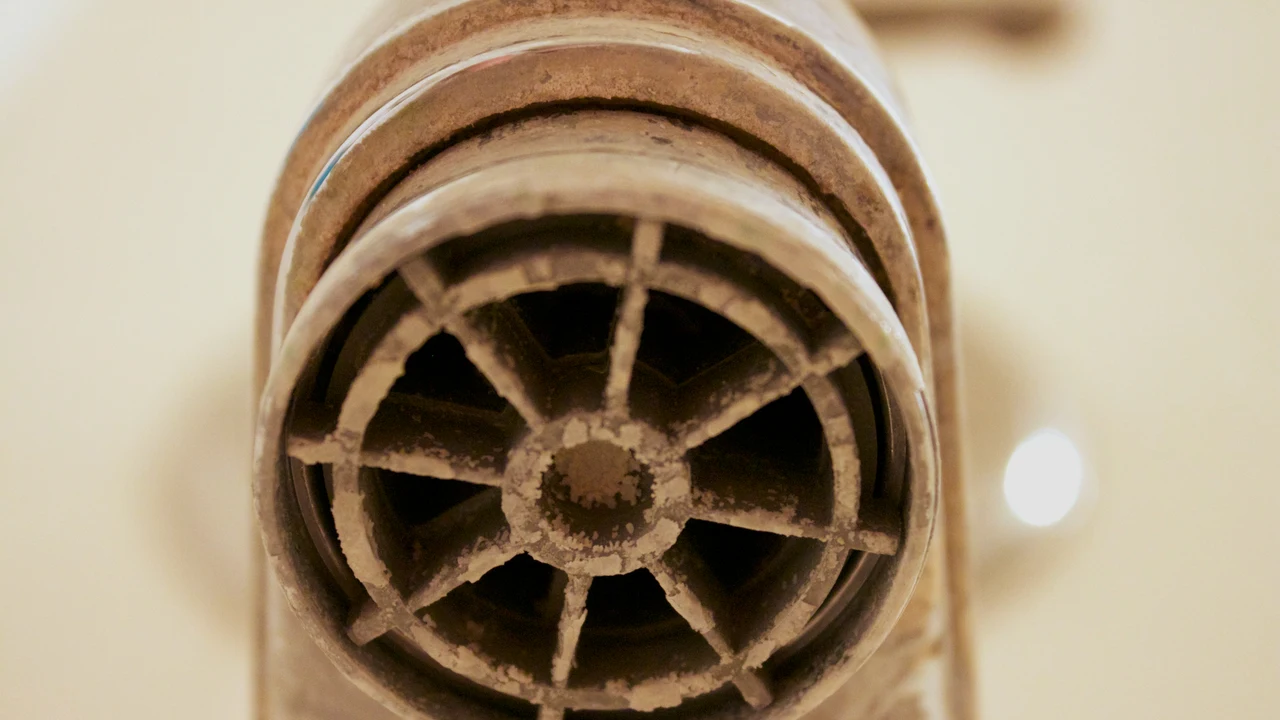
Water hardness is mainly a measure of dissolved calcium and magnesium. The US Geological Survey explains that calcium carbonate can form solid deposits when hard water is heated. Repeated wetting and drying also concentrates residue on taps, shower glass and other surfaces where droplets are left behind.
That is why one fixture can look clean while the edge around its base becomes chalky. Water reaches the edge, evaporates and leaves part of its dissolved load behind. Limescale is a deposit on the surface. It is not the same thing as the metal, glass or stone underneath, and a successful clean must separate one without sacrificing the other.
First decide whether it is actually limescale
Limescale is often pale, crusty and concentrated where water dries or a jet emerges. Soap scum can create a greasier film because soap reacts with minerals in hard water. Rust and iron staining tend to look orange or brown. Dark spotting in a persistently damp joint can involve mould, while permanent cloudiness may be etched glass rather than removable dirt.
These clues are useful, not a laboratory diagnosis. Start with ordinary soil removal using the mild cleaner allowed for the surface, then inspect a dry test area. If a greasy film lifts but a hard pale edge remains, the remaining problem is more consistent with mineral scale. If the material itself has lost gloss or become rough, stronger descaler may enlarge damage rather than remove a deposit.
The surface decides the cleaner
Before reaching for acid, identify the substrate, finish, coating and nearby materials. A shiny tap may be chrome plated, stainless steel or a coloured finish. A shower panel may have an easy-clean coating. A stone-look ledge may be marble, porcelain or engineered material. The same liquid can touch metal, sealant, grout and stone during one careless spray.
Find the care guide for the exact product or ask its supplier. A hidden test can reveal immediate colour or gloss change, but it cannot prove that repeated exposure will not weaken a coating, seal or internal component. If the maker prohibits an ingredient, a successful social-media demonstration on another product does not overrule that warning.
Use a controlled cleaning cycle instead of a stronger attack
For a surface whose maker approves a particular descaler, remove loose soil first. Apply only the approved concentration in the approved way, keep it confined to the deposit and respect the label's contact time. Use the soft cloth, sponge or brush allowed for that finish. Rinse with clean water where directed and dry so the next mineral layer does not begin immediately.
Inspect the result in good light after the surface is dry. A second gentle cycle is usually more controllable than a metal scraper, abrasive powder or unlabelled extra-long soak. Stop if the finish changes colour, loses gloss, feels rough or begins to flake. Those are signs to reassess the material, not invitations to scrub harder.
Natural stone can be the mineral that acid removes
Marble, limestone and travertine are calcareous stones. The Natural Stone Institute says their calcium carbonate is sensitive to acid and warns that lemon, vinegar and other acidic products may dull or etch them. In that situation, the cleaner cannot neatly distinguish a calcium-rich deposit from a calcium-rich surface.
A sealer does not make stone acid proof. The Institute describes many sealers as repellents that improve stain resistance, not barriers that make a surface stain proof. Use the stone supplier's non-acidic care method. If an earlier acid treatment left a pale or dull patch that remains after rinsing and drying, it may be an etch requiring professional refinishing rather than more cleaning.
Chrome, plated and coloured fittings need their own rules
Bathroom-product guidance shows why the word mild is not enough. Hansgrohe permits gentle products such as suitable citric-acid cleaners for certain showers, but tells users not to use hydrochloric, formic, acetic or chlorine-bleach products on those products. It also recommends putting cleaner on a soft cloth rather than spraying it directly into the shower.
That is model guidance, not a universal recipe for every tap. Other finishes can have different permitted products and contact times. Protect adjacent stone and grout, keep liquid out of joints and openings unless the manual says otherwise, then rinse the fitting thoroughly. If corrosion has already pitted the finish, cleaning can remove residue but cannot replace missing plating.
A showerhead can hide more materials than it shows
A showerhead contains jets, a faceplate, seals, a filter screen and internal waterways that may not tolerate the same treatment as its visible shell. Some manufacturers allow a removable component to enter a short cleaning bath. Others tell owners to wipe the outside or rub flexible nozzles rather than immerse the whole assembly.
Use the installation manual for removal, cleaning and reassembly. Do not force a plated nut with metal tools merely to copy a soaking hack. If the approved clean does not restore the spray pattern, check the filter screen and service instructions. A blocked internal part, damaged jet or plumbing issue may not be solvable from the outside.
Shower glass may include a coating and vulnerable edges
Mineral deposits and soap film often overlap on shower glass, so a detergent clean can change the appearance before any descaling begins. Coated glass adds another layer of instructions. EnduroShield, for example, recommends a damp cloth with mild detergent for routine care and warns against rough, highly acidic, alkaline or abrasive products that can damage a protective coating.
Keep the glass method off metal frames, stone thresholds, grout and sealant unless each material allows it. Work in a small test area, rinse and dry. If a clean, dry patch stays cloudy, the glass or coating may already be etched or worn. No amount of additional dwell time can turn lost surface material back into a removable deposit.
Appliances prove that there is no universal descaling recipe
One Bosch kettle manual allows a small amount of white vinegar in hot water followed by a thorough rinse. Bosch guidance for some espresso machines says not to use pure citric acid or vinegar-based cleaners, and instead directs owners to the machine's cleaning and descaling program. The same brand gives different answers because the appliances, seals and tested processes differ.
Search by the complete model number. Follow the stated product, dose, temperature, program and rinse sequence. Do not improvise inside a coffee machine, washing machine, dishwasher or steam appliance because a method worked in a plain kettle. A food-contact appliance also needs every required fresh-water rinse before it returns to service.
Do not turn a mineral problem into an abrasion problem
Metal blades, steel wool, gritty powders and hard scouring pads can scratch finishes even when the deposit moves. A scratch can make the next residue more visible and can remove the coating that protected the fixture. The tool must be compatible with the surface, not merely harder than the crust.
Avoid picking at scale around a flexible seal or forcing a stiff control. Mature buildup can conceal corrosion or hold a weakened part together. If gentle, approved cycles reveal flaking metal, a leak, a seized mechanism or a crumbling joint, stop and arrange repair. Cleaning is not a substitute for replacing a failed component.
Never create a cleaning mixture while changing methods
Do not mix descaler, vinegar or another acid with chlorine bleach. Do not combine cleaners because the first one was slow, and do not reuse a cloth or container that still carries another product. Hansgrohe's care guidance says never to mix cleaning products, while Healthdirect warns that combined cleaning chemicals can create toxic gases.
If fumes are inhaled, move to fresh air without putting yourself at risk and do not breathe over the container or surface. Call Triple Zero on 000 if someone has collapsed or is not breathing. The Poisons Information Centre provides 24-hour advice anywhere in Australia on 13 11 26. Keep the original product labels available if it is safe to do so.
Prevention removes contact time from the minerals
Drying changes the job before chemistry is needed. A squeegee on shower glass and a soft dry cloth on approved fittings remove droplets before they evaporate. Routine mild cleaning also stops soap film from trapping new mineral residue. EnduroShield's care instructions pair regular gentle washing with thorough drying for this reason.
How quickly scale returns depends on local water, heat, use and drying. TasWater publishes a monthly water-quality portal for Tasmanian systems; other utilities provide local results or advice. A water softener is a separate plumbing and water-quality decision, not an automatic cleaning purchase. Ask the water utility and a qualified supplier about the actual local result, installation and drinking-water implications before spending money.
The safe limescale decision takes less than a minute
Ask five questions: is this a hard pale deposit where water dries? Do I know the surface, finish and nearby materials? Does the maker permit this cleaner and tool? Can I control the contact, rinse and dry it? Is every other cleaning chemical absent from the surface, cloth and room task?
If all five answers are clear, use the approved method and reassess after one controlled cycle. If one answer is unknown, pause and check the manual or supplier. The goal is not to find the strongest liquid in the cupboard. It is to remove the deposit while leaving no new problem behind.
Sources and further reading
- US Geological Survey: Hardness of water, calcium, magnesium and scale formation ↗
- Natural Stone Institute: Care and cleaning of acid-sensitive natural stone ↗
- Hansgrohe: Shower descaling methods, prohibited acids and rinsing guidance ↗
- EnduroShield: Care instructions for protected shower glass ↗
- EnduroShield: Mineral buildup and products that can damage glass coatings ↗
- Bosch: Kettle manual with model-specific vinegar descaling and rinsing instructions ↗
- Bosch: Countertop espresso-machine cleaning and descaling restrictions ↗
- Bosch: Why household vinegar and citric acid are not approved for its washing machines ↗
- Healthdirect: Do not mix cleaning chemicals and first aid for inhaled fumes ↗
- Queensland Poisons Information Centre: Household chemical first aid and 24-hour advice ↗
- TasWater: Monthly local drinking-water quality portal ↗
- Wikimedia Commons: Calcified bath tap photograph by Bbypnda, CC BY-SA 3.0 ↗
This article was written for Curiosity Desk. We do not copy other publishers or invent quotes. If a material error is found, we correct it openly.
Read the full standards →One answer should lead to a better question
Bring your curiosity to the group
Curious Minds is our public Facebook community for surprising science, strange history, Australian wildlife and everyday questions. No copied posts, no personal-friend invitations and no link dumping.
- Three self-contained discussion prompts each week
- Sourced answers and honest uncertainty
- Respectful conversation without spam