One cloudy screen can be hiding five different problems
The haze on a shower screen is not a diagnosis. Fresh condensation, greasy body-product film, soap curd, hard-water scale and physical damage can all scatter light until the glass looks milky. Two or three can exist in the same place. That is why one panel may look better while it is wet, then turn cloudy again after the last droplets evaporate.
The useful question is not which viral cleaner is strongest. It is whether something still sits on top of the glass or whether the surface itself has changed. Residue can often be removed with compatible chemistry and patience. Scratches, a damaged coating or corrosion will not dissolve merely because the next product is more aggressive.
Let the glass become completely dry before judging it
Steam creates tiny droplets that scatter light. A screen that clears as the bathroom dries may simply be showing condensation, especially when ventilation is weak or the glass is cold. Diagnose after the room has aired and both sides of the panel are dry. Look from more than one angle because side lighting reveals films and scratches that disappear in flat light.
Water can also make a rough or scratched patch seem clearer for a few minutes by filling microscopic irregularities. That wet appearance is only a clue, not proof of etching. Photograph one dry section in the same light before and after testing so memory does not turn a subtle change into a dramatic result.
Water spots are a map of what evaporation left behind
The US Geological Survey explains that water hardness mainly comes from dissolved calcium and magnesium. A droplet can look clear while it is on the screen, yet leave those dissolved materials behind when the water evaporates. Repeated showers build overlapping rings, streaks and a pale crust. Heating can also encourage calcium carbonate to form a solid deposit.
Hardness varies by water supply and home. A cloudy shower does not prove that the water is unsafe, and a single spot cannot identify its exact chemistry. A recent water-quality report or a proper hardness test is better evidence than guessing. Water treatment is a household decision, not the first response to one dirty panel.
Soap film and mineral scale can lock together
Traditional soap reacts with hard-water minerals to form an insoluble curd. Skin oils, conditioner and other body products can add a greasy layer that catches more particles. The result is often a mixed deposit: an ordinary cleaner may remove the oily part but expose white mineral marks beneath it, making the first pass look as though it failed.
Texture offers hints but not certainty. A greasy smear suggests organic film, while crusty droplet edges suggest scale. A perfectly smooth haze may be a thin deposit or damage inside the top surface. Use those observations to choose a gentle test, not to justify attacking the entire screen at once.
A ten centimetre test patch can prevent a full-screen mistake
Choose a low, inconspicuous square away from decorative print, metal trim and stone. Find the screen brand, installer paperwork or product mark if possible. Photograph the dry patch, wash it using the maker's mildest approved method, rinse it thoroughly and dry it with a clean soft cloth. Compare the patch only after it is dry again.
If the patch becomes clearer, repeat the same gentle cycle rather than increasing force. If it does not change, stop and reassess. A failed test may mean the wrong chemistry, but it may also mean the mark is a scratch, coating damage or corrosion. Stronger treatment without a new diagnosis only increases risk.
Remove oily film before reaching for a descaler
A mild detergent approved for the enclosure can lift body oils and product residue so water can carry them away. Use a soft cloth or non-scratch sponge, work a small area and rinse with clean water. Replace a cloth that has trapped grit. Pressure is not a substitute for the time and chemistry needed to loosen the film.
Cleaning and disinfecting are separate jobs. The US Centers for Disease Control and Prevention says routine cleaning is sufficient in many homes. A shower screen usually needs soil removal, not an improvised disinfectant mixture. If disinfection is genuinely needed, use one labelled product that is compatible with every contacted material and follow its contact time.
Mineral scale needs compatibility, not a universal acid recipe
Acids can dissolve some carbonate scale, but a shower enclosure is not a sheet of bare laboratory glass. The product may include a protective coating, ceramic print, natural-stone threshold, plated hardware, sealant and rubber or plastic seals. The glass maker and enclosure supplier decide which descaler, concentration and dwell time those materials can tolerate.
Guardian permits a diluted vinegar solution for its ShowerGuard product, while also warning against hydrofluoric and phosphoric acids. That permission belongs to the named product and does not automatically transfer to an unknown coating or surrounding stone. Protect adjacent materials, use the smallest approved test and rinse exactly as directed.
Never mix cleaners or stack one chemistry on top of another
A screen may already carry residue from bleach, descaler, mould remover, glass cleaner or an alkaline bathroom product. Do not add another chemical because the first one seems weak. The US Environmental Protection Agency advises never mixing cleaning products unless the label specifically directs it. Some combinations release dangerous vapours; others simply neutralise the ingredient that was meant to work.
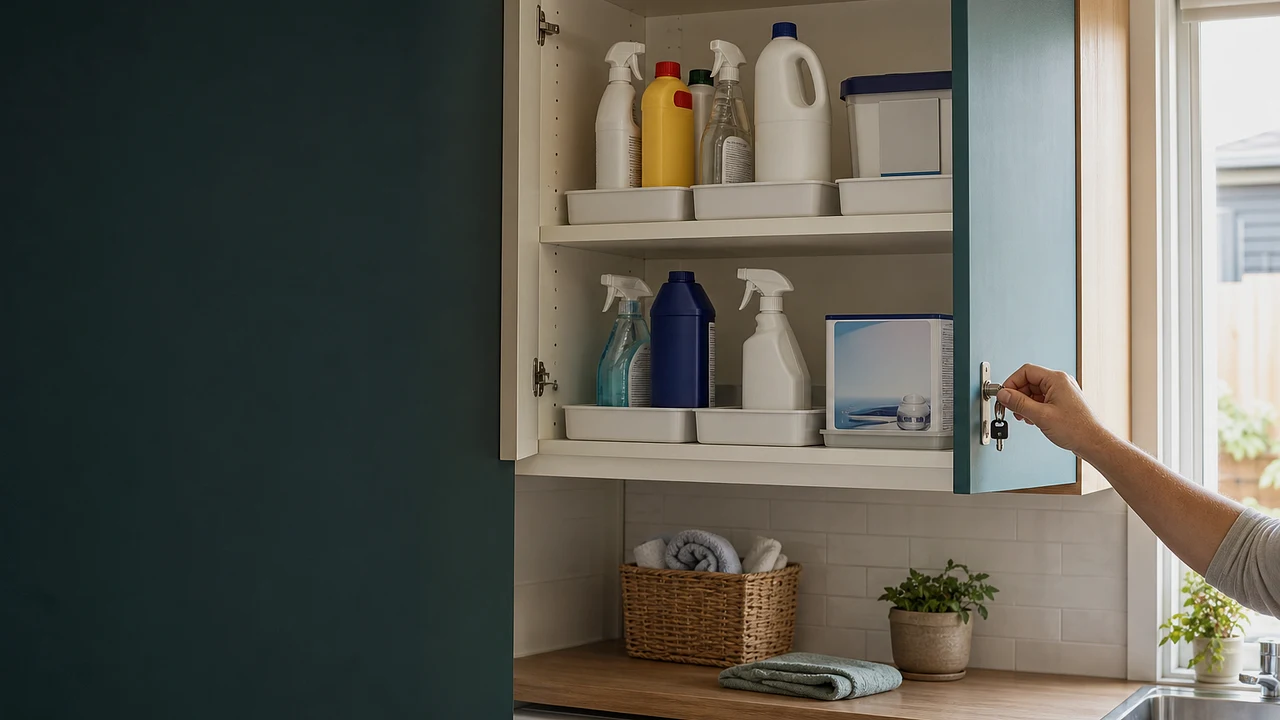
Keep products in their original containers, ventilate the bathroom and wear the protection stated on the label. Rinse the test area and tools thoroughly before changing methods. If products were accidentally mixed and anyone develops coughing, eye irritation, dizziness or breathing difficulty, leave for fresh air and contact emergency or poison-information services.
Coated and decorative glass has its own rulebook
Some shower glass is sold with a factory surface treatment intended to resist corrosion and make residue easier to remove. That does not make it self-cleaning, water repellent or scratch proof. Guardian's own care manual still calls for regular cleaning, soft tools, rinsing and drying. Another coating may specify a different cleaner or prohibit one that ordinary glass tolerates.
Etched patterns, films and decorative surfaces need particular care as well. The National Glass Association advises following manufacturer instructions and avoiding abrasive contact on decorative glass. If the installer or product cannot be identified, begin with the least aggressive method and get written advice before applying acid or using a scraping tool.
A razor can remove a spot and create a permanent line
Razor blades, metal scrapers, scouring powder and damaged pads are common shortcut recommendations. They can trap grit, cross a coating or contact a surface defect and leave scratches that only appear when the screen dries. Some glass suppliers prohibit sharp implements entirely. A technique demonstrated on one product is not permission to use it on every shower door.
The same caution applies to so-called mild abrasive pastes. Mild describes a comparison, not guaranteed safety. If the supplier allows mechanical cleaning, use the named tool, keep it clean and stay within the instructions. Otherwise a soft cloth, patience and repeated approved cycles are safer than one forceful pass.
Sometimes the deposit is gone but the cloudy pattern remains
Ordinary soda-lime glass can chemically weather in contact with water. Research on glass corrosion describes exchange and alteration at the surface, while shower-glass manufacturers warn that hard water, humidity, soap residue and some cleaners can gradually dull unprotected glass. The visible result may survive after loose mineral and soap deposits have been removed.
A permanent-looking haze can also be fine scratching or failure of an applied coating rather than corrosion of the glass itself. A home test cannot always distinguish them. If a carefully cleaned dry patch shows no improvement, do not tell yourself that one harsher chemical must be the answer. The unchanged patch is evidence to stop.
Restoration is a material-removal decision, not deeper cleaning
A glass professional may be able to assess whether polishing can improve an uncoated panel. Polishing removes or reshapes surface material, so it can change optical quality, erase a coating or create distortion when poorly controlled. Ask what the process removes, whether the glass is coated and how the result will look in side light before approving work.
Replacement may be the clearer option when damage is extensive, a coating has failed or safe restoration would cost nearly as much as a new panel. Tempered shower glass is a safety product. Do not drill, grind an edge or attempt structural modification. Use a qualified glazier for damage, loose fittings, chips or cracks.
The best prevention removes droplets before they become evidence
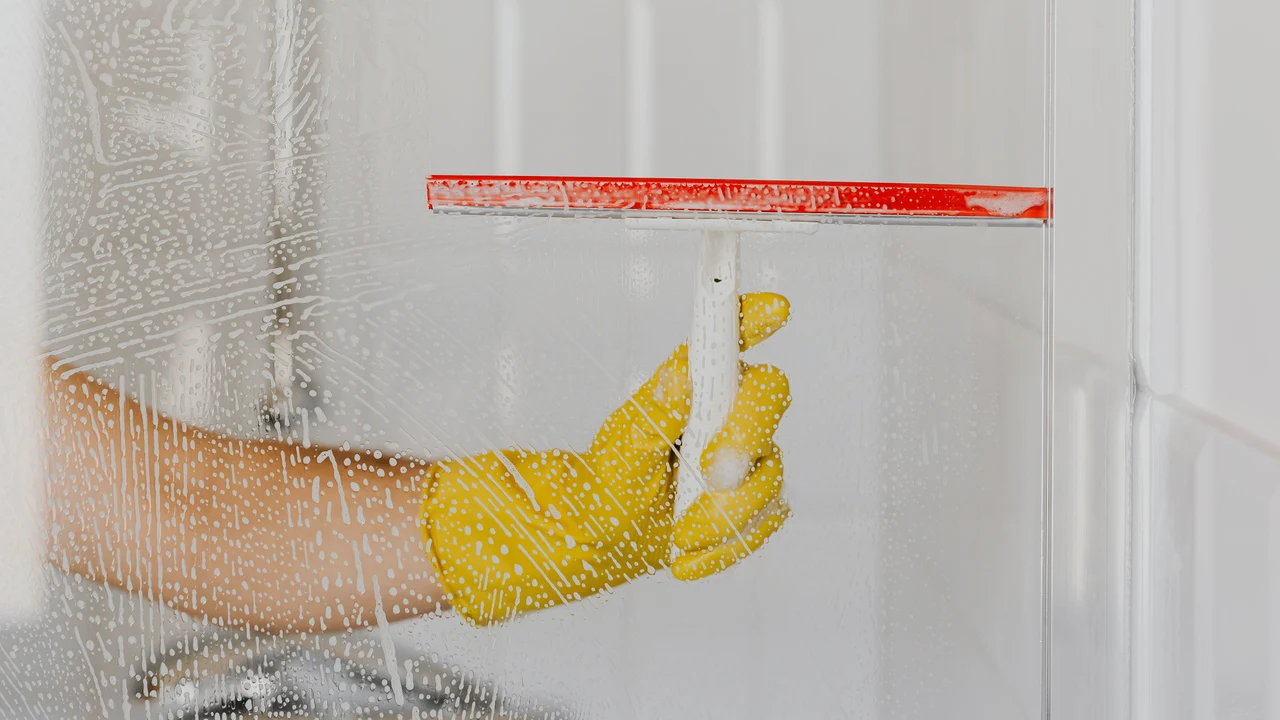
After showering, a clean squeegee or soft cloth can remove much of the water before evaporation concentrates minerals. Ventilation helps the enclosure and room dry, while regular gentle cleaning prevents a mixed film from becoming a thick project. Dry the blade between uses and replace it if grit or damage could drag across the glass.
Prevention does not require polishing the screen every day. Focus on repeated sources: standing droplets, product overspray, poor ventilation and long gaps between compatible cleaning. If measured hardness causes problems throughout the home, discuss treatment with a reputable water professional and check maintenance costs. One cloudy door alone is not enough evidence for an expensive system.
Use this order when the haze returns
First let the glass and room dry. Second identify the glass or coating and read its care guide. Third photograph and clean one small hidden patch with the mildest approved method. Fourth remove organic film before considering a compatible scale treatment. Fifth rinse, dry and compare in the same light. Change only one variable at a time.
Stop if the patch does not improve, the coating changes, scratching appears or the required chemical is not approved for nearby materials. The satisfying answer is not always another cleaning hack. Sometimes the smart result is proof that the residue is gone and the remaining cloudiness belongs to the glass, where a glazier rather than a stronger bottle should make the next decision.
Sources and further reading
- US Geological Survey: Water hardness, calcium, magnesium and solid scale ↗
- US Geological Survey: Hard water and insoluble soap curd ↗
- Guardian Glass: Why standard shower glass can become dull or corroded ↗
- Guardian Glass: ShowerGuard care, compatible cleaners and prohibited abrasives ↗
- Guardian Glass: ShowerGuard cleaning manual ↗
- National Glass Association: Proper procedures for cleaning architectural glass ↗
- National Glass Association: Handling and cleaning decorative glass ↗
- Journal of the American Ceramic Society: Water corrosion of soda-lime glass ↗
- CDC: When cleaning is enough and when disinfection is needed ↗
- US EPA: Surface compatibility and why cleaning products should not be mixed ↗
- Pexels: Shower-glass photograph by Karola G ↗
This article was written for Curiosity Desk. We do not copy other publishers or invent quotes. If a material error is found, we correct it openly.
Read the full standards →One answer should lead to a better question
Bring your curiosity to the group
Curious Minds is our public Facebook community for surprising science, strange history, Australian wildlife and everyday questions. No copied posts, no personal-friend invitations and no link dumping.
- Three self-contained discussion prompts each week
- Sourced answers and honest uncertainty
- Respectful conversation without spam