A hot cycle can end while the source of the smell stays behind
A dishwasher can open with hot steam, clean-looking plates and an unpleasant smell. That is not a contradiction. The wash water reaches the dishes, but food fragments, grease and detergent residue can collect in protected places such as the filter, sump, door lip, spray arms and drain path. Once the cycle stops, those damp areas cool slowly and may hold the material that produces the next odour.
The useful question is not simply whether the machine smells. Ask what the smell resembles, where it is strongest and whether water remains at the bottom. A sour food smell, a musty smell around the door and a drain-like smell with dirty water point to different first checks. Odour is a clue, not proof of one diagnosis.
Start with the part designed to catch what came off the plates
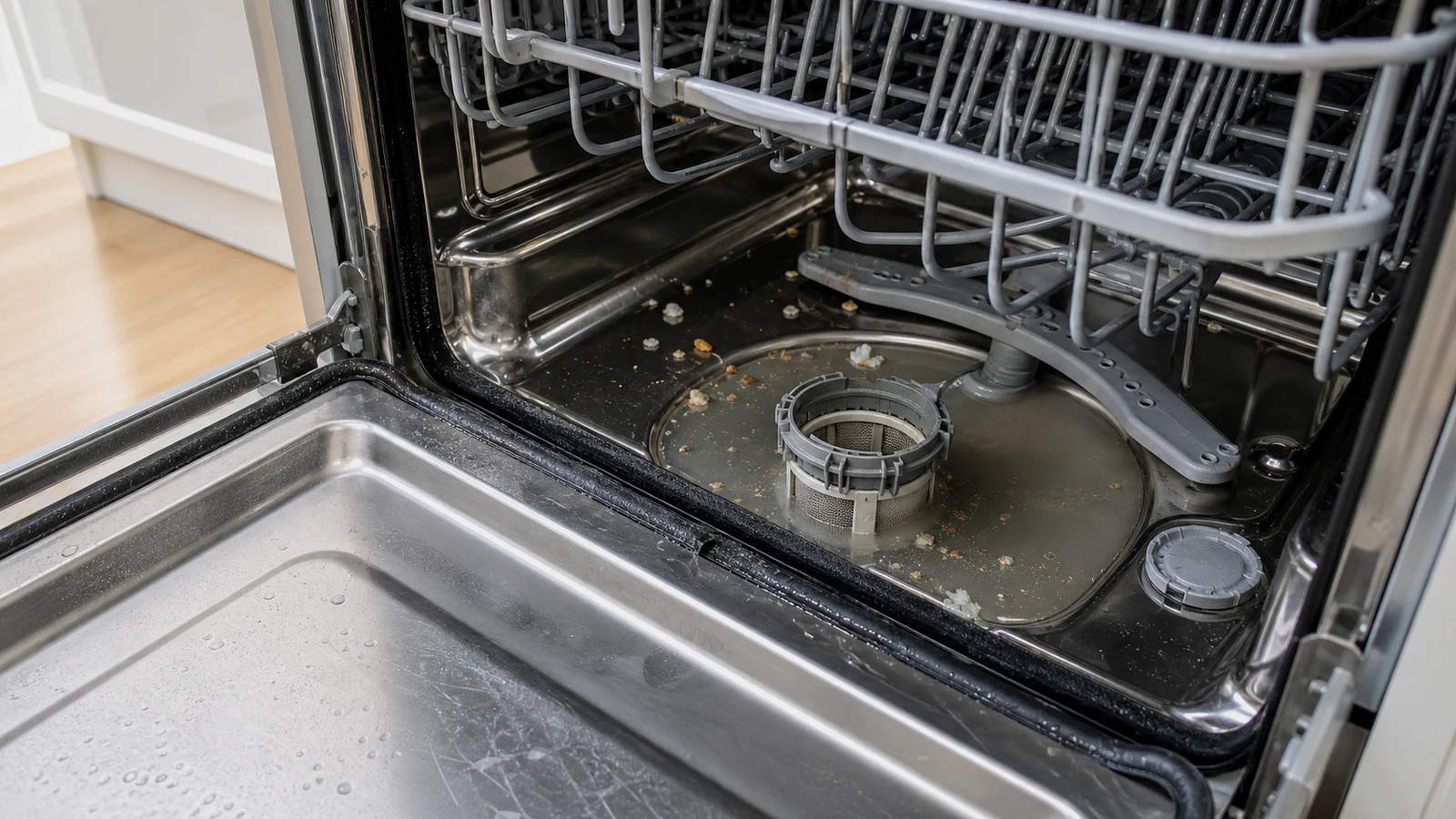
Many dishwashers recirculate wash water through a filter near the bottom of the tub. Depending on the model, that system may include a removable cylinder, a flat screen, a self-cleaning assembly or a combination of parts. A removable filter can hold rice, labels, seeds, grease and small fragments long after the dishes leave the rack.
Bosch identifies a dirty filter as a common source of dishwasher odour and advises cleaning removable filters with water, mild soap and a soft brush. Whirlpool also stresses that filter design differs between machines, including models whose filter is described as maintenance-free. Find the model number and read its manual before twisting, lifting or unscrewing a part that only looks removable.
The smell can act like a rough map
A stale food or sour smell that is strongest over the filter points first toward trapped debris. A musty smell concentrated on the door lip or rubber seal suggests residue in a place the main spray does not wash strongly. A swampy or drain-like smell with visibly dirty standing water makes the drainage path, air gap or sink connection more important to inspect.
These are practical starting points rather than guarantees. Hard-water scale, detergent film, infrequent use and a dirty item hidden under a rack can produce overlapping smells. A new appliance can also have a temporary manufacturing or packaging odour. If the smell is electrical, burning or melting-plastic rather than stale or musty, stop using the machine and move directly to the safety section below.
A little clean water may be normal; dirty water is a different clue
Some models deliberately retain a small amount of clean water in or below the filter area to keep seals from drying. Whirlpool and GE both tell owners that a modest amount can be normal on certain machines. The manual, the water's appearance and whether the level has changed matter more than the mere presence of a puddle.
Water that is cloudy, greasy, full of debris or rising higher than usual deserves attention. A blocked filter or pump inlet can slow drainage. A kinked hose, obstructed air gap or incorrectly arranged drain connection can also allow dirty water to remain or flow back. Do not reach into a pump cavity blindly because glass, bone and other sharp fragments may be hidden below the filter.
The door seal lives outside the strongest part of the wash
The lower door edge, hinge area and folds of a rubber gasket can stay damp while receiving less direct spray than the main tub. Wipe only the accessible surfaces using the method approved in the manual. Pulling a fitted gasket from its channel or forcing liquid behind it can create a leak that did not exist before.
Laboratory studies of household dishwashers have found mixed bacterial and fungal biofilms on rubber seals. That finding helps explain why a damp seal can hold persistent residue, but it should not be turned into a claim that every dishwasher is dangerous. The studies sampled small groups of machines and investigated microbial ecology. They do not show that an ordinary odour identifies a pathogen or predicts illness.
Spray arms can hide the evidence in plain sight
Food particles and mineral deposits can obstruct the small holes in a spray arm. The result may be poor coverage, gritty dishes and residue that keeps circulating. Rotate each arm by hand when the machine is off and unloaded. It should move freely without striking a tall plate, utensil or rack component.
Remove or clean a spray arm only if the manual describes the procedure. Bosch recommends checking spray arms as part of odour troubleshooting, but attachment systems vary. Avoid enlarging a jet with a drill, metal screw or forceful tool. Changing a carefully sized opening can alter the spray pattern and damage the arm.
Inspect in an order that avoids guessing
First, empty the machine and identify the model. Second, note the odour and look for dirty standing water. Third, check and clean the user-removable filter. Fourth, inspect the accessible door lip and seal. Fifth, look at the spray arms and visible drain area. Reinstall every part exactly as the manual shows before testing a cycle.
This sequence starts with common, visible and user-serviceable causes. It also keeps a simple filter problem from turning into an unnecessary hose or pump dismantling job. Take a photograph before removing a multi-part filter, and never run the dishwasher with a filter left loose or missing unless the manufacturer explicitly directs a diagnostic test.
Use the maintenance cycle the appliance was designed to run
After debris is removed and the parts are correctly reinstalled, the manual may specify an empty hot maintenance cycle, a machine-care program or a model-approved dishwasher cleaner. Use the documented product, dose and program. A deodorising product can make the tub smell different, but it cannot clear an obstructed filter, correct a drain installation or repair a failed pump.
Internet recipes often treat vinegar, bicarbonate, bleach and commercial cleaner as interchangeable tools. They are not. Acids can affect some metals and seals, chlorine products can react dangerously with acids or ammonia, and excess foam can escape an appliance. Never mix cleaning products. Follow both the appliance manual and the cleaner label, and ventilate the room as directed.
Loading habits influence what reaches the filter
Scrape bones, seeds, labels and large food pieces into the bin, but do not assume every plate must be pre-washed until spotless. The dishwasher and detergent need to work as a system. The exact preparation advice belongs to the manufacturer because sensors, filter designs and wash programs differ.
Make sure a tray, pan handle or long utensil does not block a spray arm. Use the recommended detergent type and dose for the water conditions, choose an appropriate cycle for heavy soil and unload soon enough for the tub to begin drying. These habits reduce residue without disguising a mechanical drainage problem.
Infrequent use needs a different routine
A few wet plates left for days can begin to smell before a cycle ever starts. GE notes that infrequent use can contribute to dishwasher odour. If the machine will sit, scrape the load well and use a rinse program only when the manual provides one. Do not leave a closed tub full of standing dirty water.
After an ordinary cycle, allow moisture to escape in the way the manufacturer recommends and safe household conditions permit. Homes with small children or pets may need the door fully latched rather than ajar. The safe routine is the one that balances drying with the appliance's anti-tip, child-safety and door instructions.
Know when the odour has moved beyond cleaning
Stop using the dishwasher for a burning, hot-electrical or melting-plastic smell, visible smoke, unusual heat, sparking or a repeated electrical fault. Isolate power only if it is safe to do so and arrange qualified appliance service. A leak, damaged power connection or water near electrical parts also needs immediate attention rather than another wash cycle.
Call for service when dirty water repeatedly remains after the filter and visible area are checked, the pump cannot be accessed by the documented user procedure, an error code returns or the machine makes a new grinding noise. A sewage smell or backflow linked to the sink, air gap or household drain can require a licensed plumber. Renters should report drainage and fixed-appliance faults instead of altering building plumbing.
The five-minute smell check
Open the empty, cool machine and smell near three places: the filter, the door seal and the drain area. Look for food in the user-removable filter, residue on the accessible door lip, blocked spray holes and water that is dirtier or higher than the manual describes. Check that the sink is draining normally and that no new error or leak has appeared.
Then choose the smallest action that matches the evidence. Clean the documented filter, wipe the accessible seal, clear only user-serviceable spray holes or run the approved maintenance program. If the clue is burning, leaking, dirty backflow or a fault that returns, stop. The fastest route to a fresh machine is a correct diagnosis, not a stronger fragrance.
Sources and further reading
- Bosch: Dishwasher odour causes, filter cleaning and spray-arm checks ↗
- Bosch: Dishwasher cleaning and maintenance guidance ↗
- Bosch: Not-draining checks and pump debris safety ↗
- Whirlpool: Cleaning the dishwasher filter and model differences ↗
- Whirlpool: Water remaining in the filter area ↗
- GE Appliances: Dishwasher odour troubleshooting ↗
- GE Appliances: Removable and self-cleaning dishwasher filters ↗
- GE Appliances: Standing dirty water and the high drain loop ↗
- US CDC: Never mix household cleaning and disinfection products ↗
- Applied and Environmental Microbiology: Biofilms on household dishwasher rubber seals ↗
- BMC Microbiology: Household dishwasher seals as microbial reservoirs ↗
- American Society for Microbiology: Microbial inhabitants of cleaning appliances ↗
This article was written for Curiosity Desk. We do not copy other publishers or invent quotes. If a material error is found, we correct it openly.
Read the full standards →One answer should lead to a better question
Bring your curiosity to the group
Curious Minds is our public Facebook community for surprising science, strange history, Australian wildlife and everyday questions. No copied posts, no personal-friend invitations and no link dumping.
- Three self-contained discussion prompts each week
- Sourced answers and honest uncertainty
- Respectful conversation without spam