A solar panel catches light, but a fuel keeps it for later
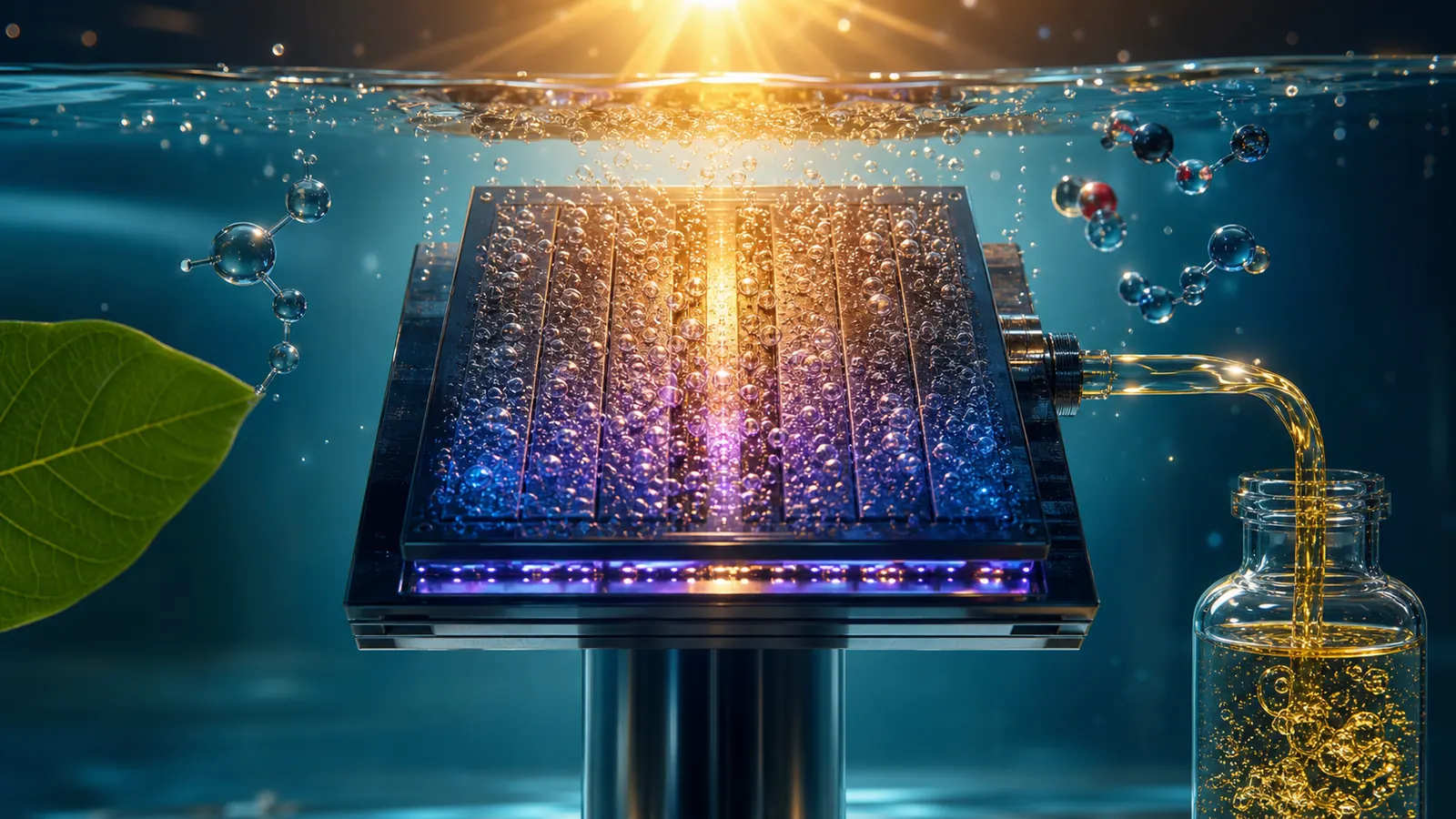
Sunlight landing on a photovoltaic panel can push electrons through a circuit. That electricity must be used, sent elsewhere or stored. A leaf takes a different route: it uses light-driven chemistry to assemble energy-rich molecules. Artificial photosynthesis borrows that broad ambition. Researchers want devices that use sunlight to split water or combine water and carbon dioxide into fuels whose chemical bonds can be stored and transported.
The phrase 'artificial leaf' can make the task sound like copying a green shape. The real challenge is a chain of light absorbers, catalysts, membranes and reaction environments. Each part must move energy and matter in the right direction while suppressing unwanted reactions. A beautiful bubble in a laboratory may show one step works; it does not prove the complete system can make useful fuel safely for years.
Water is stable because breaking it is expensive
Water does not volunteer to become hydrogen and oxygen. Energy from light must be captured, charges must be separated, and catalysts must guide the reactions without wasting most of the energy as heat. Hydrogen can be a solar fuel if it is produced from water using sunlight. More complex systems attempt to reduce carbon dioxide into carbon-containing products, which introduces more reaction pathways and more chances to make the wrong molecule.
Selectivity matters because a mixture is not automatically a useful fuel. The device may also need to keep hydrogen and oxygen apart, prevent reverse reactions, manage changing sunlight and survive contact with water, salts or reactive intermediates. Researchers can optimise one catalyst under controlled conditions, then discover that the complete device loses performance because another layer blocks light or degrades.
The leaf is a brilliant teacher and an unfair competitor
Plants build and repair their photosynthetic machinery, grow toward light and use abundant raw materials. They also spend captured energy on survival and reproduce on their own. An engineered solar-fuel device does not need to imitate every biological detail. It can use different materials and target a single product. That freedom may allow higher conversion efficiency for a chosen task, but the device must be manufactured, maintained and eventually recycled.
This is why a headline efficiency number never tells the entire story. A material containing scarce elements may perform well on a tiny area and still be unsuitable for global scale. A catalyst may be efficient for hours and unaffordable if it must be replaced every week. Carbon dioxide conversion only helps climate goals if the energy, feedstock, construction and eventual fuel use are counted across the system rather than at one glowing electrode.
The future arrives when the whole machine survives the sunlight
The US Department of Energy describes solar fuels as a route for storing solar energy in chemical form and continues to fund basic research because practical barriers remain. The milestones are measurable: higher solar-to-fuel efficiency in a complete device, long operation without rapid degradation, selective production of a useful fuel, safe separation of products and catalysts made from sufficiently abundant materials. Pilot systems must then repeat those results outside ideal laboratory light.
If that sequence succeeds, solar fuels could serve jobs that are difficult to electrify directly or provide feedstocks for industry. They will still compete with renewable electricity, batteries, conventional hydrogen and fuels made through other routes. The frontier is exciting precisely because nature proves that light can be stored in chemistry. The unanswered question is whether engineers can build a system that does it cheaply, cleanly and reliably without needing the self-repairing life of a leaf.
The fuel is useful only if the energy and carbon books balance
Making a combustible molecule is not automatically a climate solution. Researchers must count the energy used to build and run the device, the source of water or carbon dioxide, catalyst replacement, product separation and what happens when the fuel is burned. A carbon-containing solar fuel can recycle recently captured carbon rather than add fossil carbon, but only if the complete process actually captures, converts and contains it efficiently.
That full accounting also decides where the technology belongs. Direct electricity is usually more efficient when a wire and battery can do the job, while energy-dense fuels may remain valuable for aviation, shipping, seasonal storage or chemical manufacturing. Artificial photosynthesis does not need to replace every solar panel to matter. Its credible opportunity is narrower and harder: turning intermittent sunlight into a storable molecule for the parts of the economy that electrons alone cannot easily reach.
Sources and further reading
This article was written for Curiosity Desk. We do not copy other publishers or invent quotes. If a material error is found, we correct it openly.
Read the full standards →One answer should lead to a better question
Bring your curiosity to the group
Curious Minds is our public Facebook community for surprising science, strange history, Australian wildlife and everyday questions. No copied posts, no personal-friend invitations and no link dumping.
- Three self-contained discussion prompts each week
- Sourced answers and honest uncertainty
- Respectful conversation without spam