Why the magnetopause is hard to see
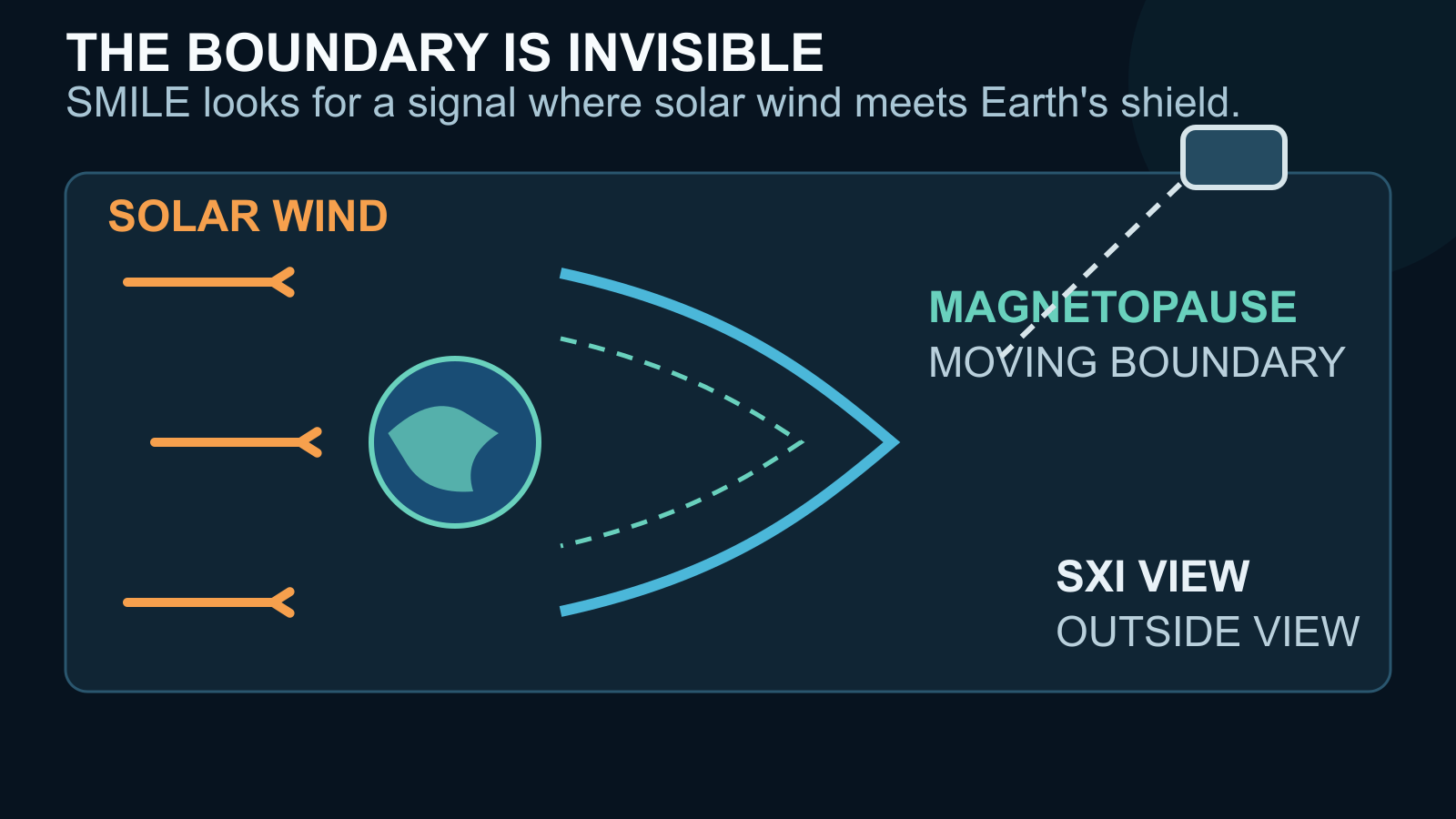
The magnetopause is the moving boundary where the solar wind meets Earth's magnetic shield. It is not a solid surface with a bright edge. Its position changes as the solar wind changes, and the science question is how that boundary responds when the stream of charged particles from the Sun pushes on it.
That makes the boundary difficult to see directly. A spacecraft inside the magnetosphere can measure local particles and fields, but a local reading is not the same as a wide view of the whole boundary. ESA designed SMILE to take a more distant look from a high Earth orbit, with its soft X-ray imager aimed at the region where the solar wind and the outer atmosphere interact.
The important distinction is that SMILE is designed to make the boundary visible through a physical signal, not through a normal-light photograph. The first step is to detect the faint soft X-rays associated with solar-wind ions interacting with neutral atoms around Earth; the other instruments then help test whether the apparent edge matches the space-weather situation.
How SMILE's soft X-ray camera finds the boundary
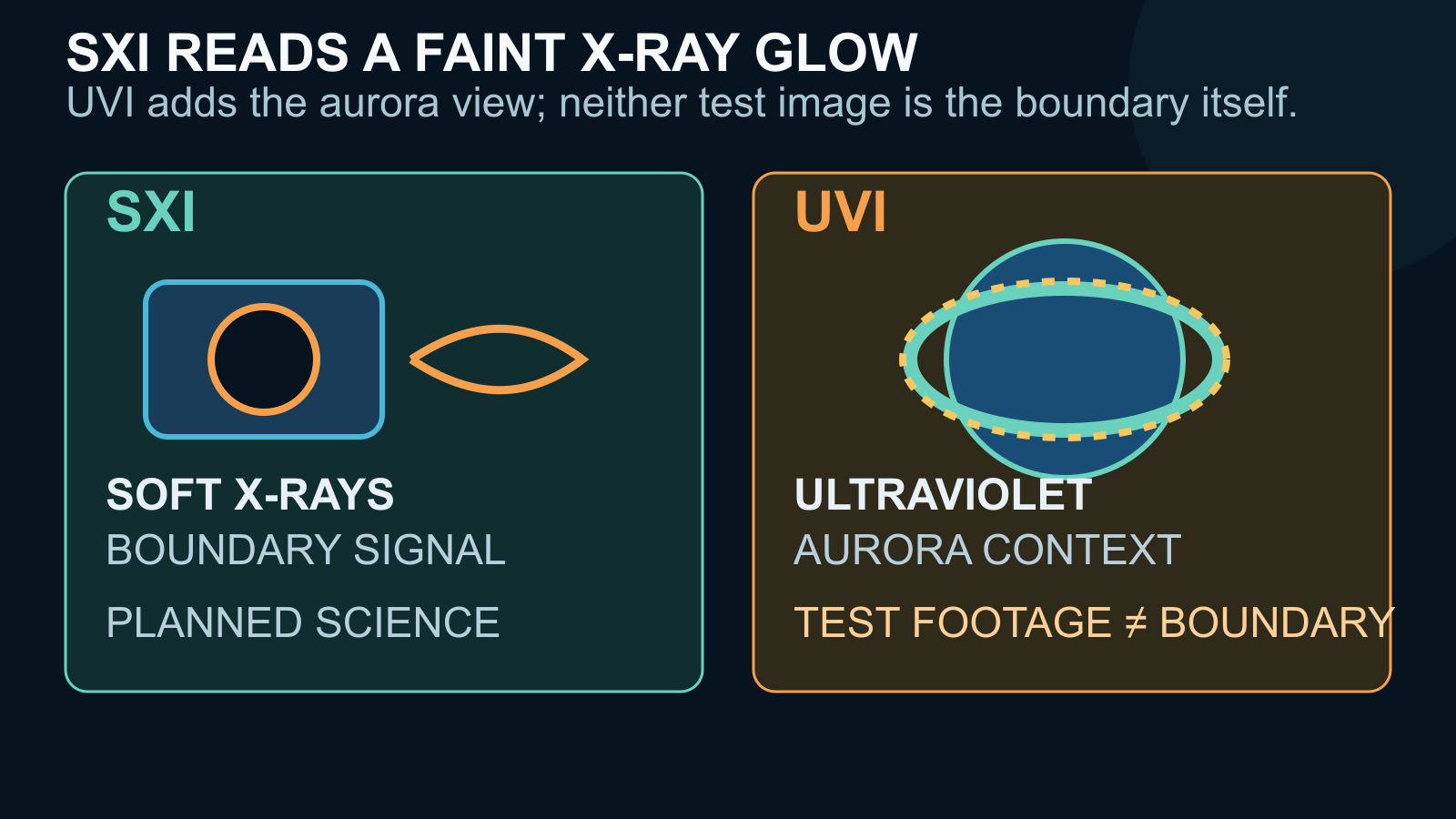
SMILE's SXI is intended to image soft X-rays produced when solar-wind ions exchange electrons with neutral atoms in Earth's outer atmosphere. That glow can outline the interaction region from a viewpoint outside the magnetosphere, giving scientists a way to follow the boundary's shape and motion rather than sampling it at only one point.
A useful image still needs interpretation. The apparent X-ray edge has to be placed in the spacecraft's viewing geometry and compared with models of the solar wind and magnetosphere. A bright patch or a changing edge would be a measurement to analyse, not a complete explanation of what the solar wind did or what will happen next.
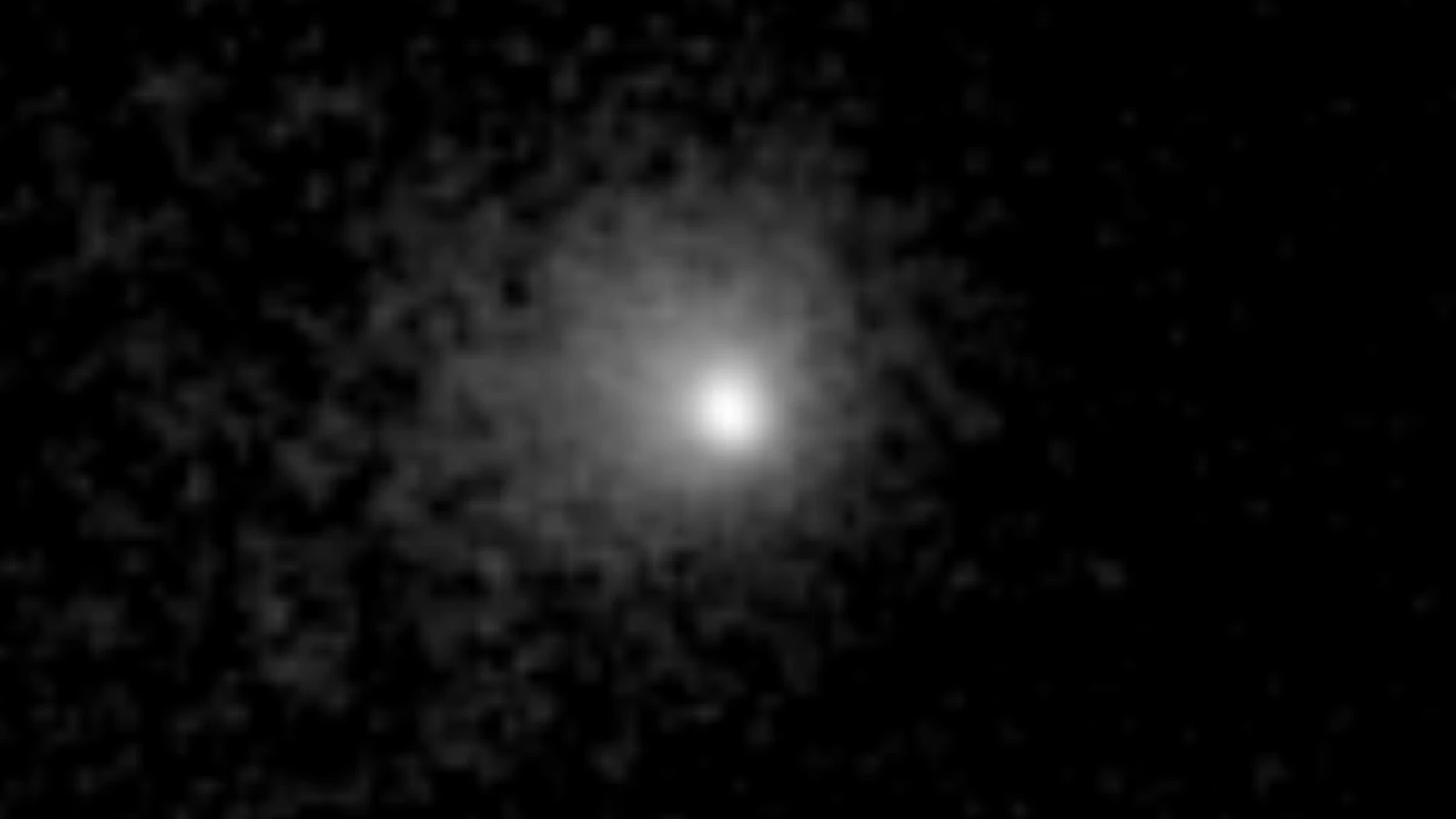
ESA's first SMILE X-ray test image was of the supernova remnant Cassiopeia A, a calibration target that showed the camera could collect a useful test view. That is evidence about instrument commissioning, not a picture of Earth's magnetopause. The same separation applies to the mission's first ultraviolet footage of an auroral substorm: it is valuable context, but it is not the planned boundary image.
Why ultraviolet, particle and magnetic measurements are combined
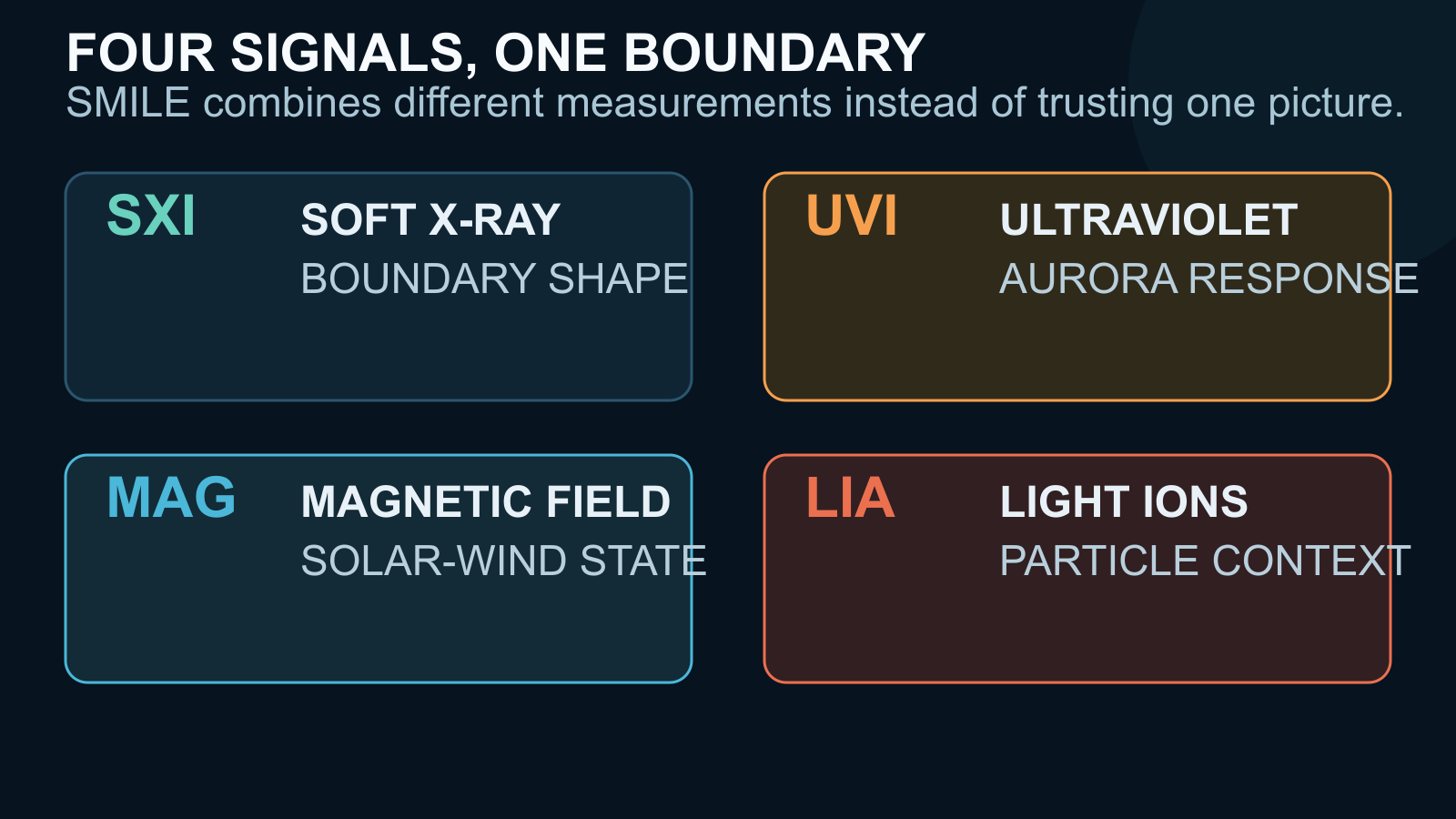
The soft X-ray image is only one part of SMILE's measurement chain. Its UVI instrument observes ultraviolet auroral emissions, which show how energy from the solar wind is being deposited in Earth's upper atmosphere. The MAG instrument measures the local magnetic field, while the LIA instrument measures light ions. Each channel describes a different piece of the same interaction.
Putting those channels together helps scientists distinguish a real boundary response from an optical or processing artefact. The X-ray view can provide the large-scale shape, the auroral view can show a response in the polar region, and the particle and magnetic measurements provide the local conditions needed to interpret both. The combination is stronger than treating one image as a self-explanatory answer.
The inspected commissioning records already separate these instruments in practice: ESA reports early UVI footage, a first SXI test image and MAG data from space. Those milestones show that the mission is being commissioned, but they should not be rewritten as proof that the full four-instrument magnetopause study has already produced its first final result.
What commissioning has shown—and what remains open
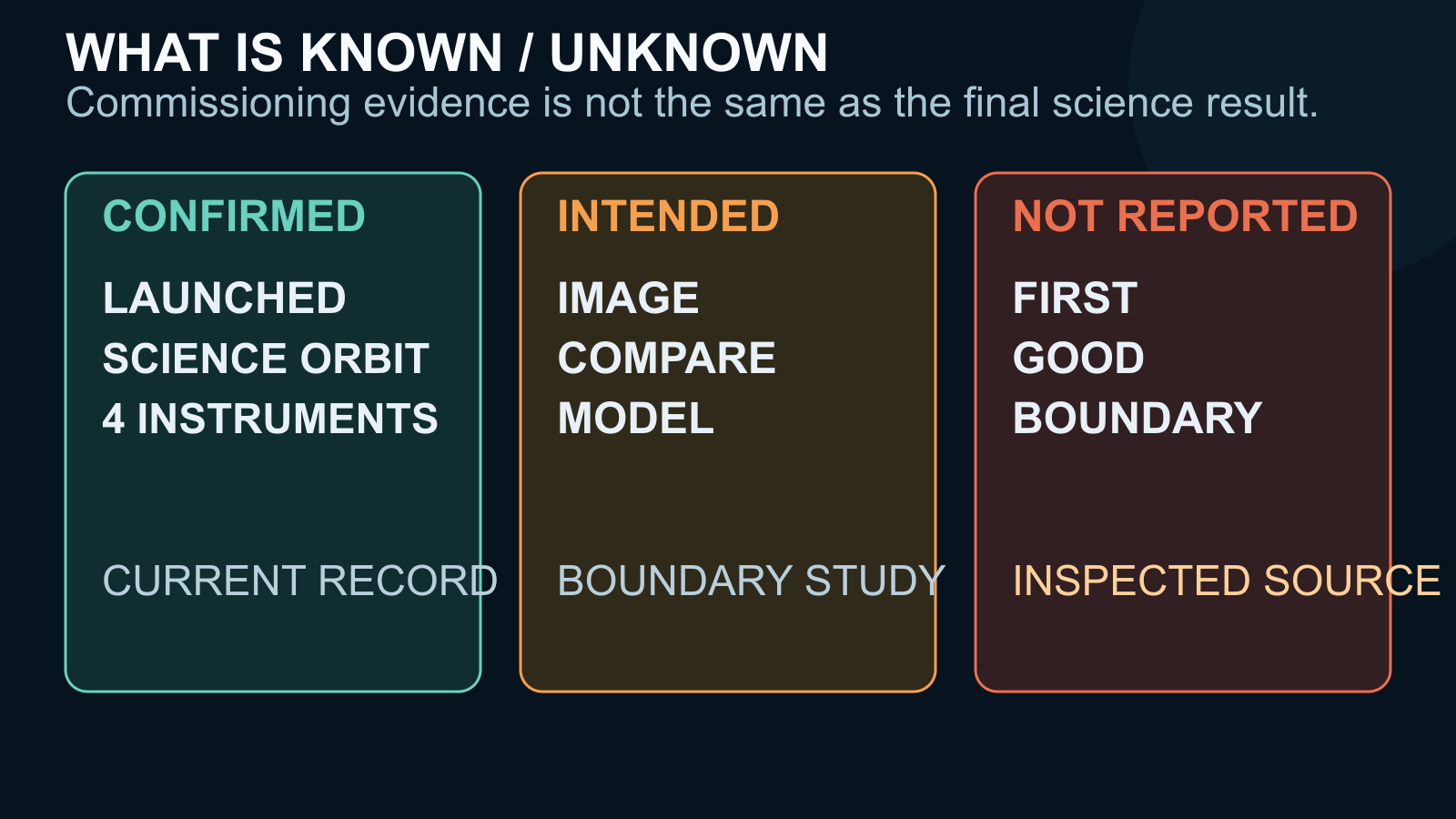
ESA's September 2026 report says SMILE launched on 19 May, reached its science orbit on 20 June and was approved to begin science operations on 23 September. It also describes the four instruments, the first ultraviolet footage and the Cassiopeia A X-ray test. Those are the confirmed milestones used in this explanation.
The same report says the SXI team was still reducing unwanted stray light and expected to take the first good magnetopause or polar-cusp image after further work. The inspected page does not report that image as completed. That wording matters: a mission can be in science operations while an especially difficult first target image remains a work in progress.
So the honest answer is partly a method and partly a boundary on the evidence. SMILE is built to combine a wide soft-X-ray view with ultraviolet, particle and magnetic measurements of the solar-wind interaction. The final test is still the returned, analysed magnetopause data; until that result is documented, the commissioning images are steps toward the answer, not the answer itself.
Sources and further reading
This article was written for Curiosity Desk. We do not copy other publishers or invent quotes. If a material error is found, we correct it openly.
Read the full standards →One answer should lead to a better question
Bring your curiosity to the group
Curious Minds is our public Facebook community for surprising science, strange history, Australian wildlife and everyday questions. No copied posts, no personal-friend invitations and no link dumping.
- Three self-contained discussion prompts each week
- Sourced answers and honest uncertainty
- Respectful conversation without spam