The first result is a comparison, not a single snapshot
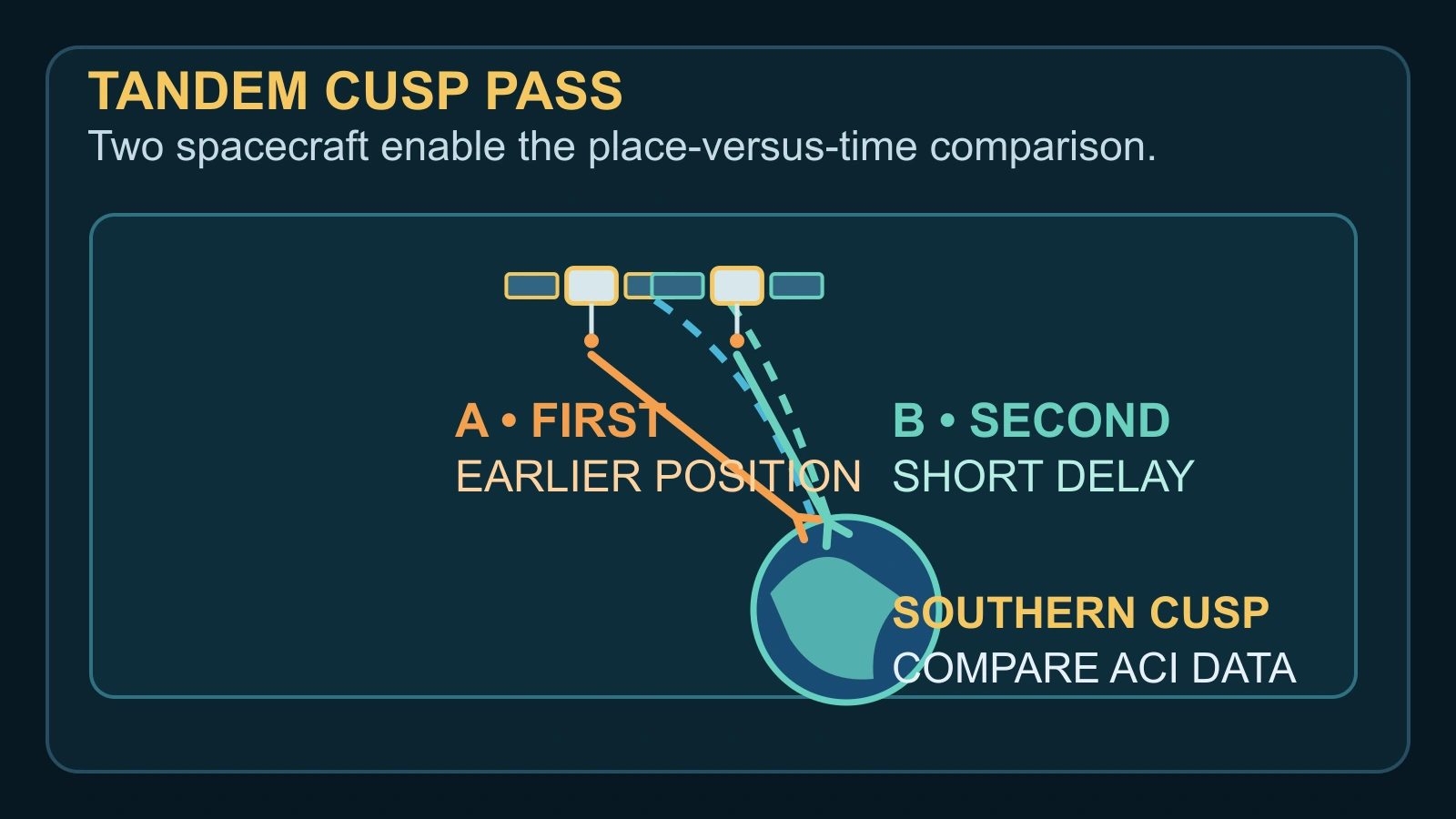
TRACERS did not answer the question with one dramatic flash. Its first paper used tandem encounters in the polar cusp: the two spacecraft's Analyzers for Cusp Ions recorded particle structures as the pair passed through the same broad region in sequence. The comparison asks whether a difference is mainly caused by the spacecraft being in a different place, or by the reconnection pattern changing during the delay.
For the November 2025 through February 2026 encounters, the preliminary result pointed to spatial variability as the larger contribution. The paper's abstract says it dominated by at least a factor of two across the tested interplanetary-magnetic-field orientations and solar-wind dynamic pressures. That is a result about the relative variability in this data set, not a claim that time never matters.
Almost all encounters classified as spatial also contained some temporal variability. The useful finding is therefore a measured imbalance, not a neat either-or: location appears to matter more in the first sample, while evolution during the encounter remains part of the signal.
Why the polar cusp is a useful sampling point
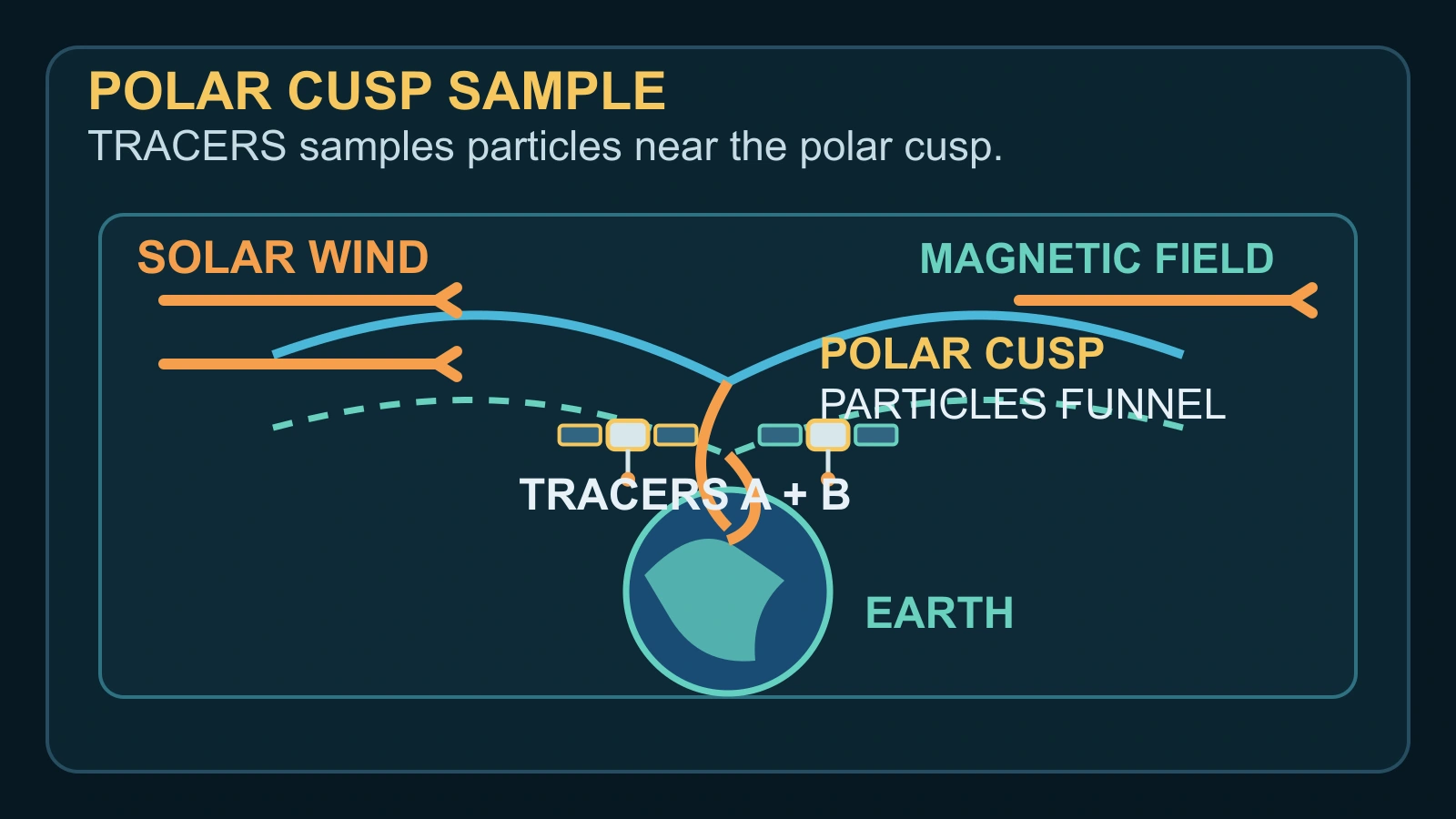
Magnetic reconnection is the process that lets magnetised plasma exchange energy, mass and momentum across a magnetic boundary. At Earth's dayside magnetopause, the solar wind presses against the magnetosphere. TRACERS is not parked on the reconnection line itself; it samples the particle signatures that appear in the nearby cusp, where the magnetic geometry funnels solar-wind particles toward the polar atmosphere.
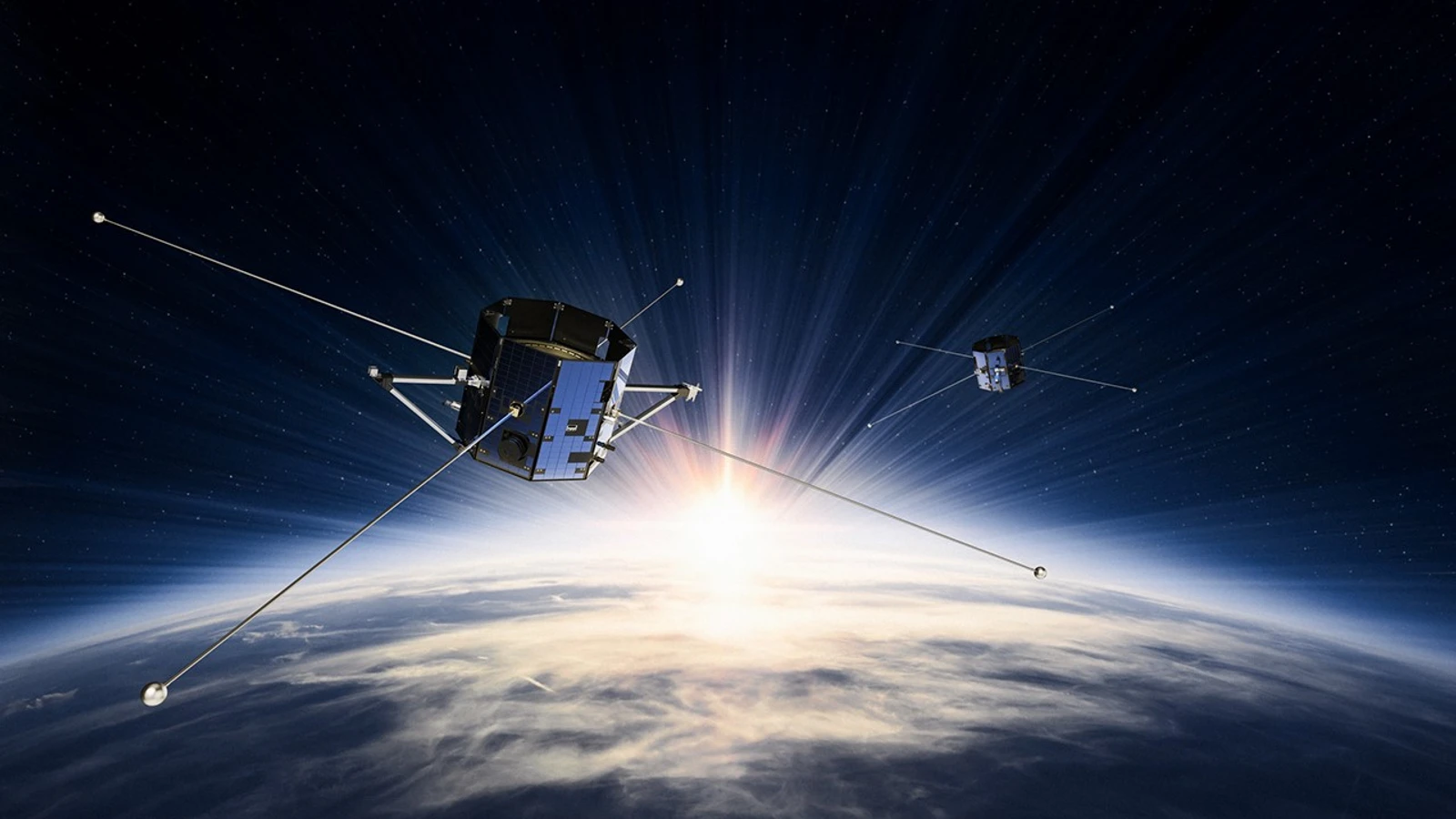
NASA describes the twin spacecraft as flying in a Sun-synchronous low-Earth orbit that repeatedly crosses the dayside polar cusp. That repeated geometry gives the mission many encounters under different solar-wind conditions while keeping the measurement question focused on a recognisable sampling region.
The cusp is consequently a useful observation window, not a glowing outline of the entire magnetopause. The instruments measure local particles and fields. Scientists then use timing, spacecraft separation and models to infer how reconnection variability is distributed.
Two spacecraft help separate place from time
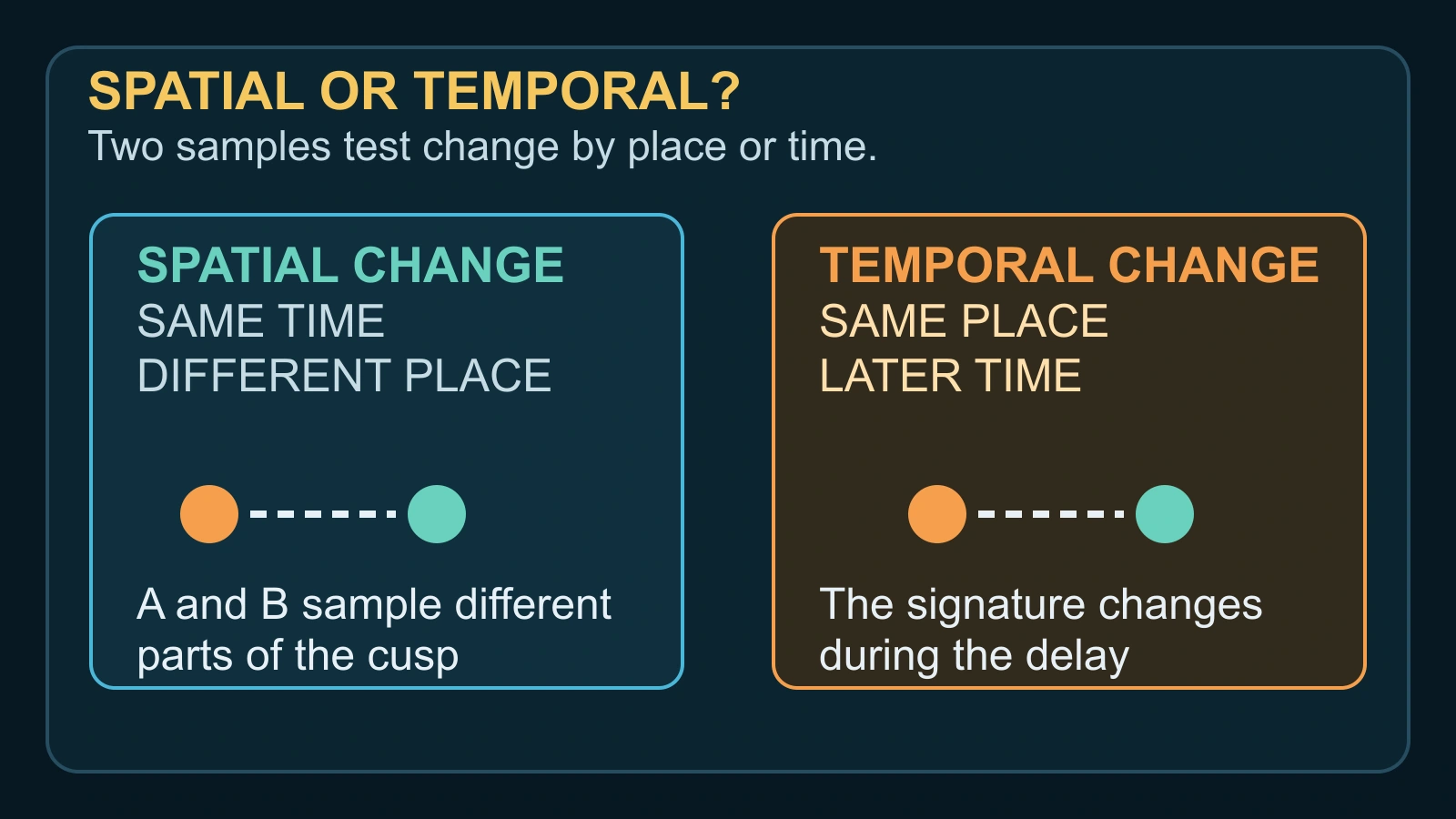
A single spacecraft cannot easily tell whether a changing particle pattern is moving past it or changing where it is. Two spacecraft provide a second sample with a known separation and delay. If their readings differ in a way consistent with different positions, that supports a spatial contribution; if the same region's signature evolves during the delay, that supports a temporal contribution.
The TRACERS paper uses the tandem ACI observations to make that distinction across the mission's early cusp encounters. The spacecraft are not two cameras taking the same photograph. They are two moving particle samplers whose relative timing makes a physical comparison possible.
That is why the article's answer is about method as much as outcome. TRACERS did not simply observe reconnection and announce its cause. It designed a comparison that makes two competing explanations visible in the data, then reports which contribution was larger under the sampled conditions.
What the first paper establishes—and what it does not prove
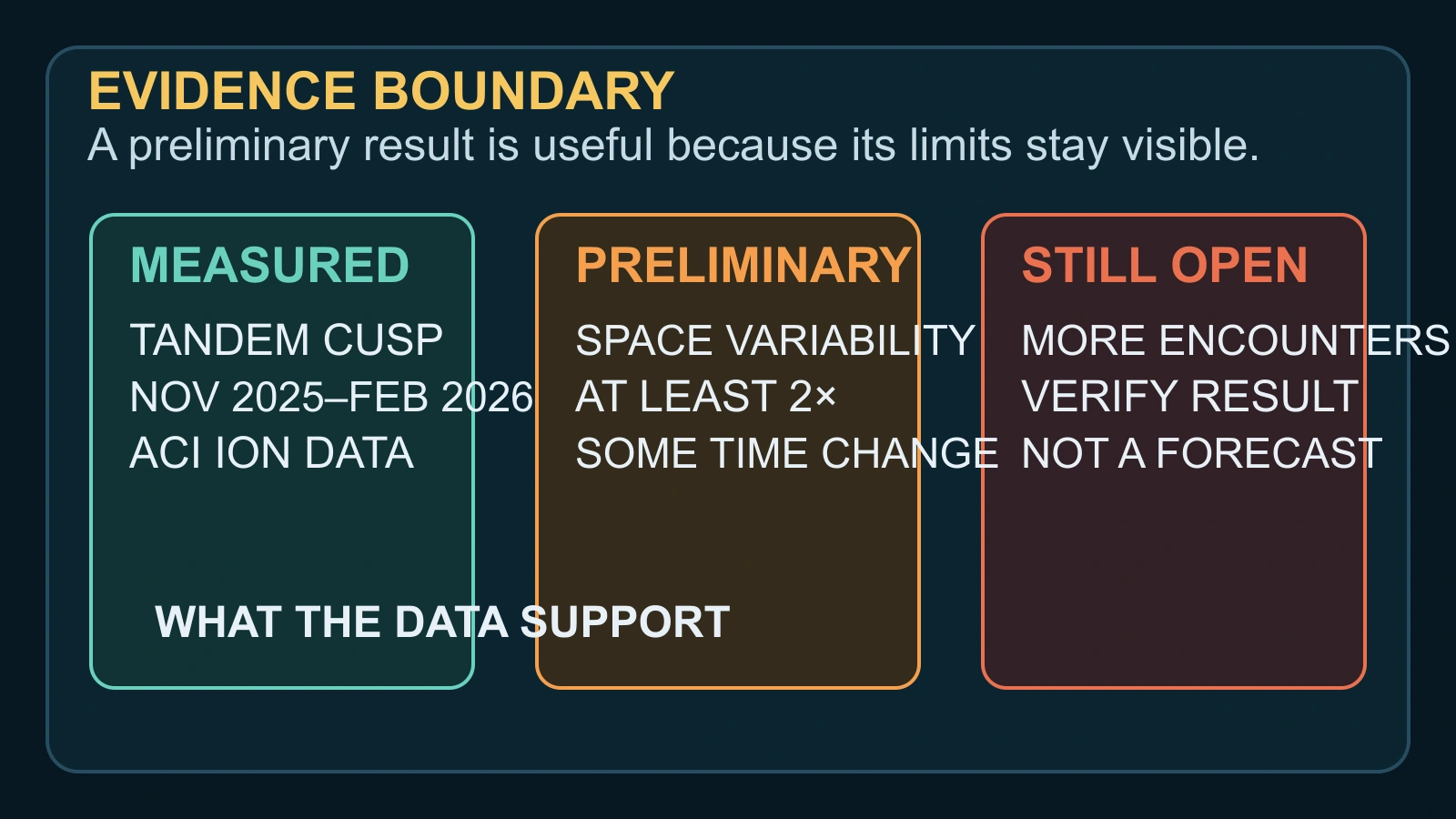
Established: TRACERS collected tandem cusp encounters from November 2025 through February 2026, and the paper used ACI observations from the two spacecraft to test spatial versus temporal variability. NASA's mission record confirms the twin-satellite design, low-Earth orbit and polar-cusp science target.
Newly observed in the first result: the analysis found spatial variability dominated by at least a factor of two for all tested interplanetary-magnetic-field orientations and solar-wind dynamic pressures. The paper also reports that temporal variability remains embedded in almost all encounters classified as spatial.
Uncertain: the result still needs more tandem cusp encounters for verification and for the mission's other science objectives. Not proved: that every reconnection event is spatially controlled, that TRACERS can forecast a particular geomagnetic storm, or that the first result directly measures effects at a power grid or a person on the ground. That boundary keeps an early measurement from becoming a universal explanation.
Sources and further reading
This article was written for Curiosity Desk. We do not copy other publishers or invent quotes. If a material error is found, we correct it openly.
Read the full standards →One answer should lead to a better question
Bring your curiosity to the group
Curious Minds is our public Facebook community for surprising science, strange history, Australian wildlife and everyday questions. No copied posts, no personal-friend invitations and no link dumping.
- Three self-contained discussion prompts each week
- Sourced answers and honest uncertainty
- Respectful conversation without spam