Why a moving comet can look like a streak
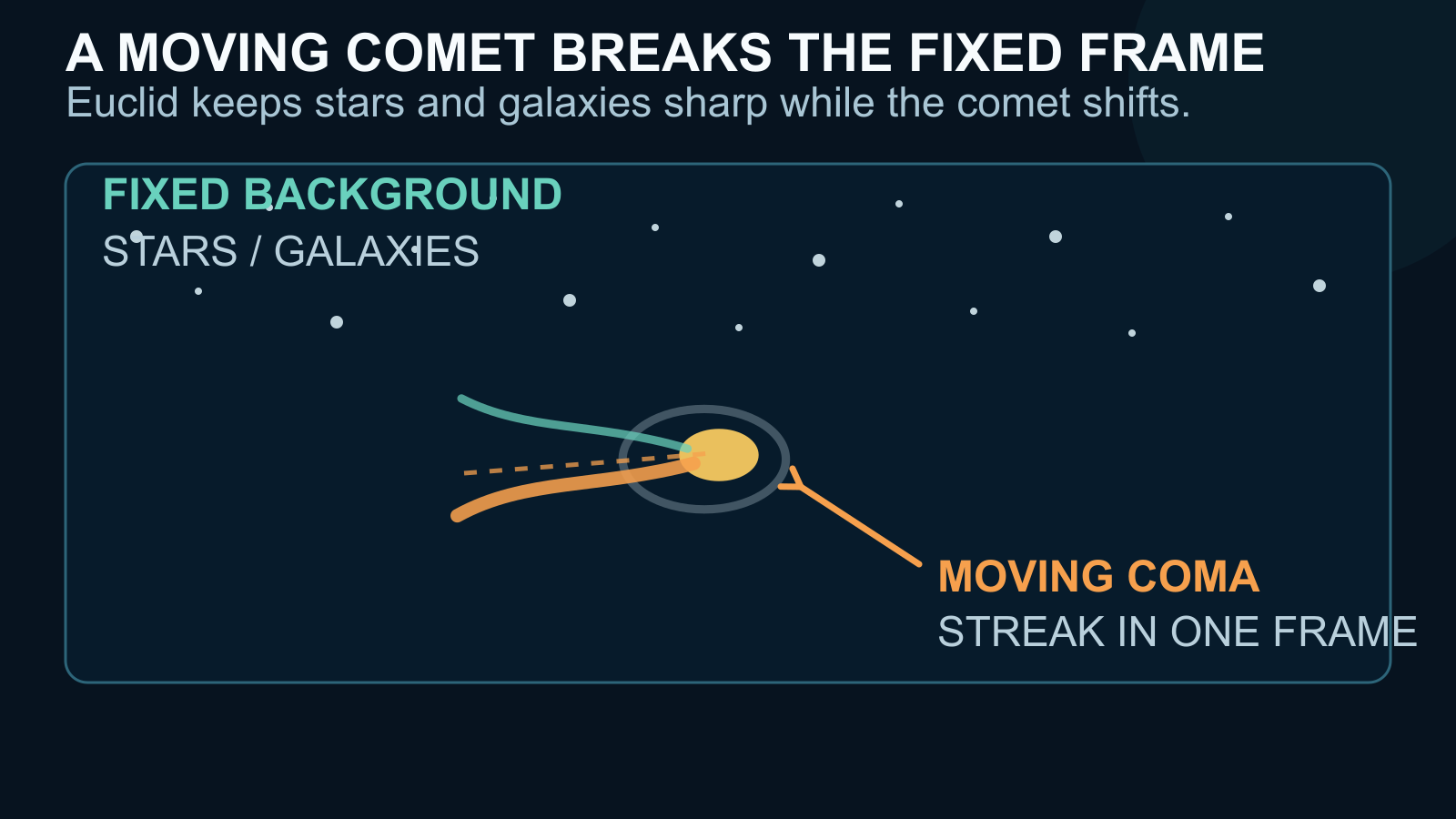
Euclid was built to make very steady, very sharp maps of distant galaxies. A comet is the opposite kind of problem: it moves across the sky, and a long exposure can stretch its light into a line while the faraway stars remain nearly fixed. That difference is the first clue.
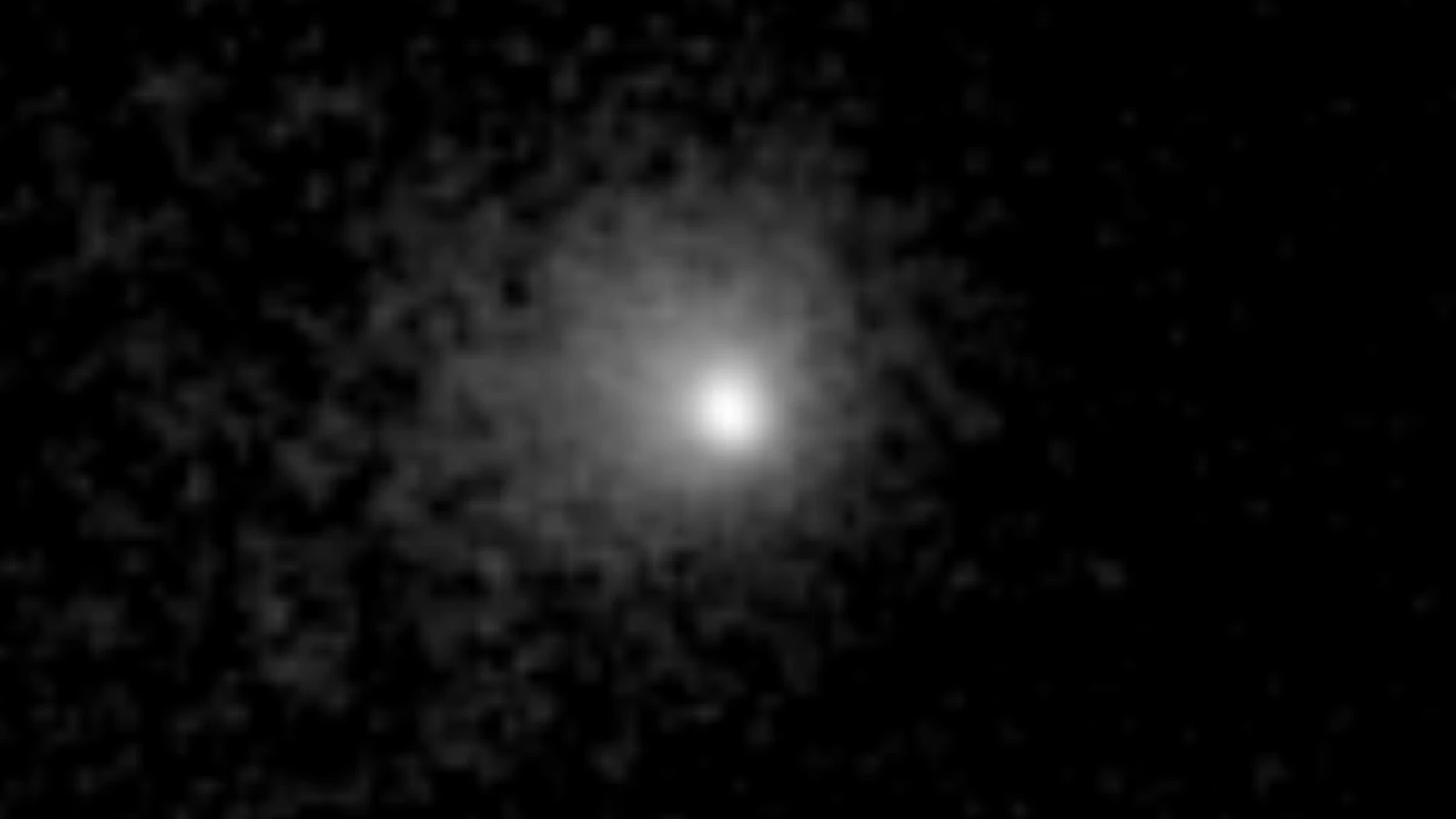
In the images reported by ESA, the object was not identified because Euclid was deliberately hunting comets. A moving-object detection programme developed for the Euclid Consortium's Solar System Objects Science Working Group flagged a streak across the images. A closer look found the fuzzy cloud, or coma, that indicates an active comet shedding dust and gas.
The useful distinction is between a picture and a detection rule. The streak is a change relative to a fixed background; the coma adds a physical clue about the kind of object. Neither clue alone is a complete orbit or a final catalogue record, which is why the later follow-up and MPC steps matter.
How repeated Euclid frames reveal the path
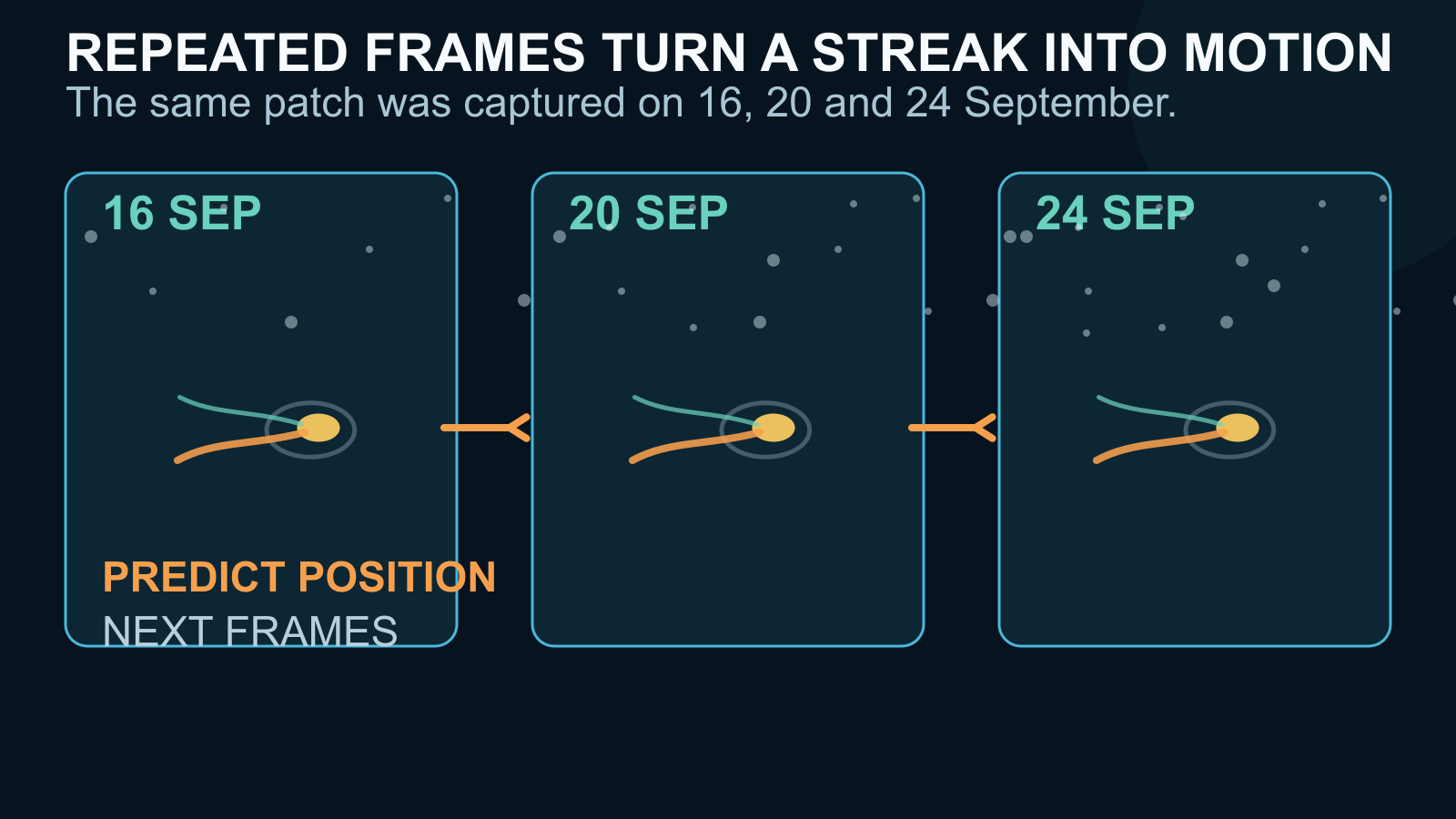
The software could search more efficiently than a person scrolling through every pixel because it could predict where a moving object should appear next. ESA says the team found C/2026 S1 in five image sets, taken between 16 and 24 September 2026, with the discovery material also describing 16 total exposures across those fields of view.
The logic is simple even though the data search is not. Stars and galaxies define a largely fixed reference frame. A candidate that changes position from one exposure to the next can be tested against a moving-object path, while the shape and surrounding coma provide a separate reason to treat it as a comet candidate rather than a stray pixel or a distant galaxy.
The sequence also explains why a telescope that normally moves on after each step could still find this object. Euclid does not revisit every field on demand, but the comet's path happened to cross several of the mission's observations. That accidental overlap supplied the time-separated positions needed for a follow-up alert.
How follow-up observations and the MPC confirmation work
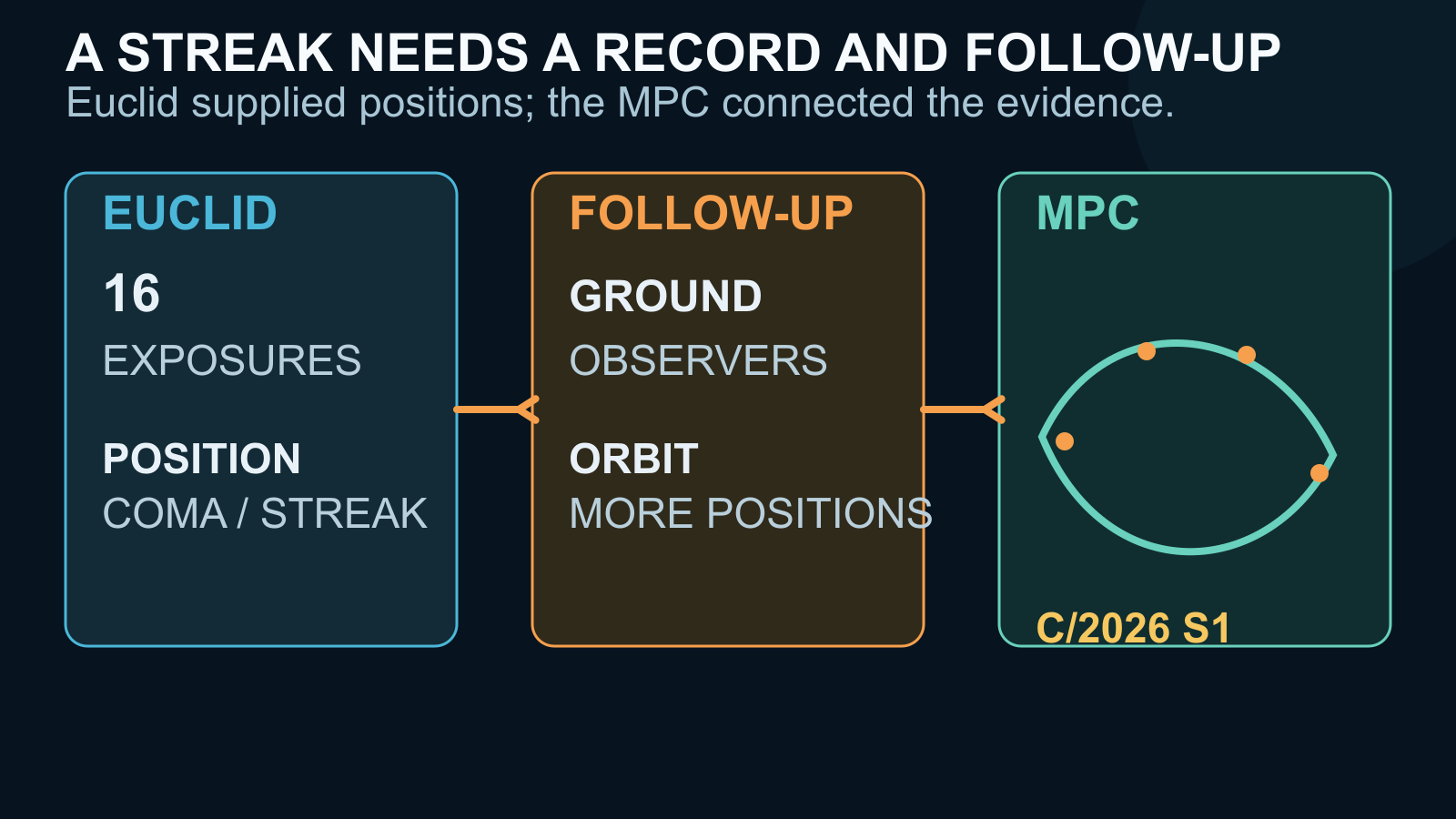
A moving streak is a strong lead, not the whole confirmation. The team first compared the candidate with catalogues of known comets and asteroids. When no match was found, the observations were reported to the International Astronomical Union's Minor Planet Center, which collects observations, helps calculate or refine orbits and assigns official designations.
The alert also gave ground-based astronomers a chance to observe the same object. MPEC 2026-T146 records reports of cometary activity and observations from 16 September to 8 October 2026, including the original Euclid measurements and later follow-up. The extra positions help turn a few moving points into an orbital solution rather than leaving the object as an unexplained streak.
The MPC confirmed the object as a comet on 8 October and the record identifies it as C/2026 S1 (Euclid). That designation is the durable evidence boundary for this article: it establishes what the observation and follow-up record supports, while the long-term orbit and future behaviour remain subject to additional observations and orbital refinement.
What the discovery does—and does not—say about Euclid's survey
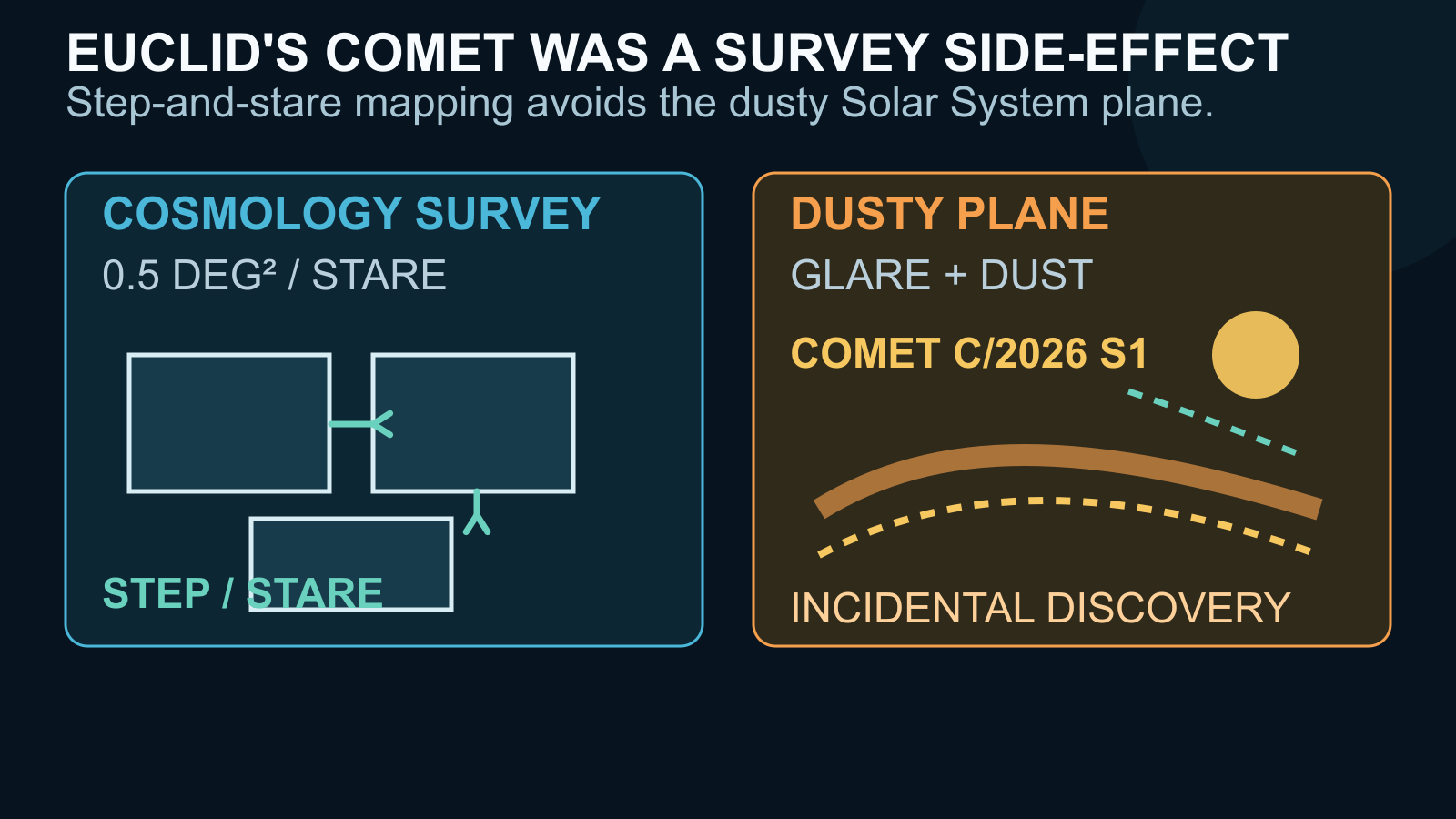
Euclid's main job is cosmology. ESA describes its VIS instrument as a wide-field visible-light camera for measuring the shapes of more than a billion galaxies, while the mission's step-and-stare survey moves between roughly 0.5-square-degree sky positions. The survey deliberately avoids the dust- and bright-star-dominated plane of the Solar System because that foreground light would interfere with the deep-universe measurements.
That design makes the comet discovery unusual, not contradictory. Euclid's moving-object software exists partly because Solar System objects still appear in the fields and need to be identified so their streaks or extra light can be separated from the cosmology data. C/2026 S1 was a fortunate overlap between the comet's path and the mission's survey pattern, not evidence that Euclid has become a dedicated comet survey.
Nor does the discovery change what Euclid's cosmology observations have already established about dark matter or dark energy. It is a useful real-world test of the mission teams' ability to detect, report and coordinate on a moving object, and it gives astronomers a previously unknown comet to follow. The two scientific stories should remain separate.
Sources and further reading
This article was written for Curiosity Desk. We do not copy other publishers or invent quotes. If a material error is found, we correct it openly.
Read the full standards →One answer should lead to a better question
Bring your curiosity to the group
Curious Minds is our public Facebook community for surprising science, strange history, Australian wildlife and everyday questions. No copied posts, no personal-friend invitations and no link dumping.
- Three self-contained discussion prompts each week
- Sourced answers and honest uncertainty
- Respectful conversation without spam