The car was only the beginning
When the motor car arrived, the valuable invention was not only the vehicle. Cars created a trail of new necessities: fuel stations, tyres, mechanics, paved roads, parking, traffic rules, insurance and parts supply. Many of those businesses became ordinary enough to disappear into the background. That is the useful way to look at artificial intelligence now. The model may be the eye-catching machine, but widespread use depends on an economy built around the problems the machine creates.
AI’s clearest equivalents are already visible: electricity and cooling for dense computing, independent evaluation for systems that behave differently outside a laboratory, provenance tools for synthetic media, secure integration into real workflows and training for the people expected to supervise it. The deeper question is not which fashionable product carries an AI label. It is which bottleneck repeatedly appears as AI moves from demonstration to infrastructure—and who has a reason to pay for that bottleneck to disappear.
First ring: power, grids and heat removal
The physical support economy is the easiest ring to measure. The International Energy Agency estimated that data centres used about 415 terawatt-hours of electricity in 2024, around 1.5 per cent of the global total. Its base case puts consumption near 945 TWh in 2030, driven most strongly by AI alongside other digital services. In the United States, a Lawrence Berkeley National Laboratory report released by the Department of Energy estimated data centres at 4.4 per cent of national electricity use in 2023 and projected roughly 6.7 to 12 per cent in 2028.
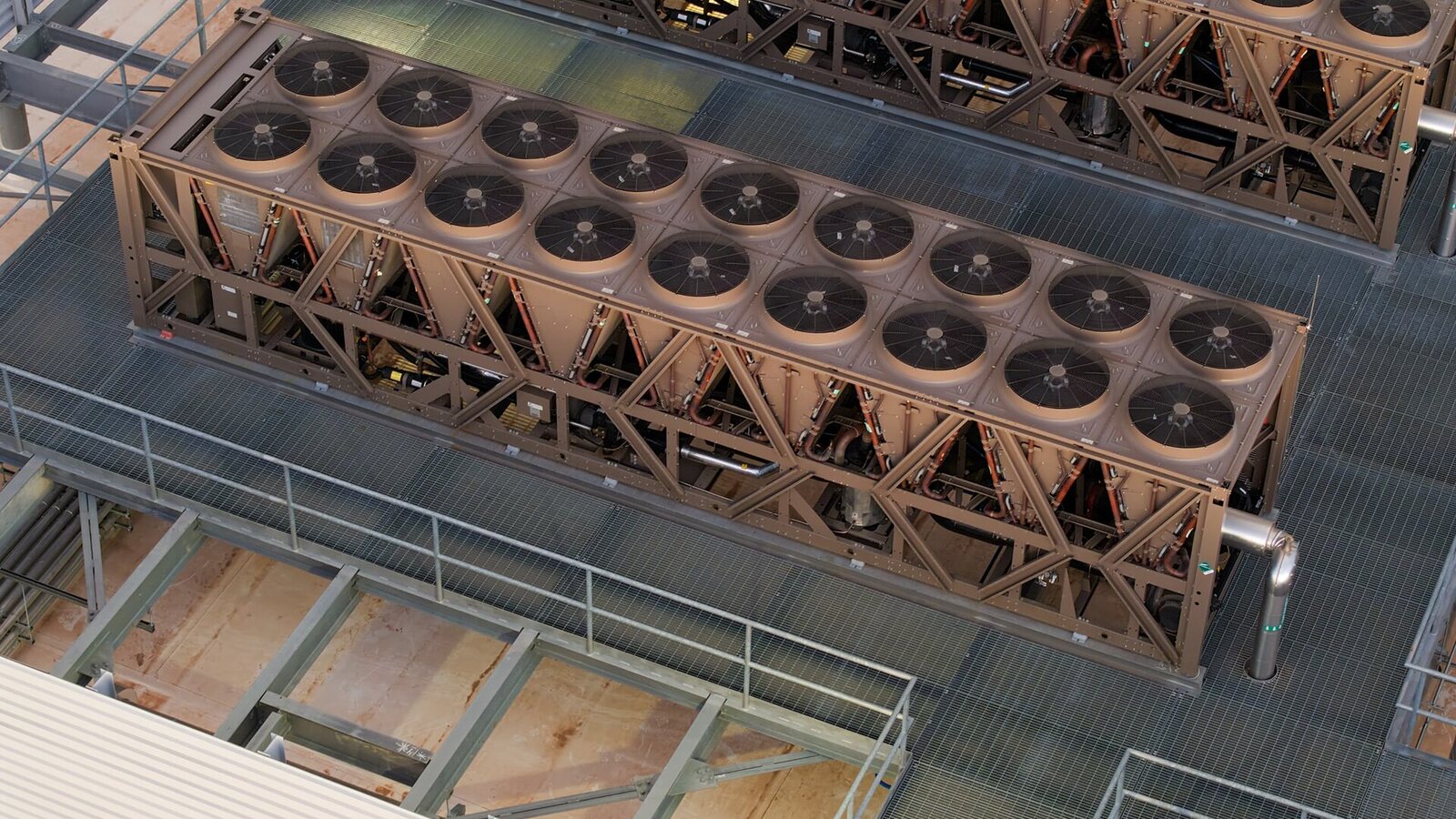
Those figures do not mean every transformer, power plant or cooling system is an AI business. They do show a concentrated new customer whose equipment must receive continuous power and shed large amounts of heat. That creates work in grid connections, electrical equipment, energy storage, cooling, efficiency measurement, flexible demand and sometimes heat reuse. The bottleneck is local as much as global: the IEA estimates that grid constraints could delay about one-fifth of planned data-centre projects unless risks are addressed. The ‘petrol station’ may therefore look less like a forecourt and more like a transformer queue.
Second ring: testing a system after the demo ends
A benchmark can show what a model did under a defined test. A business still needs to know what the full system will do with its own documents, permissions, users and unusual cases. That gap creates demand for evaluation, red teaming, monitoring, incident records and sector-specific test suites. NIST’s voluntary AI Risk Management Framework organises the job around four functions—govern, map, measure and manage—because trustworthy use is a continuing operating process, not a certificate earned once at launch.
NIST’s ARIA programme makes the distinction even clearer by separating model testing, red teaming and field testing. A model may look capable in isolation while a deployed system fails because of the surrounding data, interface, incentives or human hand-off. Independent evaluators and assurance services can therefore become AI’s crash-test laboratories and roadworthy inspectors. Yet the limit matters: a voluntary framework does not automatically create a legally required audit market, and an impressive test report cannot guarantee behaviour in every future setting. The industry grows only where buyers repeatedly value evidence more than reassurance.
Third ring: proving where digital material came from
Cheap synthetic images, audio and video create another support problem: a file can travel far from the tool, person and edits that produced it. The C2PA Content Credentials specification provides a way to attach cryptographically verifiable provenance, preserving claims about creation and changes in a tamper-evident chain. That can support cameras, editing software, publishers, archives and platforms—and create work in credential issuance, signing infrastructure, verification interfaces and provenance-preserving production tools.
But provenance is not a truth machine. C2PA explicitly avoids judging whether the recorded assertions are good or bad; it checks whether they are associated with the asset, correctly formed and free from tampering. A genuine photograph can carry a misleading caption, and a false claim can have a perfectly documented editing history. The useful industry is therefore closer to chain-of-custody infrastructure than an automatic lie detector. Its customers pay for inspectable origins and alterations, while human reporting and independent evidence still decide what the material means.
Fourth ring: integration and the human operating layer
Buying access to a capable model does not connect it safely to payroll, customer records, engineering tools or a company’s approval rules. Someone must decide what the system may read, which actions require a person, how costs are limited, what gets logged and how work recovers when the model is wrong. That creates a less cinematic but durable layer of workflow mapping, permission design, system integration, human review, observability and failure recovery. The buyer is not paying for intelligence in the abstract; the buyer is paying for dependable work inside a particular environment.
The workforce layer belongs in the same picture. The OECD reports growing demand both for specialist AI professionals and for general AI literacy, while warning that current training supply may not meet the broader need. The strongest opportunity is not a flood of generic prompt courses. It is role-specific learning tied to real decisions: when a nurse, accountant, technician, editor or manager should trust a result, challenge it, escalate it or refuse to automate the task. AI may scale answers, but organisations still need people who can design and supervise the conditions under which those answers are useful.
A three-question test for spotting a real AI support industry
First, name the bottleneck without using the word AI as decoration. Is the problem power, heat, proof of origin, uncertain performance, unsafe access to tools or a missing human skill? Second, identify the payer. A technology can be socially interesting without forming a separate market; an industry needs customers who repeatedly spend to remove the problem. Third, look for a measurable signal such as grid-connection demand, procurement, standards adoption, training uptake, incident data or a growing installed base that needs service.
This test filters out attractive forecasts. AI liability insurance could become a distinct market, but insurers first need identifiable losses, reliable incident records and controls they can price; ordinary cyber or professional-indemnity policies may absorb the risk instead. Robot repair could resemble the motor mechanic trade, but only after enough dependable robots are deployed outside tightly controlled factories. Agent marketplaces may need identity and payment rails, yet they may remain features inside existing software. The honest forecast is conditional: milestones turn a possible industry into an observable one.
The hidden economy is the real story
The car analogy works because it shifts attention from the glamorous object to the system that makes ordinary use possible. AI’s support economy will not appear all at once, and it will not consist only of new companies. Utilities, laboratories, publishers, training providers, software integrators and insurers may extend work they already do. Some categories will become distinct industries; others will remain services, features or regulated duties inside older ones. The boundary matters less than the recurring problem and the evidence of who is solving it.
The next time a new model performs an astonishing task, look one step behind it. Ask what suddenly became scarce, risky, confusing or expensive because that capability exists. The answer may be a transformer, a cooling loop, a field test, a provenance record or a well-trained person authorised to say no. Those are AI’s petrol stations: not guaranteed winners, but the practical infrastructure that turns a powerful invention into something society can repeatedly use.
Sources and further reading
- International Energy Agency: Energy and AI executive summary ↗
- US Department of Energy: 2024 United States Data Center Energy Usage Report summary ↗
- NIST: AI Risk Management Framework ↗
- NIST: Assessing Risks and Impacts of AI programme ↗
- C2PA: Content Credentials technical specification 2.4 ↗
- OECD: Bridging the AI skills gap ↗
This article was written for Curiosity Desk. We do not copy other publishers or invent quotes. If a material error is found, we correct it openly.
Read the full standards →One answer should lead to a better question
Bring your curiosity to the group
Curious Minds is our public Facebook community for surprising science, strange history, Australian wildlife and everyday questions. No copied posts, no personal-friend invitations and no link dumping.
- Three self-contained discussion prompts each week
- Sourced answers and honest uncertainty
- Respectful conversation without spam