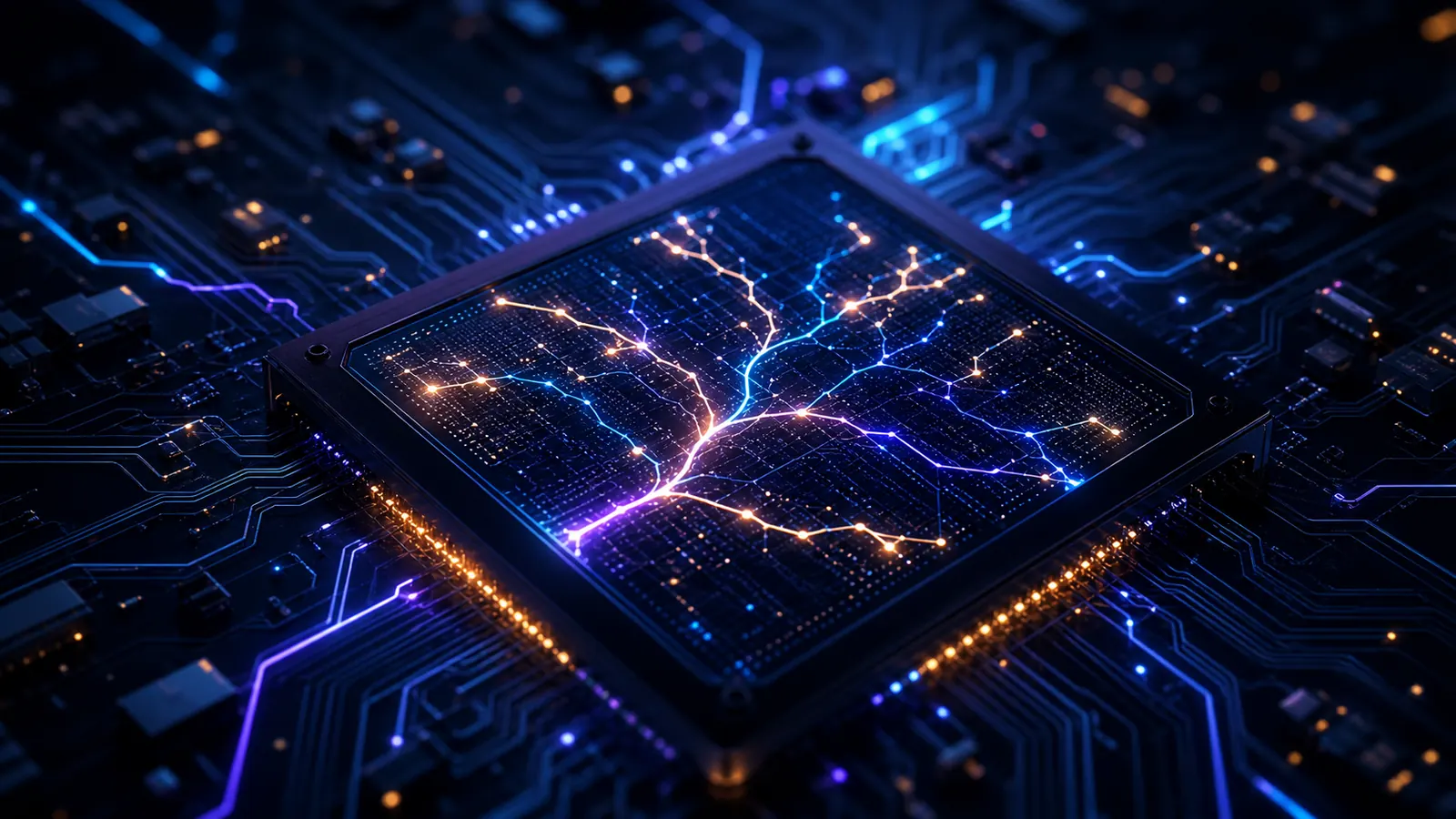
The cursor moves, but the machine is not listening to every thought
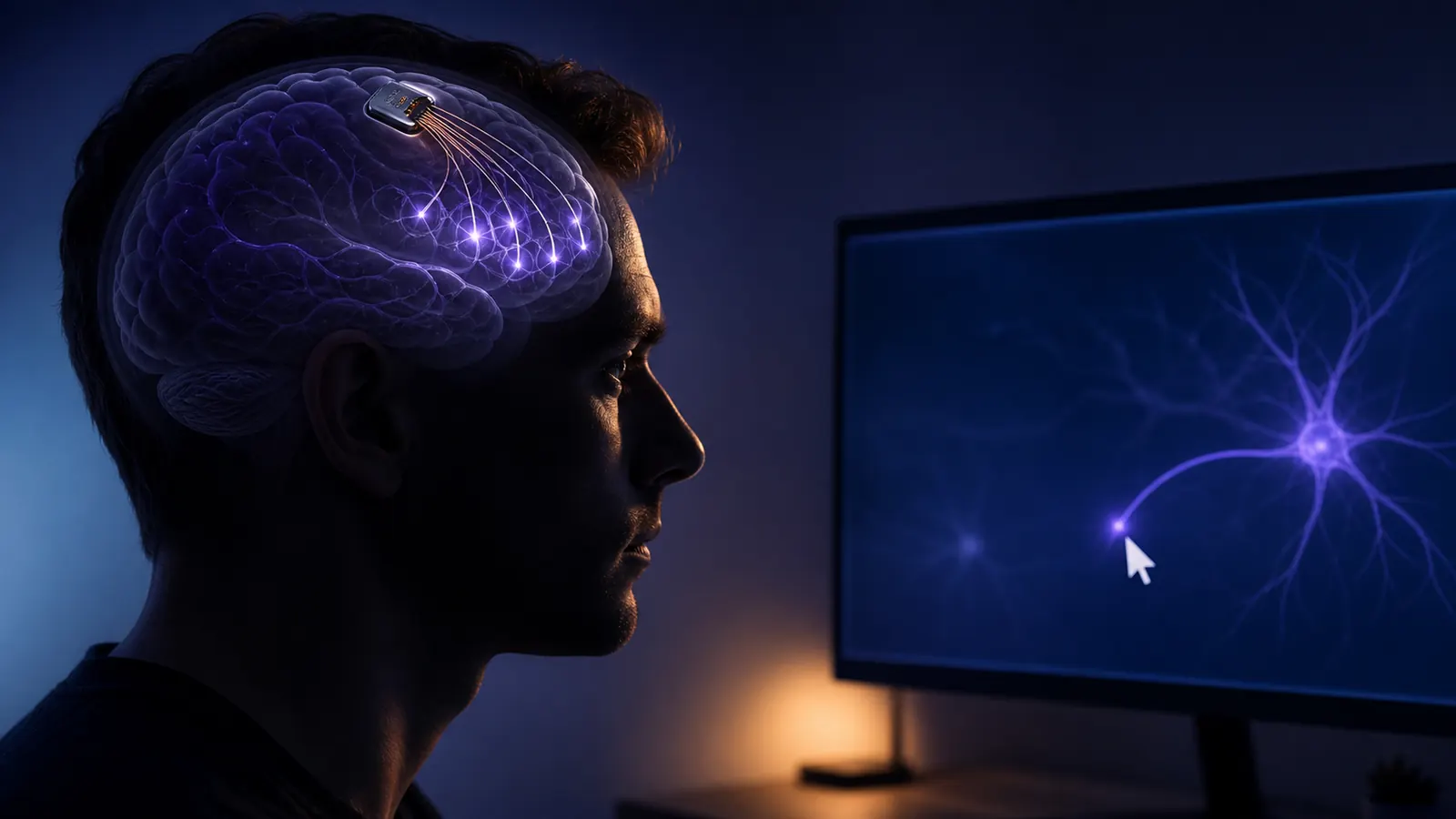
Imagine deciding to move a hand that paralysis will not let you move. A small implant records activity from neurons involved in that intention. Software learns which changing patterns accompany an attempted left, right, click or letter, then converts the pattern into an action on a screen. The result can feel almost telepathic to an observer: a cursor moves without a mouse. Yet the system has not opened a general transcript of the person's mind. It has learned a limited relationship between a trained intention and a defined output.
That distinction is the centre of Neuralink's PRIME study. The registered early-feasibility trial evaluates the initial safety and functionality of its skull-mounted, wireless N1 implant, electrode threads and surgical robot in people with severe paralysis. It is not a consumer launch or proof that the device can recover any thought on demand. ClinicalTrials.gov lists a small estimated enrolment and years of follow-up because an implant has to prove far more than one impressive demonstration.
How a cloud of electrical activity becomes one useful command
A neuron does not contain the word 'click'. Populations of neurons change their electrical firing as a person prepares and attempts an action. Electrodes sample only a fraction of that activity. A decoder is trained by comparing recorded patterns with tasks the participant is asked to attempt. With practice and recalibration, the system estimates the intended command. It is closer to learning the accent of a very specialised signal than translating a hidden language that contains every memory, belief and daydream.
The wider BCI field shows why the narrow signal can still change a life. A 2026 peer-reviewed report followed one person with ALS using a multimodal intracortical BCI at home for more than 3,800 hours across nearly two years. The system supported cursor control and speech-related communication, with prompted-word testing above 99 percent and everyday sentence performance that still needed human correction. One participant cannot establish universal safety or performance, but long independent use is a more meaningful milestone than a laboratory clip.
Why intended speech is not the same as a private inner monologue
Speech neuroprostheses usually ask a participant to attempt or intend specific speech while a decoder has been trained for that task. Accuracy depends on the person, electrode location, vocabulary, calibration and signal stability. Research has also detected above-chance information from intended speech in people with severe paralysis, but sentence accuracy can remain far below ordinary conversation. A machine that recognises a practised attempt under controlled conditions has not demonstrated access to every silent thought that passes through the brain.
Company updates deserve the same boundary. Neuralink says participants have used its system for computers, games, creative work and experimental robotic-arm control, and it reports a growing participant group. Those are the company's own accounts, not a completed controlled trial. The honest story is already astonishing: people are learning to operate tools through recorded neural activity. It does not need the false extra claim that a chip can secretly browse a person's identity.
The future will be decided by boring milestones, not one viral demo
For implanted BCIs to move beyond small feasibility studies, several things must improve together. Surgical risks must stay acceptably low. Electrode signals need to remain useful for years. Hardware must survive charging, heat and movement. Decoders must work through ordinary fatigue and changing routines. People need reliable repair, removal, privacy and support pathways. Trials must show that gains in independence outweigh burdens for more than a handful of carefully selected participants.
If those milestones arrive, the first broad impact is more likely to be assistive communication and control for people who have lost movement than instant enhancement for healthy consumers. Later systems may decode richer speech or coordinate external devices, but each capability will have to be demonstrated separately. The question to ask whenever a new claim appears is simple: what exact intention was decoded, in how many people, for how long, and under what training? That question keeps a genuine frontier visible without turning it into magic.
Sources and further reading
This article was written for Curiosity Desk. We do not copy other publishers or invent quotes. If a material error is found, we correct it openly.
Read the full standards →One answer should lead to a better question
Bring your curiosity to the group
Curious Minds is our public Facebook community for surprising science, strange history, Australian wildlife and everyday questions. No copied posts, no personal-friend invitations and no link dumping.
- Three self-contained discussion prompts each week
- Sourced answers and honest uncertainty
- Respectful conversation without spam