This aircraft is both product and laboratory
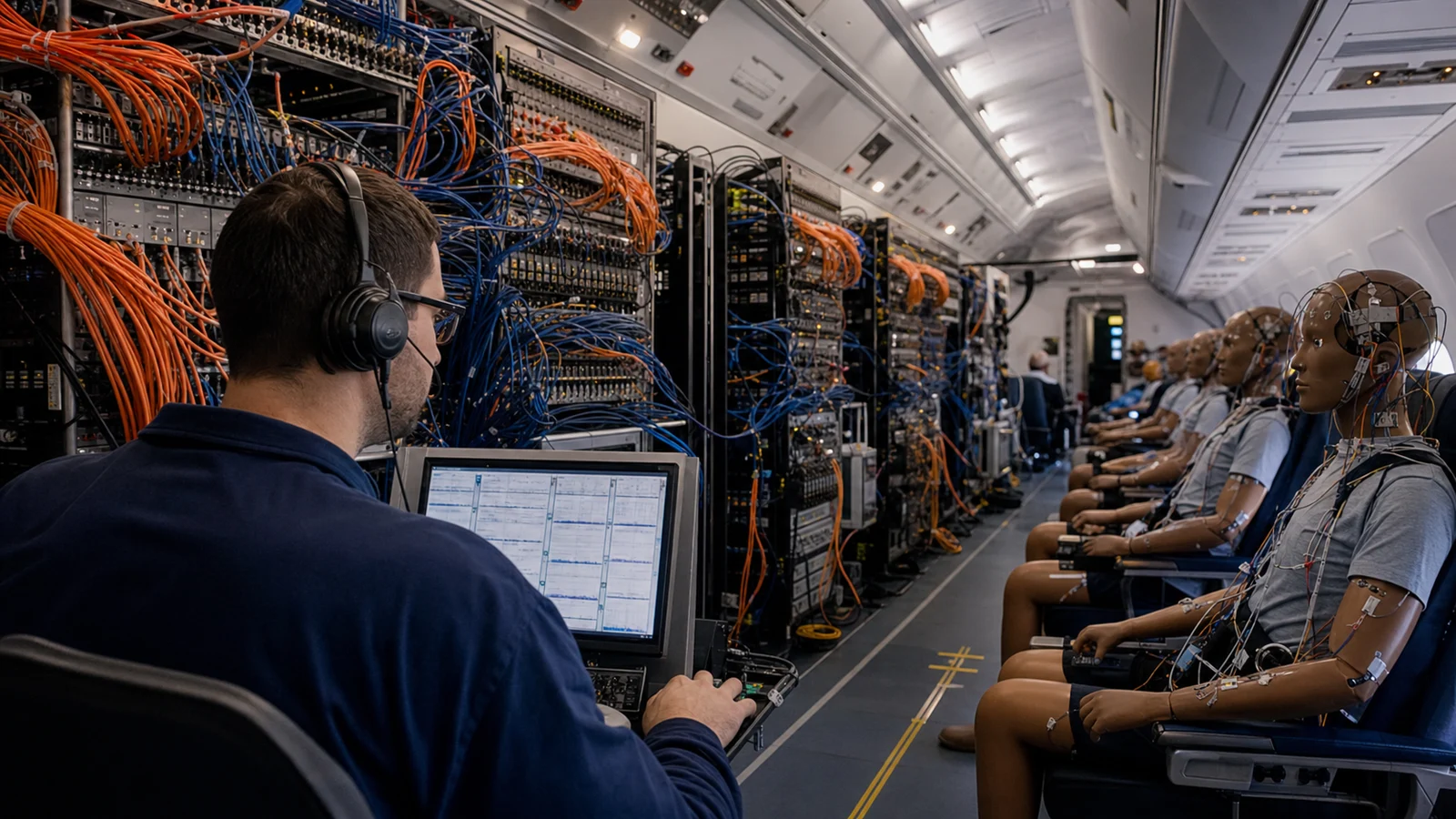
MSN707 is a production A350-1000ULR intended to carry Qantas passengers after testing. During the 2026 campaign, its cabin holds a flight-test engineer workstation, cabling, sensors and heat-generating passenger dummies.
Airbus says the complete custom monitoring installation weighs about five tonnes. More than 1,000 specialised sensors form part of that system rather than remaining as normal passenger equipment.
The fuel system needs dense measurement
The rear centre tank is a major structural and fuel-system modification. Sensors track fuel flow, temperature and oxygen concentration as the aircraft moves through different phases and altitudes.
Other instruments observe pumps, gauges, pressures and transfer sequencing. Engineers compare the measured behaviour with designs and models to show that the system performs as intended.
Cabin systems are tested too
The ULR introduces localised galley refrigeration called the New Generation Air Chiller. Temperature sensors and heat-producing dummies help reproduce the thermal load of a full passenger cabin.
That work checks whether cooling and cabin conditions remain within the required performance across a very long mission. The dummies provide a controlled load rather than a subjective comfort survey.
The installation had to be non-destructive
Because MSN707 will later enter revenue service, Airbus avoided the invasive test layout used in long-term prototypes. Orange test cables follow existing cabin tracks and structural galleys instead of requiring extensive new drilling.
Airbus says 80 percent of the instrumentation was assembled and installed while the aircraft itself moved through production. After testing, the equipment can be removed and the commercial cabin installed.
The data continues working after the campaign
Certification is the immediate goal, but Airbus also plans to use the data to recalibrate digital models of the A350 cabin. Better models can reduce the need to repeat some physical tests for future variations.
The sensor count therefore reflects the number of systems and conditions being measured, not a claim that the normal aircraft needs constant experimental monitoring. The temporary laboratory helps prove the permanent design.
Five tonnes and 1,000 sensors describe different things
The five-tonne figure covers the custom monitoring installation as a whole. It includes the engineer workstation, racks, wiring and test equipment as well as specialised sensors. It should not be reported as the weight of the sensors alone.
Airbus says more than 80 percent of the instrumentation was assembled and installed during normal aircraft production. That planning reduced the amount of retrofitting needed once MSN707 reached the final test phase.
Thousands of feet of orange cable protect the future cabin
The data from each measurement point has to reach the onboard recording and monitoring system. Airbus routed thousands of feet of recognisable orange test cable along existing cabin tracks and through structural galleys.
Using existing paths avoids unnecessary drilling into a production aircraft. When the roughly 80-hour campaign is complete, the temporary laboratory can be removed and the passenger interior fitted without leaving a permanent experimental cabin.
Certification testing is not airline acceptance flying
The campaign is designed to prove the modified ULR design and support certification. Airline acceptance work later checks an individual completed aircraft before handover. Both may involve flying, but they answer different questions.
This is why the first aircraft to fly can enter passenger service later than another aircraft in the order. MSN707 is producing design evidence for the variant, while the second aircraft is currently planned to become Qantas's first delivery.
Sources and further reading
This article was written for Curiosity Desk. We do not copy other publishers or invent quotes. If a material error is found, we correct it openly.
Read the full standards →One answer should lead to a better question
Bring your curiosity to the group
Curious Minds is our public Facebook community for surprising science, strange history, Australian wildlife and everyday questions. No copied posts, no personal-friend invitations and no link dumping.
- Three self-contained discussion prompts each week
- Sourced answers and honest uncertainty
- Respectful conversation without spam