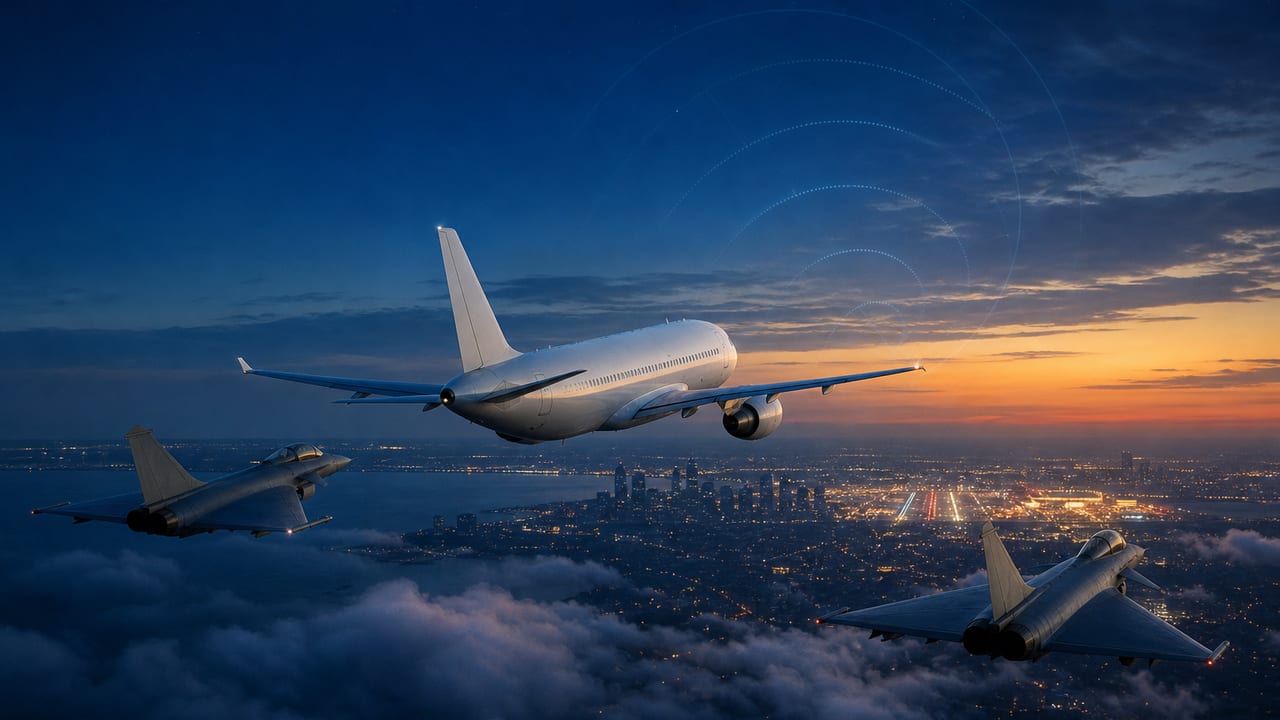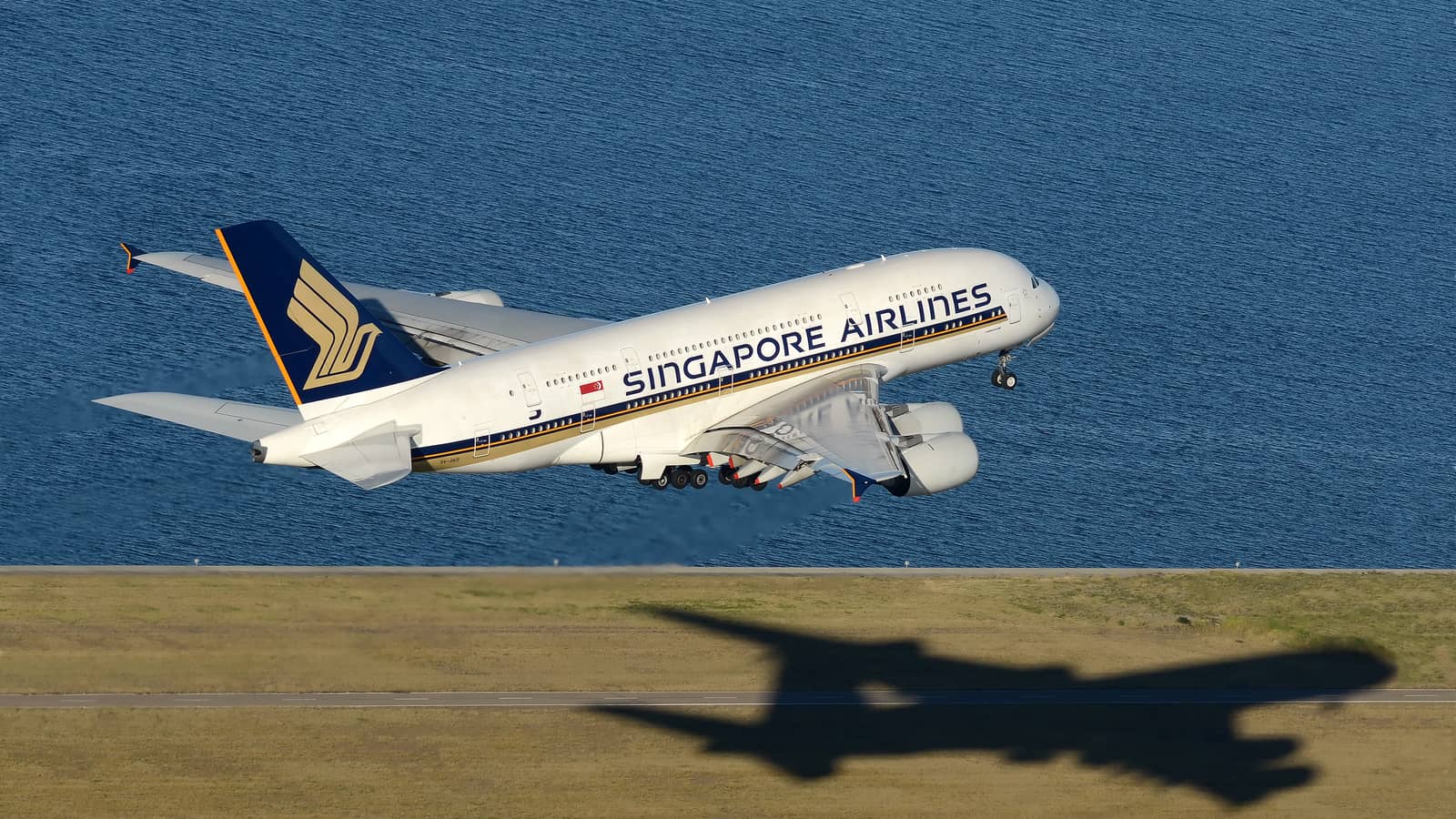
A giant aircraft is valuable only on a giant route
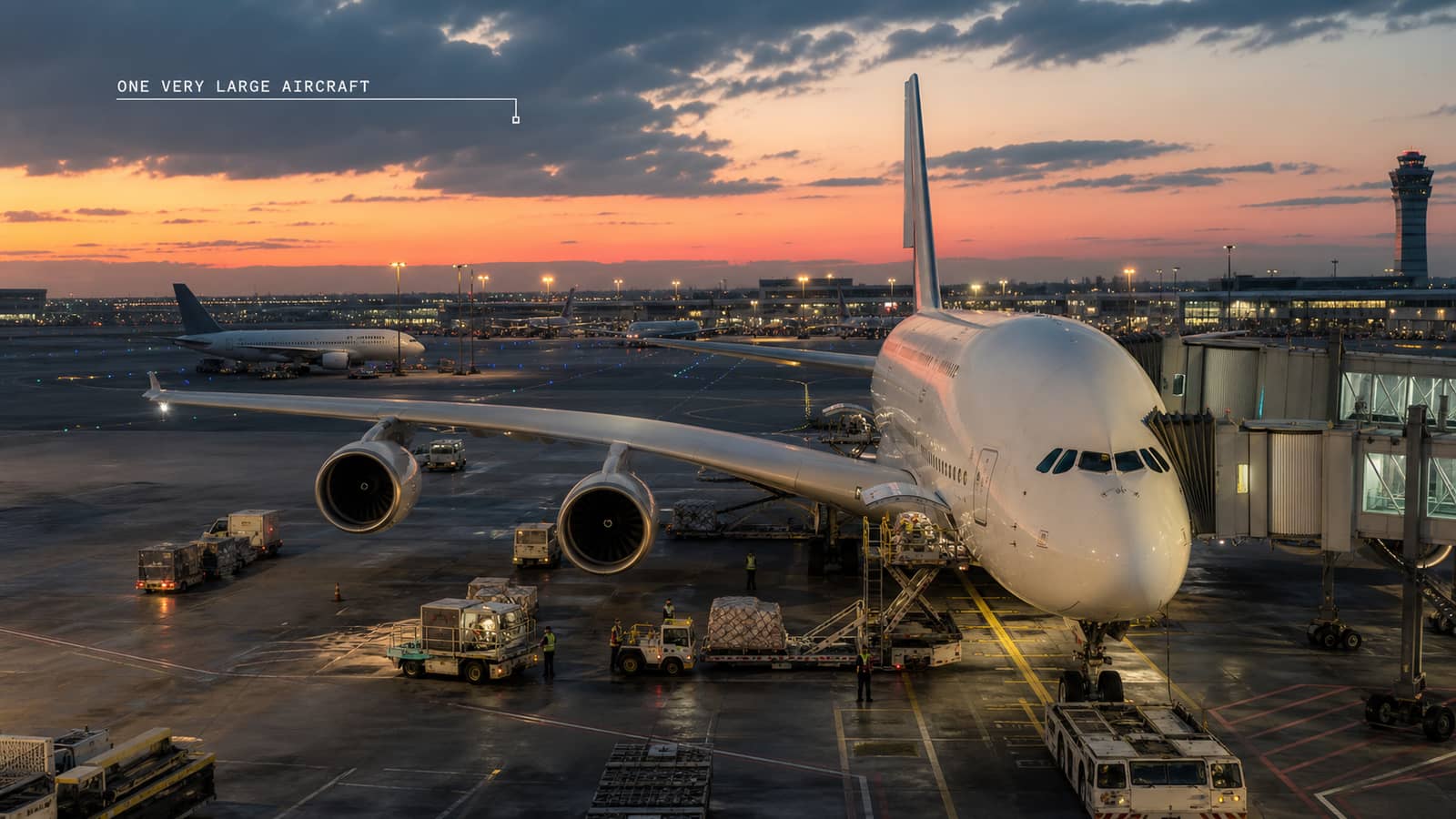
The Airbus A380 was designed around concentration. Its full-length double deck creates far more floor area than an ordinary wide-body, allowing airlines to install hundreds of seats and unusually large premium cabins in one aircraft. Airbus lists a range of about 8,000 nautical miles, enough to connect major intercontinental hubs. The design question was not simply how to make the biggest passenger jet; it was how to move a dense long-haul market through one departure.
That advantage disappears when seats go empty. Four engines, a large crew requirement, specialised gates and the sheer mass of the aircraft create high trip costs. A smaller twin-engine jet usually gives an airline more freedom to match capacity to uncertain demand and to offer more departure times. The A380 therefore does not win by being universally efficient. It wins only when many passengers want the same long route at the same time.
This conditional logic explains why declarations that the aircraft is either a failure or an inevitable comeback are too simple. Airbus ended production, so airlines cannot order new examples from an active assembly line. Yet an aircraft already owned or leased can remain useful for years if its operator has the maintenance capability, trained crews, suitable airports and enough passengers to fill it on carefully chosen services.
One scarce airport slot can make size valuable again
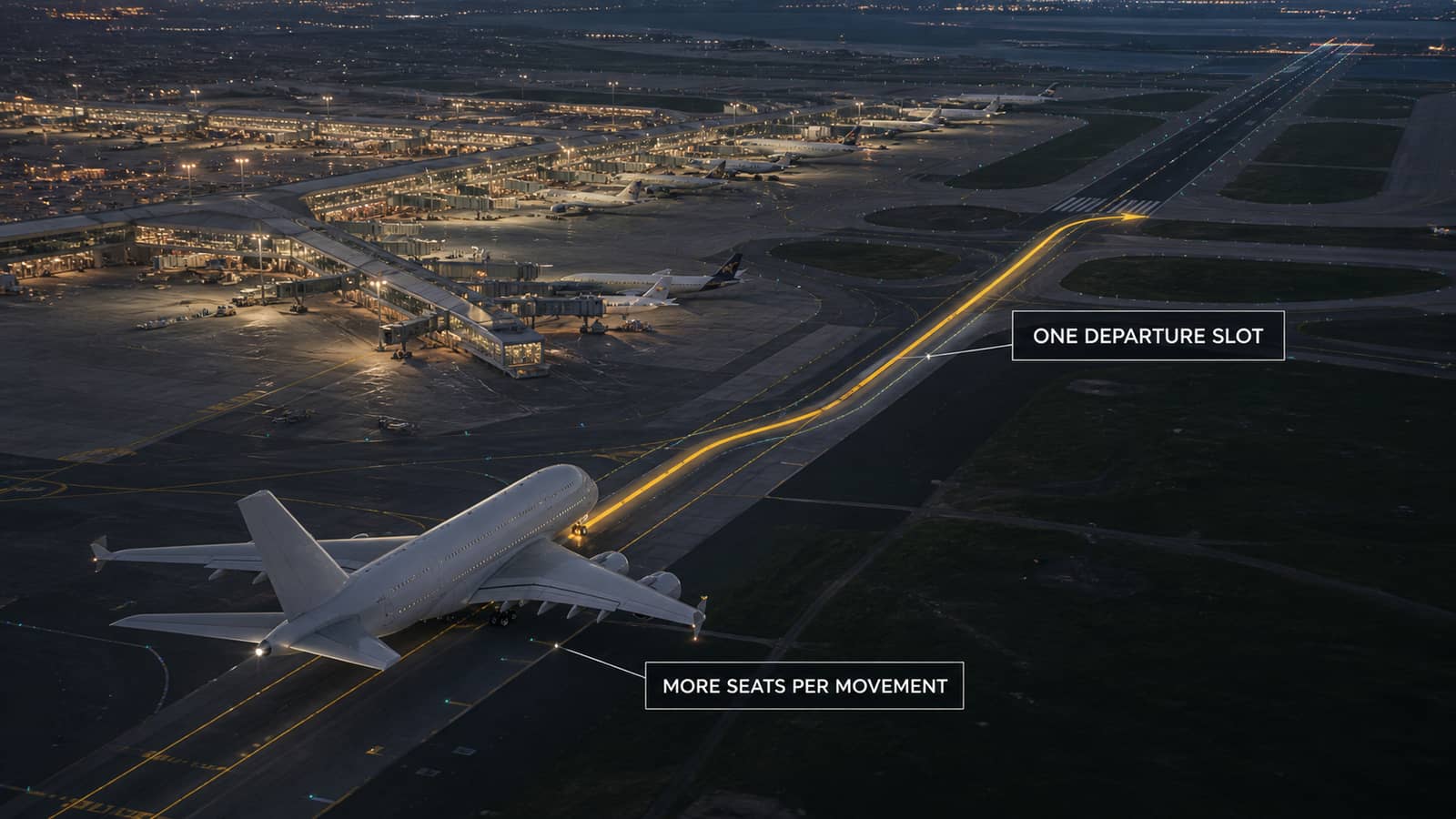
Airports do not offer unlimited takeoff and landing opportunities. At a slot-constrained hub, an airline may be unable to add another departure at the time passengers want. A larger aircraft can carry more people through the same movement. That makes the comparison more complicated than fuel burned by one A380 versus one smaller jet: the alternative may require two aircraft, two crews and two scarce slots.
A 2026 Singapore Airlines network announcement gives a concrete example of route matching. On its Auckland service, the airline said it would reduce frequency from three daily flights to two while deploying an A380 on one daily rotation instead of a Boeing 777-300ER during the relevant schedule period. The change does not prove that the A380 is best everywhere. It shows how a carrier can exchange some frequency for concentrated capacity on a market it expects to support the larger cabin.
Passenger mix matters too. An A380 offers space for suites, business-class beds, lounges or other products that can distinguish a flagship route. Premium revenue can change the economics of the whole aircraft; an empty luxury cabin can damage them just as quickly. The successful route needs more than a crowd. It needs the right blend of demand, timing, fares and connecting traffic.
The superjumbo survives as a specialist, not a default
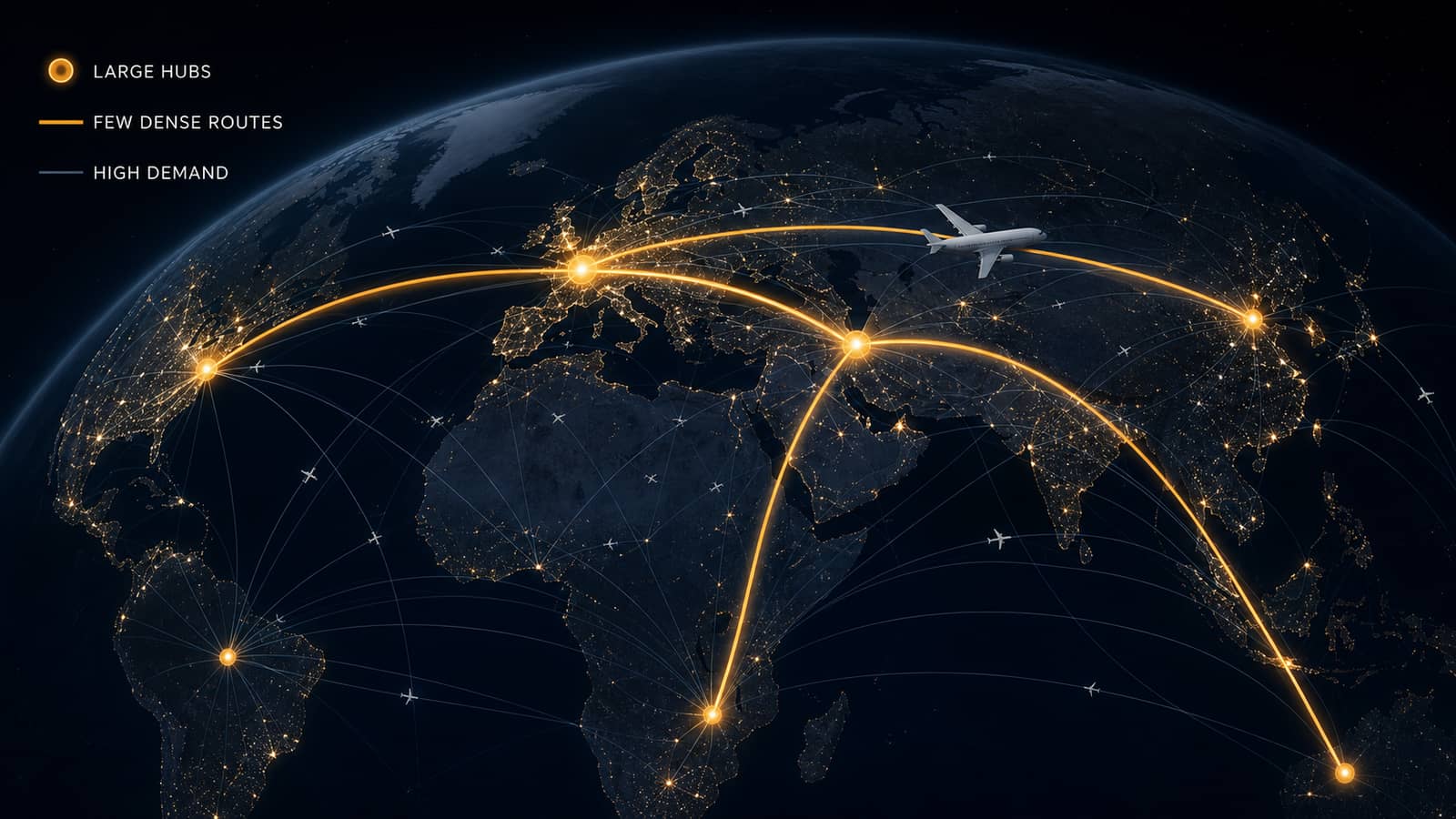
Modern long-range twins can fly many routes with fewer engines and smaller capacity, letting airlines spread service across cities and times. That flexibility helped undermine the original assumption that ever more passengers would funnel through a few giant hubs. It remains the reason the A380 is unlikely to become the standard long-haul aircraft. A specialist can still be excellent without becoming universal.
Existing fleet economics also matter. Returning a stored A380 requires maintenance, inspections, updated cabins and crews, but buying or waiting for a new aircraft requires capital and delivery time. An operator with an established A380 system evaluates the incremental cost of using an asset it already knows, not the abstract cost of designing the programme from zero. Another airline without that infrastructure can reach the opposite answer on the same route.
The useful way to read every A380 announcement is therefore as a route test. Is demand dense enough? Are airport slots scarce? Can the airline fill both ordinary and premium seats? Does it already support the type? If those answers align, one huge aircraft can solve a real network problem. If they do not, the same size becomes a burden. The A380's continued life is not a reversal of aviation economics; it is aviation economics becoming very specific.
Frequency remains the passenger-side trade-off. Two smaller departures can provide more choice and better connections than one large departure, even when their combined seats are similar. One A380 can simplify a peak wave and create a flagship experience, but a missed connection affects more people at once. Airlines are balancing a network, not judging an aircraft in isolation, so the same carrier may celebrate the A380 on one route and avoid it on another.
Sources and further reading
This article was written for Curiosity Desk. We do not copy other publishers or invent quotes. If a material error is found, we correct it openly.
Read the full standards →One answer should lead to a better question
Bring your curiosity to the group
Curious Minds is our public Facebook community for surprising science, strange history, Australian wildlife and everyday questions. No copied posts, no personal-friend invitations and no link dumping.
- Three self-contained discussion prompts each week
- Sourced answers and honest uncertainty
- Respectful conversation without spam