The shine starts with a light source outside the cat
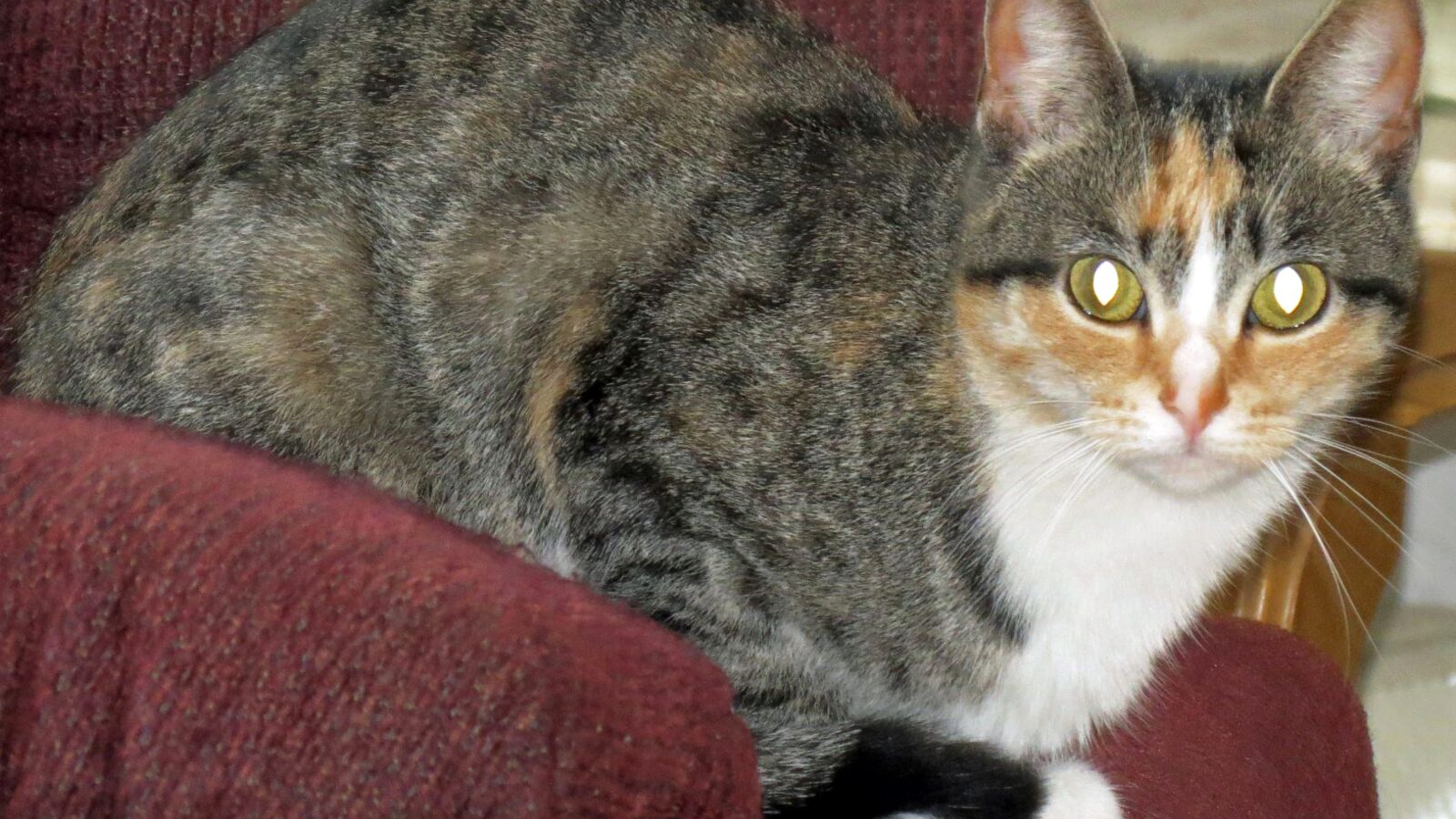
A cat facing a camera flash can appear to switch on two green or yellow lamps. The eyes are not producing that light. Illumination enters through the pupils, crosses the retina and reaches a reflective layer behind it. Some of the light then travels outward again along a path close to the one it entered.
That return path matters to the observer. A flash mounted close to a camera lens sends light toward the animal and collects the reflection coming back. Headlamps and vehicle lights can do the same at night. Move the source or viewing angle and the bright return may weaken or disappear even though the eye has not changed.
The tapetum gives dim light another pass through the retina
The reflective tissue is called the tapetum lucidum, Latin for a bright or shining carpet. It sits behind the retina in cats and many other animals active in dim conditions. Light that passed the photoreceptors without being absorbed can be reflected forward, giving those cells another opportunity to respond.
Panthera describes the structure as a retroreflector-like layer that improves the use of available light. It does not create vision from nothing. A cat in complete darkness has no light to recycle. Whiskers, hearing and other senses remain important when illumination becomes too weak for the eye.
Microscopic layers select which colours return most strongly
Research on isolated cat tapetum found tiny multilayer reflecting domains. Their spacing and orientation affect which wavelengths are returned and in which direction. Domains closer to one surface tended to reflect bluer light, while deeper structures returned longer wavelengths. Eyeshine colour is therefore an optical result, not a fixed bulb colour.
Angle, camera sensor, flash spectrum, animal age and the structure of an individual eye can all influence the photograph. Blue, green, yellow or white returns can occur without implying different powers. The visible colour tells you how illumination, tissue and viewing geometry interacted for that image.
Better sensitivity comes with less perfectly clean detail
Reflecting light through the retina again can increase the chance that photoreceptors capture it, which is valuable at dawn, dusk and night. But reflected light is not guaranteed to retrace every ray with perfect precision. Scattering and the second pass can trade some image sharpness for sensitivity.
Cats combine that optical advantage with pupils capable of controlling a wide range of incoming light and retinas adapted for low-light performance. The result is not simply human vision made brighter. It is a different balance between gathering scarce photons, preserving spatial detail and using motion and other senses.
Human red-eye is a different reflection from a different layer
Humans lack a cat-like tapetum lucidum. A camera flash can still return from the back of a human eye, but the reddish colour is associated with light reflected from vascular tissue rather than a specialised reflective carpet. The shared photograph effect hides two different anatomical routes.
A single flash image is also a poor health test for either species because angle and timing strongly affect the result. The dependable lesson is optical: eyeshine requires incoming light, a reflective path and near-alignment between source and viewer. The cat seems to light the room, but the room has briefly lit the cat twice.
The reflector works best when source, eye and observer nearly line up
Retroreflection sends a strong portion of light back toward its source. A person beside a lamp may see less eyeshine than a camera whose flash sits centimetres from the lens. Wildlife cameras exploit that near-alignment, turning an otherwise hidden animal's eyes into bright points that can help researchers notice activity in darkness.
The effect also changes as the cat turns its head because the pupil, retina and reflective domains no longer send the strongest return toward the viewer. That is why two eyes may look unequal in a single casual photograph without proving an anatomical difference. Geometry must be separated from biology before interpreting what a flash captured.
Sources and further reading
This article was written for Curiosity Desk. We do not copy other publishers or invent quotes. If a material error is found, we correct it openly.
Read the full standards →One answer should lead to a better question
Bring your curiosity to the group
Curious Minds is our public Facebook community for surprising science, strange history, Australian wildlife and everyday questions. No copied posts, no personal-friend invitations and no link dumping.
- Three self-contained discussion prompts each week
- Sourced answers and honest uncertainty
- Respectful conversation without spam