More than 500 species share one unusual fish blueprint
The short answer is more than 500. The Smithsonian Ocean portal says there are over 500 shark species, while the Florida Museum’s shark researchers put the current described total at about 520. Those are not competing facts so much as a reminder that a species count is a moving catalogue. Researchers still describe species, revise classifications and sometimes discover that animals once grouped together are distinct. A total is therefore a useful snapshot, not a final roll call carved into stone.
What holds the group together is not a single outline. Sharks are cartilaginous fishes: their skeletons are made primarily of cartilage rather than bone. They also belong to the broader elasmobranch group with rays and skates. That shared construction gives a whale shark, a hammerhead and a great white some deep family resemblances even when their bodies seem built for different worlds. A shark’s familiar tail, fins, gill openings, replaceable teeth and skin made of tiny tooth-like denticles are parts of a long-evolved package, not a costume copied by every species in exactly the same way.
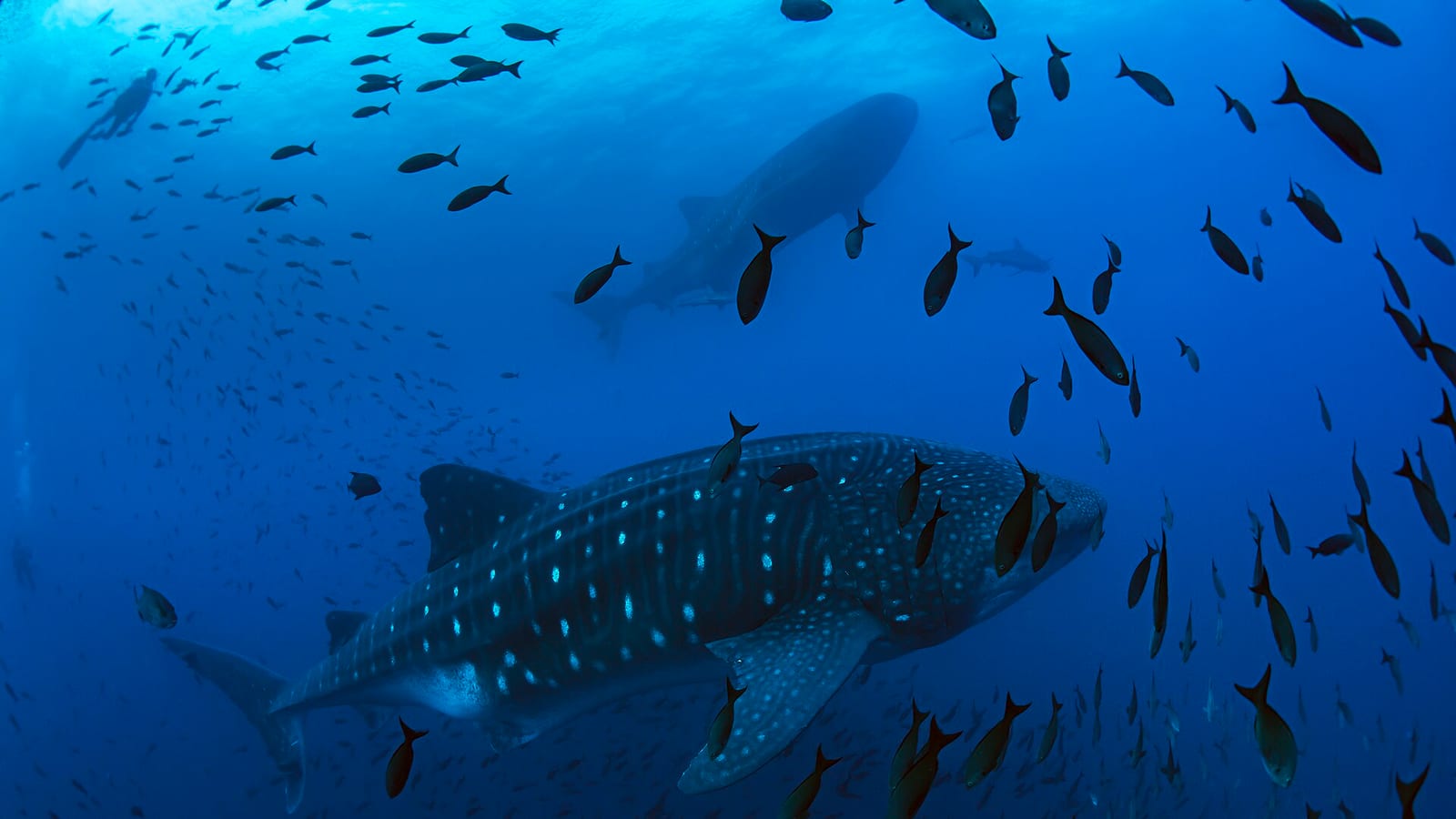
The whale shark in the hero photograph is the fastest way to see why a species count alone is not very revealing. It is the world’s largest fish, yet it does not use its broad mouth to bite large prey. It filters small animals from the water. That is a useful correction to the cartoon version of ‘shark’: a shark is not defined by being a particular size, by hunting in one way or by looking like one famous species. It is a lineage of fishes whose members have diversified into many workable solutions to moving, feeding and sensing in water.
The count also does not mean that every named form is equally familiar or equally studied. Some sharks live far below the surface, some are small enough to fit in a hand, and some are known from few observations. The Florida Museum notes that new species continue to be described. That is why the honest answer to a search for types of sharks begins with ‘more than 500’, not an apparently exact number that will become stale the next time a species is recognised or a classification is revised.
Different shapes are clues to different jobs, not a danger ranking
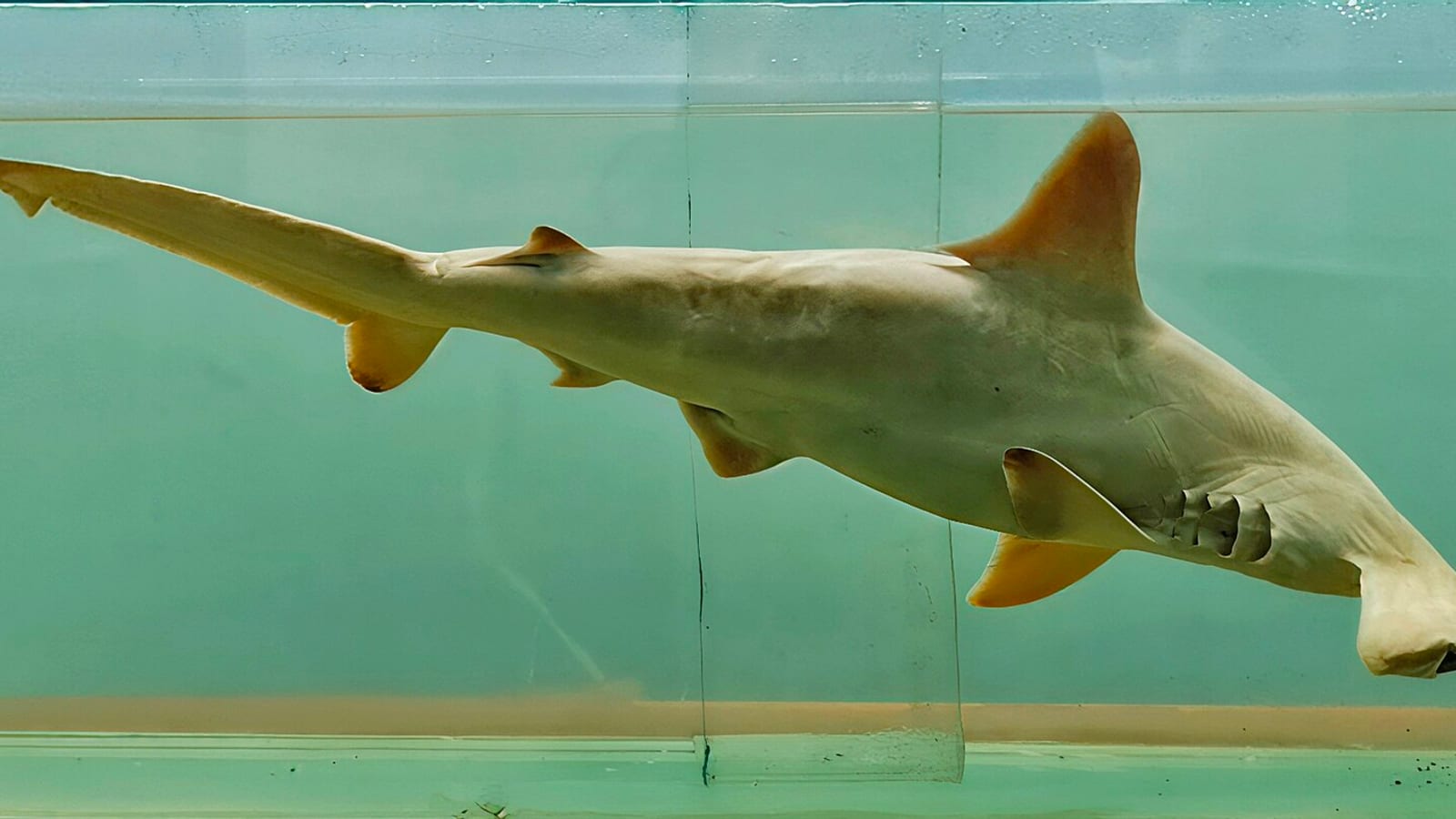
A shark’s outline is a record of trade-offs. Long bodies, broad heads, tall fins and unusual mouths change how an animal moves through water and where it can find food. The scalloped hammerhead in the photograph is a clear example. Its widened head is called a cephalofoil. It is not merely a dramatic profile: the arrangement of the head changes the placement of sensory organs and helps the animal sample a wider patch of water and seafloor as it swims. The picture shows a scalloped hammerhead in an aquarium; it is used here to show the head shape, not to imply that this image documents wild behaviour.
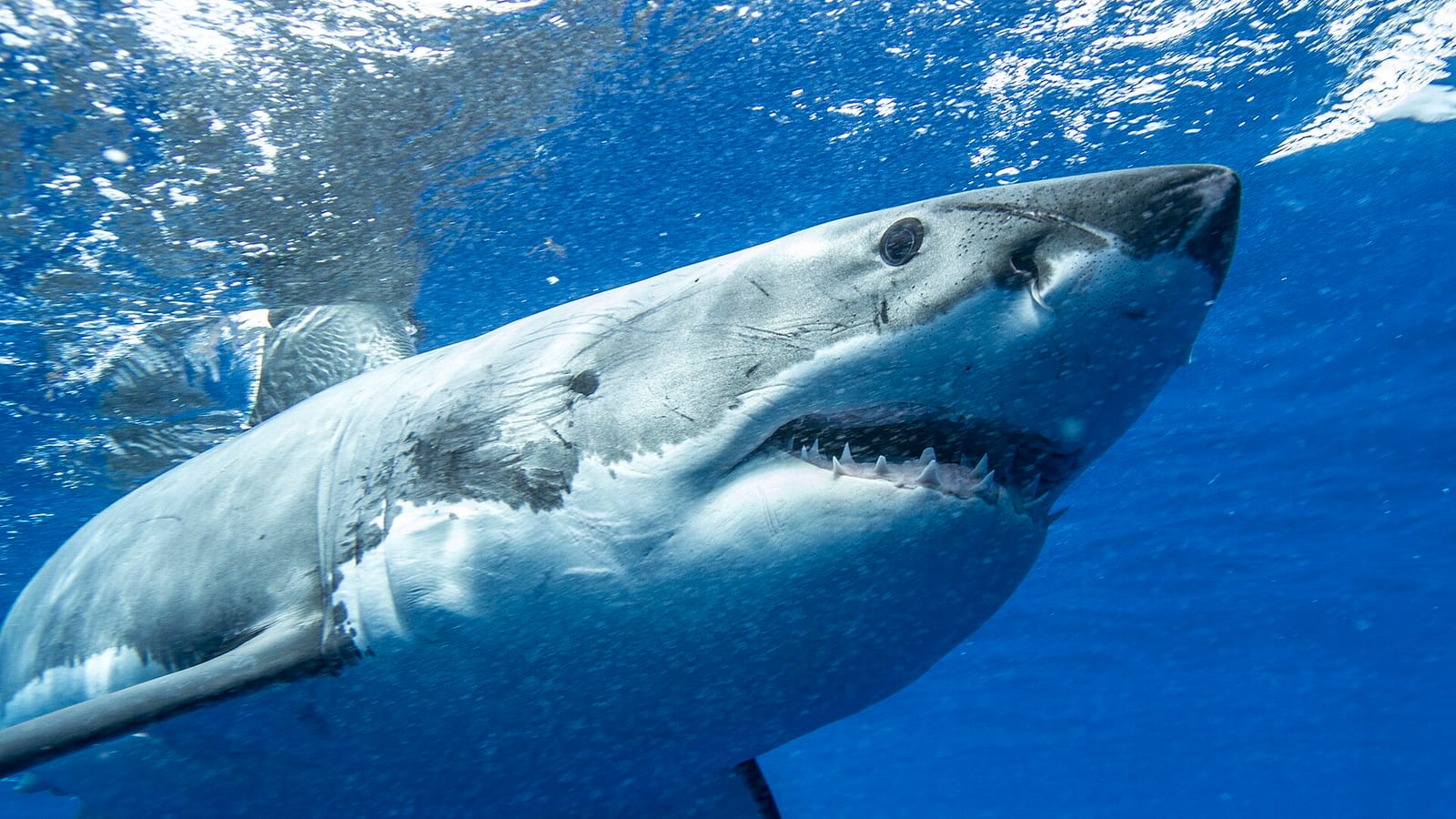
At the other visual extreme, a whale shark has a broad forward-facing mouth suited to filter feeding. The great white photograph shows a more streamlined, powerful-looking body and exposed teeth, but it should not be treated as the default shark. Smithsonian’s diversity overview points out that sharks range from tiny dwarf lanternsharks to whale sharks, and that body forms have accumulated through hundreds of millions of years of evolution. A great white is one branch of that diversity, not the template from which every other species is a lesser variation.
Food is one reason forms diverge. A species that filters tiny organisms needs a different mouth and feeding method from one that catches fish, crushes shellfish or searches the seafloor. Habitat matters too. NOAA Fisheries describes more than 50 shark species in US East Coast waters alone, where some use bays and estuaries while others are open-ocean animals that enter shallower water for nurseries or feeding. No single body shape is ‘best’; it is useful only in the conditions and for the prey an animal has evolved to use.
That is the payoff behind the original search. ‘Types of sharks’ is not really a trivia question about how many names fit on a list. It is a question about how evolution keeps reworking one cartilaginous fish blueprint. More than 500 living species means more than 500 histories of finding food, crossing water and surviving in particular habitats. The next time one shark looks strangely unlike another, the difference is not an exception to the category. It is the category’s main story.
A shark name is a starting point for a better question
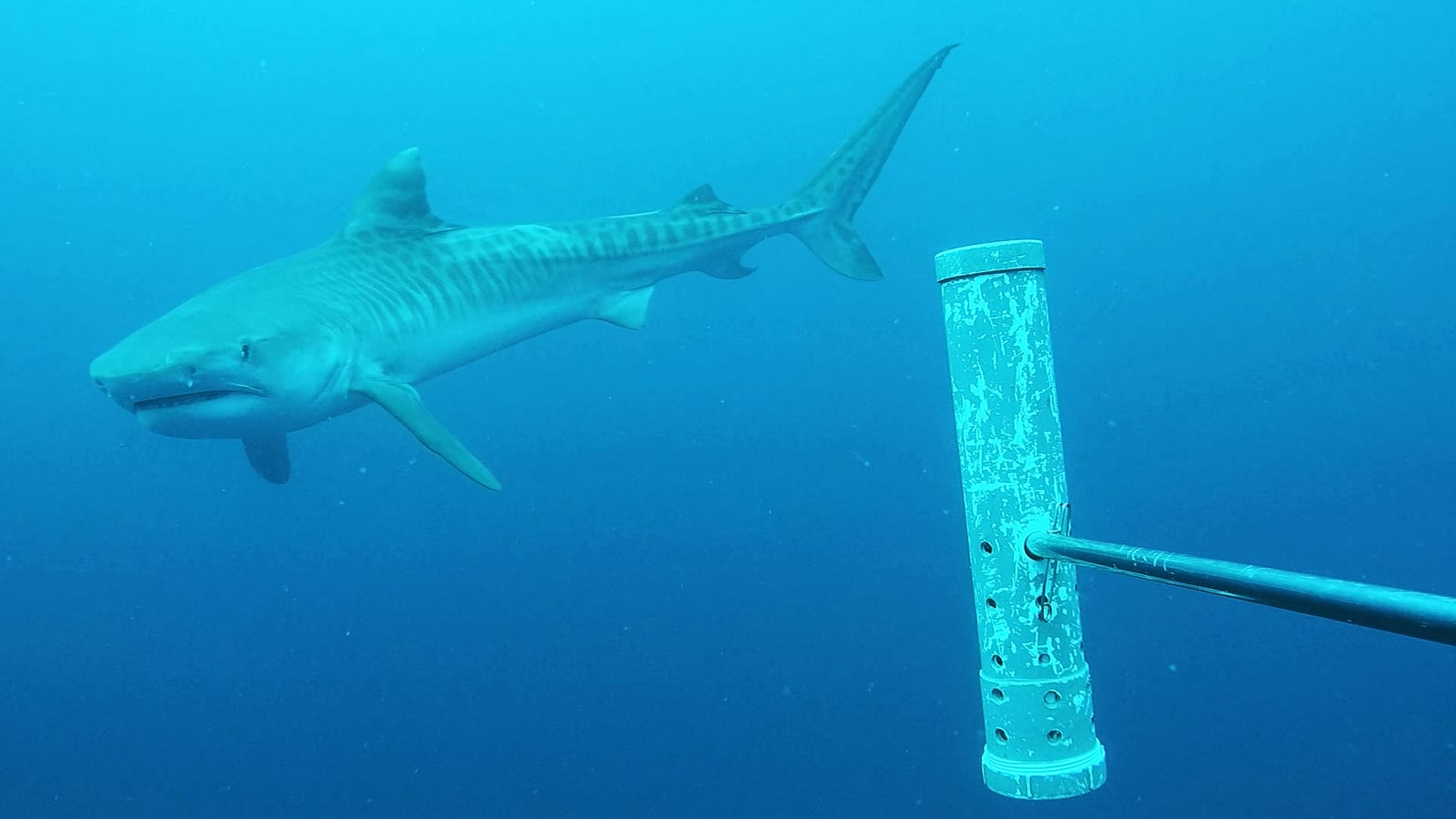
Lists can make diversity look like a cabinet of labels, but a name is most useful when it sends a reader back to the animal’s evidence. The Florida Museum’s species profiles sort sharks by family, scientific name and common name. That structure matters because common names can be broad, regional or misleading, while scientific names help researchers describe a specific species. A person who sees a hammerhead, a tiger shark or a small dogfish has not merely found three entries in a list; they have found three routes into questions about ancestry, habitat and diet.
The tiger shark photograph was taken in Geographe Marine Park in Western Australia. Its dark vertical stripes are a visible species feature, while the research pole at right is a useful reminder that photographs can show an animal without explaining everything about it. A photo cannot by itself reveal where every tiger shark feeds, how a population is changing or what a particular animal will do. It can, however, anchor a comparison honestly: this is another real shark species with its own body pattern and ecological history, not a stock stand-in for all sharks.
That distinction protects the original question from becoming a false promise. No article can turn more than 500 species into a memorised list, and a broad count should never be used as a shortcut to a claim about safety or behaviour. The useful next step is narrower: choose one species, trace it to an authoritative profile or study, and ask what feature or habitat makes it different. Diversity becomes more interesting when the list turns into a series of testable questions rather than a collection of dramatic names.
Sources and further reading
- Smithsonian Ocean: Sharks ↗
- Florida Museum: Sharks FAQ ↗
- Florida Museum: Shark species profiles ↗
- NOAA Fisheries: Sharks in Atlantic, Gulf, and Caribbean coastal waters ↗
- Wikimedia Commons: Jonathan Green whale shark ↗
- Wikimedia Commons: Scalloped Hammerhead ↗
- Wikimedia Commons: Guadalupe Island great white shark ↗
- Wikimedia Commons: Tiger shark at Geographe Marine Park ↗
This article was written for Curiosity Desk. We do not copy other publishers or invent quotes. If a material error is found, we correct it openly.
Read the full standards →One answer should lead to a better question
Bring your curiosity to the group
Curious Minds is our public Facebook community for surprising science, strange history, Australian wildlife and everyday questions. No copied posts, no personal-friend invitations and no link dumping.
- Three self-contained discussion prompts each week
- Sourced answers and honest uncertainty
- Respectful conversation without spam