The phrase frozen in time hides the most interesting part
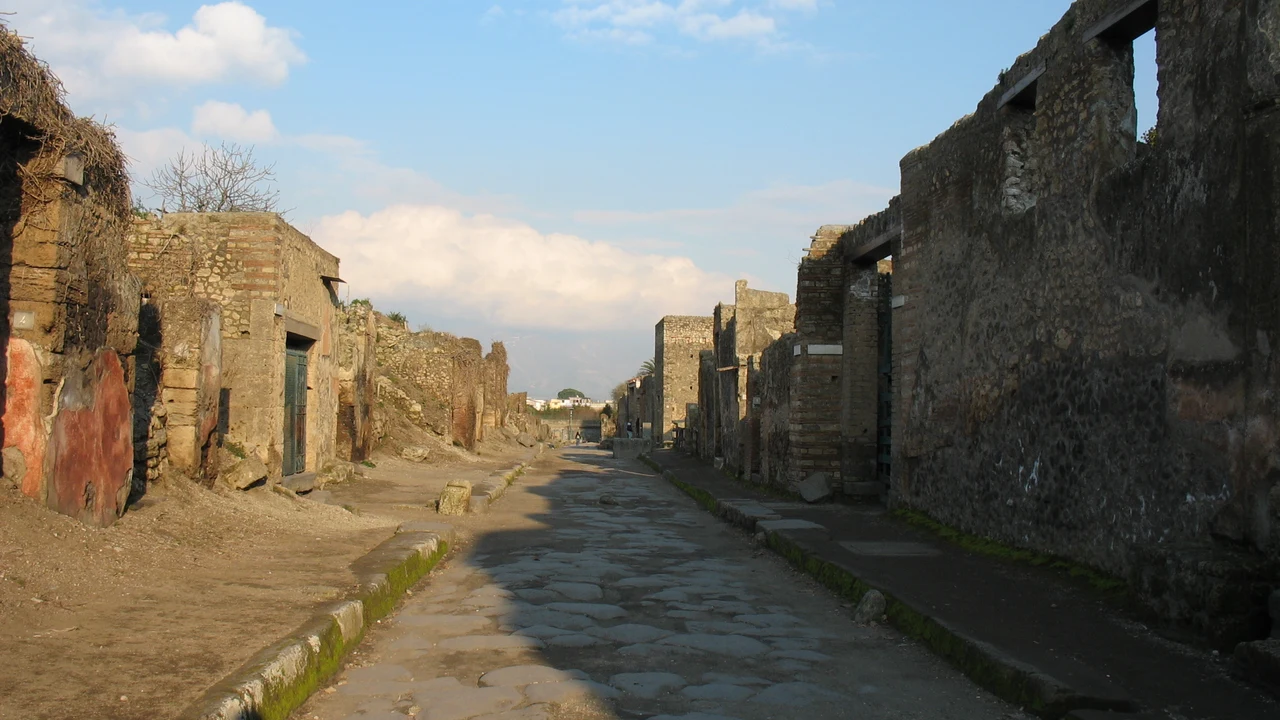
Walk down Pompeii's Via dell'Abbondanza and the city feels startlingly legible. Kerbs frame a paved street. Doorways open into houses and shops. Painted walls, counters, drains, inscriptions and worn stone preserve the scale of ordinary movement. UNESCO describes the excavated city as an exceptional picture of Roman urban life, not merely a collection of prized artworks.
Yet Pompeii is not an untouched photograph of one second in 79 CE. The eruption unfolded in phases. Buildings collapsed, organic material decayed, survivors and looters returned, early excavators removed objects and modern conservation altered what could remain outdoors. The wonder is not perfect stillness. It is that so many different kinds of evidence survived that long chain at all.
Burial arrived as a sequence, not one cinematic blast
During the first major phase, pumice and lapilli fell onto Pompeii. The accumulating load buried lower rooms and caused roofs and walls to fail. Later hot, fast moving ash clouds and surges crossed the city. Recent work by Italy's National Institute of Geophysics and Volcanology and the Archaeological Park also identified damage consistent with strong earthquakes during the eruption, adding another mechanism of collapse to the story.
Those processes destroyed lives and structures, but the growing deposits also covered streets, interiors and objects before centuries of rain, construction and routine reuse could erase them. Preservation therefore came from catastrophe, not from a gentle seal. Different neighbourhoods, buildings and people experienced different parts of the sequence, so one dramatic mechanism cannot explain every find.
A food counter can reveal more than a marble statue
Pompeii preserved the infrastructure of daily choices. At least eighty thermopolia are known in the city. These street food and drink businesses had large jars set into masonry counters. The Regio V example retains painted panels and evidence that researchers use to reconstruct diet, commerce and the routines of people who often ate outside the home.
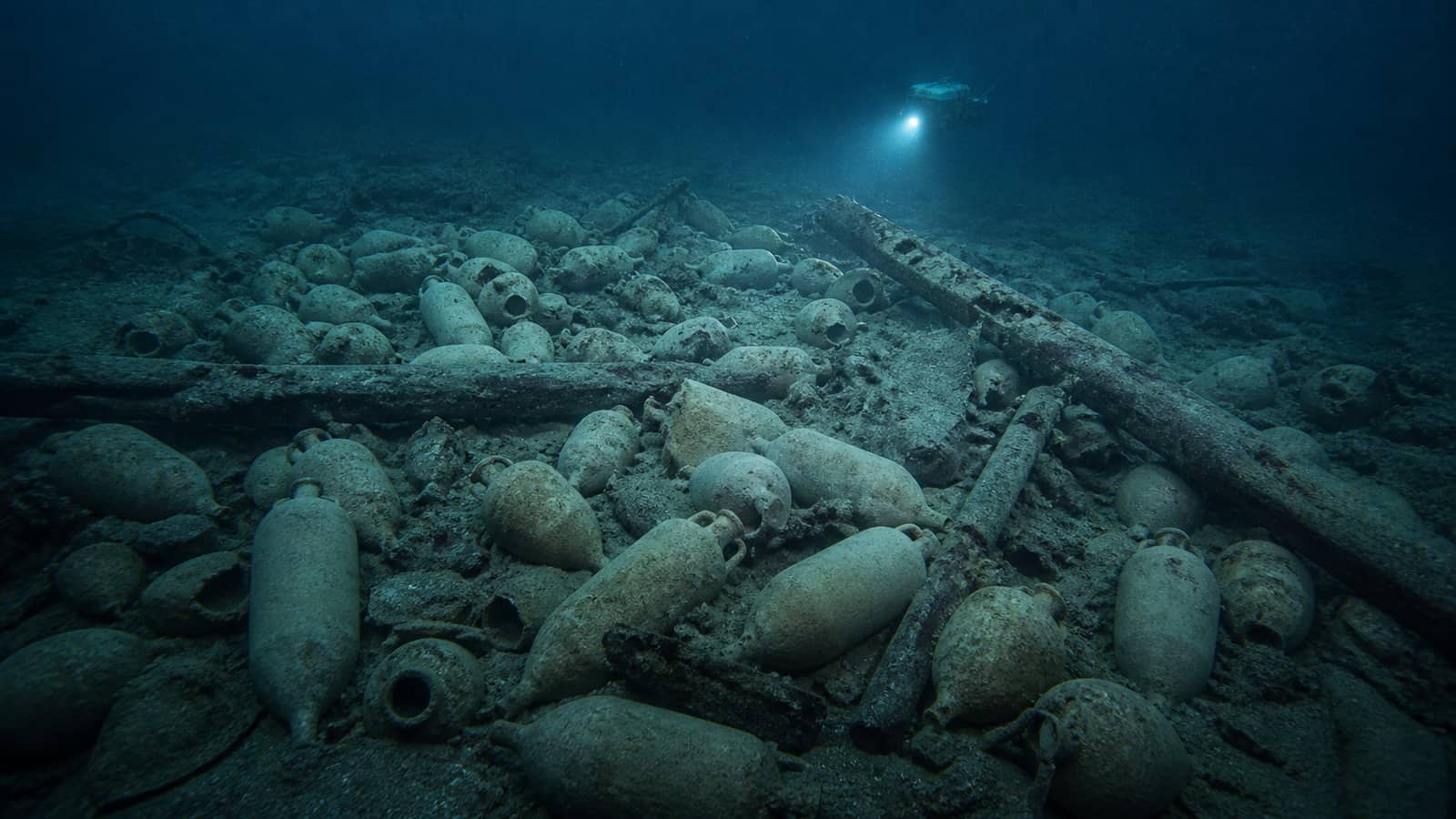
Elsewhere, amphorae, cooking spaces, workshops, election notices and personal graffiti turn buildings into a social record. Repair work was still visible after earlier earthquakes. These details resist the idea of a motionless classical city populated only by elites. They show a place where people traded, campaigned, joked, cooked, renovated and complained shortly before the familiar urban system ended.
The famous casts began as empty spaces
Many photographs appear to show complete bodies hardened into ash. The process was stranger. At some locations, fine deposits formed around victims. Soft tissue later decomposed, leaving cavities while bones and traces remained inside. From 1863, the method perfected under Giuseppe Fiorelli filled selected voids with plaster, recovering the external form of a person, clothing folds or an animal from the space their decay had left behind.
The Archaeological Park reports remains from more than one thousand eruption victims, but only a little over one hundred casts have been made. A cast is therefore not the original body transformed into stone, and it is not a neutral photograph. It combines ancient remains, volcanic material and a deliberate archaeological intervention. Laser scanning now records old casts and can produce replicas while the fragile originals are protected.
The buried city did not remain sealed and untouched
After the eruption, survivors recovered belongings where they could. Later thieves tunnelled into rooms, and builders quarried marble, stone and lead from exposed structures. Parts of the buried landscape were cultivated, used for burials or repurposed. The Archaeological Park notes buildings erected over or inside surviving Roman structures before another eruption or abandonment changed the site again.
A canal cut through the buried city in the late sixteenth century without its builders recognising the full significance of what they crossed. State sponsored excavation began in 1748, but early digging often prized portable treasures over context. Bombing in 1943 damaged structures and casts. What visitors see today is consequently both Roman evidence and a record of centuries of choices about removal, repair, shelter and display.
Even the date and the causes of death can be revised
The traditional date for the eruption is 24 August 79 CE, based on one manuscript tradition of Pliny the Younger's account. Autumn foods, wind direction, coins and a charcoal inscription have supported a later date in other studies. The Archaeological Park itself presents August or October as possibilities. The responsible conclusion is that the year and event are secure while the exact calendar day remains debated.
The destruction sequence is also refined as deposits and skeletons are studied together. A 2024 investigation found evidence that earthquakes during the eruption contributed to building collapse and deaths in addition to falling pumice and pyroclastic phenomena. Pompeii is valuable precisely because new methods can test a familiar story against walls, fractures, sediment layers and object positions.
A lamp and a kitchen mortar can recover one final decision
In April 2026, the park's excavation journal reported two victims found outside Porta Stabia. Preliminary analysis described one as a young man of about eighteen to twenty. The second was an adult man found near a ceramic lamp and with a heavy mortar raised above him, interpreted as an attempt to shield himself from falling pumice. The find does not reveal a complete biography, but it preserves an action made under terrible conditions.
That is why Pompeii continues to feel immediate without being a flawless time capsule. A street shows movement, a counter shows appetite, graffiti show argument, a void shows where a body disappeared and a lamp shows somebody trying to see. Volcanic burial protected the relationships among those clues. Archaeology, at its best, makes those relationships visible while remaining honest about everything the eruption and the following centuries took away.
Sources and further reading
- UNESCO World Heritage Centre: Archaeological Areas of Pompeii, Herculaneum and Torre Annunziata ↗
- Archaeological Park of Pompeii: The casts ↗
- Archaeological Park of Pompeii: The Regio V thermopolium ↗
- Archaeological Park of Pompeii: Pompeii after the eruption ↗
- Archaeological Park of Pompeii: The Antiquarium and the eruption sequence ↗
- INGV: Earthquakes as an additional cause of destruction during the eruption ↗
- INGV: Reassessing the season of the 79 CE eruption ↗
- Italian Ministry of Culture: The charcoal inscription and the eruption date ↗
- E-Journal of the Excavations of Pompeii: Two victims outside Porta Stabia, April 2026 ↗
- Wikimedia Commons: Via dell'Abbondanza photograph and public-domain licence ↗
This article was written for Curiosity Desk. We do not copy other publishers or invent quotes. If a material error is found, we correct it openly.
Read the full standards →One answer should lead to a better question
Bring your curiosity to the group
Curious Minds is our public Facebook community for surprising science, strange history, Australian wildlife and everyday questions. No copied posts, no personal-friend invitations and no link dumping.
- Three self-contained discussion prompts each week
- Sourced answers and honest uncertainty
- Respectful conversation without spam