The alert on 27 July was a test, not a real emergency
If your phone suddenly vibrated, sounded a siren and displayed an AusAlert message on 27 July 2026, the first thing to check was the wording. The national message was clearly labelled as a test and required no action. It was sent so the Australian Government could examine how the new warning system behaves across different networks, locations, device models and settings before real emergency use begins.
The test is not the same search question as the permanent system. The test guide explains the scheduled time, sound and compatible devices. This article looks ahead: AusAlert is scheduled to launch for real emergencies on 1 October 2026. No official national-test outcome had been published when this article was checked, so claims about how many devices received it or whether the test was a complete success would be premature.
How did AusAlert reach your phone without your number?
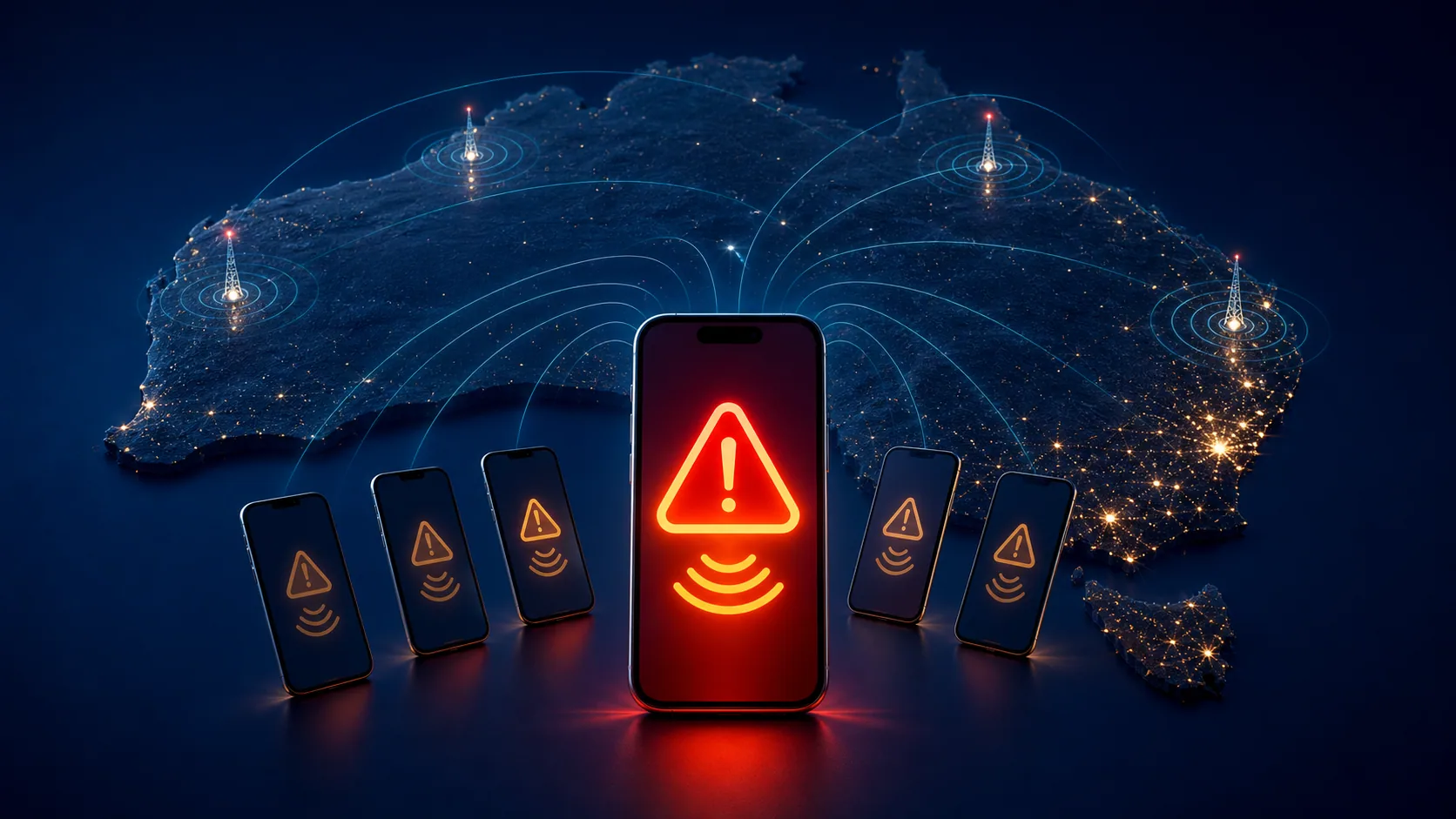
AusAlert uses cell-broadcast technology over active 4G and 5G mobile networks. An ordinary SMS is addressed and sent to a phone number. A cell broadcast works more like a radio transmission from selected mobile towers: an authorised message is sent at the same time to compatible devices connected in the chosen geographic area.
That difference is why no AusAlert app, account or sign-up is required. The system does not need to prepare a customer list before sending a warning. A compatible device can receive an alert regardless of its usual carrier and may even receive one without a working SIM card if it can connect to a supported network. The device still needs compatible software and access to active mobile coverage.
AusAlert targets an area, but it does not track your GPS location
The government says AusAlert does not collect or store your phone number, personal information or location. It does not follow individual devices on a map. Emergency authorities choose the geographic area that needs a warning, and participating mobile towers broadcast the message to compatible devices nearby.
This creates an important practical distinction. AusAlert can reach a phone because that phone is connected near an affected area without the sender learning who owns it. If an alert remains active and you enter the targeted area after the first broadcast, your compatible device can still receive it. Being in range of a selected tower is what matters, not an agency looking up your personal GPS history.
Which emergencies could trigger a real AusAlert?
Official guidance says AusAlert may be used for natural hazards including bushfires, floods, cyclones, earthquakes and tsunamis. It can also be used for serious public-safety or security threats, biosecurity incidents involving animal or plant disease or biohazards, and major health emergencies such as a pandemic.
The category alone does not mean every incident will generate a phone alert. Authorities decide whether an event and its expected impact justify using the system. AusAlert is intended for fast, clear safety information when people in a particular place, or across the country, may need to know what is happening and act. It is another warning channel, not a replacement for preparation, local emergency apps, official websites, radio or instructions from emergency services.
Will everyone receive every warning?
No. State and territory emergency services can send AusAlerts for local and regional emergencies. The Australian Government can send messages about national emergencies. A local bushfire warning could therefore be broadcast only through towers serving the threatened area, while a truly nationwide event could justify a much broader message.
Targeting is designed to reduce irrelevant warnings and reach people near danger, including visitors who may not know the local area or have a state emergency app installed. Coverage still has limits. AusAlert uses active 4G and 5G networks, so people beyond working mobile coverage or using an incompatible or disconnected device may not receive a message. Nobody should wait for a phone alert before acting on clear danger or official local advice.
Critical and Priority alerts behave differently
AusAlert has two warning levels. A Critical Alert is the highest level and means you may be in danger and should act immediately. On a compatible device it can wake the screen, vibrate and play a loud siren-like sound for about 10 seconds even when the device is set to silent or do not disturb. Critical Alerts cannot be opted out of through the ordinary alert settings.
A Priority Alert is used when information is important but the situation is not at the highest warning level. Its sound, vibration and delivery settings can be adjusted or turned off on supported devices. The 27 July national test used the Critical level, which is why so many people noticed the sound. A future message should be judged by its displayed level and instructions, not by assuming every alert will behave exactly like the test.
What will a real AusAlert message tell you?
National Emergency Management Agency guidance says a real message should identify what the emergency is, where it is happening, how serious it is, what you should do, who sent the message and where to find more information. The wording matters more than the surprise of the sound. Stop when it is safe, read the entire message and follow the stated instructions.
A genuine AusAlert will never ask for personal or financial information. It will not demand a payment, password, bank detail or identity document. Only authorised emergency-service organisations and Australian Government agencies can send AusAlerts. If a message asks for sensitive details or uses a suspicious payment link, verify it through the official emergency authority and report suspected fraud to Scamwatch rather than treating it as part of AusAlert.
What if your phone did not receive the national test?
Missing the test does not prove that the permanent system failed or that your phone is broken. The device may have been turned off, in aeroplane mode, outside working coverage, running older software or not fully compatible. The official test advice said no emergency call was needed if the message did not arrive.
Before October, install available operating-system updates and restart the device after updating. Then check the official compatibility guidance for your model and software version. Even with a compatible phone, keep more than one route to emergency information. ABC local radio, television, official state and territory services, emergency apps and trusted local instructions remain important because no single warning channel can reach every person in every circumstance.
What changes on 1 October 2026?
The government lists 1 October 2026 as AusAlert's launch date. From then, the system is intended to move from planned tests into operational use for authorised local, regional and national emergency warnings. That does not mean phones will begin receiving alerts routinely on that date. Messages should appear when authorities decide a qualifying situation requires one.
The useful habit is simple: if an AusAlert arrives after launch, do not dismiss it because the July message was only a test. Read the title, check whether it is Critical or Priority, identify the affected place and follow the instructions. For today's test-time questions and the current compatibility list, use Curiosity Desk's separate 27 July guide rather than mixing the two purposes into one page.
Sources and further reading
This article was written for Curiosity Desk. We do not copy other publishers or invent quotes. If a material error is found, we correct it openly.
Read the full standards →One answer should lead to a better question
Bring your curiosity to the group
Curious Minds is our public Facebook community for surprising science, strange history, Australian wildlife and everyday questions. No copied posts, no personal-friend invitations and no link dumping.
- Three self-contained discussion prompts each week
- Sourced answers and honest uncertainty
- Respectful conversation without spam