One certificate now answers two different questions
The Australian Government launched the second stage of its Home Energy Rating programme on 1 July 2026. It gives owners of existing homes a consistent way to examine energy performance using an accredited in-home assessment.
The resulting certificate contains a Home Energy Rating from 0 to 100 or higher and a Star Rating out of 10. Those numbers are related, but they are not interchangeable and should not be combined into one score.
The 0 to 100 score looks at the whole home
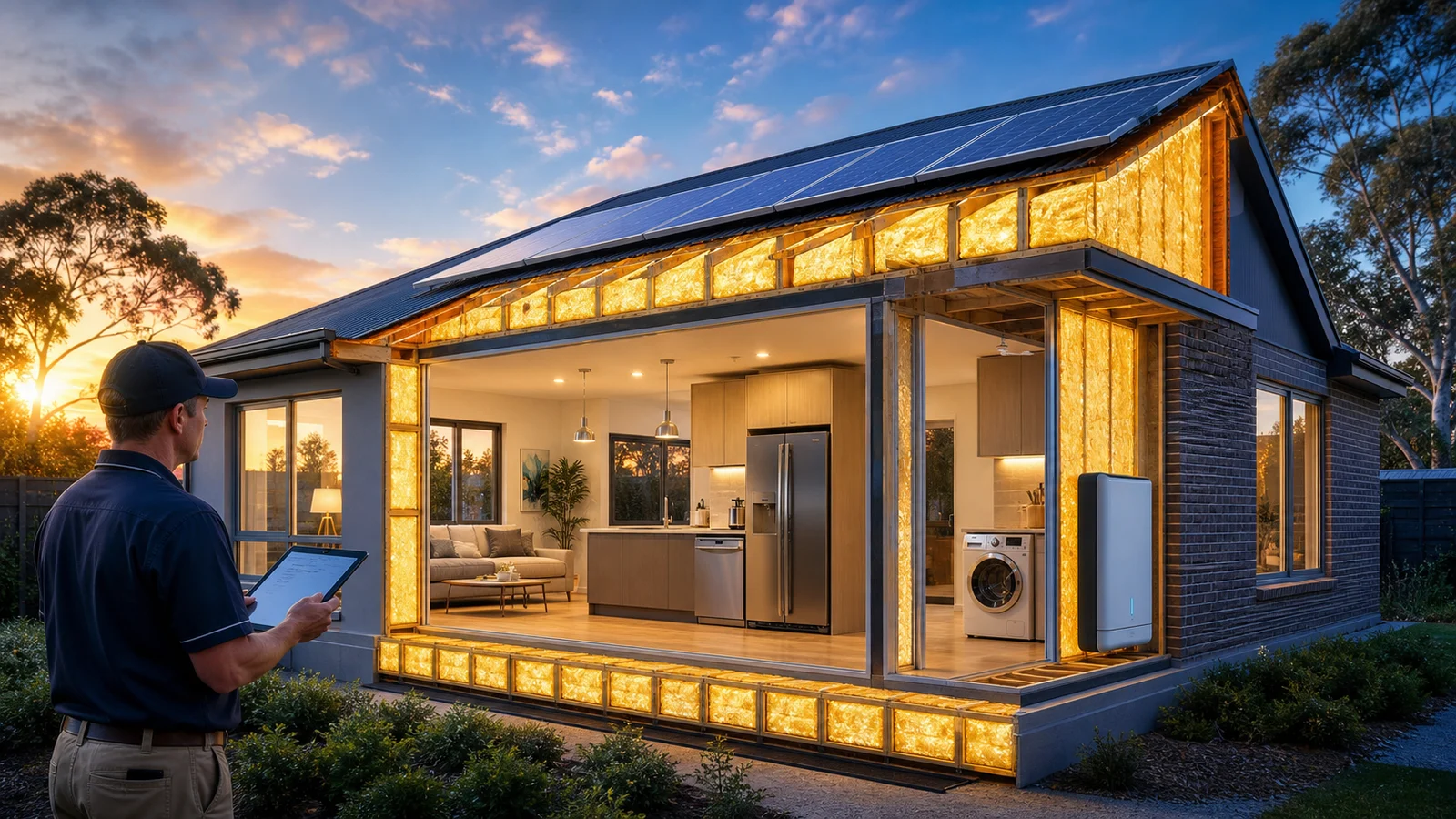
The Home Energy Rating combines the building, major fixed appliances, local climate, solar generation and battery storage to estimate annual energy use. A higher score generally indicates a home that should use less purchased energy under the assessment assumptions.
A score of 100 represents an estimated net zero annual balance, where on-site generation and household energy use balance out. Scores above 100, up to 150, are possible when a home is expected to export more energy than it uses over a year.
The Star Rating isolates the building shell
The separate Star Rating examines how the floor, walls, windows, roof, orientation, shading, insulation and air leakage affect indoor comfort. It estimates how much heating and cooling the home needs, rather than judging every appliance inside it.
This separation explains how two homes can tell different stories. Efficient appliances and solar can lift whole-home performance, while poor insulation or leaky windows can still leave the thermal Star Rating lower.
An assessor visits rather than relying on a quick quiz
An accredited assessor normally spends two to three hours at the property, depending on its size and complexity. The visit records construction features, insulation, windows, shading, gaps, appliances, rooftop solar and other relevant details.
The data is then entered into accredited software. The certificate shows both ratings, estimated annual energy use and suggested upgrades, giving the homeowner evidence to discuss with tradespeople before spending money.
What the certificate can and cannot prove
The rating is a model based on the inspected home and standardised assumptions. Actual bills will still change with occupant behaviour, energy prices, weather, appliance settings and the number of people in the home.
The existing-home certificate is also not a National Construction Code compliance certificate. Its practical value is comparison and planning: it can reveal whether the next useful step is sealing, insulation, windows, equipment or another targeted improvement.
Sources and further reading
This article was written for Curiosity Desk. We do not copy other publishers or invent quotes. If a material error is found, we correct it openly.
Read the full standards →One answer should lead to a better question
Bring your curiosity to the group
Curious Minds is our public Facebook community for surprising science, strange history, Australian wildlife and everyday questions. No copied posts, no personal-friend invitations and no link dumping.
- Three self-contained discussion prompts each week
- Sourced answers and honest uncertainty
- Respectful conversation without spam