Start with the problem, not a product
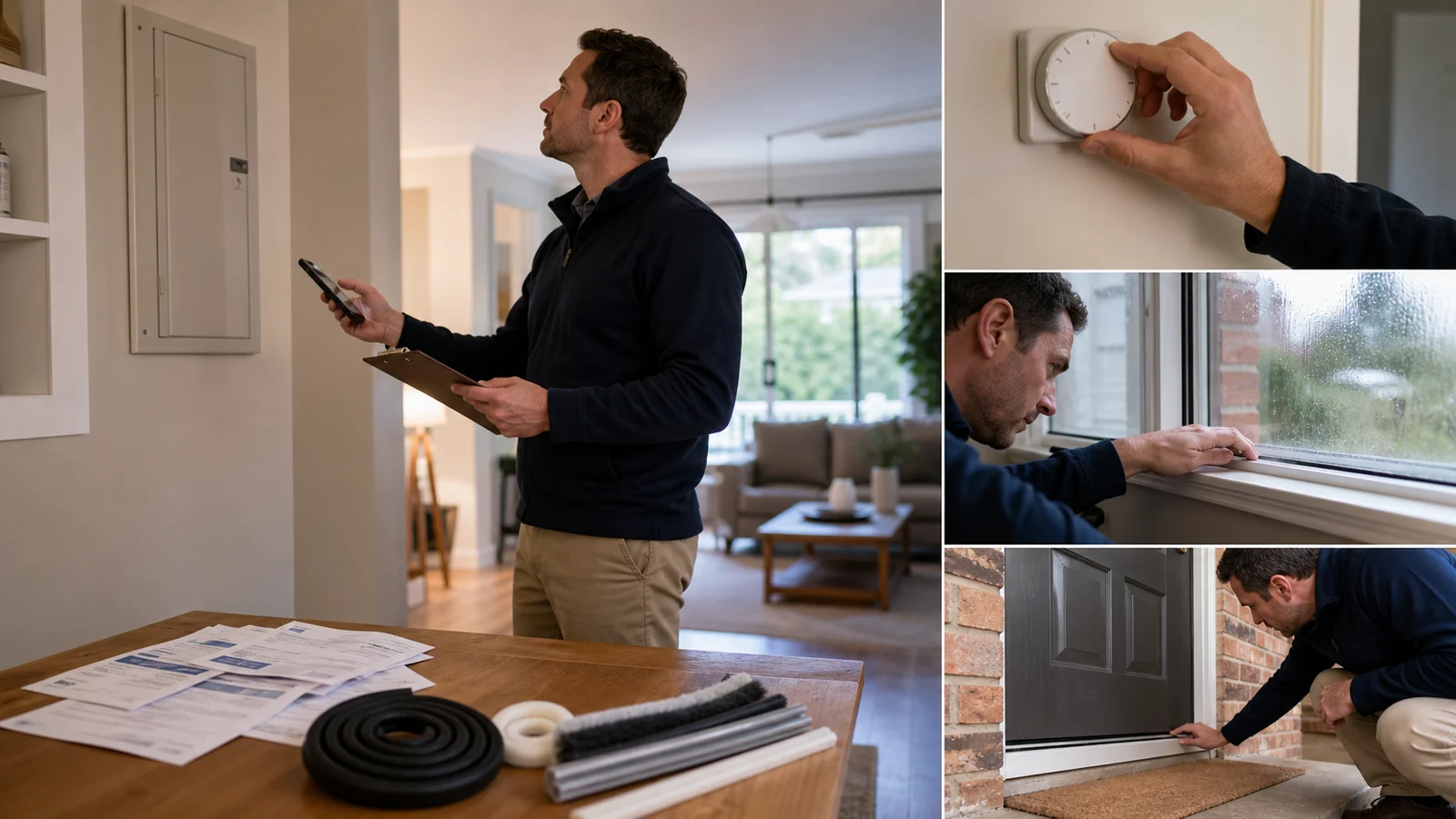
Write down which rooms feel cold, when the problem appears and what the weather is doing. Add recent energy use from bills if available, but remember that tariffs and household behaviour can change cost even when the building stays the same.
This simple map prevents one uncomfortable hour from becoming a whole-house diagnosis. A west-facing summer problem, a windy-door problem and an all-night winter heat-loss problem may need completely different responses.
Check controls before judging equipment
Record thermostat settings, operating hours, closed or open internal doors and the rooms actually occupied. Australian Government guidance suggests 18 to 20 degrees Celsius for winter heating and recommends heating only the rooms being used.
Clean accessible filters and confirm that indoor and outdoor airflow are unobstructed, following the appliance instructions. Do not remove covers, open electrical equipment or attempt gas servicing as part of a household audit.
Walk the boundary of every problem room
Inspect door edges, opening windows, skirting, floor junctions, vents, exhaust fans, fireplaces and other visible penetrations. Note movement with a damp hand or lightweight tissue, but do not use a naked flame.
Never seal a vent whose purpose is unknown, especially ventilation required for an unflued gas heater. Put uncertain openings on a professional-check list rather than turning an energy experiment into a safety risk.
Observe windows, sun and moisture
Note which windows receive useful winter sun, when coverings are opened and closed, and whether frames show draughts or condensation. The winter guide says up to 40 per cent of heating energy can be lost through windows in some homes.
Record when showers, cooking or indoor clothes drying coincide with droplets. Condensation indicates a relationship between indoor moisture and cold surfaces, so both ventilation and the thermal condition of the window belong in the notes.
Finish with a ranked action list
Separate no-cost behaviour changes, reversible low-cost fixes, maintenance, landlord requests and professional work. Photograph each issue and write the evidence beside it so quotes can address a defined problem rather than a vague desire to save energy.
A DIY audit is a screening exercise, not a Home Energy Rating. If a renovation or large purchase is planned, an accredited assessment can spend two to three hours collecting the detailed building and appliance data needed for a standardised certificate.
Sources and further reading
This article was written for Curiosity Desk. We do not copy other publishers or invent quotes. If a material error is found, we correct it openly.
Read the full standards →One answer should lead to a better question
Bring your curiosity to the group
Curious Minds is our public Facebook community for surprising science, strange history, Australian wildlife and everyday questions. No copied posts, no personal-friend invitations and no link dumping.
- Three self-contained discussion prompts each week
- Sourced answers and honest uncertainty
- Respectful conversation without spam