The important words are as much as
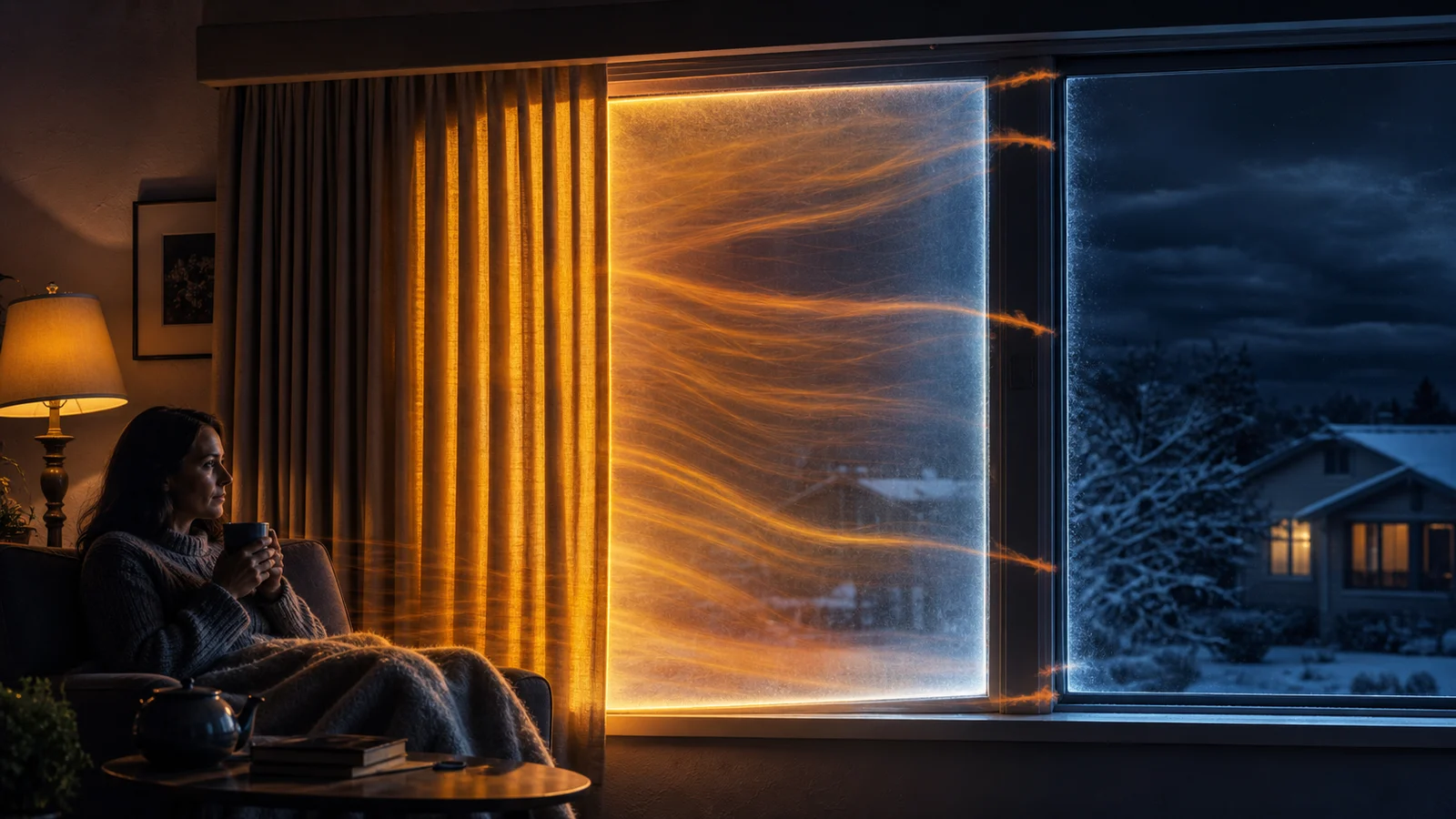
The Australian Government's winter guide says as much as 40 per cent of a home's heating energy can be lost through windows. It is a warning about their potential importance, not a measurement that applies identically to every property.
A home with large single-glazed areas and loose frames can behave very differently from a compact home with efficient glazing and well-fitted coverings. The roof, walls, floor and air leakage also change the proportion attributed to windows.
Heat crosses the glass and the frame
Windows are thinner and usually less insulating than a well-built wall. Heat moves through the glazing, frame and edge details when the indoor and outdoor temperatures differ, leaving the inside surface colder in winter.
That cold surface also affects comfort. A person near the window can lose radiant heat toward it and may feel chilly even when the thermostat reports a reasonable air temperature.
Air leakage is a separate path
Poor seals around opening sections and frames allow warm indoor air to escape while cold outdoor air enters. This draught loss is different from heat conducting through closed glass, even though both problems occur at the same window.
A useful inspection therefore checks two things: whether the window surface needs a better thermal barrier and whether moving air can be felt around the frame, sash or nearby wall junction.
Coverings work by adding a still layer of air
The winter guide recommends quality curtains or blinds and says a close fit matters. A covering that reaches beyond the frame and is controlled at the top and sides can trap a layer of air between the room and the cold glass.
Open the covering when useful winter sun reaches the window, then close it before dark. Thin decorative curtains with large gaps may look finished while providing much less thermal help than a close, lined installation.
Match the repair to the failure
Weather seals can address moving air, while curtains, blinds, films, secondary glazing or upgraded windows address different parts of the thermal problem. Replacing every window is not automatically the first or cheapest answer.
Start with an inspection and inexpensive sealing where it is safe, then compare the remaining discomfort with the cost of larger work. An accredited home energy assessment can place the windows in context with insulation, equipment and the rest of the house.
Sources and further reading
This article was written for Curiosity Desk. We do not copy other publishers or invent quotes. If a material error is found, we correct it openly.
Read the full standards →One answer should lead to a better question
Bring your curiosity to the group
Curious Minds is our public Facebook community for surprising science, strange history, Australian wildlife and everyday questions. No copied posts, no personal-friend invitations and no link dumping.
- Three self-contained discussion prompts each week
- Sourced answers and honest uncertainty
- Respectful conversation without spam