The best time is before the shopping list becomes a contract
Renovations often begin with a visible product such as new windows, a heater or solar panels. An energy assessment starts with a different question: which parts of this particular home are responsible for avoidable energy use and discomfort?
That question is most useful before the design and budget are fixed. Once cabinets, finishes and equipment have been ordered, changing insulation, shading or the location of services can become harder and more expensive.
The visit connects problems that quotes treat separately
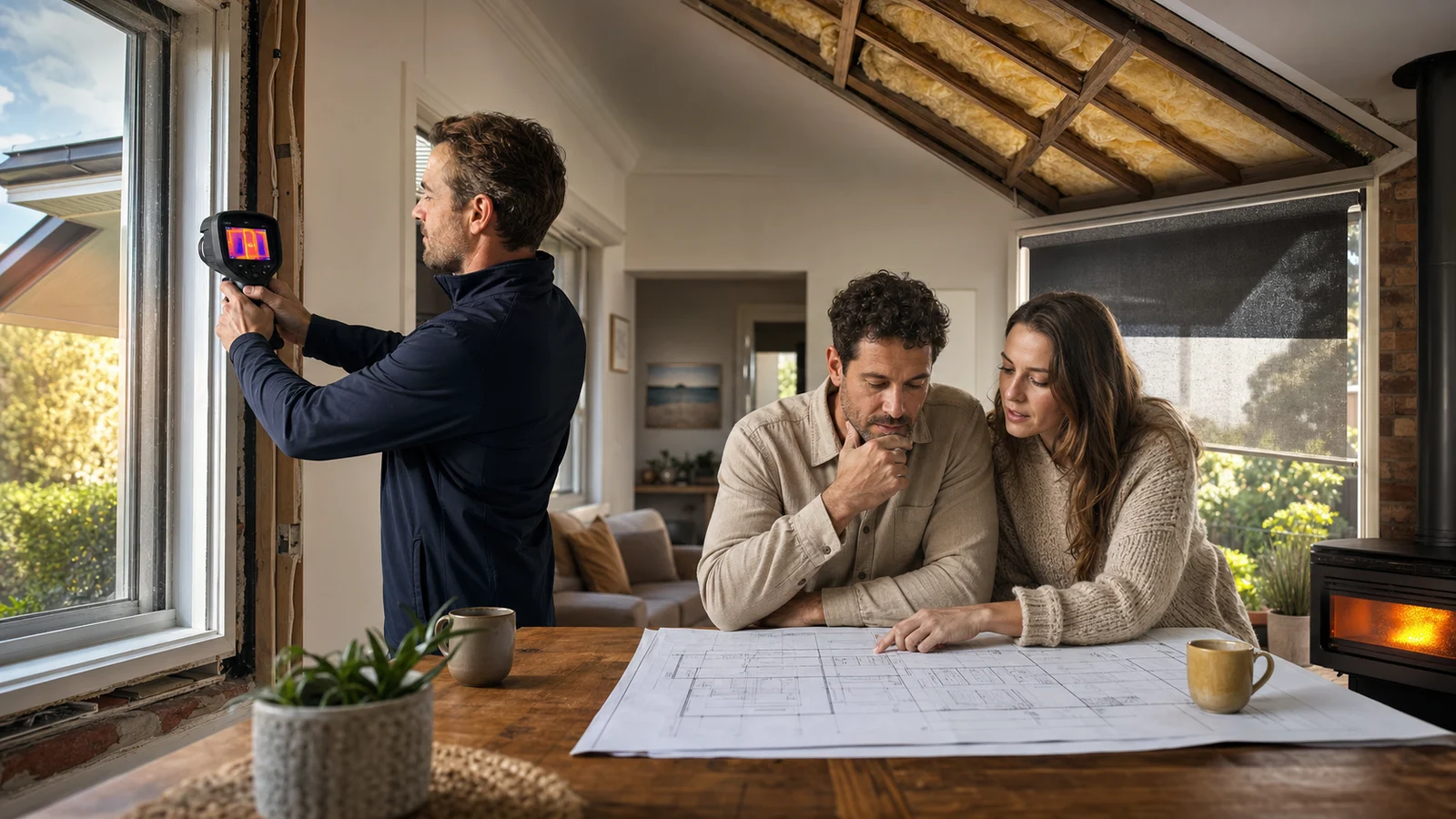
A typical existing-home assessment takes two to three hours. The assessor records the construction, insulation, windows, shading, air gaps, fixed appliances, solar and battery equipment, rather than examining only the product a single contractor sells.
That whole-home view can reveal interactions. A larger heater may warm a draughty room, for example, but sealing safe unwanted gaps and improving the building shell may reduce the amount of heating the room needs in the first place.
The certificate creates a baseline
The certificate provides a 0 to 100 or higher Home Energy Rating, a Star Rating out of 10, estimated annual energy use and upgrade guidance. The two ratings distinguish overall energy performance from the thermal quality of the building shell.
A baseline is useful when several improvements compete for the same budget. It lets the owner ask which work addresses comfort, which reduces purchased energy and which mainly changes appearance or convenience.
It is valuable evidence, not a savings guarantee
Modelled results cannot promise an exact bill reduction. Household size, thermostat settings, time spent at home, local weather, tariffs and future behaviour all affect actual consumption after a renovation.
Costs and possible benefits also vary by property. The assessment is easier to justify when a substantial renovation is already planned or when the home has persistent hot, cold or high-bill problems that have resisted guesswork.
Use the report to ask better questions
Take the certificate and upgrade guidance to designers and tradespeople. Ask which recommendation their quote addresses, whether another job must happen first, and how the proposed work changes air leakage, insulation continuity or equipment efficiency.
For major regulated work, confirm local approval and National Construction Code requirements separately. The existing-home rating certificate helps with planning, but the programme states that it is not itself a certificate of NCC compliance.
Sources and further reading
This article was written for Curiosity Desk. We do not copy other publishers or invent quotes. If a material error is found, we correct it openly.
Read the full standards →One answer should lead to a better question
Bring your curiosity to the group
Curious Minds is our public Facebook community for surprising science, strange history, Australian wildlife and everyday questions. No copied posts, no personal-friend invitations and no link dumping.
- Three self-contained discussion prompts each week
- Sourced answers and honest uncertainty
- Respectful conversation without spam