A heater cannot keep air that the room keeps replacing
Uncontrolled gaps let warmed air leave and cold outdoor air enter. Australian Government guidance describes sealing gaps as a simple, affordable step that may reduce heat loss by 15 to 25 per cent, although the result depends on the home.
This is why a colder room does not always need a larger appliance first. Reducing safe unwanted leakage can lower the heating task and make the existing equipment feel more effective.
Begin with doors and opening windows
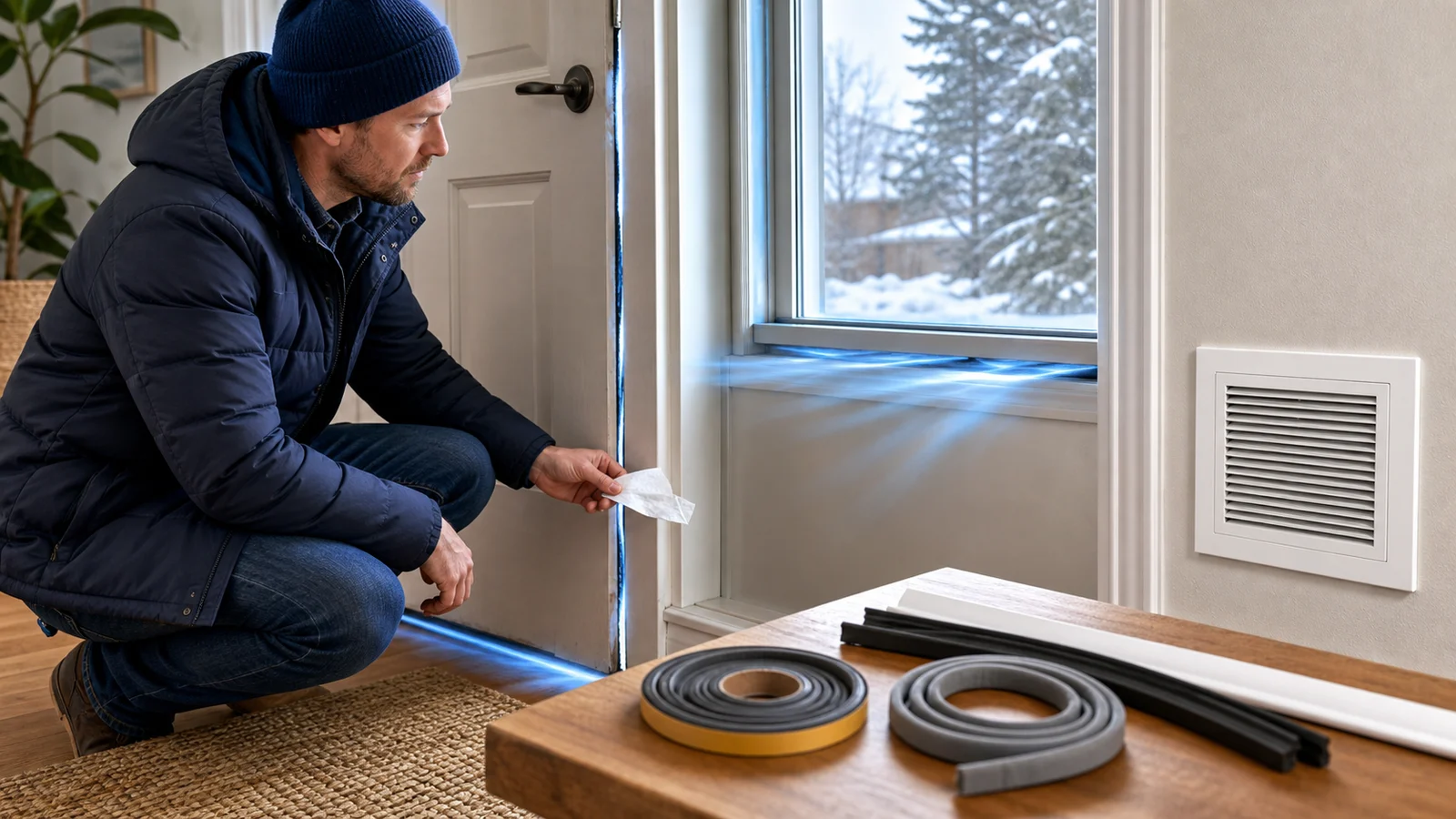
Look for daylight under external doors, worn perimeter seals and rattling window sections. A removable door snake can test whether an under-door gap is important before a permanent seal is fitted.
On a cool or windy day, move a slightly damp hand slowly around closed frames. A strip of lightweight tissue can also reveal air movement without using a flame near curtains, paint or other combustible surfaces.
Then inspect the less obvious edges
Government guidance lists skylights, floorboards, skirting boards, wall junctions, appliances, vents and fireplaces among the places worth checking. The strongest leak may be behind furniture or at a junction rather than in the middle of a window.
Exhaust fans can also allow air movement when switched off. Purpose-made dampers or covers may help in suitable installations, but bathrooms, kitchens and laundries still need effective moisture ventilation when they are being used.
Do not seal a safety requirement
Some vents exist for combustion air, gas appliance safety or required building ventilation. The energy guide specifically warns against sealing vents needed by unflued gas heaters. If the purpose of an opening is unclear, leave it alone and ask a licensed professional.
Electrical and insulation work also has required clearances around lights, transformers, fans and heat sources. A cheap energy fix is not cheap if it creates a fire, moisture or carbon monoxide risk.
Make a list before making a purchase
Record each suspected leak, the weather when it appeared and the room affected. Start with reversible low-cost measures, then check whether comfort improves before paying for major equipment or building work.
Renters should obtain the required approval before attaching permanent seals or altering fittings. Owners planning larger work can use a home energy assessment to compare air leakage with insulation, windows and heating efficiency across the entire property.
Sources and further reading
This article was written for Curiosity Desk. We do not copy other publishers or invent quotes. If a material error is found, we correct it openly.
Read the full standards →One answer should lead to a better question
Bring your curiosity to the group
Curious Minds is our public Facebook community for surprising science, strange history, Australian wildlife and everyday questions. No copied posts, no personal-friend invitations and no link dumping.
- Three self-contained discussion prompts each week
- Sourced answers and honest uncertainty
- Respectful conversation without spam