Follow the water
What indoor drying changes
- Before drying
- A stronger spin leaves less water in the load
- During drying
- Water evaporates from fabric into surrounding air
- Condensation risk
- Higher when humid air reaches cold glass or walls
- Best room
- A suitable space with effective outdoor ventilation
- Fan effect
- Speeds evaporation but does not remove the water by itself
- Appliances
- Vented, condenser and heat-pump dryers manage moisture differently
- Warning pattern
- Droplets that repeatedly appear after laundry days
Drying does not make water disappear. It moves water out of the fabric, and the room or appliance must then manage that moisture.
Dry fabric means water has moved elsewhere
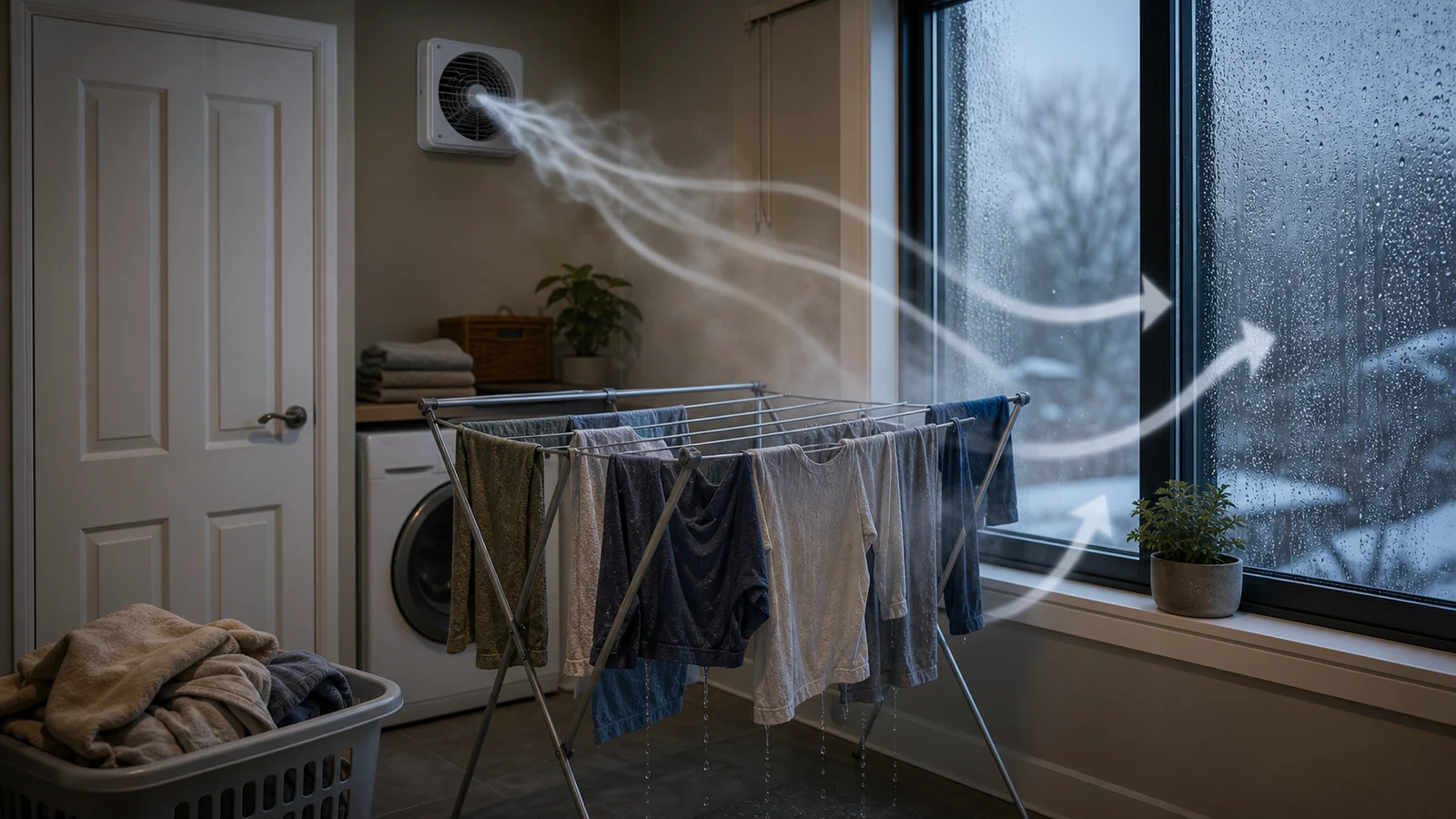
A washing machine removes much of the wash water during its spin cycle, but the fabric remains damp. As the load dries, that remaining liquid becomes water vapour and enters the surrounding air unless a vented appliance carries it outdoors.
In winter, windows and some walls can be cold enough for the added vapour to return to liquid. Indoor drying is therefore one possible source of condensation, not because the rack is wet but because evaporation raises indoor humidity.
The room and the load change the result
A small fast-spun load in a ventilated laundry does not behave like several heavy loads drying in a closed bedroom. Air volume, airflow, starting moisture, surface temperature and the time taken to dry all matter.
Other activities can add moisture at the same time. Cooking, showers, breathing and unvented sources may combine, so the visible droplets cannot always be blamed on one rack alone.
A stronger spin removes moisture before it reaches the room
If the fabric leaves the washing machine holding less water, less must evaporate indoors before the load becomes dry. Using the highest suitable spin permitted by the garment and machine instructions can therefore reduce both drying time and the moisture released into the room.
This does not make every load safe to dry in any enclosed space. Heavy fabrics, repeated loads and poor ventilation can still raise humidity, but the spin cycle is a useful first control that does not depend on warming the whole room.
Keep the moisture close to an exhaust path
Where practical, use a laundry or other suitable space with effective ventilation to the outdoors. Close the internal door if that helps prevent humid air spreading through the house, while keeping the designed exhaust path operating.
Follow the instructions for any clothes dryer. Vented dryers need an appropriate discharge arrangement, while condenser and heat-pump models collect moisture differently and still require correct installation and maintenance.
A heater is not a moisture-removal system
Warmer air can hold more water vapour and may make a rack dry faster, but the water remains in the room until ventilation, extraction or suitable dehumidification removes it. Heating alone can postpone visible droplets until the humid air reaches another cold surface.
Do not drape clothing over a heater or place a rack against equipment contrary to its safety clearances. Keep fabrics away from ignition and overheating hazards, follow the heater instructions and never obstruct a designed air outlet.
Air movement helps drying but does not destroy water
Spacing garments and circulating air can speed evaporation. That makes clothes dry sooner, but the vapour still needs to leave the room or be removed by suitable dehumidification rather than being pushed toward another cold surface.
Opening a window briefly can help in suitable outdoor conditions, but leaving a home permanently draughty wastes heating energy. Moisture control and uncontrolled air leakage are not the same thing.
Test the household pattern one change at a time
Choose two similar cold-weather laundry days and record the load size, spin setting, drying room, ventilation used and where droplets appear the next morning. On the second day, change one factor such as the spin speed or exhaust use.
This is not a laboratory measurement, but it can reveal a repeatable household pattern. Changing everything at once may clear the glass without showing which action mattered, making the problem harder to manage during the next wet week.
Renters and owners have different repair choices
A renter can often change load timing, spin settings, room choice, garment spacing and use of existing ventilation without altering the building. Permanent vents, new ducting, electrical work and fixed glazing changes normally require the property owner's approval and qualified installation.
Owners can compare exhaust performance, insulation, glazing and air leakage if behaviour changes do not resolve repeated wetting. Neither group should block required vents or alter combustion-appliance ventilation in an attempt to keep more heat indoors.
Use the window as a warning sign
If droplets appear after washing days, test one change at a time: use a stronger spin, reduce the load, move the rack, operate effective exhaust ventilation or choose an outdoor drying period when conditions permit.
Repeated wetting, mould or damp damage needs more than wiping the glass. Check the moisture sources, ventilation and cold surfaces together, and seek qualified building advice when the cause or safe remedy is uncertain.
Sources and further reading
This article was written for Curiosity Desk. We do not copy other publishers or invent quotes. If a material error is found, we correct it openly.
Read the full standards →One answer should lead to a better question
Bring your curiosity to the group
Curious Minds is our public Facebook community for surprising science, strange history, Australian wildlife and everyday questions. No copied posts, no personal-friend invitations and no link dumping.
- Three self-contained discussion prompts each week
- Sourced answers and honest uncertainty
- Respectful conversation without spam