The range comes from energy guidance
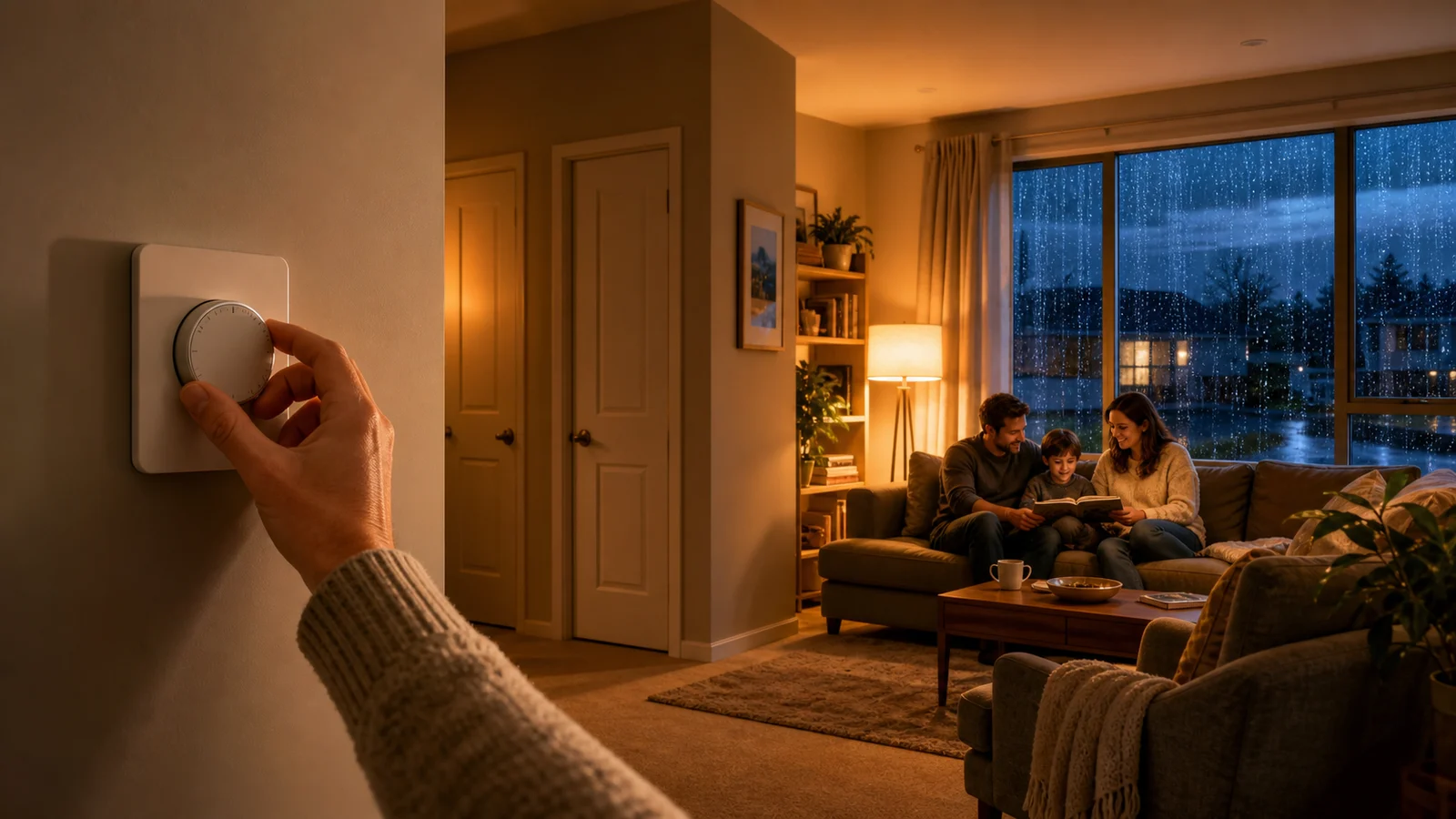
The Australian Government's winter household guide recommends setting heating between 18 and 20 degrees Celsius. The same guidance says every degree the setting rises can add about 5 to 10 per cent to energy costs for heating.
That estimate is about the heating task, not a promise that the entire electricity bill will fall by the same percentage. Hot water, appliances, tariffs, solar and other household uses continue to affect the final bill.
A small temperature change creates hours of extra work
A thermostat tells the heater when the room has reached its target. Raising the target increases the difference between indoor and outdoor temperatures, so heat escapes through the building shell faster and the system must replace more of it.
The effect accumulates while the heating runs. One degree can sound trivial at the control panel, but maintaining that difference across walls, windows, floors, ceilings and air leaks for many hours requires additional energy.
The number is a starting point, not a medical prescription
Comfort depends on clothing, activity, humidity, air movement, age, health and the temperature of surrounding surfaces. Two rooms with the same thermostat reading can feel different when one has cold glass, draughts or poorly insulated walls.
People with health needs should follow appropriate medical and public health advice. The 18 to 20 degree range is presented as household energy guidance and should not override an individual's safety or care requirements.
Heat the occupied space and the occupied time
The winter guide recommends closing internal doors and heating the rooms being used. Programmable controls can warm a space around the household schedule instead of holding the whole home at one temperature when nobody needs it.
Sunlight can also do part of the work. Opening curtains when winter sun reaches the glass and closing well-fitted coverings before dark helps reduce the time the heater has to replace lost warmth.
Fix the house before blaming the thermostat
If 20 degrees still feels cold, check for uncontrolled draughts, uncovered windows and missing insulation before turning the setting higher. Cold air movement and cold surfaces can make occupants uncomfortable even when the air temperature looks reasonable.
Use heaters according to their instructions, keep combustible items clear, inspect cords and have gas equipment serviced as required. An efficient setting only helps when the appliance and the home are being used safely.
Sources and further reading
This article was written for Curiosity Desk. We do not copy other publishers or invent quotes. If a material error is found, we correct it openly.
Read the full standards →One answer should lead to a better question
Bring your curiosity to the group
Curious Minds is our public Facebook community for surprising science, strange history, Australian wildlife and everyday questions. No copied posts, no personal-friend invitations and no link dumping.
- Three self-contained discussion prompts each week
- Sourced answers and honest uncertainty
- Respectful conversation without spam