Ten minutes is a reset, not a promise of a clean room
A ten-minute timer can produce a dramatic visual change, especially when rubbish, dishes, clothes and loose objects are blocking the useful parts of a room. It cannot reliably remove every soil, sanitise every food-contact surface, dry a soaked carpet, remediate mould or organise months of possessions. Calling the result a deep clean would turn a useful routine into a false promise.
The honest objective is triage. Make the room safer to move through, remove material that can smell or attract pests, contain the objects that belong elsewhere, clean the surface with the greatest consequence and create a clear starting point for the next session. A visibly better room after ten minutes is progress even when the bookshelf, wardrobe and skirting boards wait.
Choose the finish line before the timer starts
A timer only creates urgency; it does not choose priorities. Stand at the doorway and define five outcomes: rubbish and spoiled food are out, dishes are together, laundry is contained, the main walking path is clear and one priority surface has been cleaned. Those outcomes are specific enough to guide decisions when the clock begins.
Do not put dusting, window cleaning, drawer sorting, paperwork filing and decorative styling into the same sprint. Each new category increases switching and makes the room look half-started. If visitors are arriving, prioritise the entrance, seating and bathroom basin. If the room is used for sleep, prioritise the bed access, floor path and anything wet or food-related.
The doorway safety scan can cancel the routine
Before moving quickly, look for broken glass, needles or other sharps, an unknown chemical spill, blood or body fluids, sewage, pest waste, damaged electrical equipment, a burning smell, heavy smoke, a suspected gas release, a large wet area or widespread mould. A ten-minute speed routine is not the right method for a hazard that needs protective equipment, isolation, emergency help or a specialist process.
If chemical or toxic fumes may be present, Healthdirect advises moving to fresh air and calling Triple Zero on 000 for a severe reaction. Do not enter a toxic atmosphere to rescue somebody without emergency-service direction. Keep children and pets away from unknown material, loose button batteries and cleaning products, and never handle a sharp object through a thin rubbish bag.
Stage six tools so the clock measures cleaning, not searching
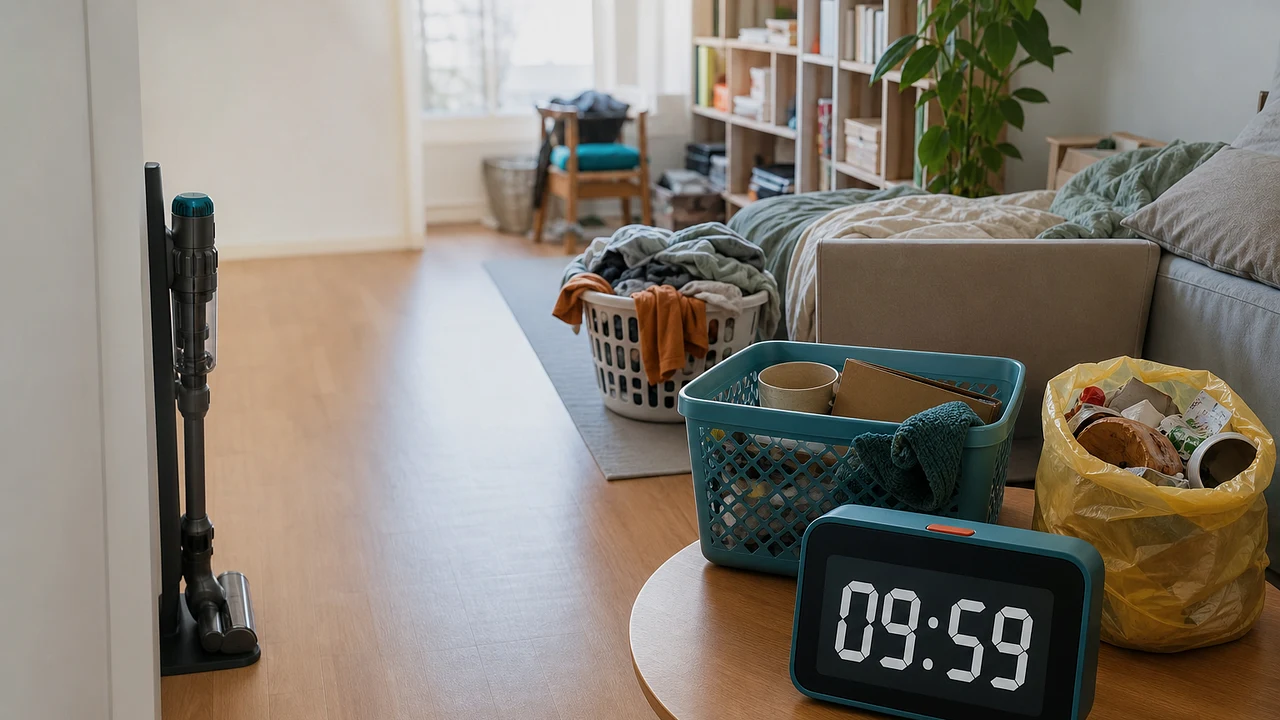
Place a rubbish bag, laundry basket, relocation basket, absorbent cloth, material-compatible cleaner and vacuum or broom at the doorway. The relocation basket is for sound, dry objects that belong in another room. It is not a place for food, wet fabric, chemicals, medication, batteries, sharp objects or important documents that could disappear under clutter.
Use one basket rather than creating several new piles. Check the cleaner label and the surface care instructions before the timer starts. If the correct product is not available, leave that surface for later instead of improvising a mixture. Put on any protection required by the label and keep the product in its original container.
0:00 to 2:00: remove what can decay, leak, cut or trip
Begin with ordinary rubbish, empty packaging and spoiled food because these items can create odour, leakage and pest problems. Work around the room once rather than darting between corners. Close the bag before it becomes overfilled, and do not compact it with a hand or foot when the contents are not completely known.
Pick up obvious trip hazards from the main route to the door. A clear walkway matters more than a polished shelf because obstructions, cords and loose objects can cause falls. Safe Work Australia also identifies wet floors as a slip risk, so deal with a simple water spill promptly and leave any cleaned patch dry or protected from foot traffic.
2:00 to 4:00: collect dishes and laundry without starting side quests
Gather cups, plates and food containers in one stable carrier or take them to the kitchen in one trip. Do not begin washing a full sink during this room reset. Scrape or contain food as appropriate, place perishable leftovers in safe storage and leave the washing as the next defined task unless one item can be dealt with immediately without abandoning the room.
Place dry clothing and ordinary washable textiles in the laundry basket. Keep wet towels, damp sportswear and heavily contaminated items separate so moisture is not buried in the load. CDC household guidance recommends following the item's washing instructions and drying laundry completely. Never shake dusty or contaminated textiles around the room merely to identify them.
4:00 to 6:00: use one relocation basket, not a hiding place
Return an object immediately only when its home is in the same room and the action takes a few seconds. Put sound items that belong elsewhere into the relocation basket. This contains visual noise without forcing twenty separate trips through the house, but the basket must have a destination and an emptying time.
Do not sweep everything from a table into a drawer, cupboard or bag. Hidden disorder is harder to inspect and can bury bills, medication, batteries, food or damp material. If a decision takes more than a few seconds, leave the item visible in the basket and continue. Sorting is a separate job with a separate finish line.
6:00 to 8:00: clean one surface that changes how the room works
Choose the highest-consequence surface, not necessarily the largest. That might be a food-preparation bench, sticky dining table, bathroom basin, bedside area holding medication or the desk space needed for tomorrow. Remove loose debris first, then use the compatible cleaner, cloth and amount of moisture specified for the material.
Cleaning and disinfecting are not interchangeable. CDC guidance says routine cleaning with soap or detergent is enough in most home situations; disinfection is more relevant when someone is sick, at higher risk or after specific contamination. If disinfection is actually needed, clean first when directed and follow the exact label, including contact time, ventilation and rinsing requirements. A hurried spray and wipe is not proof of disinfection.
8:00 to 10:00: clear the main floor path and finish at the exit
Vacuum or sweep the main route rather than attempting every edge and corner. Start at the far end of that route and work toward the doorway so the floor becomes the final collection step. Use the method approved for the flooring, keep cords and equipment out of the cleared path and never rush while carrying a load that blocks your view.
Take the rubbish bag out, move the dishes and laundry to their next safe location and leave any damp floor dry before normal use. When the timer sounds, stop. A fixed stop prevents a ten-minute reset from quietly consuming the rest of the day and makes it possible to repeat the routine without dreading it.
The best priority changes with the room
In a bedroom, clear the route between the door and bed, remove food, contain clothes and make enough of the bed to use it. In a living room, clear the entrance and seating, collect cups and contain remote controls, books and toys. In a bathroom, address wet floors, towels and the basin while leaving toilet contamination for a correctly equipped clean rather than spreading it with the same cloth.
A kitchen has higher food-safety consequences. Remove spoiled food, secure rubbish and clear one preparation zone, but do not claim the whole kitchen is hygienic after a two-minute wipe. Raw meat juices, a recalled food, pest contamination and a heavily soiled sink need the relevant sanitation or disinfection process, not the visual-reset shortcut.
Ventilation helps only when the conditions make sense
Outdoor air can reduce exposure to particles and product vapours during and after cleaning. Open a safe window or use suitable exhaust ventilation when the label and conditions support it. The US EPA cautions against bringing in outdoor air when pollution is high or when it makes the home dangerously hot, cold or humid.
Ventilation does not cancel the product directions and it cannot make an unsafe chemical mixture acceptable. Never mix household cleaners. If a label requires specific protection or a different airflow arrangement, follow it. When a room contains smoke, strong unknown fumes or symptoms such as breathing difficulty, the priority is leaving and obtaining appropriate help, not finishing the timer.
Ten minutes cannot solve moisture, mould or contaminated spills
A damp patch can extend into carpet backing, underlay, plasterboard or a wall cavity even when the surface looks dry. NSW Health explains that mould commonly returns unless the moisture source is corrected. A quick wipe and room fragrance cannot repair a leak or dry hidden material, and a large or recurring problem can require the property owner, a building professional or qualified remediation.
Blood, vomit, faeces and other body-fluid spills also need a process matched to the material, spill size and exposure risk. Victorian health guidance says spills should be contained and removed before routine cleaning liquids are added, because adding liquid too early can enlarge the contaminated area. Do not treat these as ordinary rubbish during a speed round.
A reset should reduce strain, not become a test of speed
Move at a pace that preserves balance, breathing and safe lifting. Sit while sorting a small basket, use a long-handled tool, work from a stable height and clear a smaller zone if pain, fatigue, pregnancy, disability or limited mobility changes what is safe. Never stand on a chair, overreach or carry more than you can see around simply because the timer is running.
The routine is a tool, not a judgement about character. Illness, grief, caregiving, housing conditions and limited storage can all change what a room requires. If possessions prevent safe movement, exits are blocked or attempts to discard items cause severe distress, a compassionate support plan is more appropriate than a viral challenge built around speed.
Use a visible stop rule and name the next task
At ten minutes, ask whether the defined outcomes were met: ordinary waste removed, dishes grouped, laundry contained, main path clear and one priority surface cleaned. Take a private reference photograph only if it is helpful and nobody else's documents or personal items are exposed. The photograph is a progress record, not a reason to shame the starting condition online.
Write one next action that can begin without rethinking the whole room: wash the dishes, empty the relocation basket, launder the towels, clean the toilet zone or vacuum the edges. A specific next task protects the progress made during the reset. The vague instruction to finish everything usually recreates the same decision problem at the next session.
Small landing zones make the next ten minutes easier
Repeated clutter often identifies a missing system. A cup near the sofa may need a regular return routine; clothes beside the bed may need an accessible hamper; mail on the bench may need one tray; objects waiting for another room may need a small relocation basket that is emptied daily. Put storage near the behaviour rather than expecting perfect memory.
Keep the reset kit simple and safe. Store cleaning products locked or otherwise out of reach of children and pets, retain the original labels and return every product after use. Empty rubbish, laundry and relocation baskets instead of allowing the containers themselves to become permanent clutter. The method works because each category has an exit.
The ten-minute checklist
Before the clock: scan for hazards, choose five outcomes and stage the correct tools. From zero to two minutes: remove ordinary rubbish, spoiled food and trip hazards. From two to four: collect dishes and laundry. From four to six: use one relocation basket. From six to eight: clean one important surface. From eight to ten: clear the main floor path, take the rubbish out and leave the area dry.
The room should finish safer, more usable and easier to continue, not falsely certified as clean. If the timer reveals mould, sharps, sewage, blood, a chemical release, damaged electrics or another serious hazard, stopping is success because it prevents a rushed routine from turning a small problem into an injury or wider contamination.
Sources and further reading
- US CDC: When and how to clean and disinfect a home ↗
- Australian Department of Health: Routine community cleaning and disinfection ↗
- US EPA: Ventilation during and after cleaning ↗
- Safe Work Australia: Slips, trips, wet floors and clear walkways ↗
- Healthdirect Australia: First aid after inhaling chemical or toxic fumes ↗
- NSW Health: Moisture control and household mould ↗
- Victorian Department of Health: Managing blood and body-fluid spills ↗
- ACCC Product Safety: Chemical, cleaning-product and button-battery hazards for children ↗
- US CDC: High-to-low, clean-to-dirty and systematic cleaning principles ↗
This article was written for Curiosity Desk. We do not copy other publishers or invent quotes. If a material error is found, we correct it openly.
Read the full standards →One answer should lead to a better question
Bring your curiosity to the group
Curious Minds is our public Facebook community for surprising science, strange history, Australian wildlife and everyday questions. No copied posts, no personal-friend invitations and no link dumping.
- Three self-contained discussion prompts each week
- Sourced answers and honest uncertainty
- Respectful conversation without spam