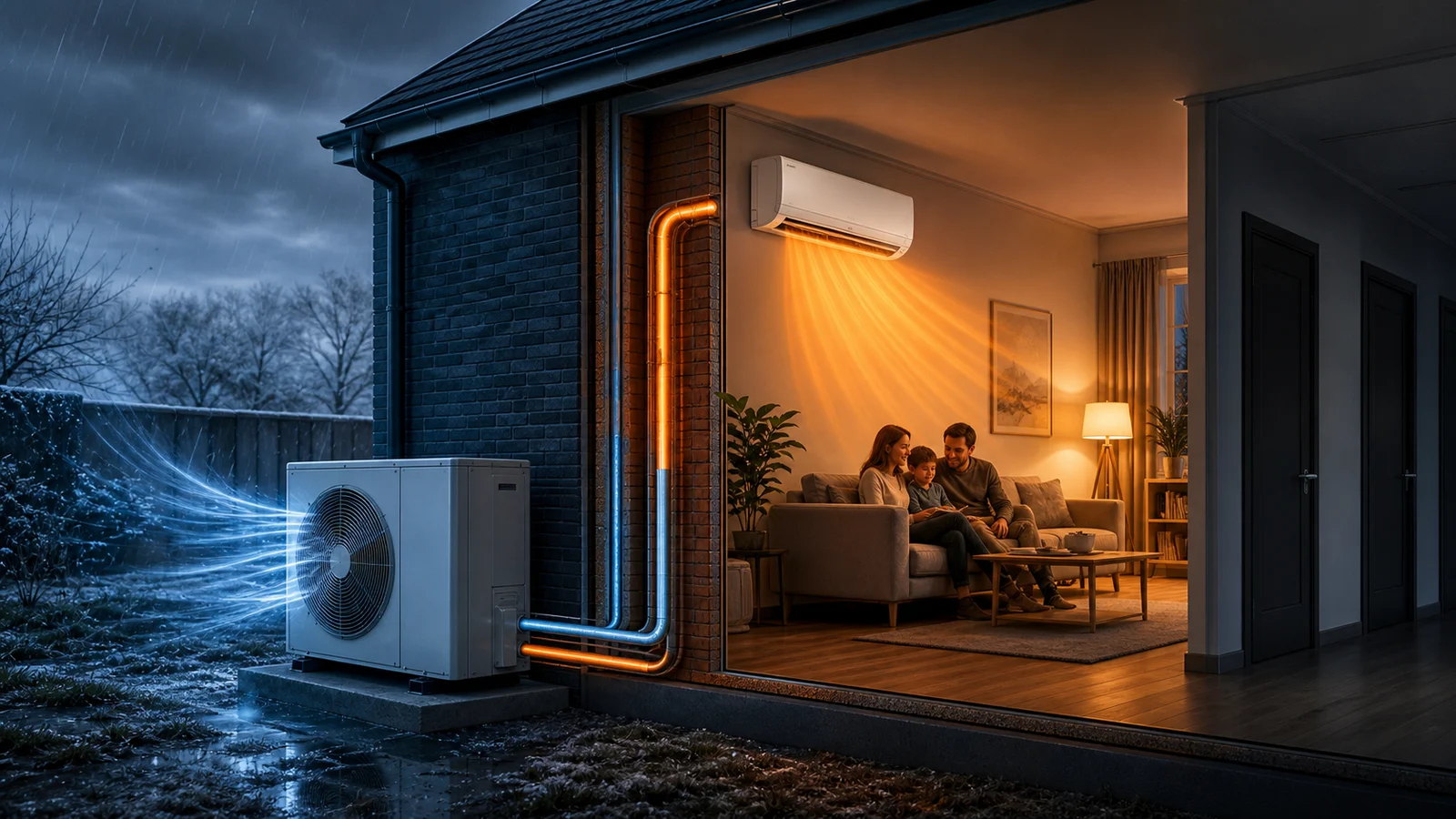
The machine moves heat rather than only making it
A reverse cycle air conditioner is an air-source heat pump. In heating mode, refrigerant and a compressor collect heat from the outdoor air and release it inside, even when the outdoor temperature feels cold to a person.
That transfer process distinguishes it from simple electric resistance heating, which turns electricity directly into heat. Your Home describes reverse cycle air conditioning as the most energy-efficient combined heating and cooling system for many Australian homes.
Cold outdoor air still contains usable energy
Temperature describes the average energy of particles, but outdoor air above absolute zero still contains thermal energy. A heat pump uses the changing pressure and temperature of refrigerant to absorb some of that energy and move it indoors.
Performance changes with outdoor conditions and the model. A system suited to a mild coastal climate may not perform identically in a colder region, which is why the zoned energy label reports performance for hot, average and cold climate zones.
The home determines how hard the system works
Even an efficient unit must replace heat escaping through windows, walls, ceilings, floors and draughts. Sealing safe unwanted gaps, using well-fitted window coverings and improving insulation can reduce the heating load.
Sizing also matters. An undersized system may struggle on cold days, while an unnecessarily large or poorly selected unit can cost more and operate less comfortably. Compare room size, climate and building condition with professional advice where needed.
Settings and maintenance affect the result
Australian Government winter guidance recommends a heating setting between 18 and 20 degrees Celsius and says each higher degree can add around 5 to 10 per cent to heating energy costs. Heating occupied zones only can reduce unnecessary work.
Keep filters clean and outdoor airflow unobstructed according to the manufacturer's instructions. A dirty filter, blocked unit or poorly placed sensor can reduce airflow and make a capable system feel less effective.
Efficient does not mean best in every circumstance
Purchase price, installation, electricity tariff, solar availability, room layout, noise and local winter conditions all matter. A renter with one small room may make a different decision from an owner replacing whole-home equipment.
The useful comparison is not the appliance name alone. Check the zoned energy label, likely hours of use, the spaces being heated and the home's heat loss before estimating running costs or choosing a model.
Sources and further reading
This article was written for Curiosity Desk. We do not copy other publishers or invent quotes. If a material error is found, we correct it openly.
Read the full standards →One answer should lead to a better question
Bring your curiosity to the group
Curious Minds is our public Facebook community for surprising science, strange history, Australian wildlife and everyday questions. No copied posts, no personal-friend invitations and no link dumping.
- Three self-contained discussion prompts each week
- Sourced answers and honest uncertainty
- Respectful conversation without spam