Why landing-site cameras need a high viewpoint
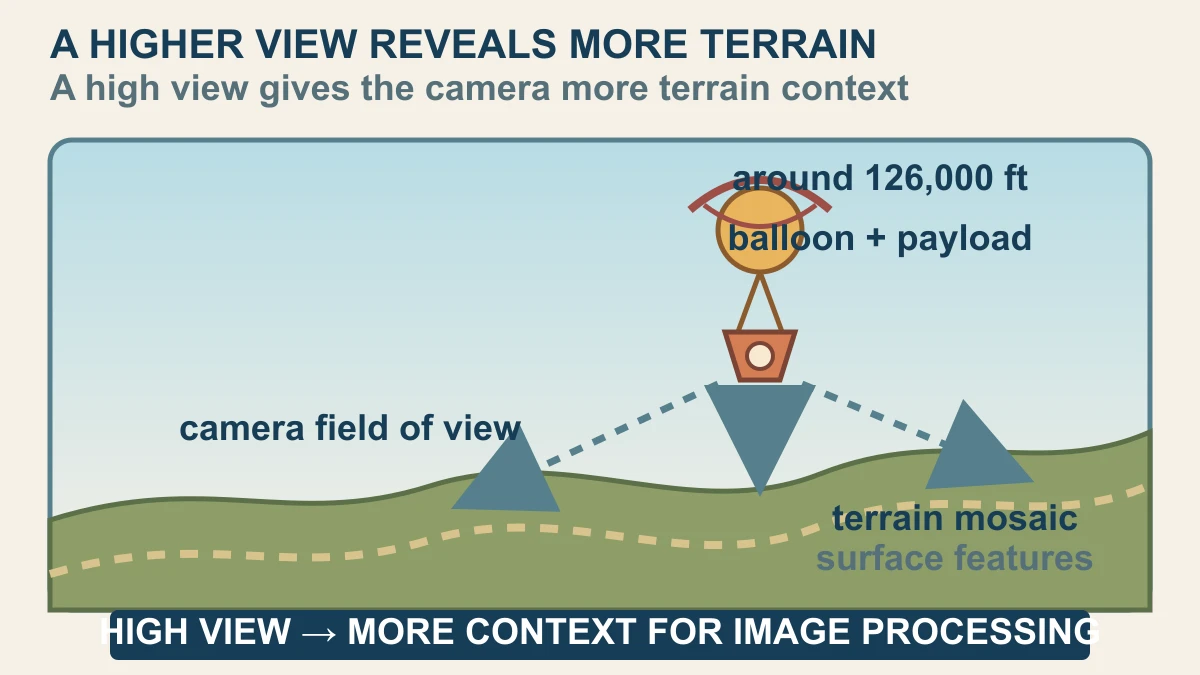
The immediate answer is geometry. A camera carried high above the ground can place more of a landscape into one frame, giving engineers a wider piece of terrain to interpret before they ask a rover to approach a landing area. That wider context can help a future mission look for slopes, rocks, edges and other surface cues. It is a reason to test the camera from a balloon; it is not proof that the camera has already certified a safe landing site.
NASA's CLIC 2 report describes the mission as the second flight for the Compact Large-sensor Imaging Camera. It was hand-launched from NASA's Fort Sumner facility in New Mexico on 24 August 2026, reached a float altitude of around 126,000 feet and flew for 3 hours and 41 minutes. The report says the small camera system can process images in real time to help determine safe landing spots for rovers on future Moon or Mars missions.
That altitude is useful as a test geometry, not because Earth and another world look identical from above. NASA's balloon-capabilities page places typical scientific-balloon float altitudes in the roughly 29.2-to-38.7-kilometre range for conventional flights, and describes planetary ballooning as an area of feasibility work. The CLIC 2 report supplies the flight fact; the programme page supplies context. Neither turns an Earth balloon image into a lunar or Martian terrain result.
How CLIC 2 processes images in real time
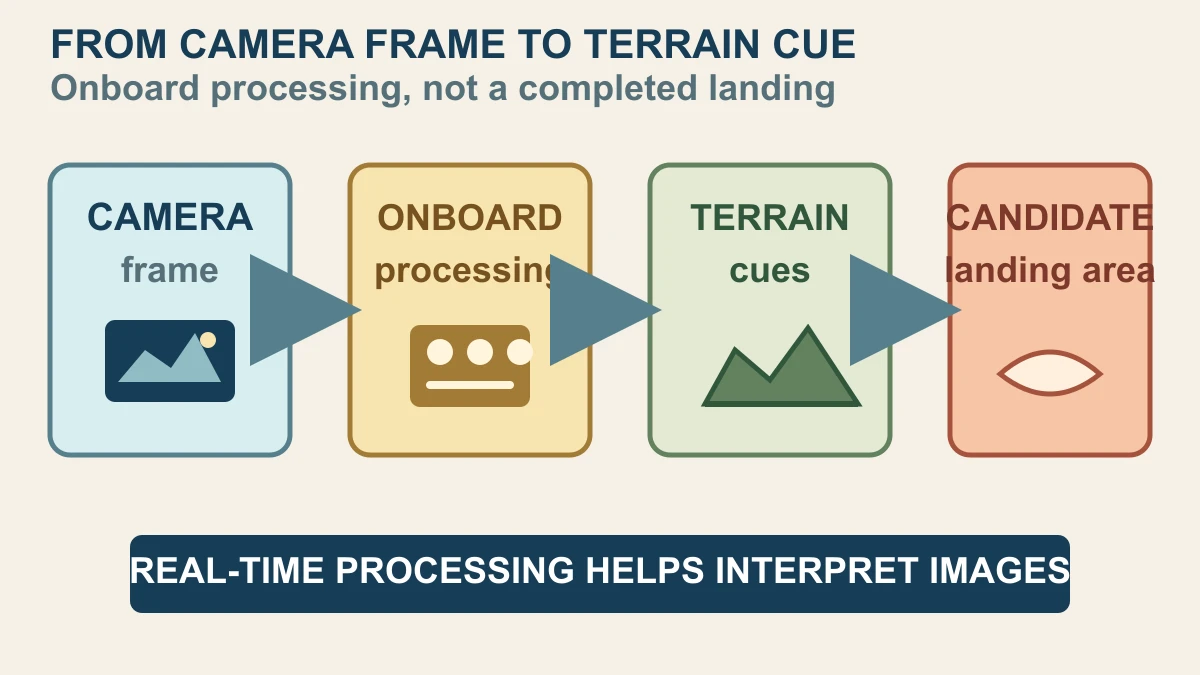
A useful way to picture the experiment is as a short chain: the camera captures a frame, onboard processing examines the image, terrain cues are identified and a candidate area can be considered for later landing-site work. The first and last steps describe the purpose NASA names. The middle of the chain is the engineering question: can useful image interpretation happen during the flight rather than only after every frame has been returned and inspected on the ground?
Real-time does not mean infallible or fully autonomous. It means the payload is intended to process the image stream while the balloon and camera are operating. A processed cue still needs to be tied to where the camera was looking, understood in the right illumination and terrain conditions, and compared with a known reference before someone can judge how reliable the result is. The current NASA report does not publish a landing-site accuracy score, a complete algorithm description or a mission certification.
The broader balloon programme shows why platform details matter. NASA describes support systems for line-of-sight telemetry, command and pointing, with capabilities that vary by mission and package. Those are programme-level options, not measurements that should be silently assigned to CLIC 2. For this flight, the defensible claim is narrower: a balloon carried a camera system whose stated purpose was real-time image processing for future rover landing-site work.
What the balloon test can—and cannot—prove
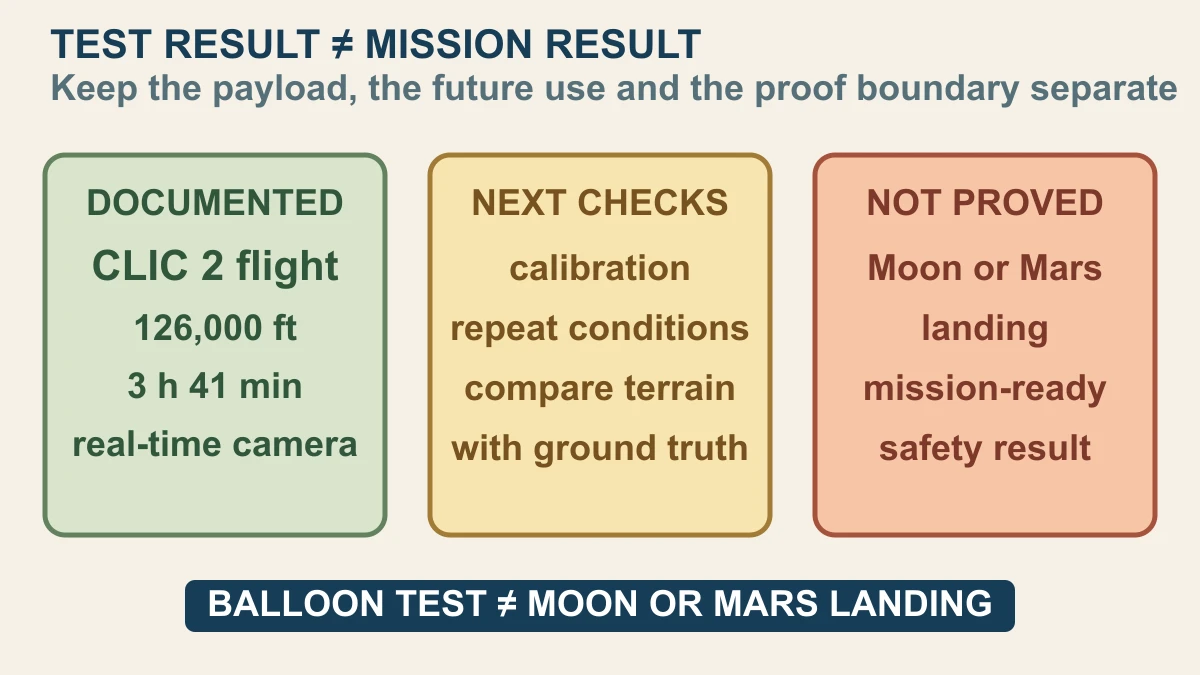
The official flight record adds a small but useful piece of evidence. The Columbia Scientific Balloon Facility page identifies CLIC 2 Flight 764N and records that the flight has ended. That confirms the flight's operational record, while NASA's report supplies the payload purpose, altitude and duration. Together they establish a completed balloon test with a real-time imaging aim, not a successful landing decision on another world.
The next checks are the ones that connect a promising camera workflow to a mission. Engineers would need calibration, repeated tests across relevant lighting and terrain conditions, comparisons with ground truth and a clear account of how image cues become a usable map or recommendation. Even then, a Moon or Mars mission would add different gravity, atmosphere, dust, illumination, communication and landing dynamics. A balloon experiment can reduce uncertainty without removing every later test.
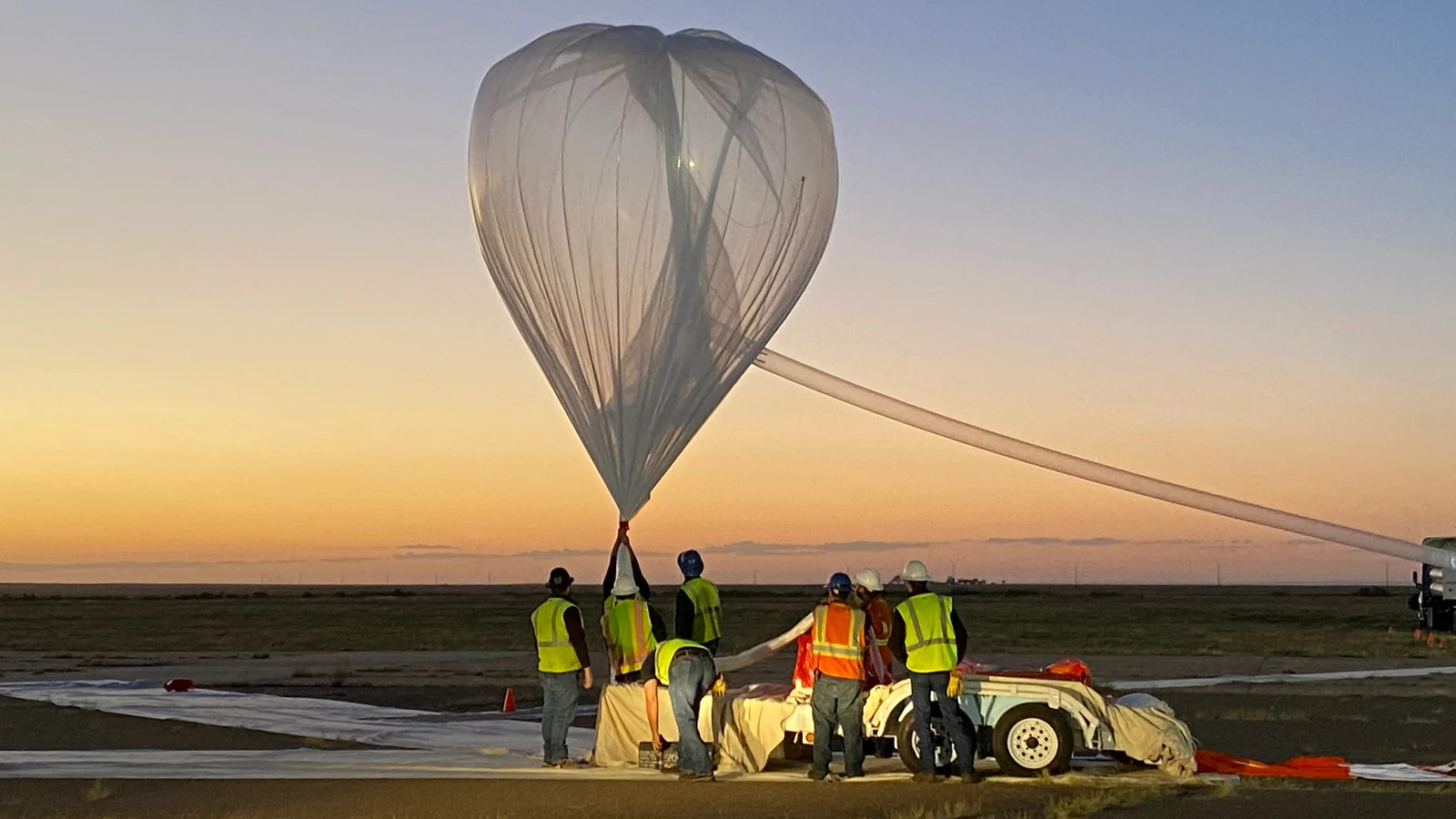
The hero photograph is intentionally disclosed as contextual. NASA's current CLIC 2 page uses a real scientific-balloon image showing balloon inflation at sunrise, but the page does not identify it as a CLIC 2 payload photograph. It illustrates the flight programme, not the payload's image output. What the evidence supports is precise: CLIC 2 flew a high-altitude balloon camera intended to process images in real time for future landing-site work. What it does not prove is a lunar or Martian landing result, universal terrain safety or mission readiness.
Sources and further reading
This article was written for Curiosity Desk. We do not copy other publishers or invent quotes. If a material error is found, we correct it openly.
Read the full standards →One answer should lead to a better question
Bring your curiosity to the group
Curious Minds is our public Facebook community for surprising science, strange history, Australian wildlife and everyday questions. No copied posts, no personal-friend invitations and no link dumping.
- Three self-contained discussion prompts each week
- Sourced answers and honest uncertainty
- Respectful conversation without spam