The colour is built by structure, not mixed like paint
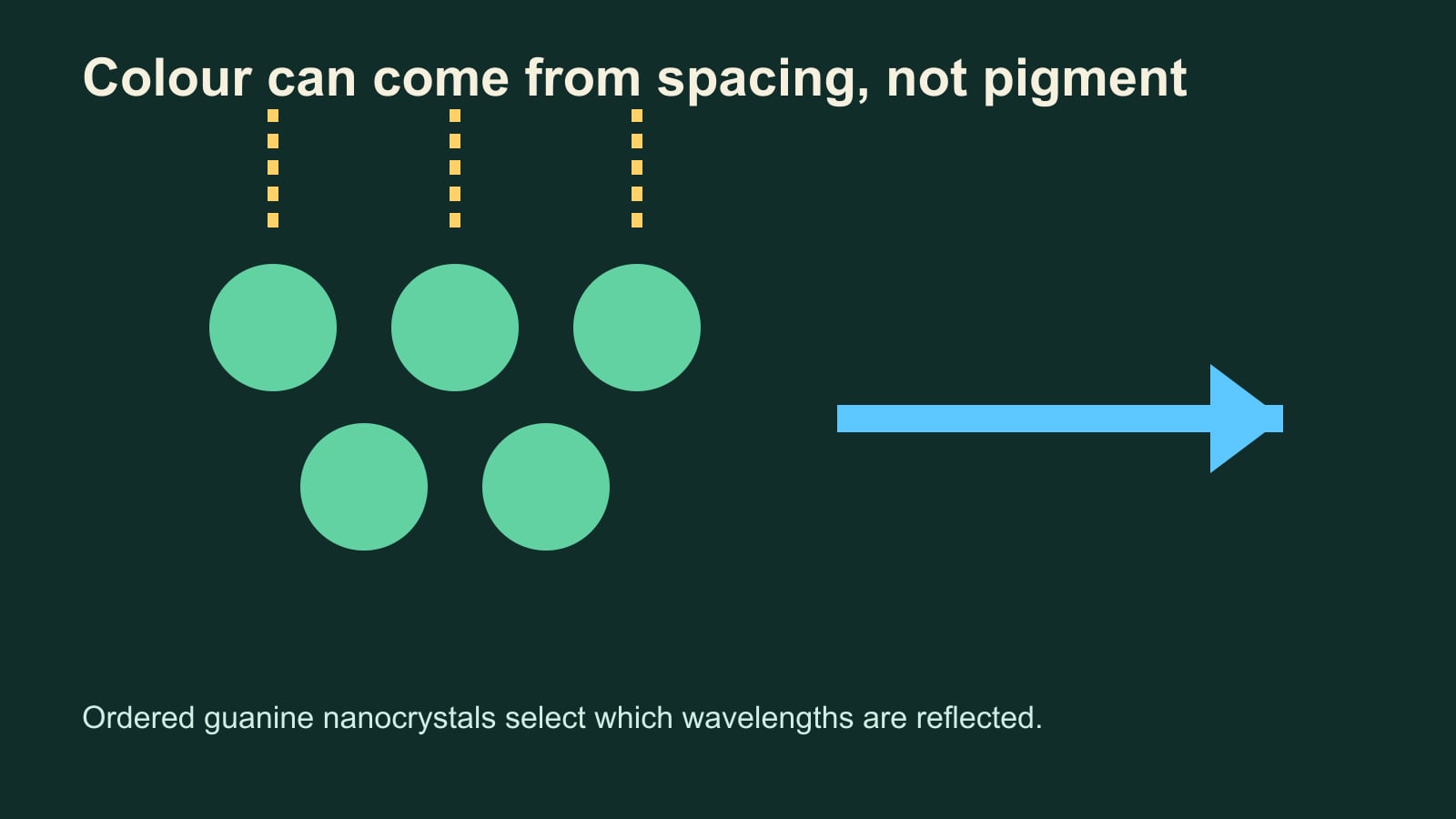
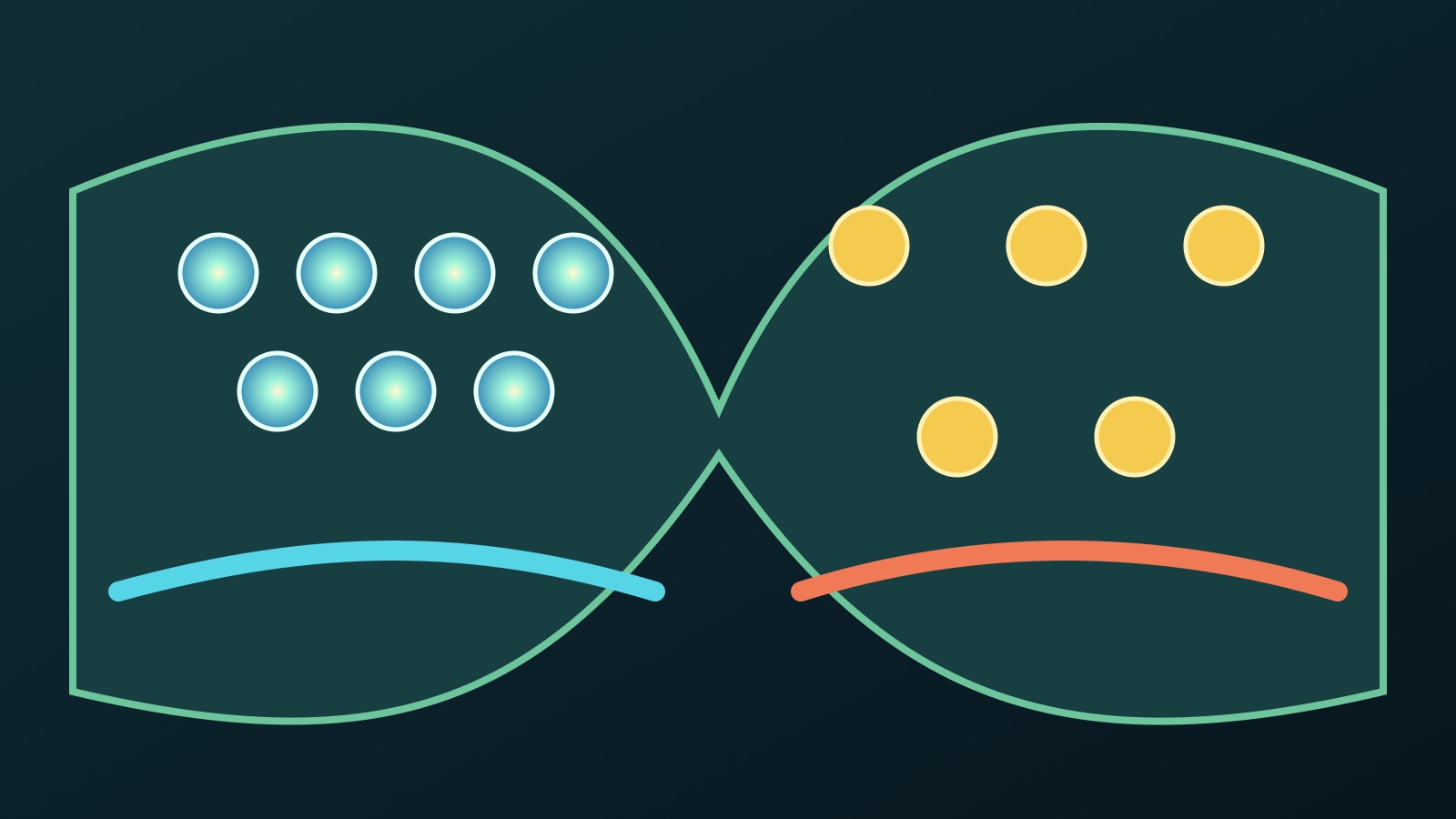
A panther chameleon's skin contains pigments, but its rapid blue-green-to-yellow or red shift cannot be explained by pigment bags simply blending new colours. Beneath the outer skin are iridophores: specialised cells packed with transparent guanine nanocrystals arranged in an ordered three-dimensional lattice.
Light entering that lattice scatters from many crystals. At particular spacings, reflected waves reinforce one another for some wavelengths and cancel more strongly for others. The strengthened wavelength is the colour that returns to an observer. This is structural colour: geometry selects light even though the crystals themselves are not blue, green or red paint.
Changing the gaps retunes the reflected wavelength
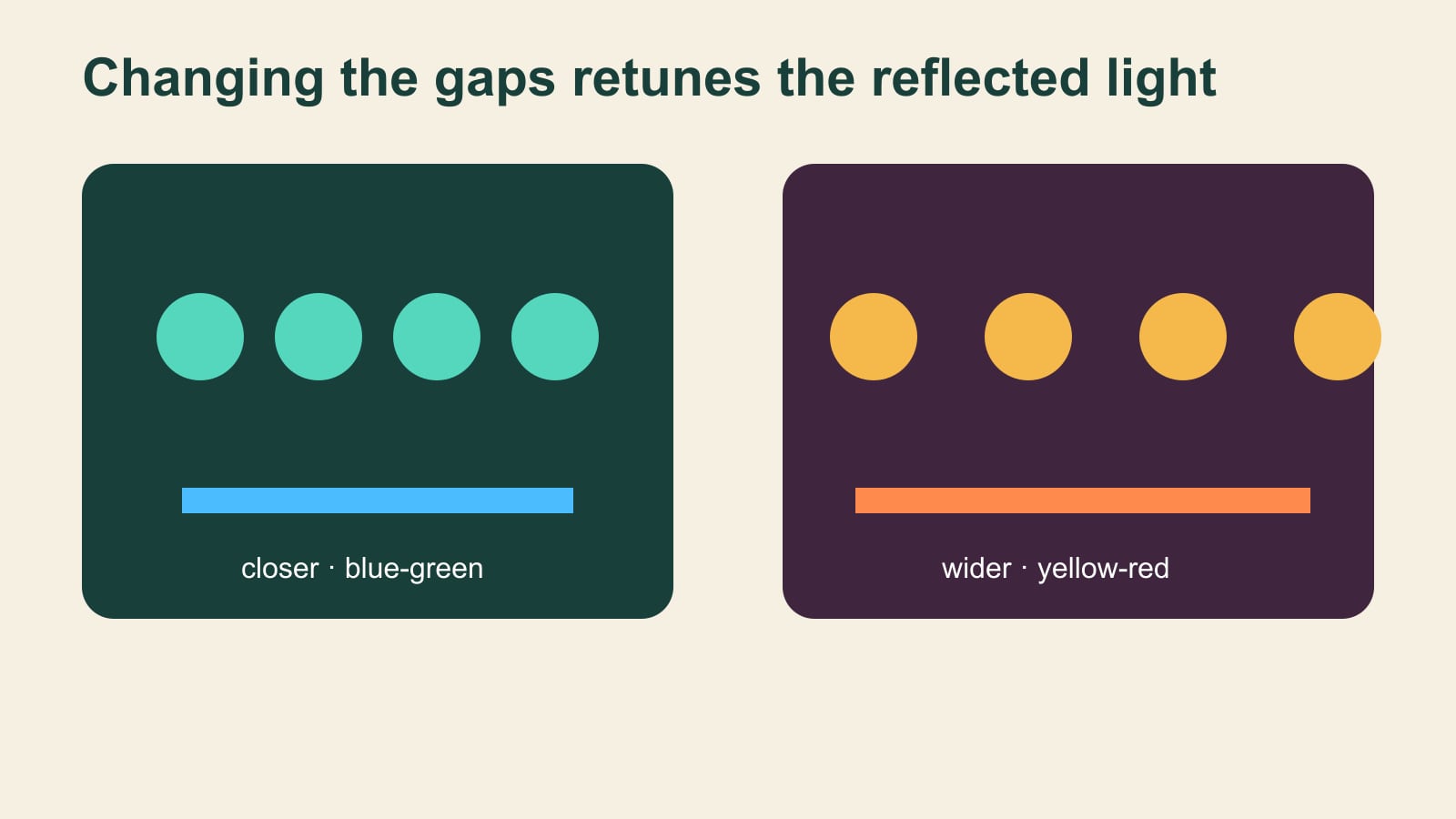
In a relaxed adult male panther chameleon, crystals in the superficial iridophore layer sit relatively close together and the skin commonly reflects shorter blue-green wavelengths. During excitation, the lattice expands. Greater spacing favours reinforcement of longer wavelengths, shifting the reflection through yellow and orange toward red.
The 2015 primary study measured those spacing changes with electron microscopy, modelled the resulting optical response and used osmotic-pressure experiments to shrink expanded skin samples. The reflected colour shifted back toward shorter wavelengths. Together, those tests support lattice spacing as a mechanism, rather than a colour change merely correlated with mood.
Cells move the lattice, while pigment still shapes the result
The useful diagram is not a row of coloured beads. Guanine nanocrystals sit inside living cells whose volume and internal organisation can change. When the average distance between crystals changes, the photonic lattice is retuned. Pigment cells above and below can absorb part of the returning light, so the visible result depends on both reflection and filtering.
That is why structural colour and pigment colour should not be treated as rivals. A blue structural reflection seen through yellow pigment can appear green. Dark melanin can reduce brightness. The fast optical switch comes from the crystal arrangement, while surrounding pigments help determine the final shade and pattern seen from outside.
The display carries social and physical information
Chameleons do not change colour only to disappear into a background. In panther chameleons, rapid changes are prominent during social encounters such as courtship and contests between males. The display can communicate condition or motivation, while slower colour and posture changes also interact with temperature and illumination.
Camouflage is real in some contexts and species, but it is not one universal switch copied from the nearest leaf. A chameleon's starting colours, available range and control system depend on its biology. The safe conclusion from this study is narrower: adult male panther chameleons actively tune a crystal lattice during conspicuous colour changes.
A second crystal layer may help manage heat
The researchers found a deeper layer of iridophores containing larger, less orderly guanine crystals. Rather than creating the rapidly tuned visible display, this layer reflected a broad share of near-infrared light in their measurements. Returning some incoming infrared energy could reduce how much solar radiation deeper tissues absorb.
That thermal role is a supported interpretation, not proof that every colour change is a thermostat setting. The two-layer system is more interesting: one ordered lattice supplies a tunable visible signal, while a deeper disordered layer may provide broader infrared reflection. One material serves different optical jobs because its crystals are organised differently.
The mechanism reveals what colour really is
Colour is not a substance stored inside an object. It is the nervous system's response to wavelengths that reach the eye. Pigments select wavelengths by absorbing some light; photonic structures select them through repeated scattering and interference. Chameleon skin can alter that structure while the animal is alive.
The result looks like an instant repainting, but no fresh blue or red material has to be manufactured. A nanoscale change in spacing changes which light waves leave together. The chameleon turns geometry into colour, using living cells to retune an optical material built beneath its skin.
Sources and further reading
This article was written for Curiosity Desk. We do not copy other publishers or invent quotes. If a material error is found, we correct it openly.
Read the full standards →One answer should lead to a better question
Bring your curiosity to the group
Curious Minds is our public Facebook community for surprising science, strange history, Australian wildlife and everyday questions. No copied posts, no personal-friend invitations and no link dumping.
- Three self-contained discussion prompts each week
- Sourced answers and honest uncertainty
- Respectful conversation without spam