A gecko toe is a branching contact machine
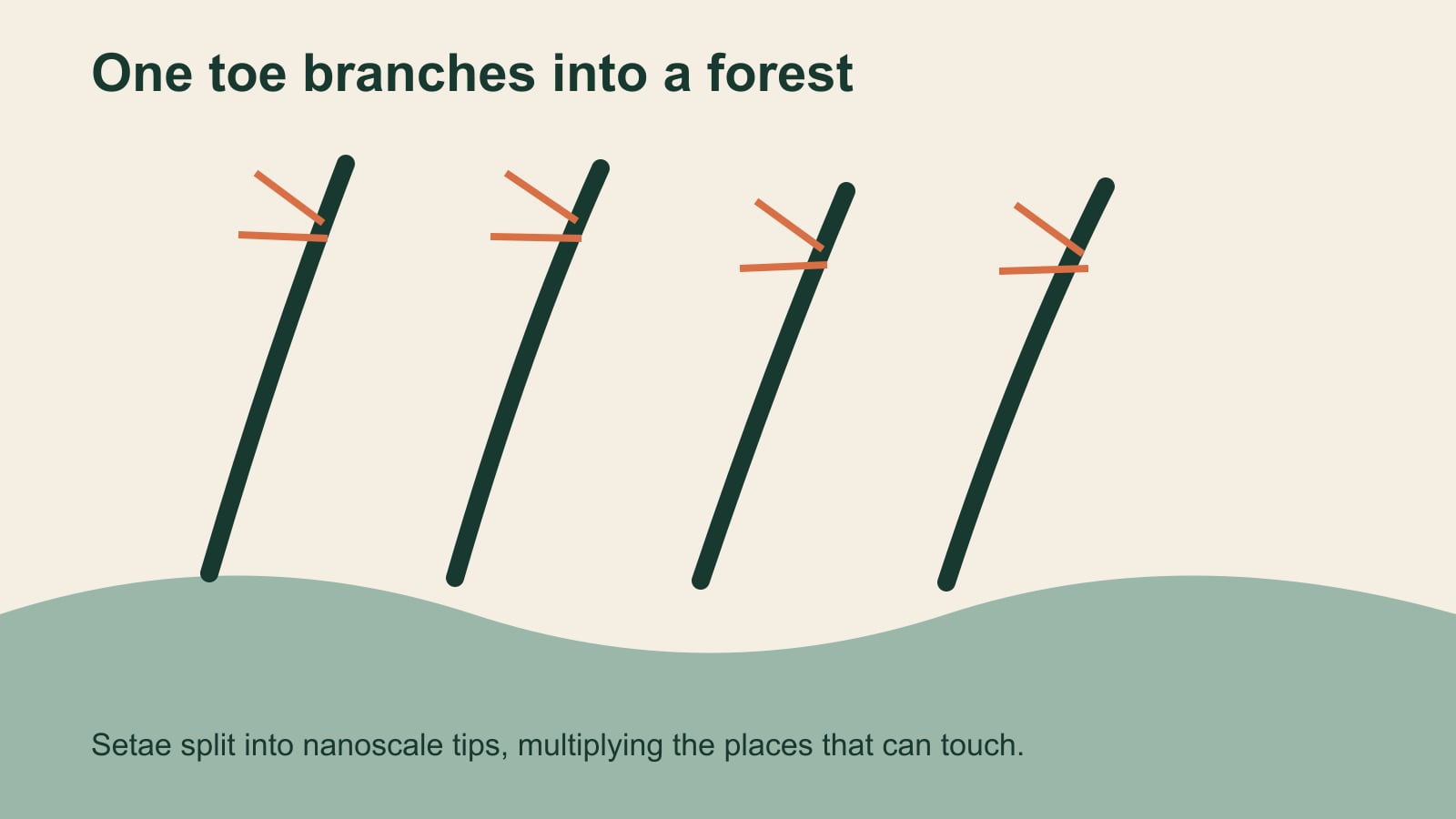
The underside of a gecko toe is not smooth. It carries rows of pads covered by microscopic hairs called setae. Each seta branches near its end into even smaller tips, often called spatulae. That hierarchy turns a limited patch of toe into an enormous number of possible contacts with the surface beneath it.
This branching matters because ordinary-looking glass is not perfectly flat at molecular scale. One broad pad would bridge over many small irregularities. Flexible hairs can bend independently and bring far more of their tips close to the surface, so the animal gains real contact area without needing a wet secretion between toe and wall.
The scale change is the essential first surprise. A toe looks like one object to us, yet it meets the wall as a distributed forest. If one branch lands badly, neighbouring branches can still engage. The load is spread rather than concentrated at a single fragile attachment point.
Weak molecular attractions add up across the toe
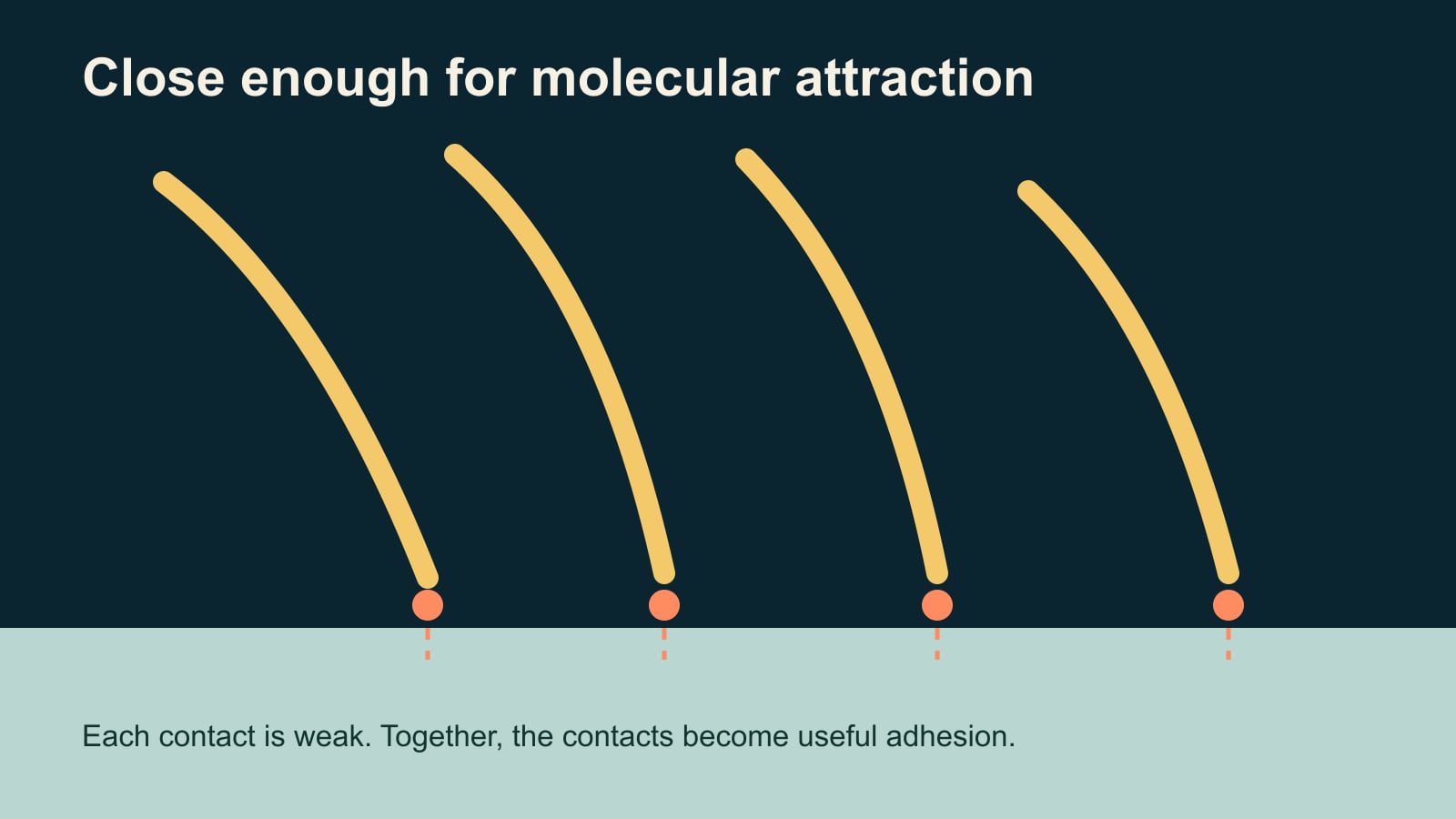
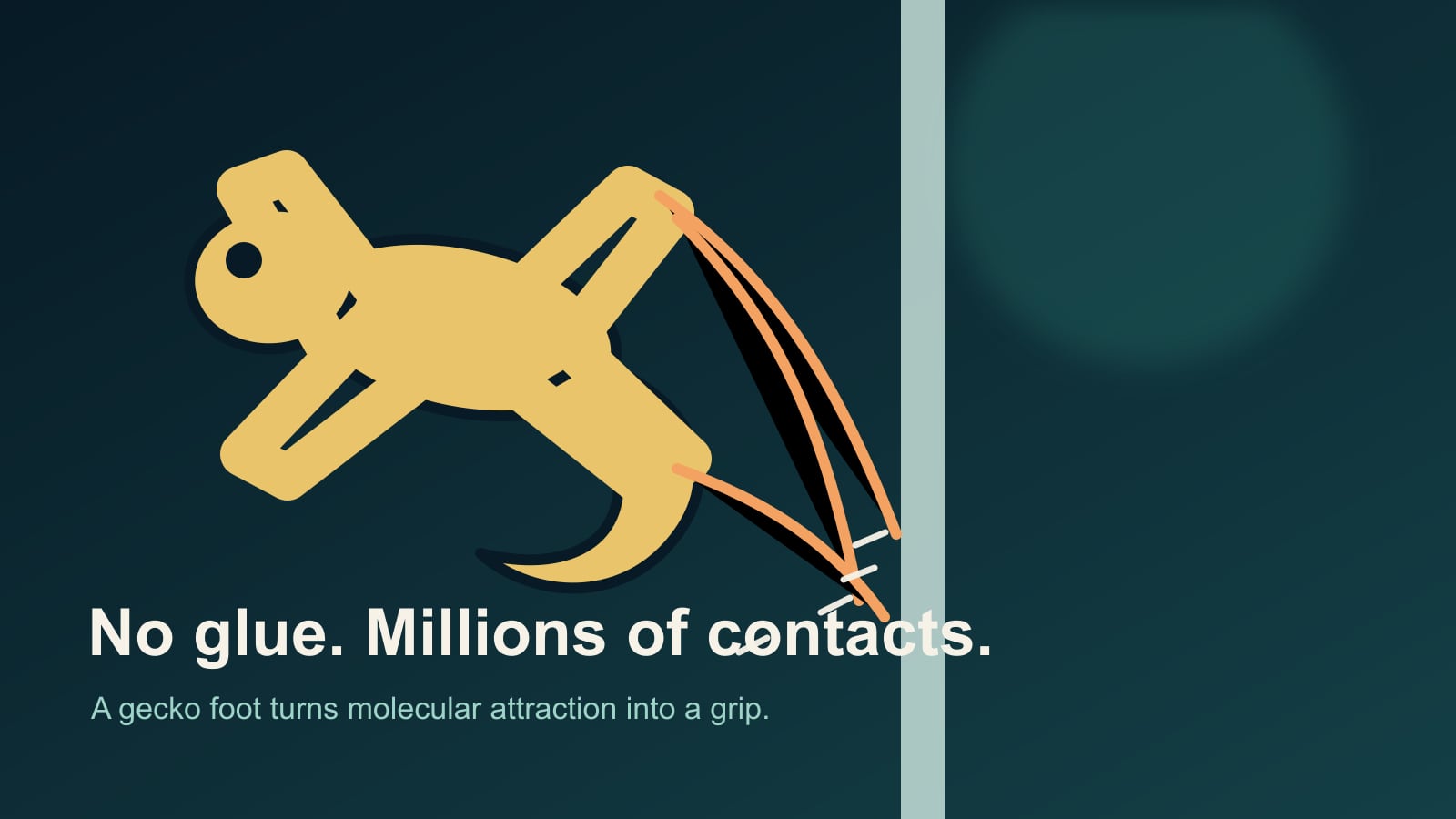
When a spatula approaches a surface extremely closely, fluctuating electrical charges in neighbouring atoms create a small attraction. These van der Waals interactions operate between ordinary materials; the gecko does not carry a special magnetic charge, and the wall does not need to be chemically sticky. The useful effect appears because the toe creates so many close contacts at once.
A single foot hair produces only a small force, but experiments on isolated setae showed that their combined capacity is substantial. The key lesson is multiplication: a weak interaction becomes mechanically useful when the toe's branching architecture repeats it across a large population of tips and shares the load among them.
This also explains why suction is the wrong picture. A suction cup needs a sealed edge and a pressure difference; gecko toes remain hairy and open. Experiments found that individual hairs could adhere in conditions where a pressure-sealed cup would not provide the proposed explanation, supporting a close-contact molecular mechanism instead.
The grip switches on through direction, not glue
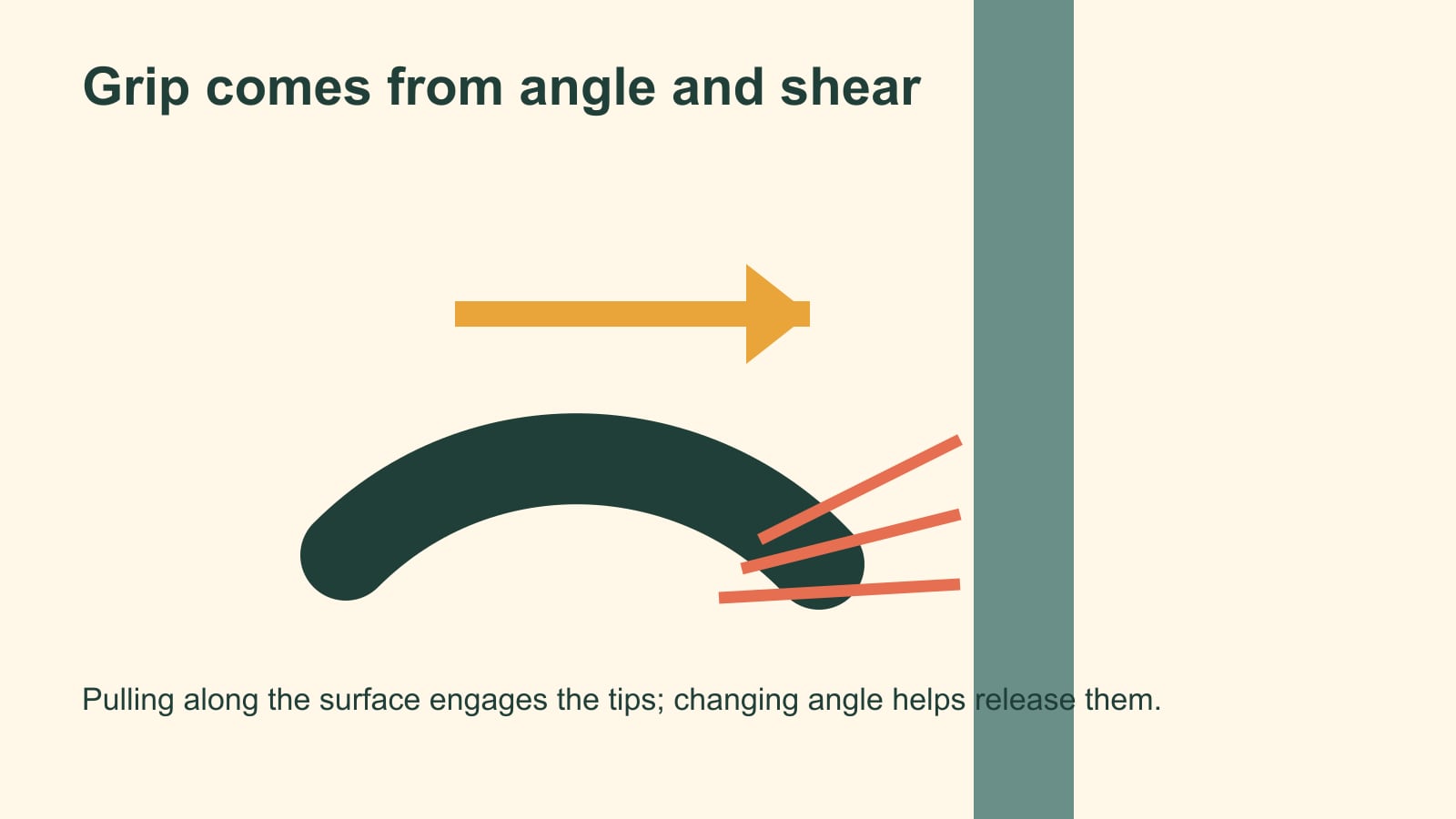
A seta does not adhere equally in every orientation. The gecko presses its toes down and draws them slightly along the surface, aligning the flexible hairs so their tips make close contact. This directional loading, called shear, helps engage many branches together and produces a strong grip while the animal's weight pulls against it.
Release is the reverse problem. Instead of fighting the full contact area at once, the gecko changes the angle of its toes and peels the contacts away progressively. Peeling reduces the number of engaged tips moment by moment. That control lets the animal alternate attachment and detachment rapidly enough to run rather than becoming trapped by its own feet.
The distinction between total possible force and force used during a step is important. A gecko does not need to engage every seta at maximum strength. It can recruit enough contacts for the current load, distribute them among several toes and then disengage them in sequence as the foot rolls forward.
The famous grip has real surface limits
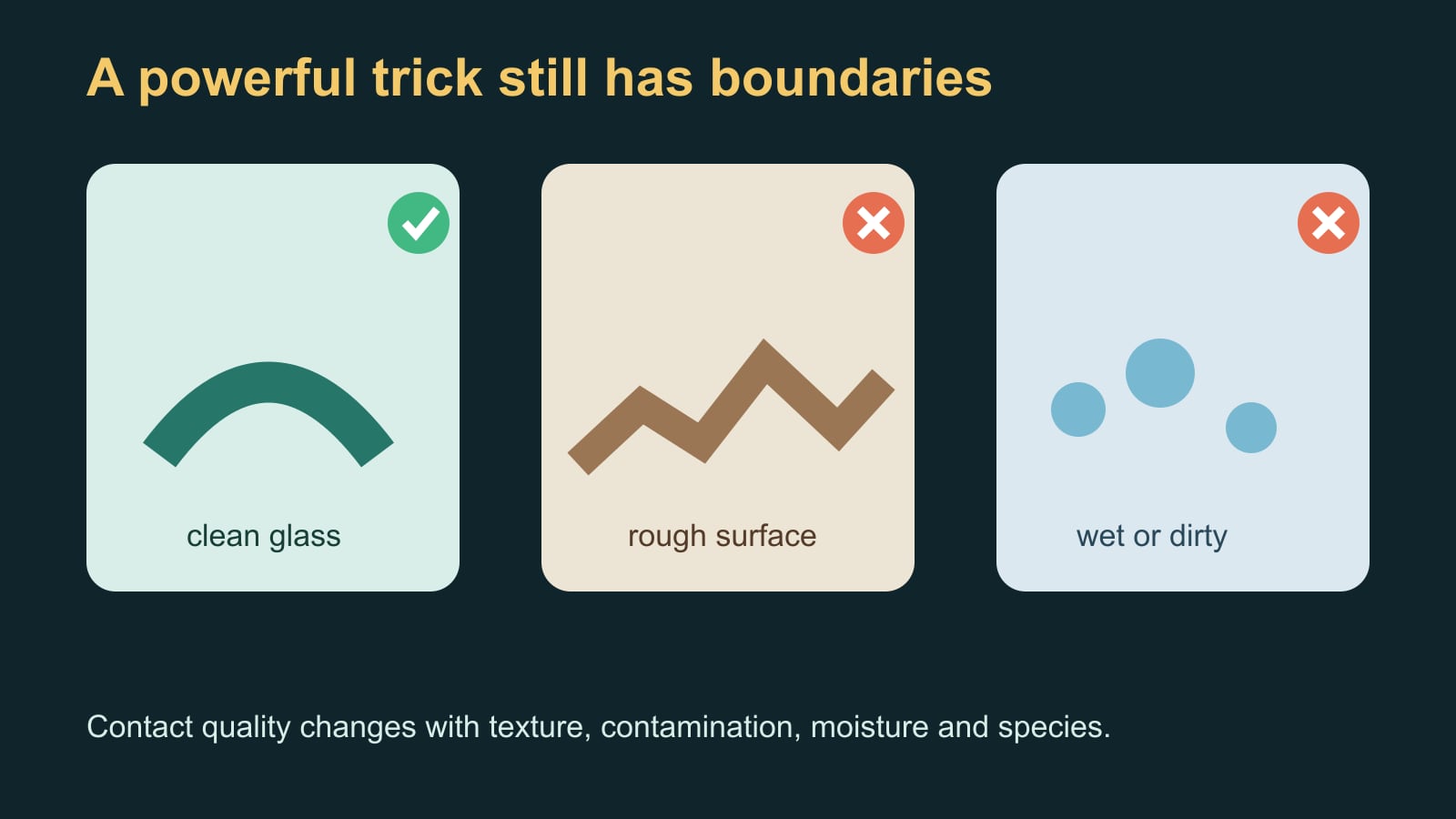
Gecko adhesion is powerful, but it is not a promise that every species can cling to every material. A very rough surface prevents many tips from approaching closely. Dust or other contamination can occupy contact points. Water can either weaken or alter performance depending on the surface chemistry, the animal and the exact experimental conditions.
That boundary is part of the mechanism, not an exception to hide. The system works when compliant, angled hairs create enough intimate contact and distribute the load. Glass makes the demonstration dramatic because it can provide a relatively smooth contact surface. The gecko's achievement is precision engineering with ordinary molecular forces—not invisible glue.
The same logic guides biomimetic research. Copying only the material is not enough; a useful dry adhesive must reproduce the hierarchy, compliance, directionality and clean release. A flat rubber patch may be tacky, but it does not automatically gain the gecko toe's ability to attach repeatedly while controlling when the grip lets go.
Sources and further reading
This article was written for Curiosity Desk. We do not copy other publishers or invent quotes. If a material error is found, we correct it openly.
Read the full standards →One answer should lead to a better question
Bring your curiosity to the group
Curious Minds is our public Facebook community for surprising science, strange history, Australian wildlife and everyday questions. No copied posts, no personal-friend invitations and no link dumping.
- Three self-contained discussion prompts each week
- Sourced answers and honest uncertainty
- Respectful conversation without spam