The colour change begins as the tree stops investing in green
A summer leaf looks green because chlorophyll absorbs much of the red and blue light falling on it and reflects more green. Chlorophyll is not permanent paint. It is part of the photosynthetic machinery that captures light energy, and the leaf continually maintains it while days are long and conditions support useful sugar production.
As nights lengthen, many deciduous trees begin senescence: a controlled shutdown rather than a sudden death. Chlorophyll production slows and the existing molecules are dismantled. The green signal weakens, so pigments that were present but visually overwhelmed become visible. Autumn yellow is often a reveal, not a last-minute delivery of new colour.
Yellow and orange were waiting underneath the chlorophyll
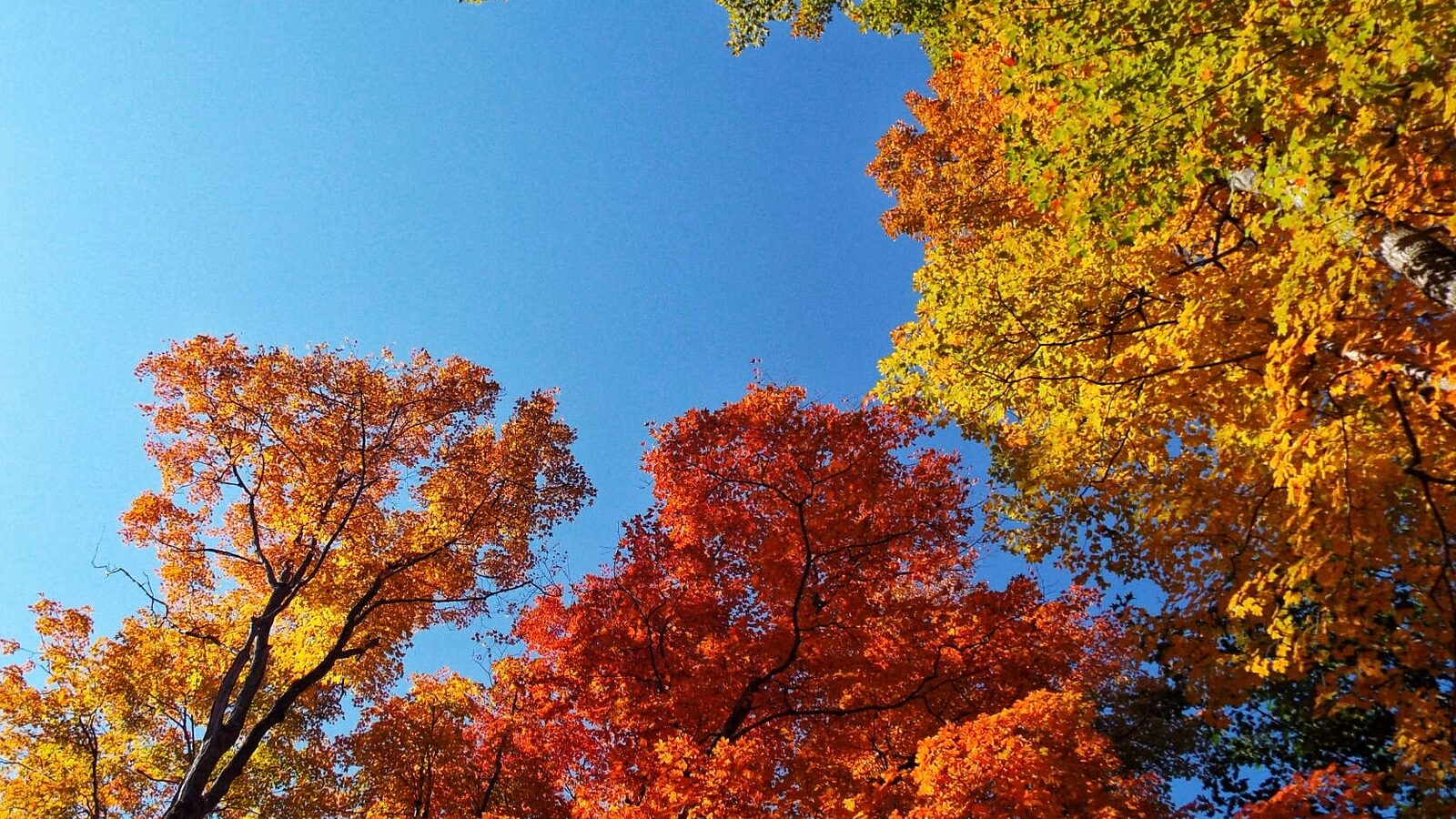
Carotenoids absorb and reflect a different set of wavelengths from chlorophyll. They help leaves manage light and are present during the growing season, but dense green chlorophyll masks much of their yellow and orange appearance. When green fades, carotenoids can dominate what reaches the eye, producing the gold of hickories and the yellow of many aspens.
Species matter because leaves begin with different pigment mixtures and structures. An oak, maple and beech exposed to the same week of weather need not show the same palette. The visible landscape is therefore a chemical map of species as well as a response to shortening days, temperature, moisture and the timing of leaf shutdown.
Red is different because some leaves make it during the shutdown
Many red and purple colours come from anthocyanins, water-soluble pigments held in cell vacuoles. Unlike the carotenoids already waiting in a green leaf, anthocyanins may be produced during autumn senescence. Sugars trapped in a leaf, bright light and cool conditions can influence their formation, which helps explain why colour varies between species, sites and years.
Anthocyanins absorb light across a broad range and can reduce the light reaching sensitive tissues while the photosynthetic apparatus is being dismantled. That photoprotection could help a leaf recover nutrients for longer. It is a supported hypothesis, not a universal verdict: researchers still debate the relative importance of protection, signalling to insects and other functions.
Before the leaf falls, the tree salvages what it can
A tree does not discard an intact solar panel. During senescence it breaks down valuable cellular components and moves reusable nutrients, including nitrogen, out of the leaf and into longer-lived tissues. At the base of the leaf stalk, an abscission zone develops. Cells there weaken the connection while a protective layer forms on the twig side.
When wind and gravity finally take the leaf, much of the important recovery work has already happened. The fallen leaf still contains carbon and minerals that decomposers return to the ecosystem. Seen this way, the colour display is the visible middle of a transfer: pigments change while a tree closes one temporary organ and prepares resources for another season.
Weather changes the performance, but it does not write the whole script
Bright days and cool nights can favour vivid anthocyanin colour in some species, while drought, early frost, storms or warm nights can shorten or dull the display. The same conditions do not affect every tree equally. Genetics, leaf age, canopy position and local stress all shape when pigments appear and how long leaves remain attached.
That is why a single weather rule cannot predict an entire forest. The dependable mechanism is layered: day length helps start senescence, chlorophyll is dismantled, existing pigments are unmasked, some red pigments are made, nutrients are recovered and the leaf separates. Autumn looks like decoration, but it is a carefully staged exit.
A leaf's final colour records several processes at once
A yellow leaf can show that chlorophyll disappeared while carotenoids remained. A red leaf may record new anthocyanin production on top of that loss. Brown often becomes stronger as pigments and cells degrade further and tannin-rich tissues dominate. The visible shade is therefore a result, not a direct meter for one chemical or one weather variable.
Reading autumn well means resisting a universal caption. Two neighbouring leaves can differ because of sunlight, age, damage, sugar movement or position in the canopy. The reliable surprise is not that every leaf obeys the same colour chart; it is that the tree makes an internal salvage operation visible across an entire landscape.
Sources and further reading
This article was written for Curiosity Desk. We do not copy other publishers or invent quotes. If a material error is found, we correct it openly.
Read the full standards →One answer should lead to a better question
Bring your curiosity to the group
Curious Minds is our public Facebook community for surprising science, strange history, Australian wildlife and everyday questions. No copied posts, no personal-friend invitations and no link dumping.
- Three self-contained discussion prompts each week
- Sourced answers and honest uncertainty
- Respectful conversation without spam