What can the two tests tell scientists?
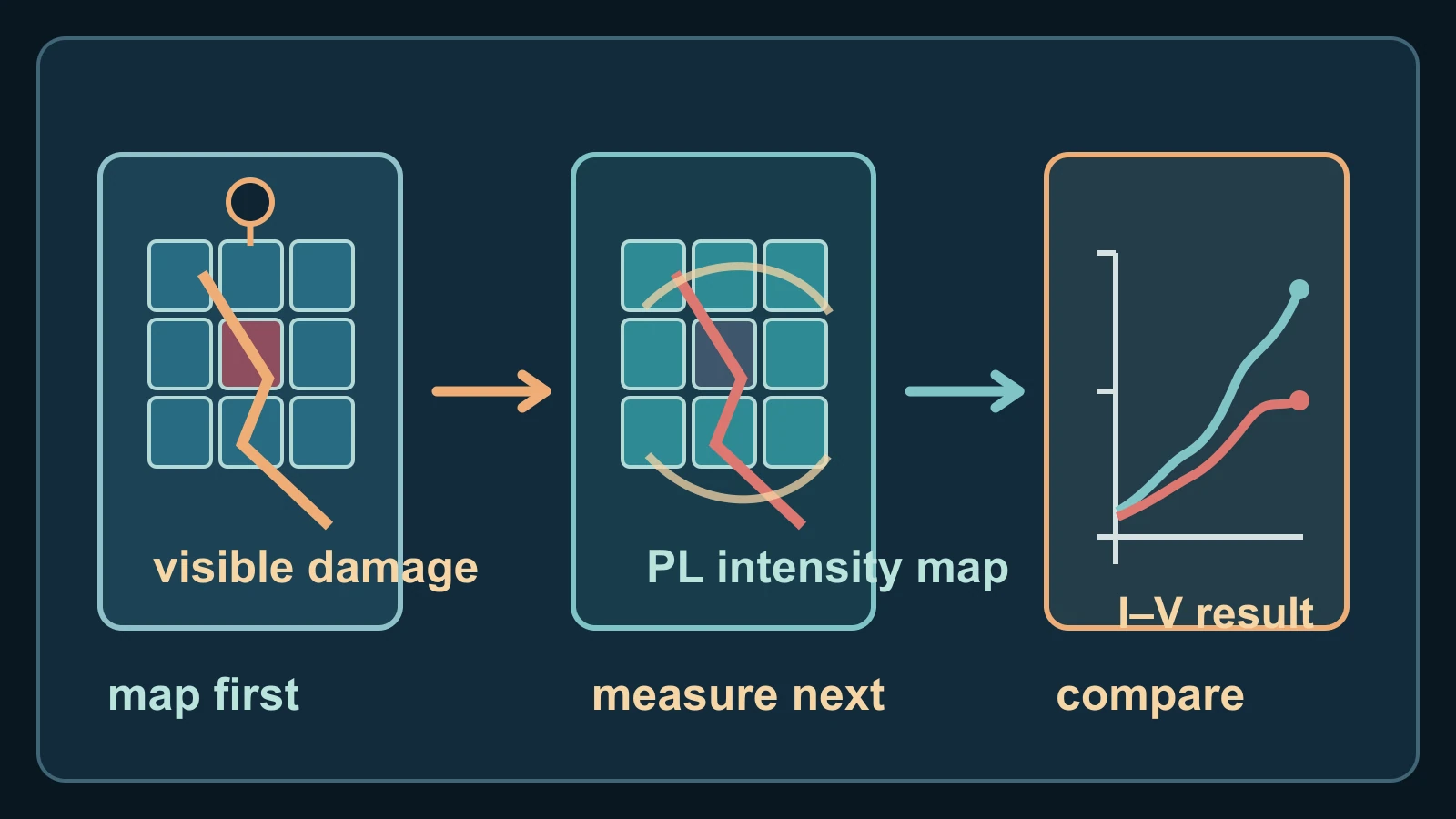
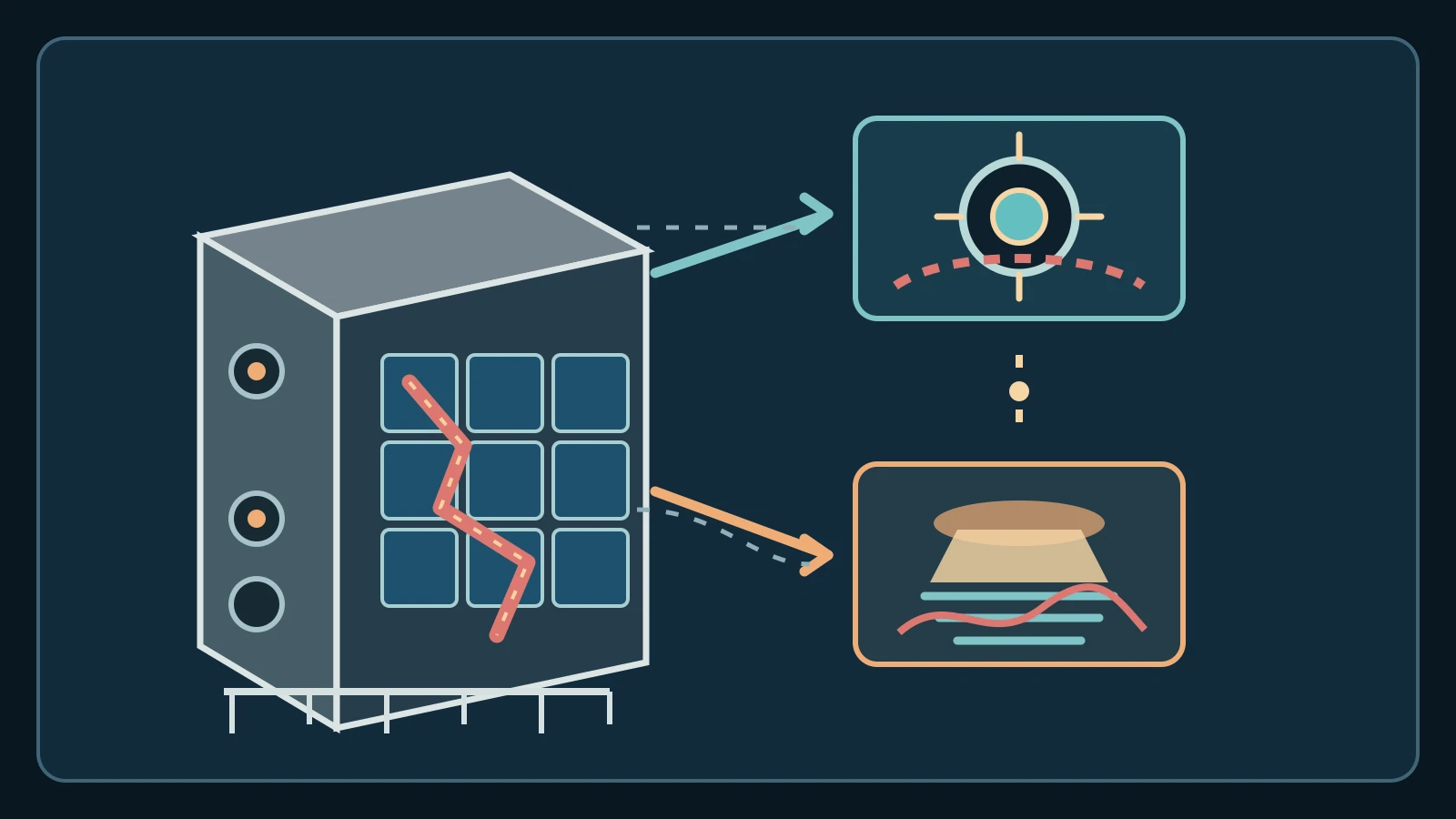
A visible crack answers only one question: something on the panel is damaged. It does not say how much electrical output the panel has lost. The Da Vinci Satellite team therefore used two complementary tests at ESA ESTEC: photoluminescence imaging to inspect the damaged or cracked cells, followed by electrical performance measurements with a pulsed solar simulator, or flasher, using a spectrum representative of sunlight in space.
Photoluminescence is the spatial clue. Light excites the semiconductor, and the camera records the luminescence emitted as excited carriers return toward a lower-energy state. Areas with lower intensity can point to poorer material quality or defects. The pulsed simulator is the performance check: it illuminates the panel and records its electrical response, so researchers can compare the damaged panel with the others.
The tests answer different parts of the same engineering question. A map can show where a defect changes the cell response; an electrical measurement can show whether that local damage has changed the panel's useful output. ESA reports that the initial results were encouraging, but the report calls them preliminary rather than a flight-ready verdict.
How does photoluminescence reveal a cracked cell?
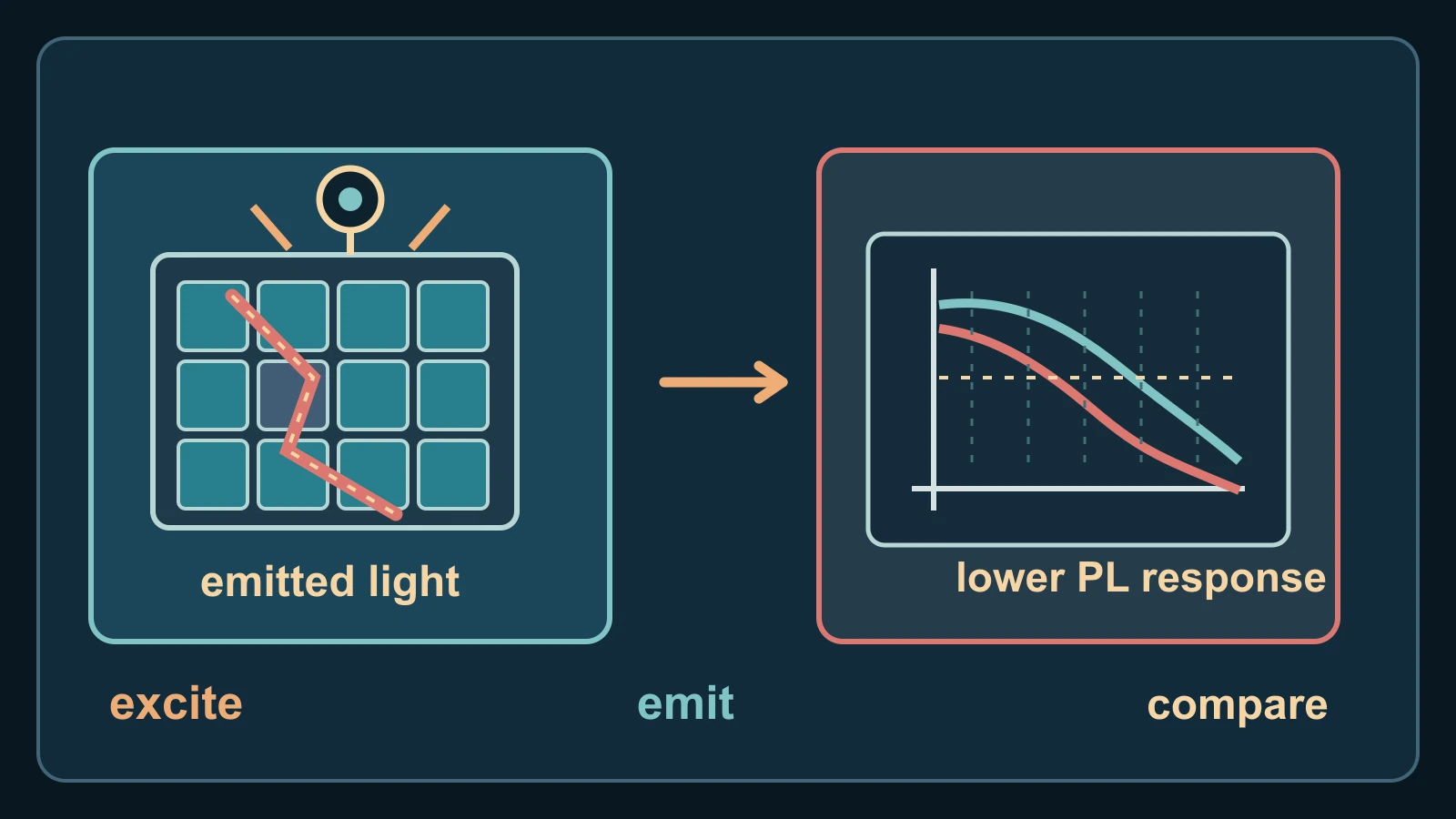
Photoluminescence imaging uses light as the excitation source. Photons create excited charge carriers in the solar-cell semiconductor, and a camera collects the material's emitted luminescence. The intensity is not a photograph of the crack itself; it is a spatial signal that can change when defects, impurities or poor interfaces alter how carriers behave.
That makes the image useful for inspection. A crack or damaged region may appear as a disrupted or lower-response area in the PL map, alongside any wider cell-quality variations. The image tells the team where to look and how the response is distributed across the panel, while the source report's follow-up electroluminescence comparison can provide another diagnostic view.
The limits matter. The public ESA report does not publish Da Vinci's PL image, crack dimensions or a numerical map of the affected area. This article can explain what the method reveals in principle, but it cannot infer the team's unpublished image or convert a visible line into a percentage power loss.
How does a pulsed solar simulator measure electrical performance?
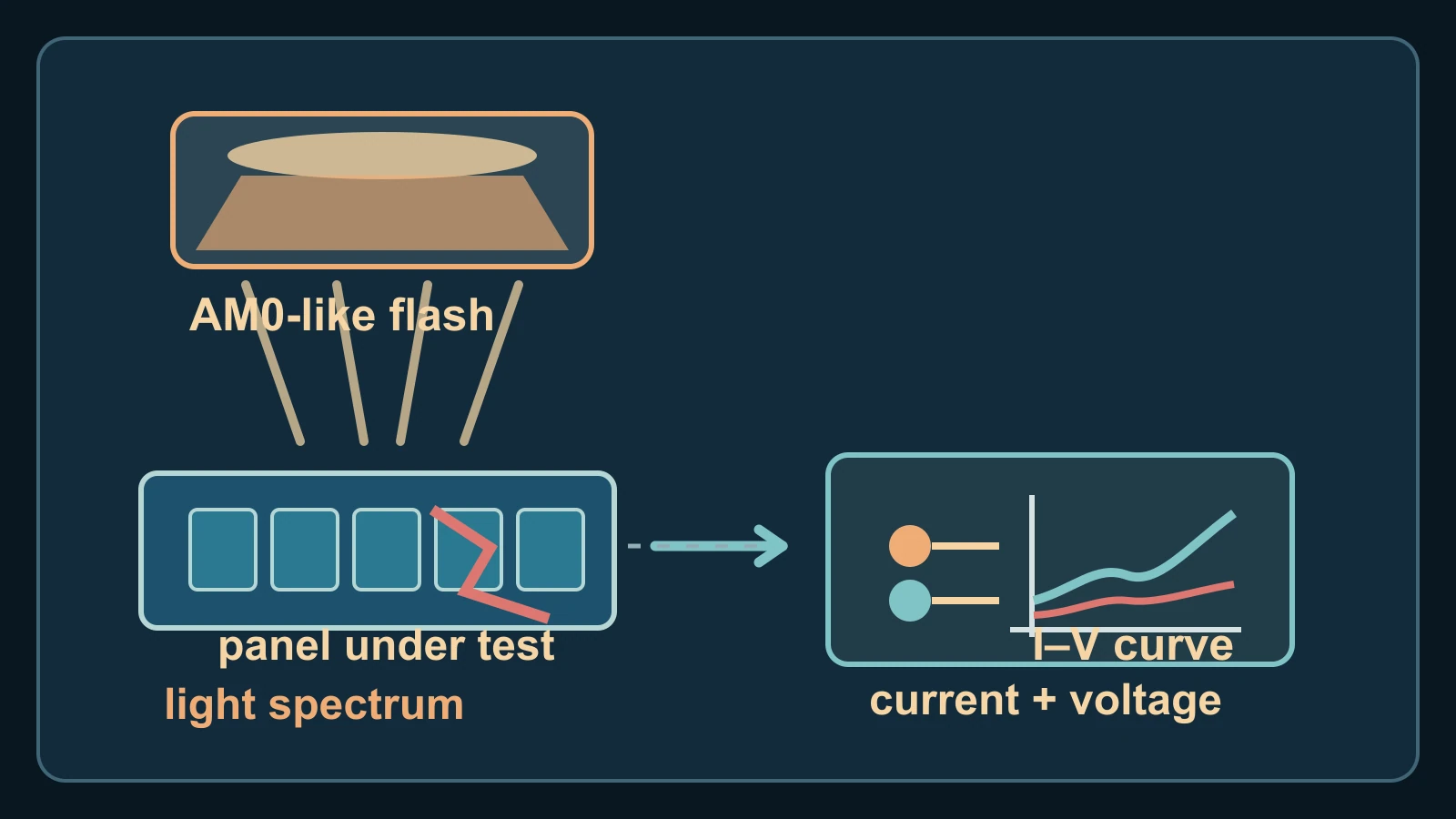
A solar simulator replaces changing sunlight with a controlled light source. ESA's Solar Generator Characterisation Facility describes permanent and pulsed simulators, electrical characterisation and simulated-sun performance measurements for solar panels, cells and arrays. Its laboratory material also describes close matching to AM0, the reference solar spectrum used for space conditions.
During a flasher test, the panel sees a calibrated pulse rather than waiting for outdoor sunlight to stay constant. The test equipment measures the panel's electrical response—typically the relationship between current and voltage—under the declared illumination conditions. That curve lets the team compare the damaged panel with its companions without pretending that a visual inspection alone is an electrical measurement.
The word representative is important. An AM0-like flash is a controlled approximation of the light spectrum and intensity used for characterisation; it is not a complete simulation of every temperature, angle, radiation dose or ageing condition the spacecraft may meet in orbit. Those other conditions belong to separate qualification and life-test questions.
What do the preliminary results establish—and what remains open?
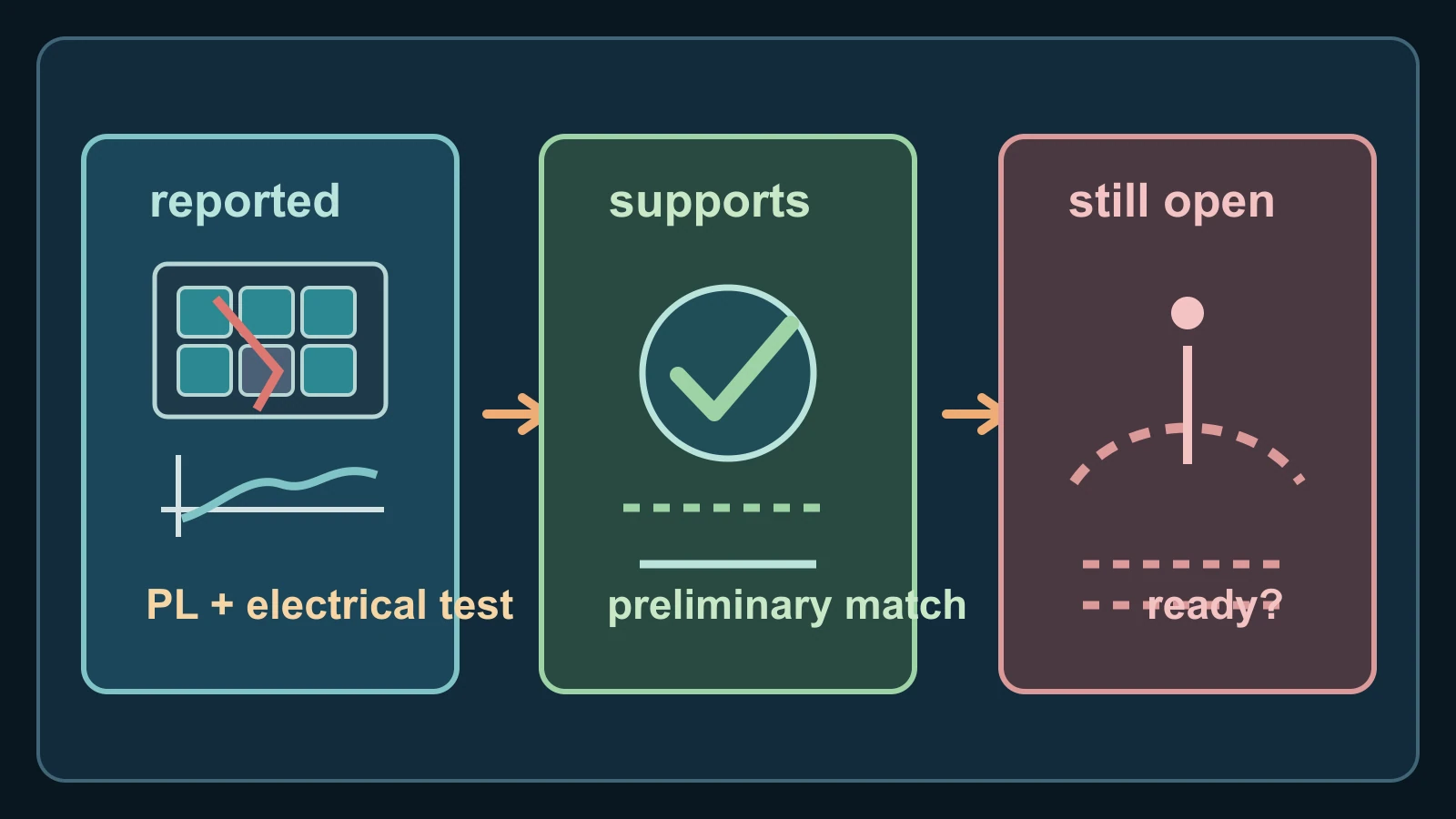
ESA's 5 November report says that all of Da Vinci's panels, including the damaged one, were tested and that preliminary measurements indicate the panels continue to perform well despite the visible damage. That is the strongest public result available in the report. It supports the cautious statement that the damage had not significantly changed the measured performance in this initial assessment.
It does not provide the numerical current-voltage traces, the exact crack geometry, the test temperature, a lifetime projection or a public flight-readiness decision. The team planned to compare the ESTEC measurements with an earlier electroluminescence test and to perform another ELM test at the university, so the condition picture was still being built.
The honest answer is therefore conditional: scientists can tell whether a cracked panel still works by combining a spatial defect-sensitive image with a controlled electrical performance test and by comparing the result with reference panels. Da Vinci's encouraging preliminary measurements are evidence for that spacecraft's current test state, not a guarantee that every cracked solar panel is safe or that long-term mission performance is settled.
Sources and further reading
- ESA Education — Da Vinci Satellite team assesses solar panel performance at ESA ESTEC ↗
- ESA Space Power Laboratory — Solar Generator Characterisation Facility ↗
- ESA — Key facts of the Solar Generator laboratory ↗
- National Laboratory of the Rockies — Electro-Optical Imaging ↗
- ESA — Meet the team: Da Vinci ↗
This article was written for Curiosity Desk. We do not copy other publishers or invent quotes. If a material error is found, we correct it openly.
Read the full standards →One answer should lead to a better question
Bring your curiosity to the group
Curious Minds is our public Facebook community for surprising science, strange history, Australian wildlife and everyday questions. No copied posts, no personal-friend invitations and no link dumping.
- Three self-contained discussion prompts each week
- Sourced answers and honest uncertainty
- Respectful conversation without spam