A transit changes the light reaching us
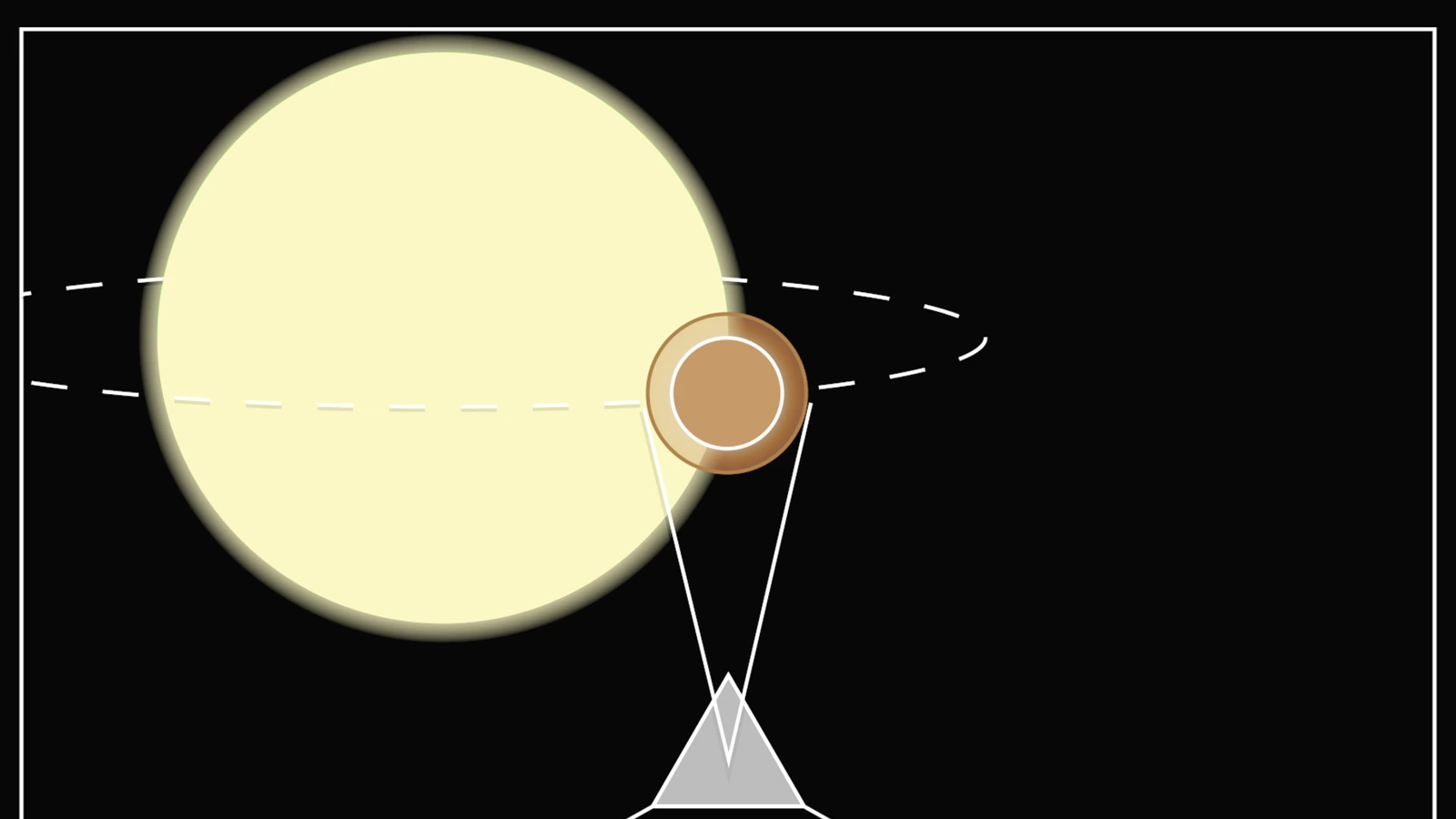
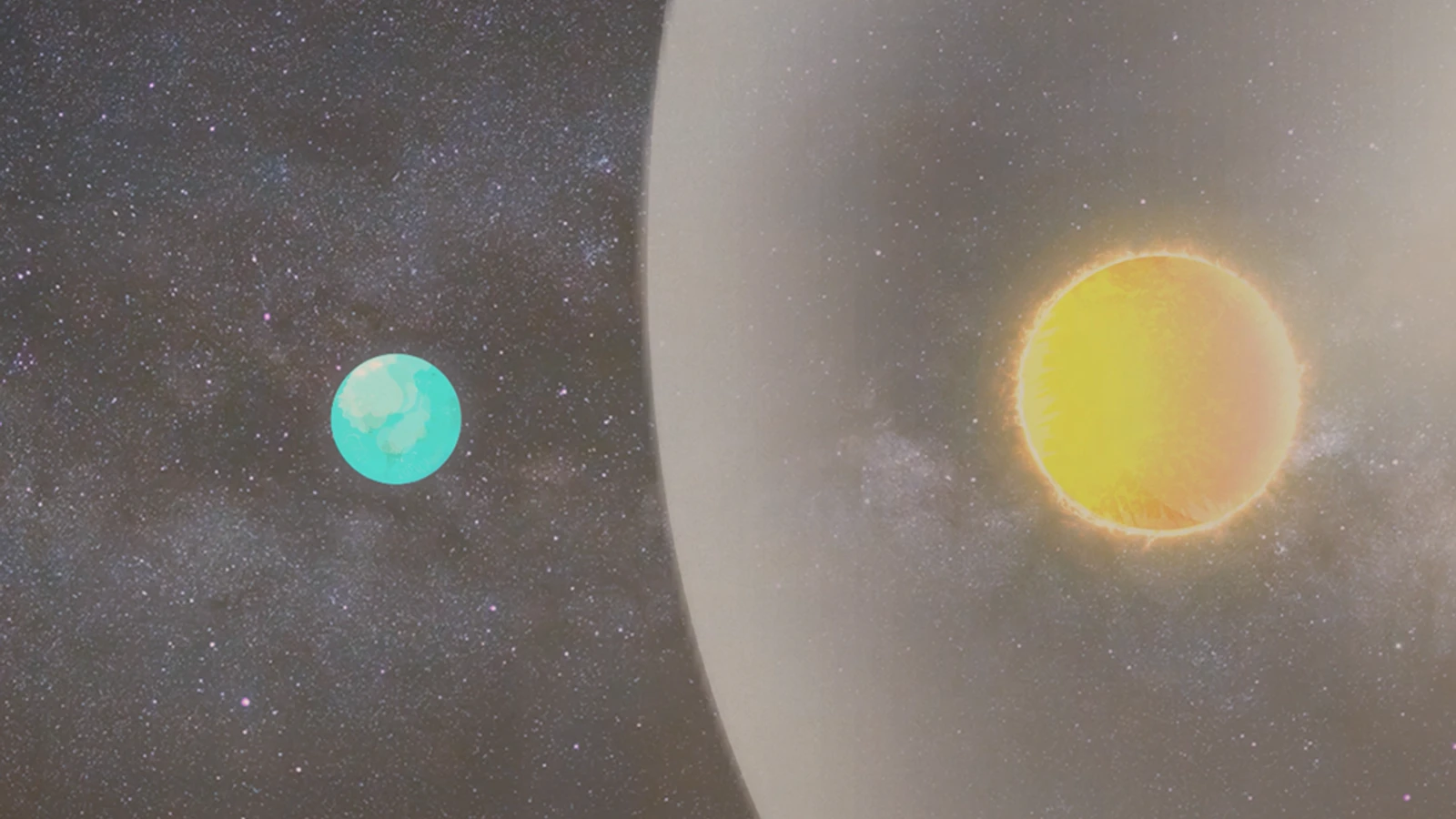
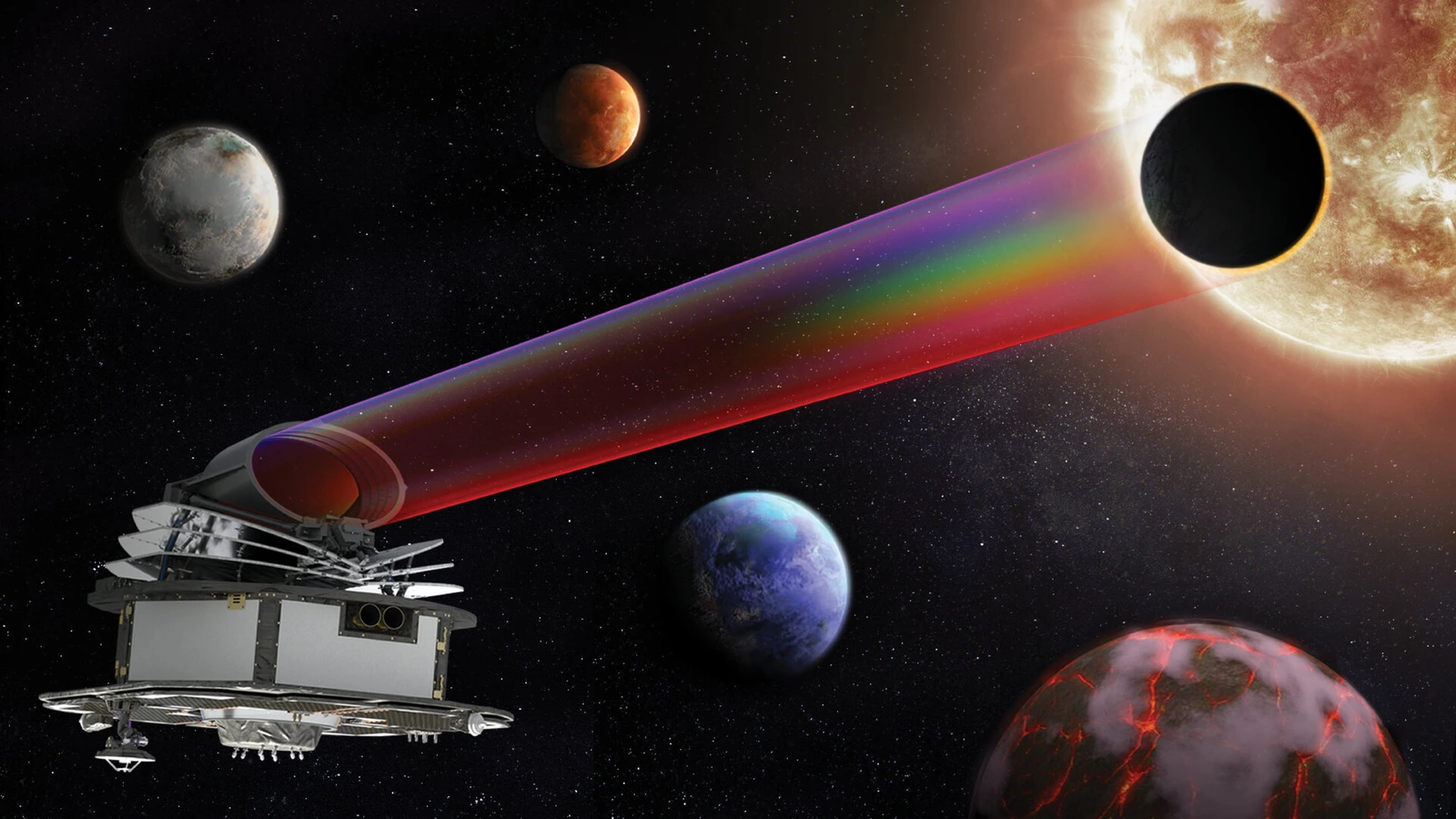
Ariel is planned as an atmospheric survey, not as a camera that will photograph weather systems on a distant world. Its basic evidence will be a spectrum: a measurement of how much light arrives at different wavelengths. ESA says Ariel will study planets whose orbits line up so that, from our viewpoint, the planet can pass in front of its host star. That event is a transit. The star dims slightly because the planet blocks part of its light, but the more revealing detail is around the planet’s edge. If the planet has an atmosphere, a small fraction of the starlight passes through that gas before reaching the telescope.
Different gases can absorb light more strongly at particular wavelengths. The transit measurement therefore contains light from the star plus the effect of the planet’s atmospheric edge. This is transmission spectroscopy. It is not a direct photograph and it does not turn one dark dip in a graph into proof of a named molecule by itself. It is a carefully calibrated comparison problem: astronomers must account for the star, instrument behaviour and the planet’s geometry before they can interpret a pattern. ESA’s method page says Ariel will use this technique, but the future tense matters—Ariel has not made one of these measurements.
An eclipse supplies the comparison
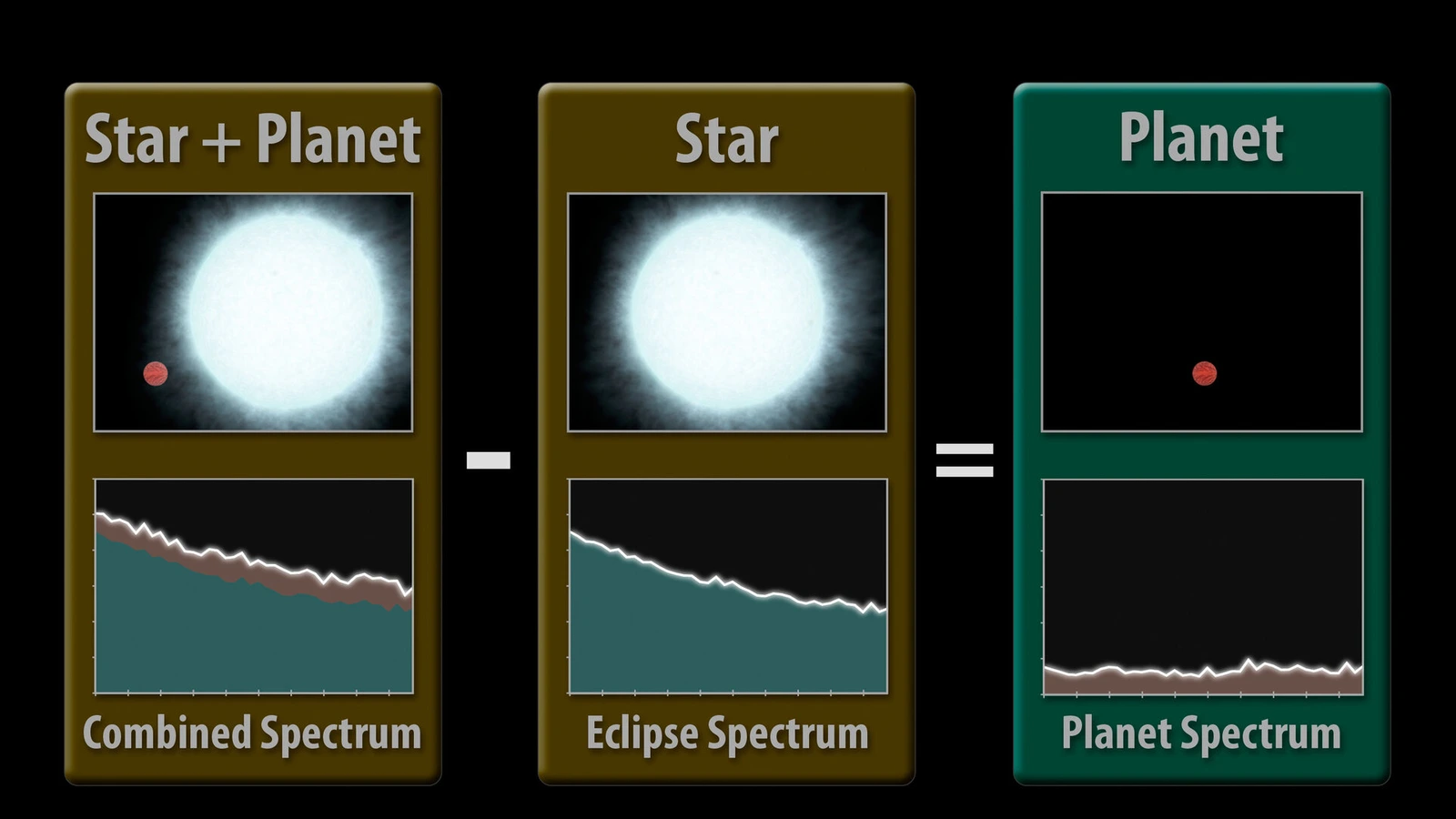
A second alignment can help separate the planet’s contribution from the star’s. During an eclipse in this context, the orbiting planet moves behind its star from our line of sight. ESA explains that the measured spectrum then shows the star alone because the planet is hidden. Astronomers can compare that star-only spectrum with a spectrum made when the planet is visible or transiting. The useful point is not that an eclipse is dramatic; it is that it supplies a reference measurement. The difference between two carefully timed measurements can isolate a much smaller signal that would otherwise be mixed into the star’s light.
That is why Ariel’s plan includes transit and eclipse spectroscopy rather than one observation type. A comparison can constrain atmospheric composition and temperature-related properties, but constraints are not the same as certainty. A spectral feature has to be tested against alternative explanations and measurement uncertainty. The package also avoids a stronger claim sometimes attached to exoplanet stories: no feature observed by Ariel could automatically prove a planet is habitable or that life exists there. The established claim is narrower and more interesting: ESA plans a repeatable way to compare the light from many different planetary systems.
AIRS is designed for infrared fingerprints
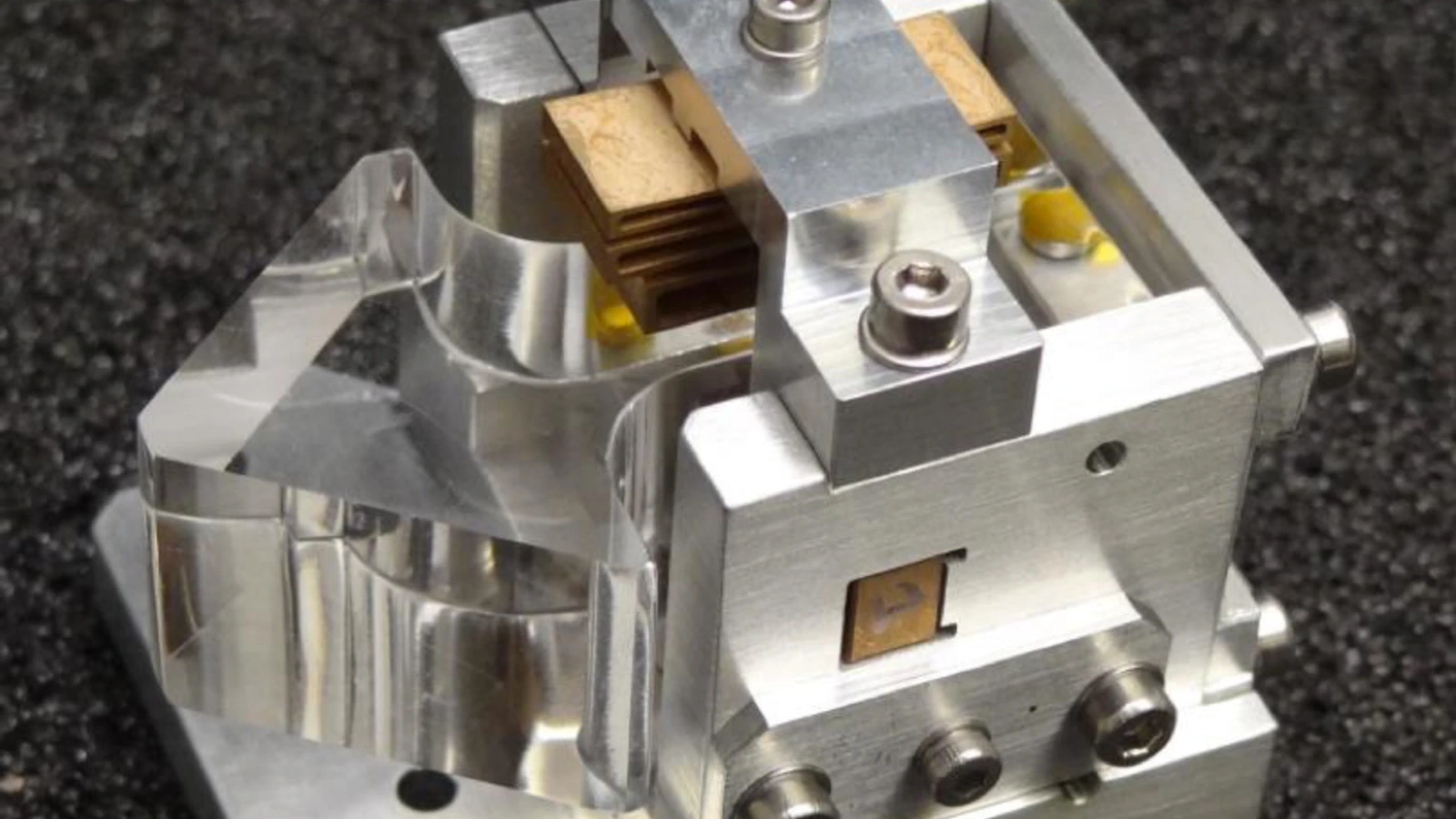
The instrument named in the plan is AIRS, the Ariel medium-resolution InfraRed Spectrometer. ESA says its two channels are designed to cover wavelengths from 1.95 to 7.8 micrometres, while the Fine Guidance System adds a near-infrared spectrometer from 1.1 to 1.95 micrometres. A prism splits incoming light into wavelength bands so detectors can record a spectrum instead of only one total brightness value. In the infrared, molecular signatures can be prominent, which is why ESA describes the range as useful for studying exoplanet atmospheres. The exact prism is a real component of the planned instrument; it is not evidence of a spectrum from an exoplanet.
Ariel’s broader aim is what gives this a frontier scale. ESA describes a chemical census of about a thousand planets, examining worlds as individual cases and as populations with different properties. That could let researchers compare patterns across types of planet and host star rather than treating one striking world as the rule. What is established today is the mission’s development status, survey objective, optical method and planned instruments. What remains uncertain is how the hardware will perform in space, which targets will yield interpretable spectra, and what the data will ultimately say about any atmosphere. Each eventual result will still need careful interpretation. That restraint makes the future mission more useful as a testable story because later measurements can be compared against stated expectations.
Sources and further reading
This article was written for Curiosity Desk. We do not copy other publishers or invent quotes. If a material error is found, we correct it openly.
Read the full standards →One answer should lead to a better question
Bring your curiosity to the group
Curious Minds is our public Facebook community for surprising science, strange history, Australian wildlife and everyday questions. No copied posts, no personal-friend invitations and no link dumping.
- Three self-contained discussion prompts each week
- Sourced answers and honest uncertainty
- Respectful conversation without spam